Istria Travel Guide: Where to Stay and How Long
Plan an Istria trip with Pula's Roman amphitheatre, Venetian Rovinj, Poreč's mosaics and hill towns like Motovun, plus how to get around and how long to stay.
On this page
Istria is a compact peninsula at the top of the Adriatic, and Bradt's Istria guide notes that despite its small size it packs in history, culture, scenery and food, making it well suited to short breaks. Pula's Roman amphitheatre and the Byzantine mosaics at Poreč are the two showpieces. This guide covers the coast towns from Pula up to Umag, the inland towns around Motovun, the Brijuni islands offshore from the mainland village of Fažana and the Limski kanal, and how to link them.
Plan around two halves. The west coast is a chain of old Venetian and Habsburg ports with the Roman amphitheatre at Pula and the UNESCO-listed mosaics at Poreč; inland is a ridge of walled hill towns looking over vineyards and truffle woods. Istria lies in three countries — Croatia, Slovenia and Italy — with the great majority in Croatia. Unforgettable Croatia describes the landscape as greener and the towns as lying away from the main tourist trail compared with the Dalmatian resorts to the south.
Where Istria sits and why it feels different from Dalmatia
The peninsula lies at the northern head of the Adriatic where the Croatian and Slovenian coasts meet, a short hop from Trieste and Austria. It lies in three countries — Croatia, Slovenia and Italy — with about nine-tenths in Croatia. That northern position explains the mix of Venetian, Habsburg and Italian influence in the architecture and the food, and why the landscape is greener than the karst and islands further south.
For travellers, the difference is practical. Istria is compact enough to base in one town and drive out each day, rather than island-hopping between ferries. The Venetian street plans, the hilltop fortifications and the produce — olive oil, pršut, truffles — are what people come for. Expect pebbly rather than sandy beaches, a coastline of small coves and rocky platforms rather than long strands.
Coast or hill towns: how to split your time
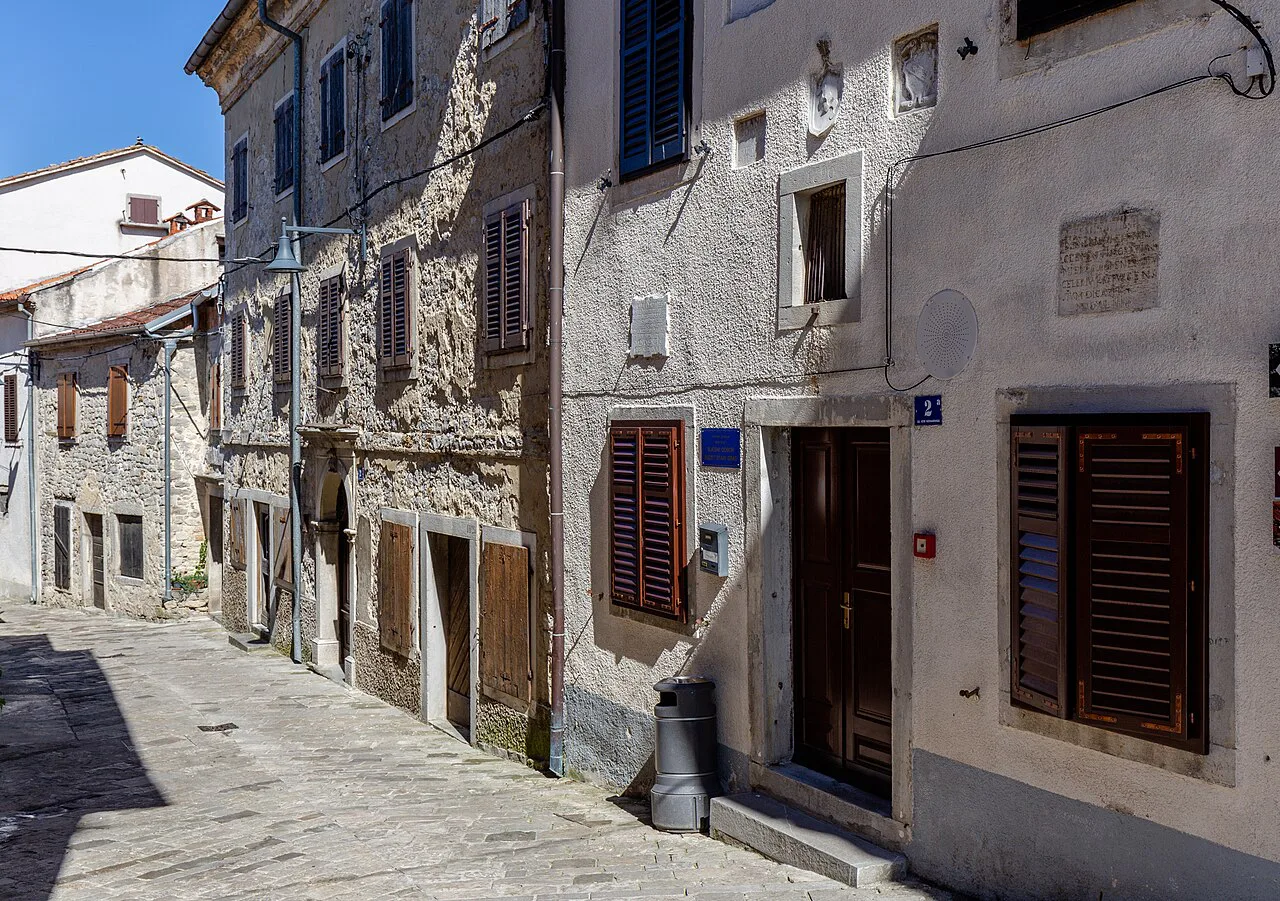
Split roughly two-thirds coast and one-third inland. The coast gives you the big sights and the sea for swimming; the hills give you the views, the quieter lanes and the sense of a working landscape. A clean four-night shape is two nights in Rovinj or Pula, one full day of Roman Pula and one for the coast north to Poreč, then a day based inland for the hill towns; see the Istria's Hill Towns guide for what each one offers.
If you have a week, add a day on the Brijuni islands and a slower loop along the west coast to Novigrad or Umag. The hill towns sit within an easy drive of each other, so one base such as Motovun covers several. The trade-off is that inland buses are thin, and a car makes the hinterland far easier to reach.
Pula: the Roman sights in a morning
Pula's Roman sights cluster tightly enough to walk in a single morning. The amphitheatre is the headline; the Arch of the Sergii and the Temple of Augustus are also in the historic centre. Bradt singles out the amphitheatre as a showstopper, and it is the one sight not to skip. Confirm current opening times and ticket prices with the Arena when you arrive, as they change by season.
Give Pula half a day for the Roman cluster and a little longer if you want the Venetian and Austro-Hungarian layers. Unforgettable Croatia lists the Arch of the Sergii and the Temple of Augustus alongside the Arena, so treat them as one circuit rather than separate stops. It is the natural first base if you are arriving from the north or by air.
Rovinj: the Venetian old town on the water
Rovinj is the most photographed town in Istria: a pyramid of Venetian houses spilling down to the water, with a church crowning the summit. The old town is a knot of cobbled lanes, and the pleasure is to wander rather than tick sights. Bradt suggests punctuating a stroll through its narrow streets with al fresco coffee and dining breaks, which is the right pace for the place.
Allow at least an evening and a morning. Rovinj competes with Dubrovnik as Croatia's most picturesque town, and the lanes fill quickly in high summer, so early starts and evenings are the comfortable hours. If you base here, the hill towns are an hour or so inland by car, and it is the best single base for a short break that mixes sea and hinterland.
Poreč: the UNESCO mosaics and the old-town grid
Poreč's draw is the Euphrasian Basilica, whose Byzantine mosaics are UNESCO-listed and among Istria's showpieces. The mosaics are the reason to come, and they deserve unhurried time rather than a quick look. The old town around the basilica keeps a Roman grid of parallel streets running down to the sea.
Poreč works as a half-day stop between Rovinj and the north, or as a base in its own right. The town is flatter and more open than Rovinj, with the waterfront and the basilica at its centre. Check the basilica's opening times and ticket price for your dates with the parish or the town's visitor office, as these change through the year — the wider sights of Poreč are covered in more depth in a dedicated guide.
Novigrad, Umag and Vrsar: the smaller west-coast stops
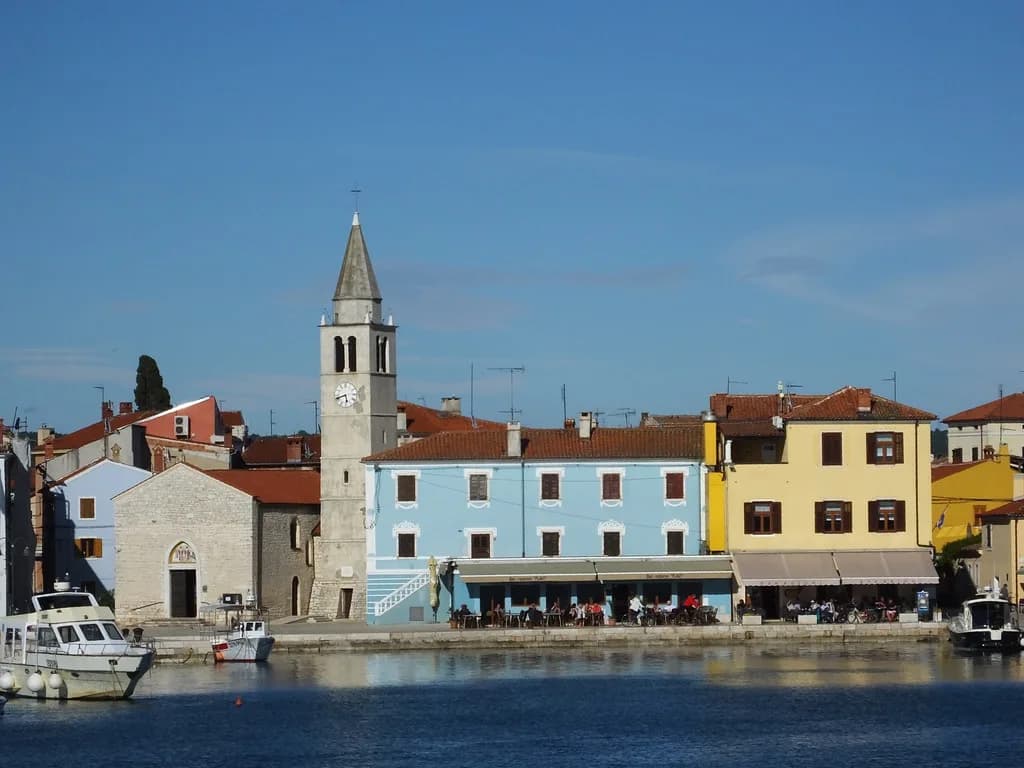
Novigrad, Umag and Vrsar are smaller west-coast harbour towns, each with a compact old core — good for a coffee stop or a late lunch if you are driving the coast. They don't repay a dedicated day if your time is short, and Rovinj and Poreč cover the same appeal more strongly.
Where they earn their place is on a slow loop north towards the Slovenian border, or if you want a quieter base away from the busiest towns. The coast road between them is easy and the swimming is good from the rocks. Treat them as stops on a drive rather than destinations in themselves.
Inland Istria: Motovun, Grožnjan, Hum and Buzet
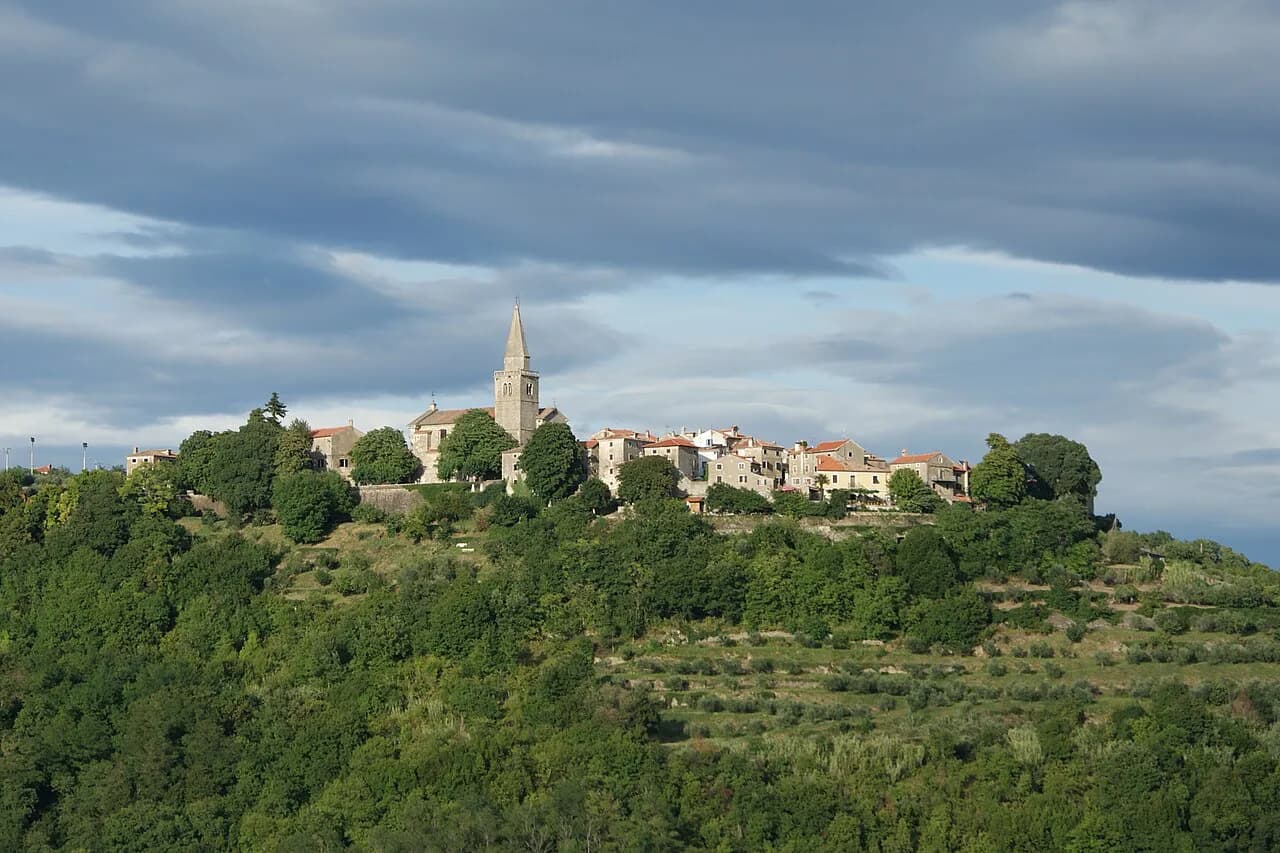
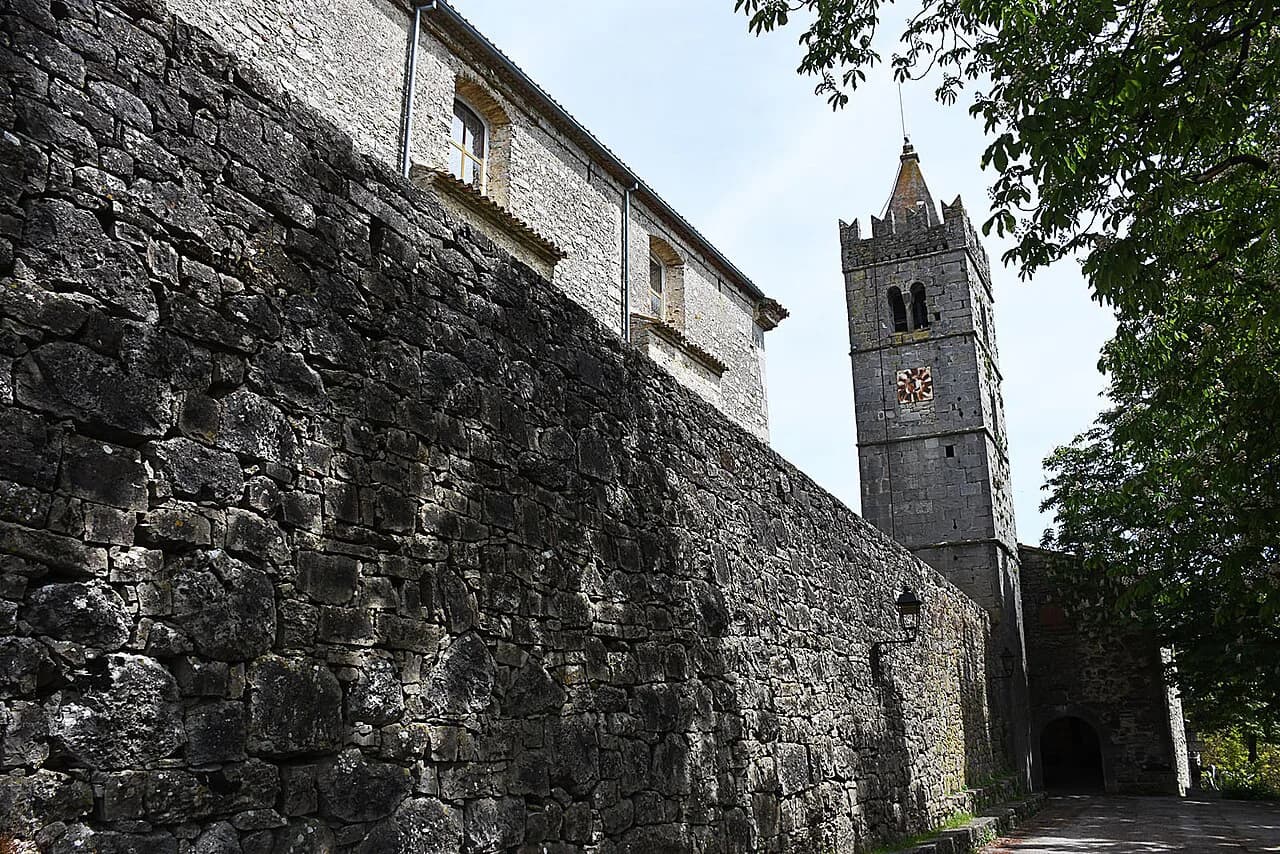
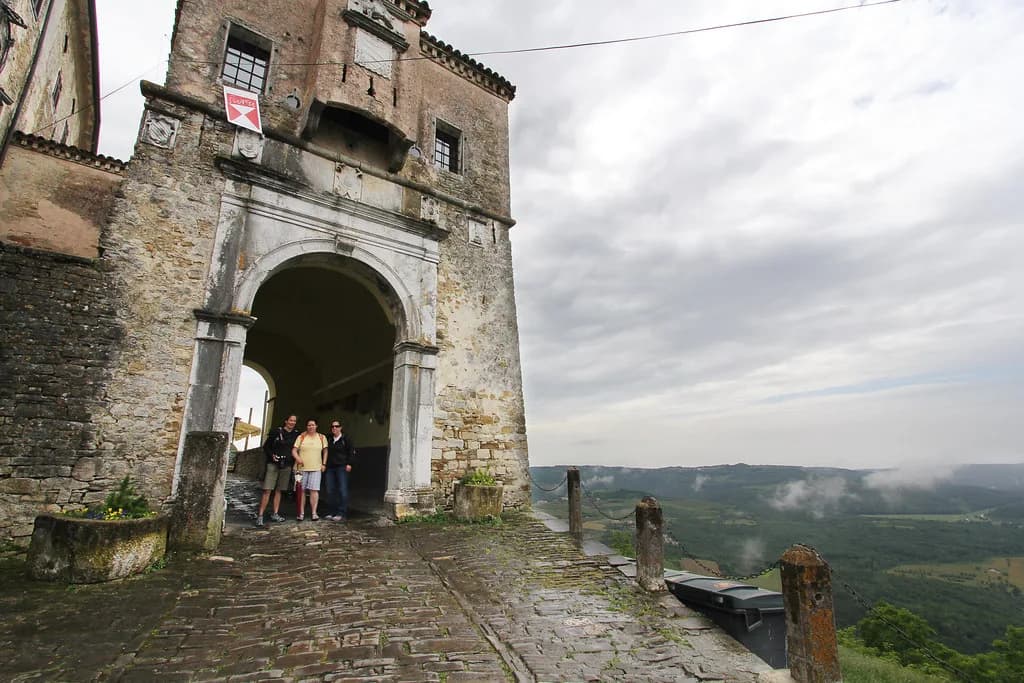
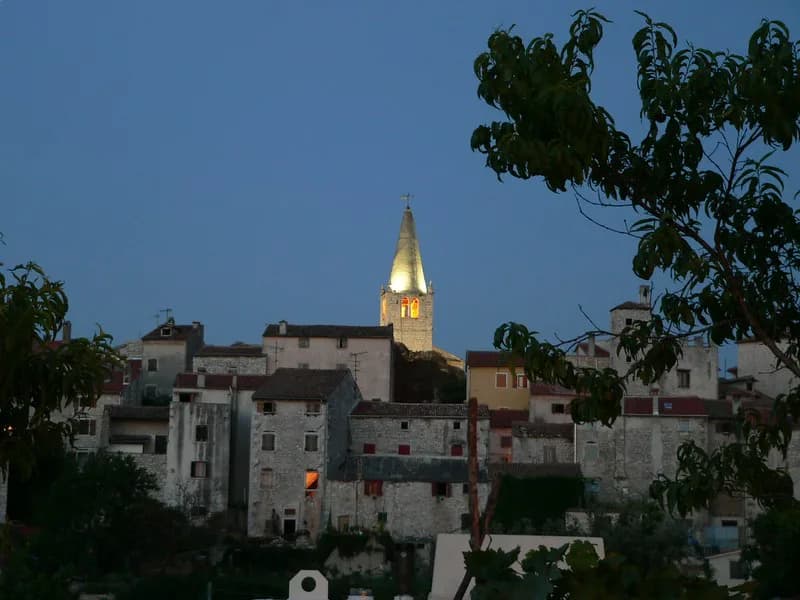
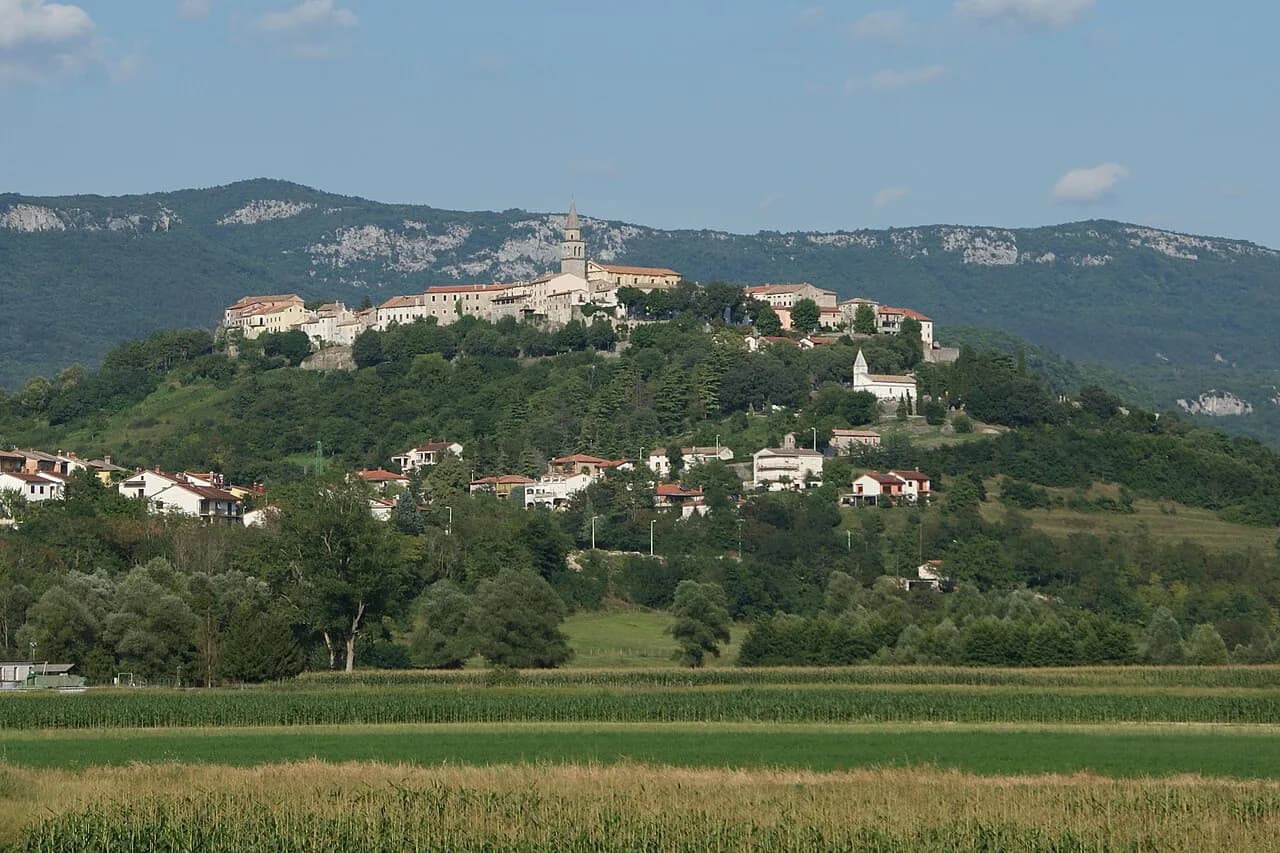
Inland Istria climbs to hilltop settlements with long views over vineyards and woods. Motovun is the classic: a hilltop town ringed by ramparts, with galleries, boutiques and delis in its lanes. Bradt recommends heading uphill to gaze out over rolling vineyards from settlements like Grožnjan, Hum and Motovun. Grožnjan is the artists' hill town.
A hill-town day is a loop of stops rather than a set of museums. Drive to Motovun for the ramparts and views, then across to Grožnjan for its galleries and lanes, finishing in Hum. The roads are narrow and steep into some towns, and parking sits outside the gates, so allow walking time. Restaurants in the hill towns keep shorter hours out of season, so check before a late drive.
Brijuni National Park and the Limski kanal
The Brijuni islands lie just off the southern edge of Istria, a group of islets that were a Roman settlement, an Austro-Hungarian fortress and a Viennese resort, later Tito's summer retreat. Unforgettable Croatia recommends them as a day trip from the mainland, with beaches, a zoo, a safari park and a theatre on the main island. Check sailing times and any limit on visitor numbers through the park authority before your visit.
The Limski kanal, a long inlet cut into the coast, is the other landscape sight in this part of Istria. Allow it time on the itinerary: it does not suit a rushed schedule, and both it and Brijuni eat half a day once you allow for transfers.
The Parenzana route and seeing the landscape by bike
The Parenzana is a former narrow-gauge railway line converted into an off-road cycle route across the peninsula. Bradt singles it out for cyclists who want to see the landscape between towns, and it suits a half-day rather than a full day unless you ride long distances. Check local bike-hire options in the larger towns before you set out.
For walkers, the options range from coastal strolls to steep hill-town climbs. The reward is the same: vineyards, dry-stone walls and views down to the sea. Check the trail before you set out.
How long to stay: two, four or seven nights
Two nights covers one town well, and Rovinj or Pula is the sensible pick. Four nights adds the Roman cluster at Pula, the Poreč mosaics and a day in the hill towns. Seven nights lets you add Brijuni, the Limski kanal and a slow loop up the west coast to Novigrad or Umag without rushing. If you are deciding how much time to give Istria against the rest of the country, our Croatia guide shows how a few days in Croatia fit into a wider trip.
The constraint is transport rather than distance. A car turns a week into a comfortable circuit; without one, stick to Pula, Rovinj and Poreč and take buses between the main towns. Inland hill towns are the part that most rewards having your own wheels. If you are weighing a longer Croatian trip, remember that the Dalmatian islands need ferries and their own time — Istria does not. For the lay of the land before you go, the Istria Map shows how the coast and hill towns relate.
Getting there: Trieste, Vienna and the road in
Istria is reached by road or by air. Unforgettable Croatia puts Vienna about a three-hour drive away and Trieste about 90 minutes, which makes the Italian gateway or an Austrian arrival the practical options for a fly-drive. The border with Slovenia runs along the peninsula's north, so a car from Trieste crosses briefly through Slovenian territory.
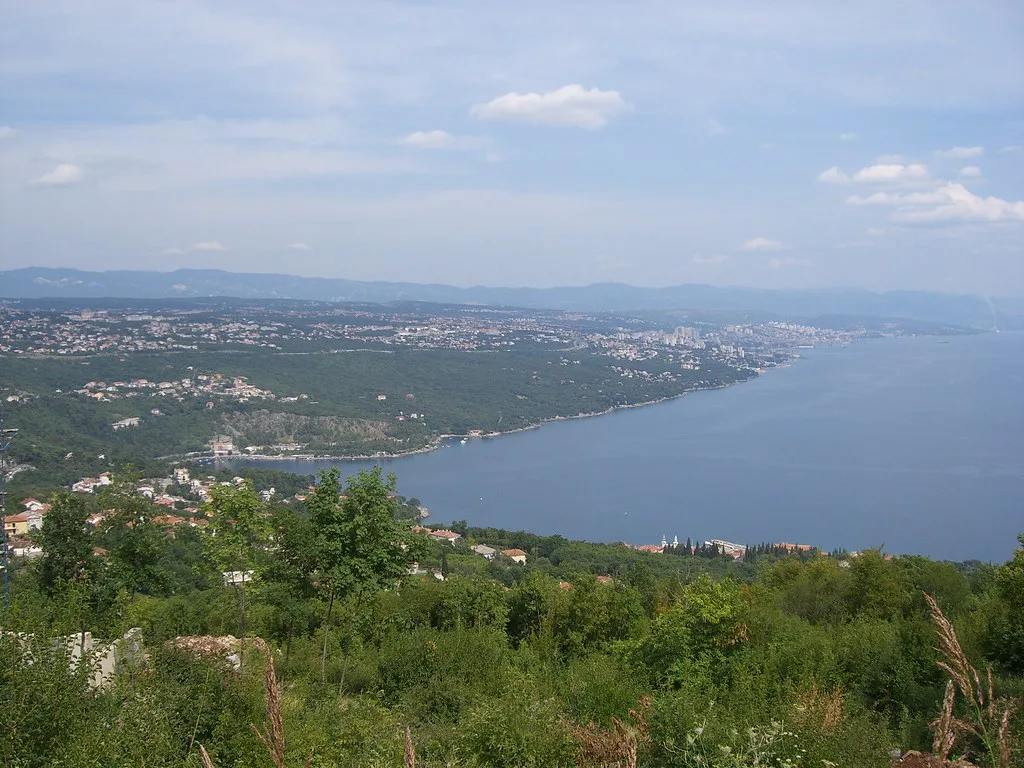
Rijeka, just over the eastern edge of the peninsula, is another mainland gateway and a base for day trips; Bradt notes Istria works well as a base for day trips to nearby Rijeka. Check your airline's current routes to Pula and Trieste before booking, as these change seasonally. Once in Istria, the road network is good and the towns are close together, so a car is the simplest way to see both coast and hills.
Getting around without a car
Buses serve the main coast towns, and Pula is the hub for the region. That is enough for a short break based in one town with a couple of day trips. The limit is inland: services to Motovun, Grožnjan, Hum and Buzet are sparse, and some link only through larger towns. Check operator timetables for your dates rather than relying on a printed pattern.
If you forgo a car, build the trip around Pula, Rovinj and Poreč and treat the hill towns as one organised day out or a taxi ride. The Parenzana is a former railway line now used as a cycle route, but it does not replace road transport between the coast and the hills; buses, tours and hired cars are the options. That shapes the itinerary more than distance does.
When to go: May, June, September and October
May, June, September and early October are the best months, with warm but pleasant temperatures and thinner crowds than midsummer. Unforgettable Croatia recommends these shoulder months over the July and August peak, when southern Europeans fill the coast.
July and August are hot, busy and at their priciest, though the sea is at its warmest. For swimming, June and September give you warm water without the peak crowds, and the northern Adriatic is generally settled through the summer.
What it costs: euros and where to check ticket prices
Croatia uses the euro, so you can budget in euros throughout Istria without changing money. Prices for the main sights — the Pula amphitheatre, the Euphrasian Basilica at Poreč, Brijuni National Park and the Limski kanal boats — change by season and by operator, so buy at the gate or through the official operator and confirm the current price there. The Pula Arena and the Poreč basilica are the two big paid entries; the town lanes and waterfronts are free to walk.
Trade-offs to expect
The beaches are pebbly and rocky rather than sandy, which makes water shoes useful and swimming from rocky platforms the norm. Rovinj and Poreč fill with day trippers in high summer, so early mornings and evenings are the calm hours. Inland towns are quieter but have fewer facilities out of season, and restaurants and galleries keep shorter hours.
The main choice is coast versus hills. The coast gives you the big sights and the sea; the hills give you views and a slower pace but need a car. A four-night trip split two-thirds coast and one-third inland balances both. If you only have two nights, stay on the coast and save the hill towns for next time. The same coast-or-hinterland balancing act shapes a stay on Hvar, covered in Hvar Attractions, where beaches and inland villages compete for your days.
Which Istria base suits your trip
Choose Rovinj for a short break that mixes sea, lanes and easy access inland, or Pula if the Roman sights are the priority and you want the region's transport hub. Poreč suits travellers who want the mosaics and a flatter, quieter town. Base inland at Motovun only if you have a car and plan to spend most of your time in the hills.
Book the Brijuni crossing and any Limski kanal boat through the official operator before you travel, and confirm the basilica and Arena entry when you arrive. Beyond that, Istria rewards a loose plan: two coast towns, one hill-town day and enough time for a swim. If you are extending south, the Dalmatian islands such as Hvar need ferries and their own itinerary; see Hvar Attractions for what that island adds if you make the crossing.
Explore more Istria guides
- Bale, Croatia
- Buzet: A Guide to Istria's Hilltop Truffle Town
- Fažana: Istria's Fishing Village and the Gateway to Brijuni
- Grožnjan
- Hum, Croatia
- Istria Map
- Istria's Hill Towns
- Labin: A Guide to the Hilltop Old Town Above Rabac
- Lim Fjord (Limski kanal)
- Motovun: a guide to the walled hilltop town in Istria
- Oprtalj: Istria's Hill Village of Frescoed Churches and Mirna Valley Views
- The Istria Coast
- Vodnjan: Istria's Old Town, St Blaise Church and How Long You Need
- Vrsar, Croatia
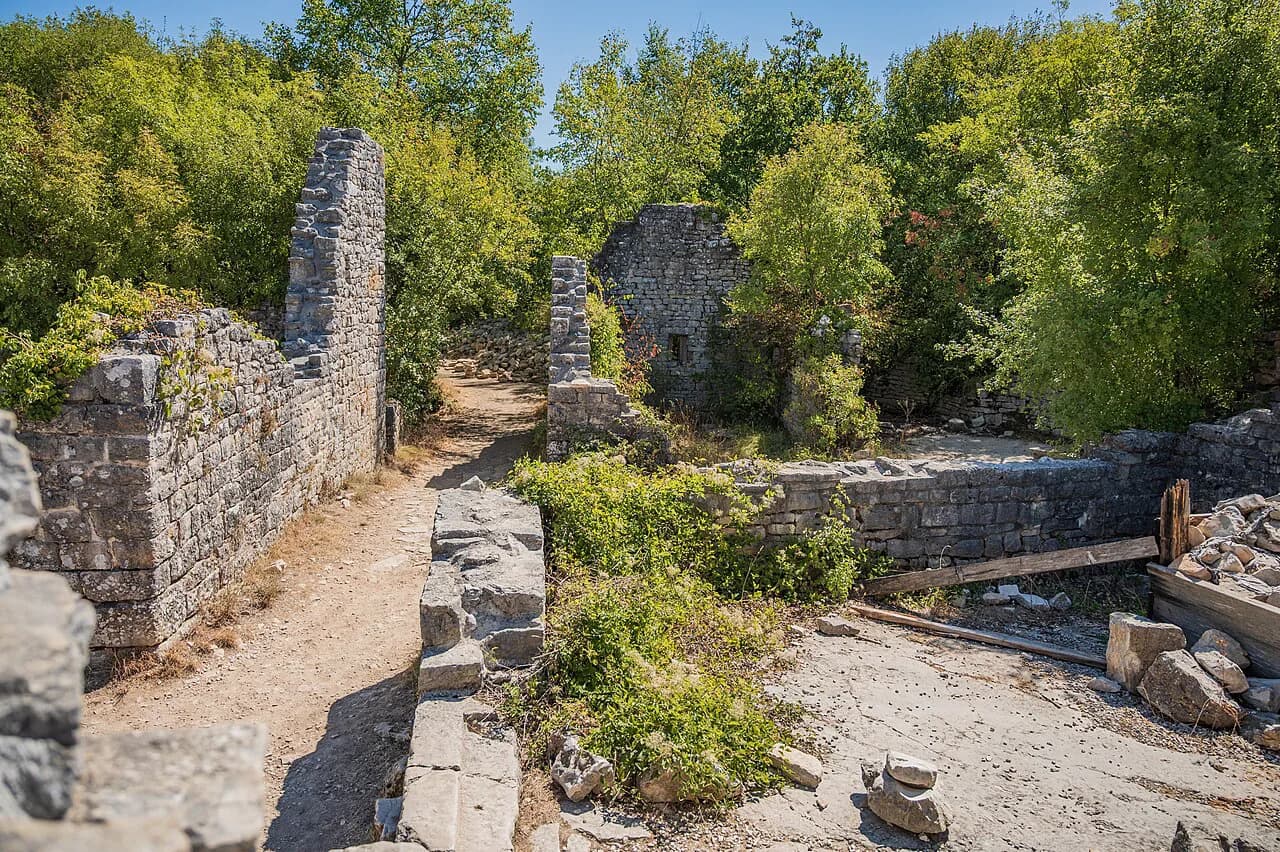
- Dvigrad: the abandoned medieval town in the Draga valley
- Pazin Castle
- Roč, Croatia
- Savudrija Lighthouse
- Svetvinčenat
Frequently Asked Questions
Is Istria part of Italy or Croatia?
Istria lies in three countries — Croatia, Slovenia and Italy — with the great majority in Croatia. Through the twentieth century the region was contested between Italy and Yugoslavia, and today most of its towns are Croatian.
What language do they speak in Istria?
Croatian is the main local language, and English is widely understood in the tourist towns. Italian has strong historical roots on the peninsula.
Where do you fly into for Istria?
The practical gateways are Pula, in the south of the peninsula, and Trieste in Italy, about 90 minutes away by road. Vienna is around three hours by car for travellers coming from Austria. Route availability changes by season, so check current airline schedules.
Do you need a car in Istria?
A car helps, especially for the inland hill towns, where buses are sparse. Without one, base in Pula, Rovinj or Poreč and use buses for the coast, treating Motovun and Grožnjan as an organised day out or a taxi ride.
Sources
Notes from the Croatian coast
Optional updates when our guides change.
You might also like
Continue reading
More guides you'll find useful