Korčula Island Guide: Town, Villages, Ferries and Timing
A practical guide to Korčula island: the walled old town, Lumbarda and Vela Luka, how long to stay, when to go and how the island's two ends differ.
On this page
Korčula suits travellers who want a medieval walled town without Dubrovnik's crowds and a green island behind it. Allow a few days to cover both the old town and the villages; the town alone needs half a day to a full day. This guide sets out the layout, the villages and beaches beyond the walls, the geography from east to west, and how to time a visit around summer crowds.
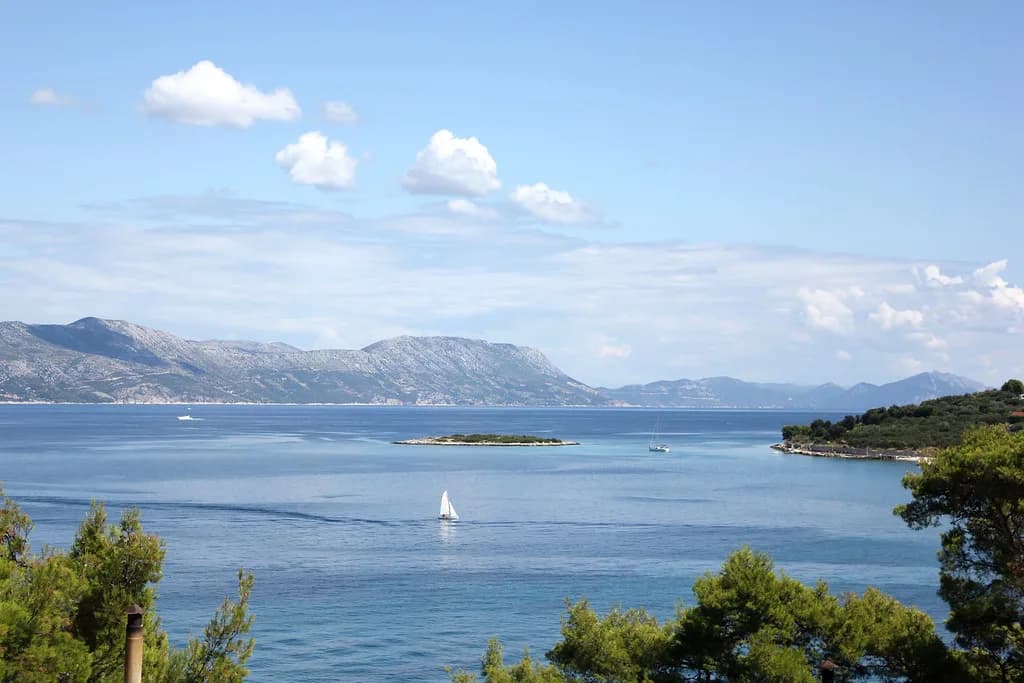
The island covers 276 square kilometres, making it the sixth-largest in the Croatian Adriatic, and it lies neatly beneath the mainland coast opposite the Pelješac peninsula. The main town occupies the north-eastern tip, looking across the narrow Pelješac Channel, while the rest of the island stretches west through vineyards and olive groves. Ancient Greek settlers named it Korkyra Melaina, Black Corfu, after its dense holm oak and pine, and the forests still shape how the island feels away from the coast.
Where Korčula sits and why the old town stands out
Korčula has one of the best-preserved medieval centres in the Adriatic and ranks as the most popular south-Dalmatian destination after Dubrovnik, which is the comparison every visitor makes. The fortified old town is on UNESCO's tentative list of outstanding world heritage sites, so the walls and street plan are the reason to come rather than a backdrop to them. Because it sits on a small island rather than the mainland, it absorbs far less of the traffic that funnels through Dubrovnik's gates.
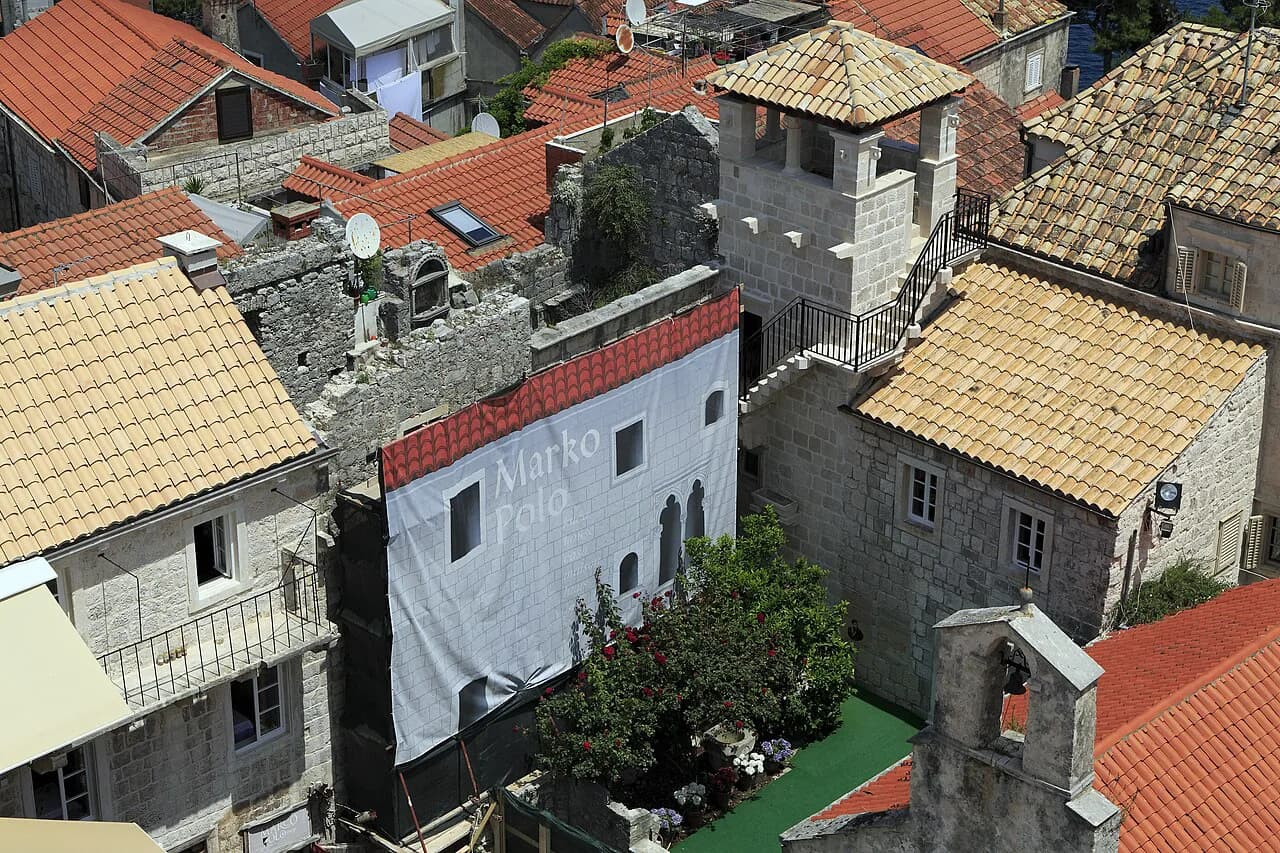
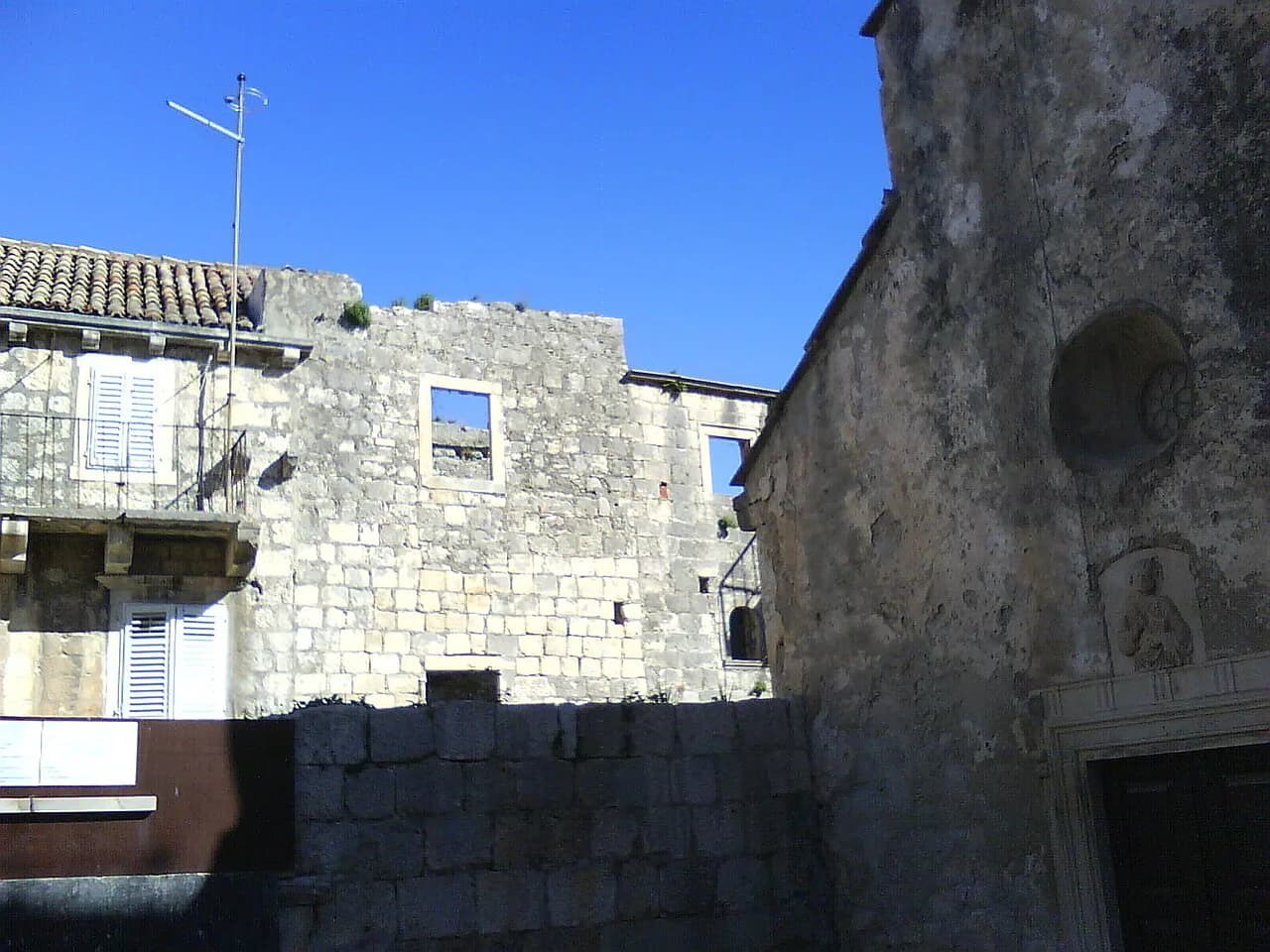
The setting explains the town's shape. It faces the Pelješac Channel on one side and open water on the other, with the mass of the island behind it, and the medieval walls wrap the whole cluster of stone houses and burnt-orange roofs. Approach by sea and the houses seem to crowd the waterline behind the defences. That compactness is what makes the old town so easy to walk and so quick to see.
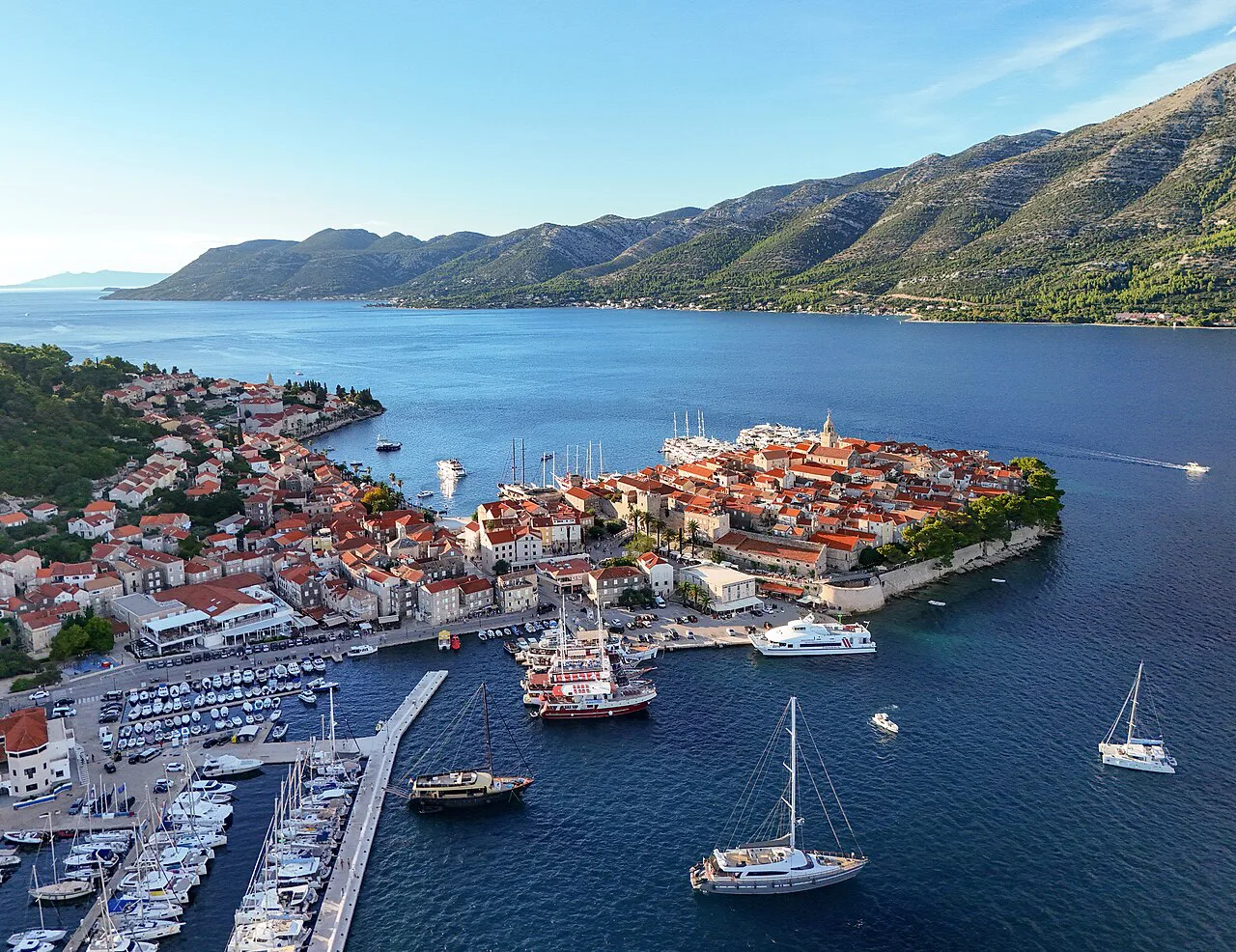
Korčula town: the fishbone lanes and St Mark's Square
The historic centre is flat, pedestrianised and entirely walkable, and its narrow lanes fan out from the centre in a fishbone pattern. The layout was designed to stop the wind funnelling through the streets, which is worth remembering on a breezy day. Inside the lanes are art shops, boutiques, tavernas and wine bars, and the flat paving makes the whole circuit comfortable even in the middle of a hot afternoon.
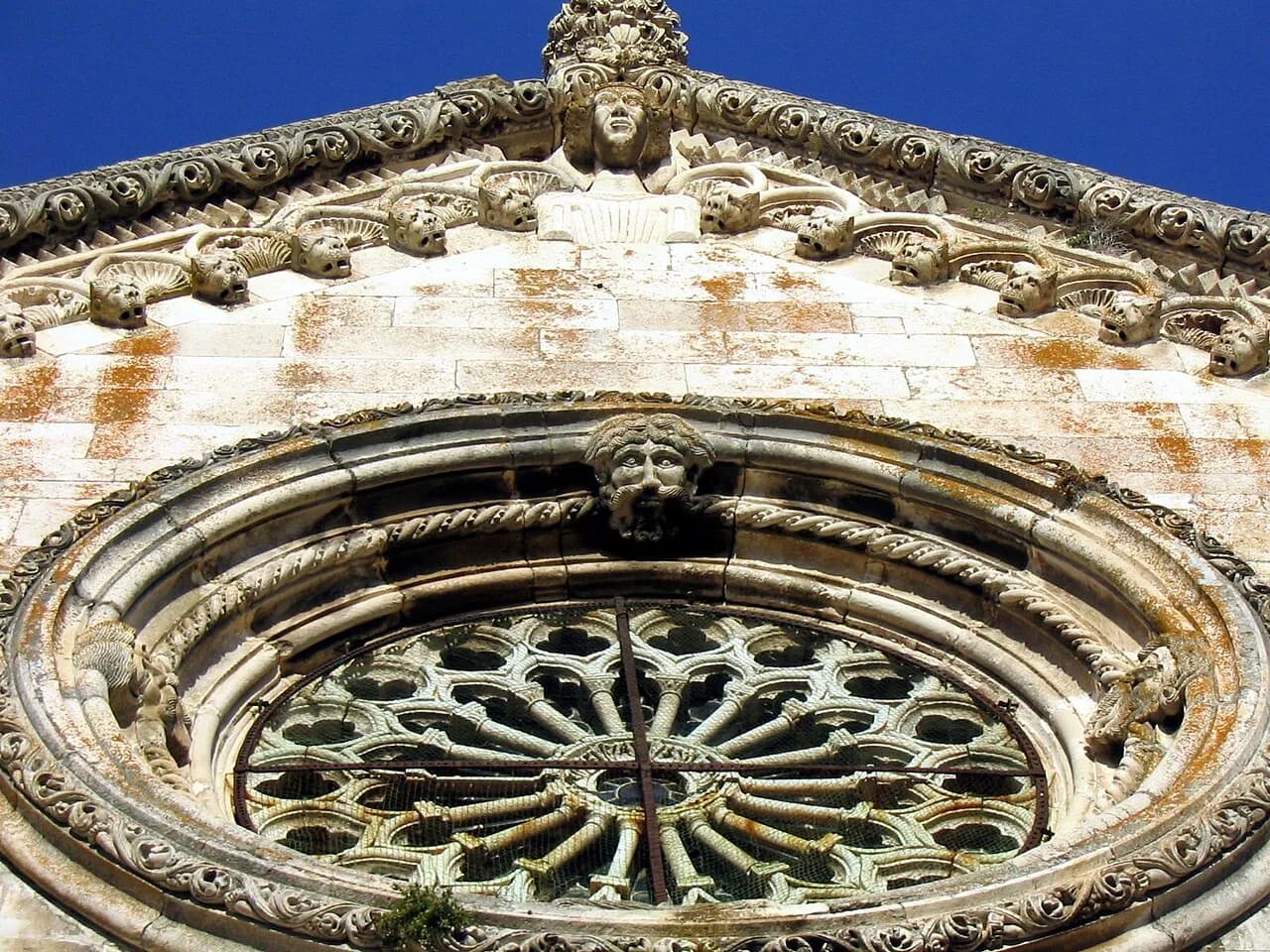
St Mark's Square sits at the heart of it all, with the cathedral beside it and a tower viewpoint reached by 65 steps. The square is unusual for a Croatian old town in having no restaurants or bars on it, which keeps it quiet; early morning you may have it almost to yourself apart from the town's cats. Climb the tower for the roofscape, then walk the landward walls for the view back over the island.
Give the town half a day at minimum and a full day if you want the walls, the tower and a slow lunch. The lanes are short, so the risk is not missing a sight but rushing the atmosphere. Arrive before the midday heat and the place feels like a working town rather than a stage set.
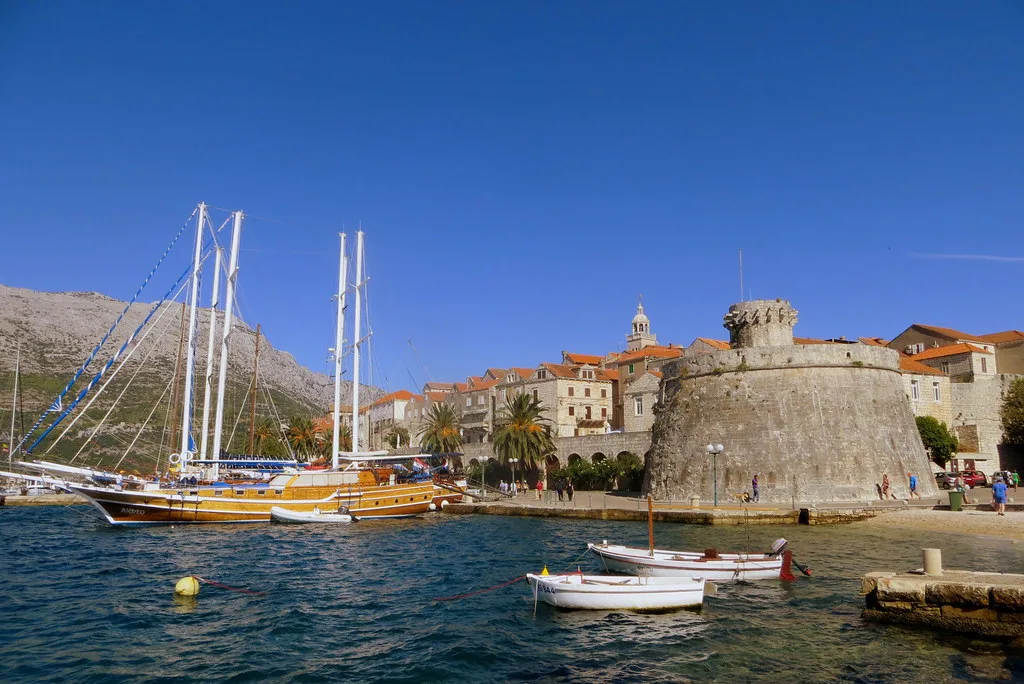
The palm-lined promenade
The tree-lined promenade is what separates Korčula from most other Dalmatian islands: a shaded waterfront stretch for strolling from morning to night, with the water on one side and terraces under the trees on the other. It looks across to the mountains and islands beyond the channel. In the evening the whole area fills up but stays convivial rather than loud, which is the tone of the town generally.
Mornings and evenings behave differently here. Early on, the promenade is tranquil and several places only open from lunchtime, so plan breakfast accordingly. Later, the cafes and restaurants along the waterfront become the natural place to end a day of walking.
How long Korčula needs
Treat the old town and the island as two separate decisions. The walled town is compact and walkable and fits comfortably into half a day to a day, including the tower and a meal on the promenade. The island itself is easy to explore in just a few days, and that is the more realistic window if you want villages, coves and the western end as well.
A sensible split for three nights is one full day in Korčula town, one day for Lumbarda and the south-coast beaches, and one day for the west, bearing in mind the travelling time between the two ends. If you only have a night, stay inside or beside the walls and skip the island circuit altogether. Trying to see both ends in a day means spending much of it on the road.
Lumbarda, 6km from Korčula town, and the sandy beaches
Lumbarda, 6km from Korčula town, is thought to be the oldest settlement on the island and is arranged around a series of small bays. It holds the island's best-known sandy beaches: Vela Pržina, where the local dialect word for sand gives the beach its name, has a volleyball court and a beach bar. Just beyond it, Bilin Žal is smaller and shallower, with a stone wall behind it for shelter and a pier jutting into the water, which makes it the easier choice for families.
The flat land around Lumbarda is one of the agricultural pockets behind the coast, with vineyards and olive groves on the plains. The villages and their fields are part of the scenery rather than a separate itinerary.
Pupnatska Luka and the south coast
Pupnatska Luka is the main draw of the south coast, roughly a 20-minute drive from the old town, and the pebble beach looks out towards Lastovo island with two small seaside restaurants behind it. There is little natural shade, so bring a parasol and go early if you want a spot in the shade of the rocks. The drive itself climbs through the island's interior, which is half the point.
Proizd, Vela Luka and the western end
Vela Luka occupies an irregular bay at the western end of the island and is the main port for car ferries to Split and Lastovo, so it functions as a gateway as much as a destination. Around 50km from Korčula town, it also has its own beaches, including Pičena Bay, a secluded picnic spot with a few wooden sunloungers and parasols. Most visitors use the bay as the jumping-off point for the uninhabited islet of Proizd.
Proizd lies a 35-minute boat journey west of Korčula and has rocky coves rather than sand, with clear water and few people. Its unspoiled ruggedness is the appeal, and it rewards those prepared for rocks underfoot. Check the boat times before you commit, as this is a trip that eats a day rather than a morning.
Villages and coastal ports: Žrnovo, Pupnat, Čara, Smokvica, Blato and Račišće
The interior is a chain of agricultural villages rather than a tourist circuit. Žrnovo spreads across the hills above Korčula town as four distinct hamlets, Prvo Selo, Brdo, Postrana and Kampus. Pupnat sits at the edge of a small but fertile plain, and Čara hovers above a broad agricultural plain of its own.
Further west, Smokvica's red-tiled houses spill down a hillside above its fields, and Blato was once the island's biggest settlement and an important agricultural centre exporting wine and olives. Račišće, 12km west of Korčula town, is a picturesque port spread around a broad bay with the Church of St Mary the Helper overlooking the shore. These are places to pass through slowly on the way to the beaches rather than to tick off.
Getting to Korčula and getting around
Korčula is reached by sea, and the western port of Vela Luka handles the car ferries to Split and Lastovo. The island can also be approached across the Pelješac peninsula from the mainland. Operators publish timetables by season, so confirm sailing times and fares with the operator for your dates before you book, and book ahead in summer when the fast catamarans fill.
On the island, taxis and buses connect the west to the east in around 45 minutes. From the old town, Lumbarda is 6km away and Pupnatska Luka about a 20-minute drive. Short water-taxi hops reach offshore islets and coves, which is often simpler than driving.
When to go
Summer brings the crowds, and the town's compactness means they are concentrated rather than dispersed. Spring and autumn are the better bet for walking the walls and driving between villages without queuing for a table. Even in season, many places along the promenade only open from lunchtime, so mornings are quieter.
If you are building a longer Dalmatian trip, Korčula pairs naturally with Dubrovnik and the Pelješac peninsula across the channel. Travellers comparing Adriatic towns often weigh it against Hvar, where the atmosphere is livelier and the crowds correspondingly heavier, and against Poreč on the northern Adriatic if they are touring the whole coast. If you are weighing up a broader Dalmatian route, see our Croatia guide to the coast, islands and parks before fixing your stops.
Is Korčula worth it for your itinerary?
Korčula is worth it if you want a medieval walled town you can walk in half a day and an island worth a few more. Skip it if you are chasing nightlife or only have a single day between Dubrovnik and Split, where the ferry time eats the visit.
Base yourself in Korčula town, give the old town a full day including the 65-step tower, then add Lumbarda and one south-coast beach before deciding whether the far west justifies the drive. Check ferry times for your dates rather than relying on a printed guide.
Explore more Korčula guides
Frequently Asked Questions
Is Korčula closer to Dubrovnik or Split?
Neither is close enough for a casual hop. Korčula sits off the mainland coast, and arrivals come by catamaran or ferry from Split or Dubrovnik, or via the Pelješac peninsula. Journey times vary by operator and season, so look up the timetable for your dates before planning the rest of your route.
Which is better, Hvar or Korčula?
Korčula suits travellers who want a quieter medieval town with more space in the lanes and a greener island behind it. Hvar has a livelier waterfront and heavier crowds in high summer. If you want atmosphere and evening energy, Hvar wins; for walking, villages and a calmer base, Korčula is the better fit.
Is Korčula expensive?
Prices along the promenade and in the old town reflect a popular destination, so expect town-centre rates for meals and drinks. Moving a street or two back from the waterfront, or eating in the villages, usually costs less. Check current menus and ferry fares, as both vary by season.
Sources
Notes from the Croatian coast
Optional updates when our guides change.
You might also like
Continue reading
More guides you'll find useful