Krka National Park: Tickets, Opening Hours and What to See
Plan a visit to Krka National Park: Skradinski buk and Roški slap, entrances, seasonal opening hours, ticket rules and boat links from Skradin and Šibenik.
On this page
Krka National Park covers 109 square kilometres of the Krka River valley inland from Šibenik, with seven waterfalls and ten entrances, and most visitors need half a day at Skradinski buk or a full day to add Roški slap and Visovac. The park authority publishes the layout, entrances and facilities on its visitor pages.
The two headline waterfalls behave differently. Skradinski buk is the broad, densely stepped barrier closest to Skradin and Lozovac and takes the bulk of the crowds, while Roški slap lies further along the upper-river itinerary and rewards the extra travel with a quieter circuit. This guide works through the choices in the order you will make them: which waterfall, which month, which entrance, then the boat and the time budget.
What Krka National Park is and where it sits
Krka is a river park, not a single sight. The Krka River runs through a limestone gorge from near Knin down towards Skradin, cutting a series of tufa barriers that form the waterfalls visitors come to see. The park authority lists seven waterfalls across the 109 square kilometres, along with 47 kilometres of hiking trails and 388 kilometres of bike routes.
The administrative contact address is Trg Ivana Pavla II in Šibenik, which is also the natural base for the lower park and the Skradin approach. Knin and Drniš are the other towns with park branch offices, useful if you are coming from the hinterland rather than the coast. The Skradin branch office opens half an hour before Skradinski buk and closes with it. Plan your day around the lower gorge unless you specifically want the upstream waterfalls.
Which waterfall to choose: Skradinski buk, Roški slap, Manojlovac and Burnum
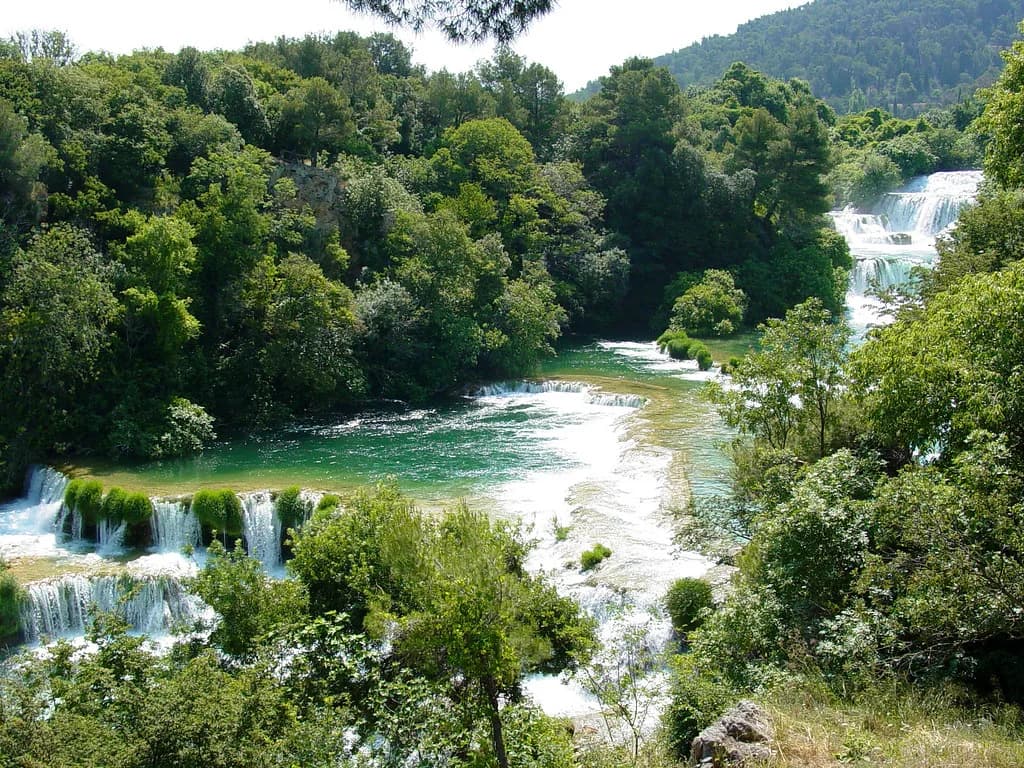
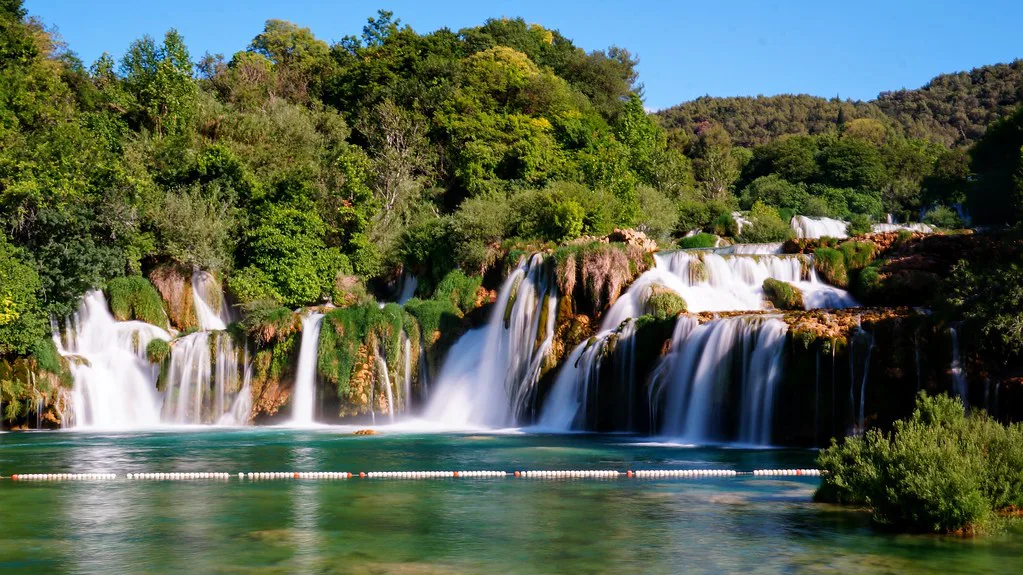
Skradinski buk is the one to pick if this is your only visit. It is the barrier closest to the coast, reachable on foot from Skradin or by road from Lozovac, and it carries the full visitor infrastructure. The trade-off is straightforward: it is also where coach groups concentrate, so arrive at opening time.
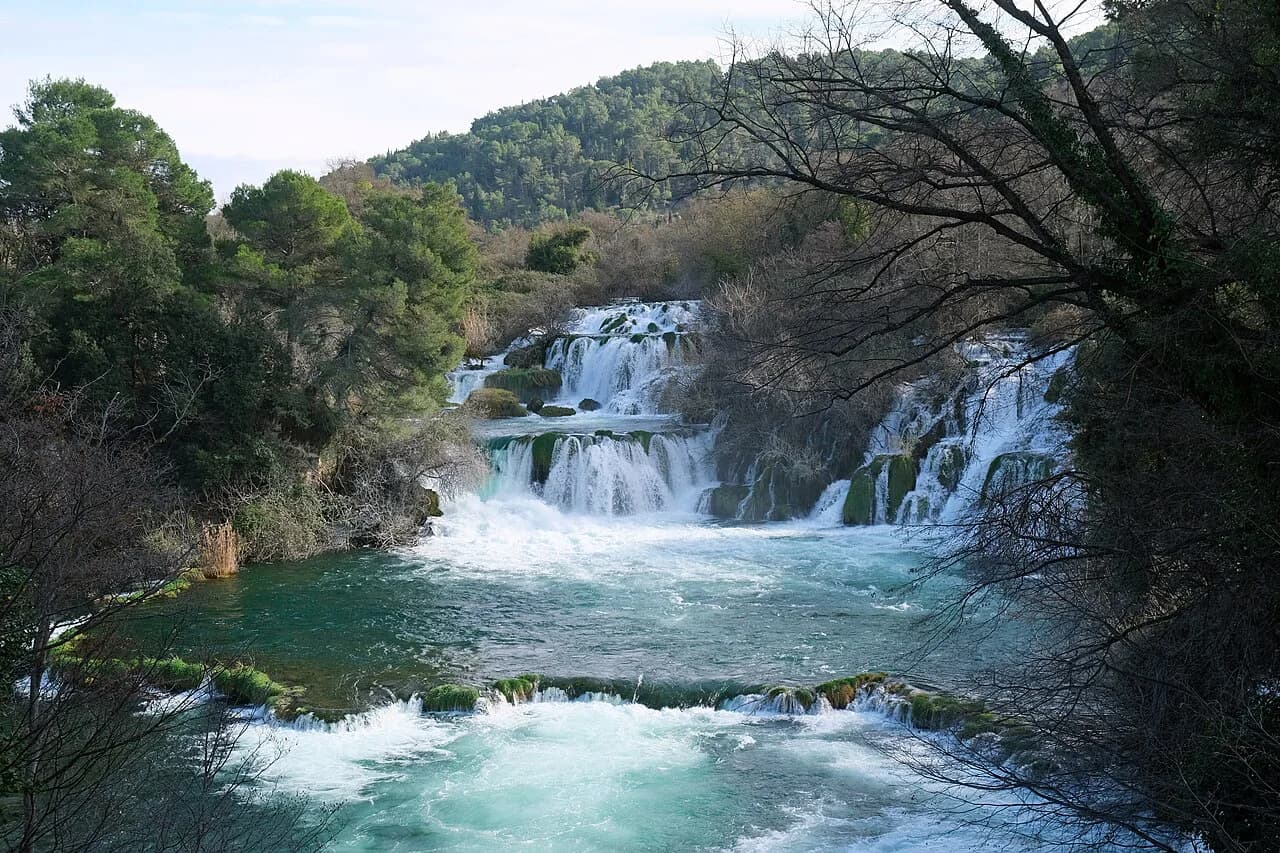
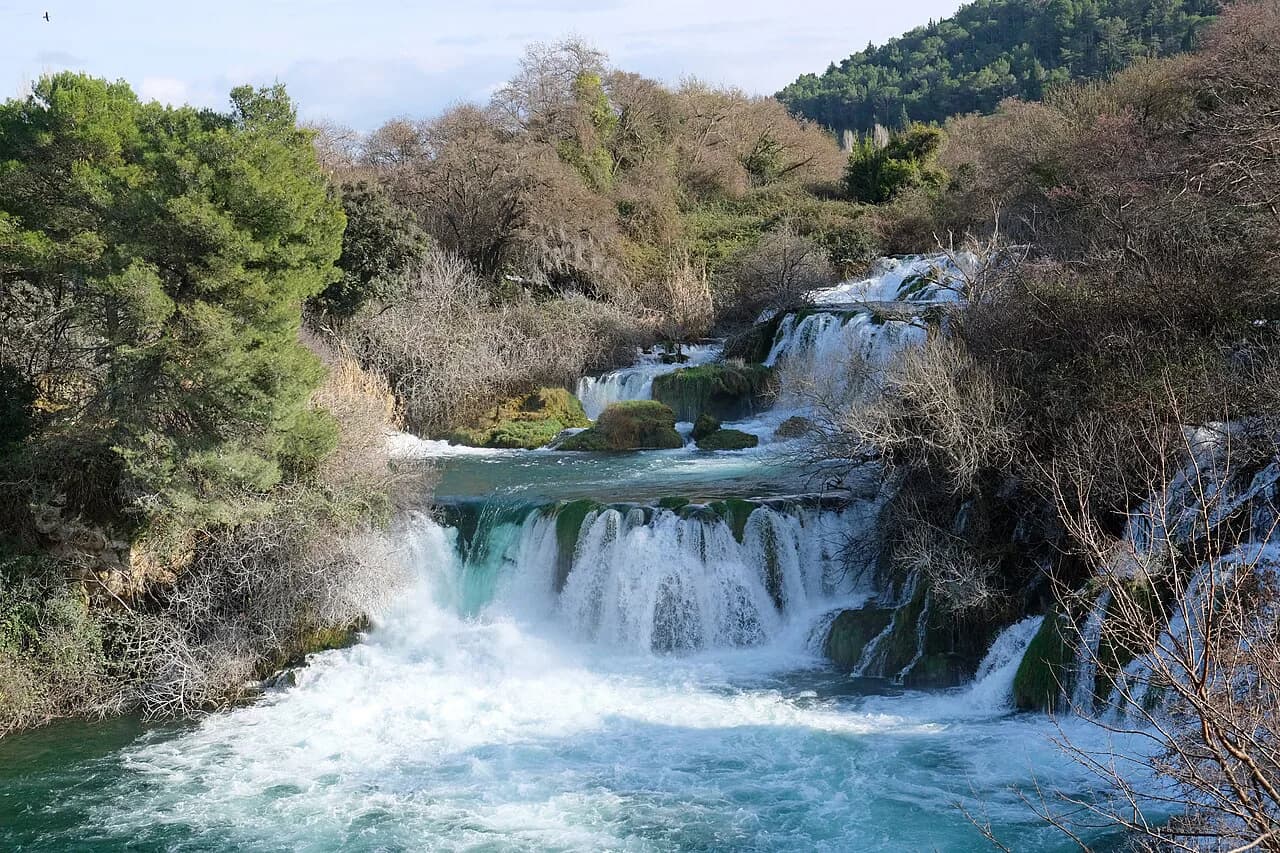
Roški slap suits travellers with a car and a full day. It is a longer, more varied circuit of cascades with the Krka River working its way between them, and it absorbs people far better than the main barrier. Roški slap keeps shorter hours than Skradinski buk for much of the year and is shut in January, March and December, so check the calendar before you commit. If you are choosing between the two on a tight schedule, take Skradinski buk.
Manojlovac waterfall and Burnum sit in the upper park and keep seasonal hours rather than all-year ones: the park does not open Manojlovac or Burnum in January, February, March, November and December, and opens them 10:00–18:00 from April to June, 8:00–20:00 in July and August, and 9:00–17:00 from 21 September; in the first half of October it gives 9:00–17:00. Burnum is the Roman legionary camp site in the same upper zone. Both are best paired with a car and a route through Kistanje and Puljane, where the Krka Eco Campus is.
Opening hours by season at Skradinski buk and Roški slap
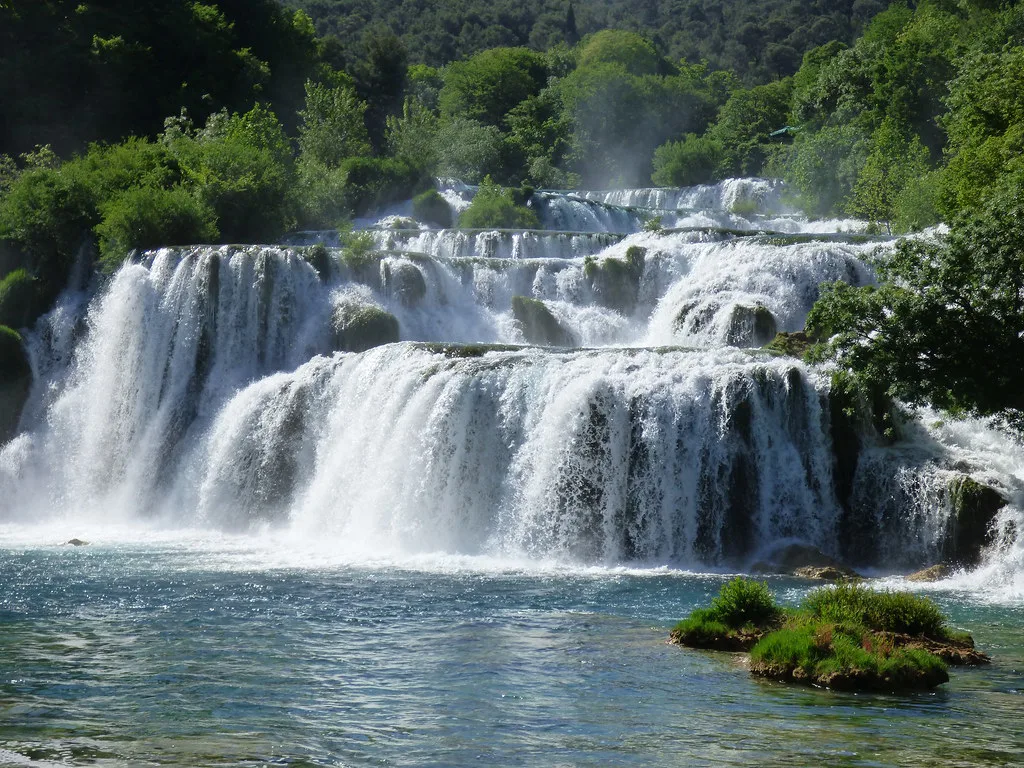
The park publishes hours by month and by locality, and the localities do not share one calendar. Skradinski buk opens at 8:00 and closes at 20:00 in July and August, narrowing to 8:00–19:00 in May and September and 8:00–18:00 in April and the first half of October; the second half of October it runs 9:00–17:00. In January, February, November and December it runs 9:00–16:00, and in March 9:00–17:00.
Roški slap keeps a shorter day outside high summer: 8:00–20:00 in July and August, 10:00–18:00 from April to June, 10:00–18:00 in September, 9:00–17:00 in October and 9:00–16:00 in February and November. It does not open at all for visitors in January, March and December. Stinice is closed in January, February, March, November and December and otherwise runs 9:00–17:00, and the park's note brings Manojlovac, the Krka Eco Campus, Krka – well of life and the Krka Eco Campus in Puljane to the shorter 9:00–17:00 hours from 21 September.
Two calendar details catch people out. On 1 January only the Lozovac entrance is open, and on 24 and 31 December the park is open 9:00–12:00, with full closure on 25 and 26 December. The Skradin branch office opens half an hour before Skradinski buk and closes with it, so buying tickets there fits the waterfall's own hours.
Tickets and what the price list covers
Ticket prices sit on the park's own price list, published as a downloadable document for each year rather than as a flat rate on the page. Croatia uses the euro, so treat any kuna figure you see in older guides as historical. Check the current price list for the year of your visit before you budget.
The price list page also carries separate schedules for Hostel Titius accommodation, conference room and vehicle rental, and Pedal Electric Cycle bicycle rental, which tells you the entry ticket is not the only published charge. If you want to cycle the trails, look at the bicycle-rental prices alongside admission.
Decide before you travel which locality you want, because the price list is set out by year and by separate service, and the headline entry rate belongs in a downloadable document rather than a single posted figure. Read the current year's sheet rather than an older one.
Which entrance to use: Lozovac, Skradin and the rest
Lozovac is the road entrance for Skradinski buk and the one that stays open on 1 January. Skradin is the water approach: you take the park boat up the gorge and arrive at the falls without a road transfer. The choice between them is the main practical decision of the day, and the entrances guide sets out the options in more detail.
Take Skradin if you want the river approach, the old town and a boat leg built into the day, and accept that your timing is tied to the boat and to the branch office hours. Take Lozovac if you are driving from Šibenik and want to control your own arrival. The park counts ten entrances in all, several serving the upper localities, so match the entrance to the waterfall rather than to the park as a whole.
Getting to the park from Šibenik and the surrounding area
Šibenik is the practical hub for the lower park, with Skradin to its east along the valley and Lozovac above the gorge on the inland road network. Coming from Split or Zadar, Lozovac is the natural approach; coming from Šibenik itself, Skradin is often the simpler run. A car gives you the freedom to move on to Roški slap afterwards.
Public transport is thinner than the map suggests. The park's own material points visitors to its published entrances, maps and brochures rather than to a named bus company, so confirm any bus or transfer arrangements directly for your date.
Boats and the Skradin–Skradinski buk connection
The boat link that matters is the park's own service between Skradin and Skradinski buk, which runs up the gorge and lands you at the falls. The park lists boat excursions as a category on its visitor pages, so treat the crossing as part of the park experience rather than an independent cruise. The Skradin branch office opens half an hour before Skradinski buk and closes with it, so ask about sailing times when you buy your ticket there.
Because the branch office tracks Skradinski buk's hours, the boat day effectively starts when the waterfall does. In July and August that means an early start is possible; in April or the second half of October you are working with a shorter window. Do not plan the boat as a standalone trip and assume it runs outside those hours.
How long to allow: half a day versus a full day
Half a day covers Skradinski buk properly: the boardwalk circuit around the barriers, the viewpoints and a stop for coffee, arriving at opening time and leaving before the middle of the day. That is the honest minimum, and it fits a Šibenik-based morning or afternoon comfortably.
A full day lets you add Roški slap, and the driving between the two localities is the real cost rather than the walking. The upper park, with Manojlovac and Burnum, effectively claims a day of its own once you factor in the separate opening calendar and the drive through Kistanje and Puljane. Choose one shape and commit rather than trying to tick all three.
Walking the trails and viewpoints around Skradinski buk
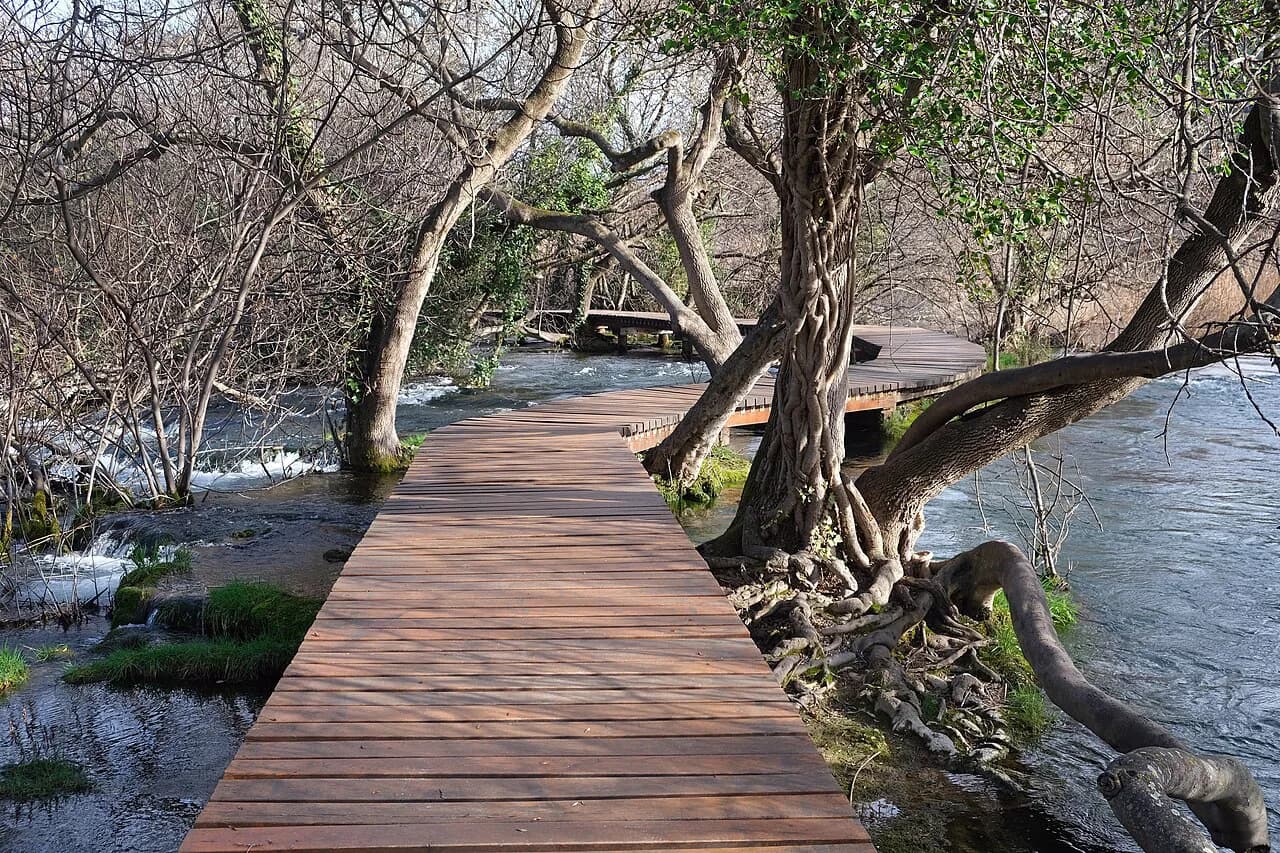
The Skradinski buk circuit is a network of boardwalks and stepped paths over and around the tufa barriers, and the park lists viewpoints as a distinct category on its site. The walking is short but uneven: wooden surfaces, stairs and spray-wet boards. Wear shoes with grip rather than sandals, and expect to pause often on the narrower sections in summer.
Away from the main barrier the park has 47 kilometres of hiking trails, which is a different proposition from the boardwalk stroll and needs proper planning. If you want the trail network rather than the classic circuit, treat that as a separate visit with its own map. The boardwalk is the right choice for a first trip.
Visovac and the Franciscan monastery
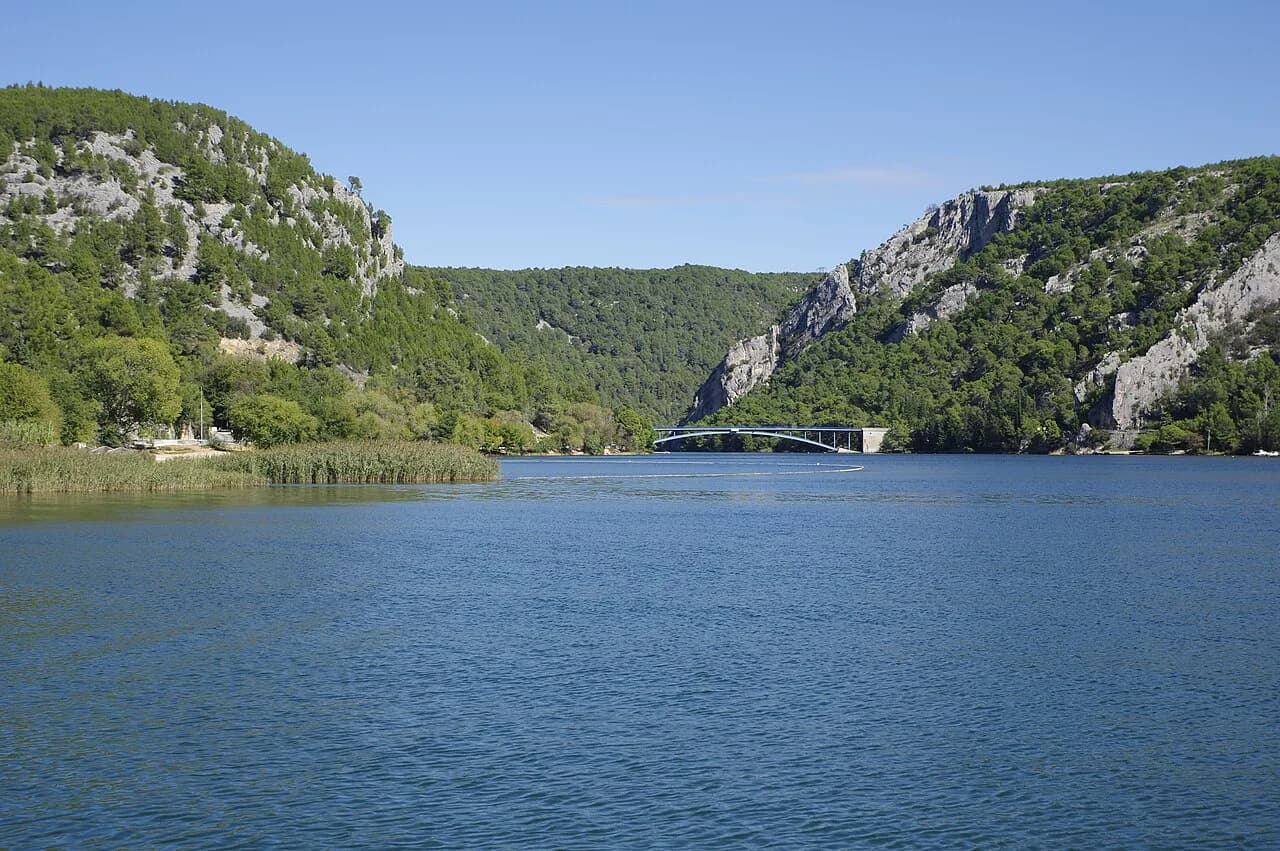
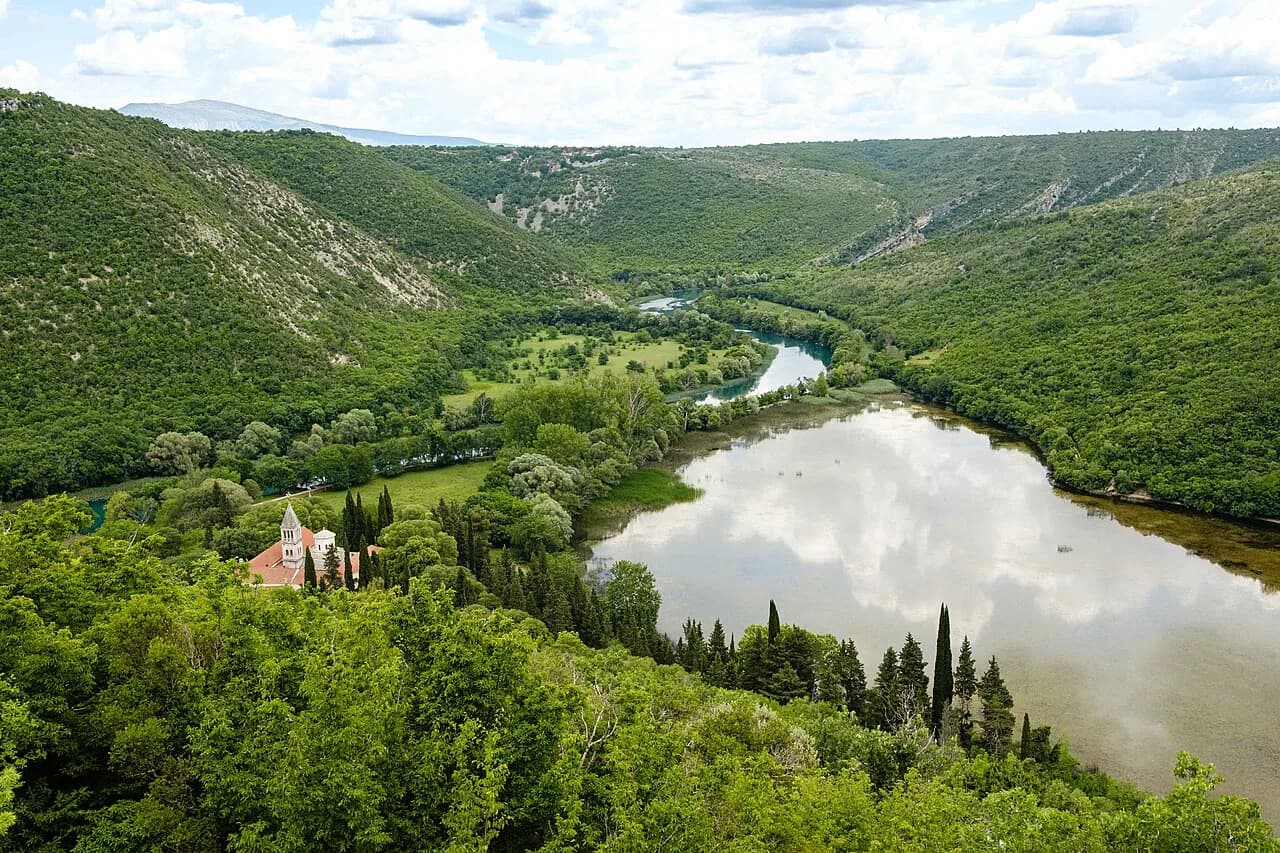
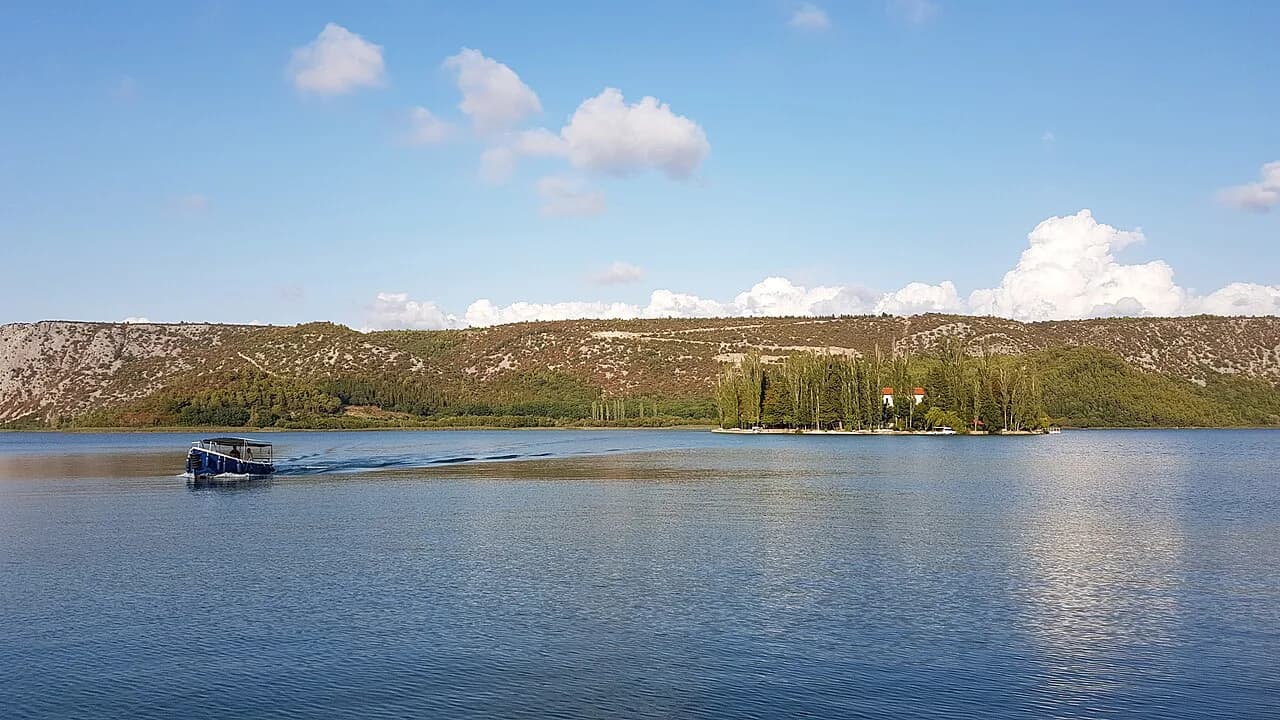
Visovac is the small island in the widened Visovac Lake section of the Krka River, with a Franciscan monastery on it, and it sits between Skradinski buk and Roški slap rather than at either. It is reached as part of the upper-river itinerary, so it belongs in a full-day plan rather than a half-day one.
The monastery community has a long history on the island, which is why Visovac reads as more than a photo stop. Build it into your day only if you have already committed to the upper river; trying to add it to a Skradinski buk morning leaves no time for either.
Park rules and what you cannot do, including swimming
Swimming is not part of a Krka visit: the park's published rules govern the river and the waterfalls, so do not build a day around swimming. The park publishes its rules on its visitor pages alongside the other practical information, and those rules govern where you can walk, what you can bring and how you behave around the tufa. Read them before you arrive rather than at the barrier.
The tufa itself is the reason for the caution. The barriers are fragile, built up by the river's calcium-rich water rather than ordinary stone, and they do not take foot traffic off the marked routes. Staying on the boardwalks protects the feature you came to see; the swimming rules guide sets out the river rules in full.
When to go: crowds and the best months
July and August give you the longest days, with Skradinski buk open from 8:00 to 20:00, and the most reliable conditions for the waterfalls. They also bring the heaviest crowds, and the middle of the day is the worst of it. The shoulder months of May, June and September keep long hours at Skradinski buk while thinning the coach traffic noticeably.
The quieter shoulder months are the trade-off for shorter days and fewer in-park services. Wind can make the Skradin boat crossing uncomfortable even on a bright day, so if a strong northerly is forecast, the road entrance is the more sheltered option.
November to March is limited: Roški slap, Stinice, Manojlovac and Burnum are closed in the winter months, and only the lower localities keep short winter hours. If you are in the region in that window, Skradinski buk remains the realistic target, and you should check the current hours for your date before setting out.
Krka with children or with limited mobility
Children do well at Skradinski buk because the circuit is short and the rewards are continuous, but the boardwalks have unprotected edges over water and the steps are steep in places. Supervise closely on the wet sections and skip the narrower loops with very young children. The park publishes an accessibility statement, which is the place to check before relying on a route.
For limited mobility, the honest answer is that the classic barrier circuit is difficult: timber surfaces, stairs and gradients work against wheels. The park's own accessibility statement is the authority on which parts are manageable, and it is worth reading before you commit to the Skradin boat approach, which adds a transfer at each end.
Which Krka day should you book?
If you have one day and no car, base yourself in Šibenik, take the Skradin approach and give Skradinski buk a half day from opening time. If you have a car and a full day, drive to Lozovac early, do the main barrier, then move upstream to Roški slap and, in season, Visovac. If you are weighing another island day against the park, our Hvar Attractions guide covers that alternative. Krka National Park Tickets and the Krka National Park Entrances guide cover the booking and arrival options in more detail. For the wider seasonal picture, our Croatia guide sets out the best time to visit Croatia: month by month, April to October.
Book or budget your tickets against the current price list rather than an old guide, and fix your date against the published monthly hours for the specific locality you want. Everything else, from footwear to an early start, follows from those two decisions.
Explore more Krka National Park guides
Sources
Notes from the Croatian coast
Optional updates when our guides change.
You might also like
Continue reading
More guides you'll find useful