Visovac Monastery Guide: Plan Your Krka National Park Visit
Visovac Monastery sits on a small island in Visovac Lake inside Krka National Park. Here is what the Franciscan complex holds and how boat access works.
On this page
Visovac Monastery is a Franciscan complex on a small island in Visovac Lake, in the middle of Krka National Park, and you reach it by boat rather than on foot. Access runs from Skradinski buk and Roški slap between April and October, so the island is a seasonal stop within the park rather than a year-round add-on. This guide covers the church, the collections and the island setting, then explains how the visit fits around the waterfalls on the same day.
It rewards a short, focused visit rather than a half-day in itself: an hour on the island covers the church, the cloister and the museum rooms in a measured way. The catch is that timing is dictated by the boats, so build the rest of your day around those crossings. A wider plan for the park, including the waterfall circuits and walking routes, helps you see where the island slots in.
What Visovac is and where it sits
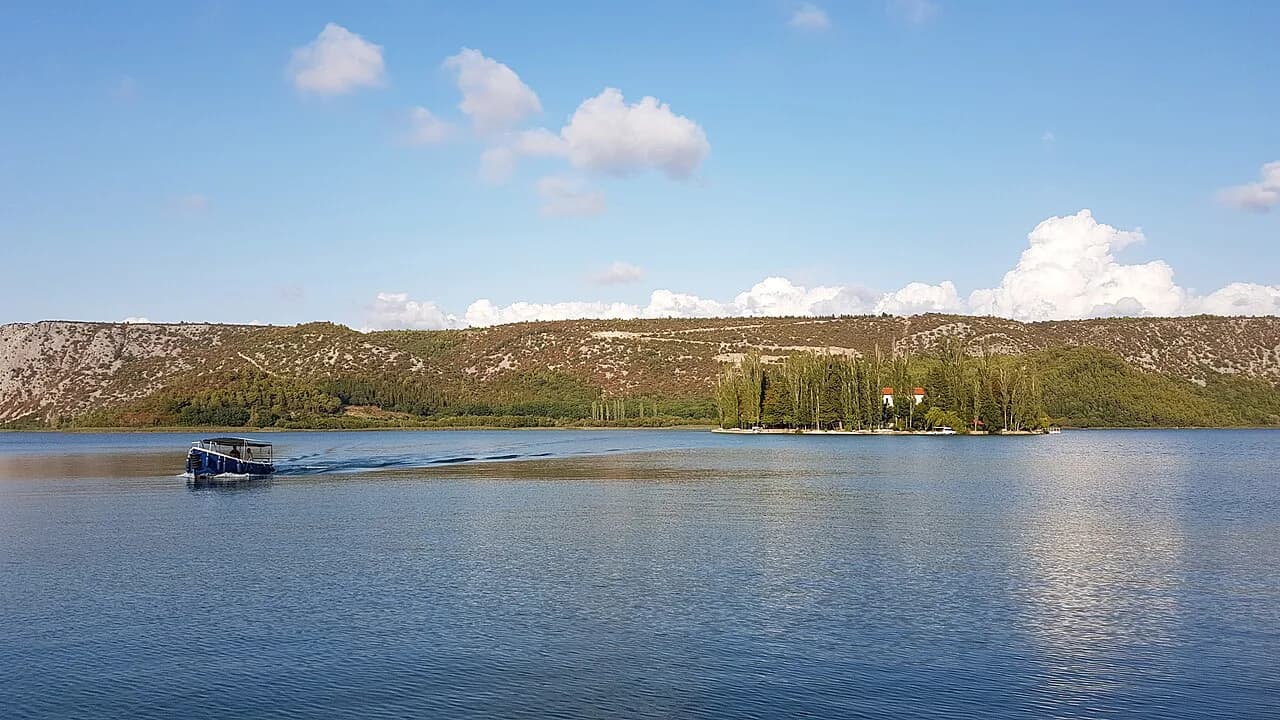
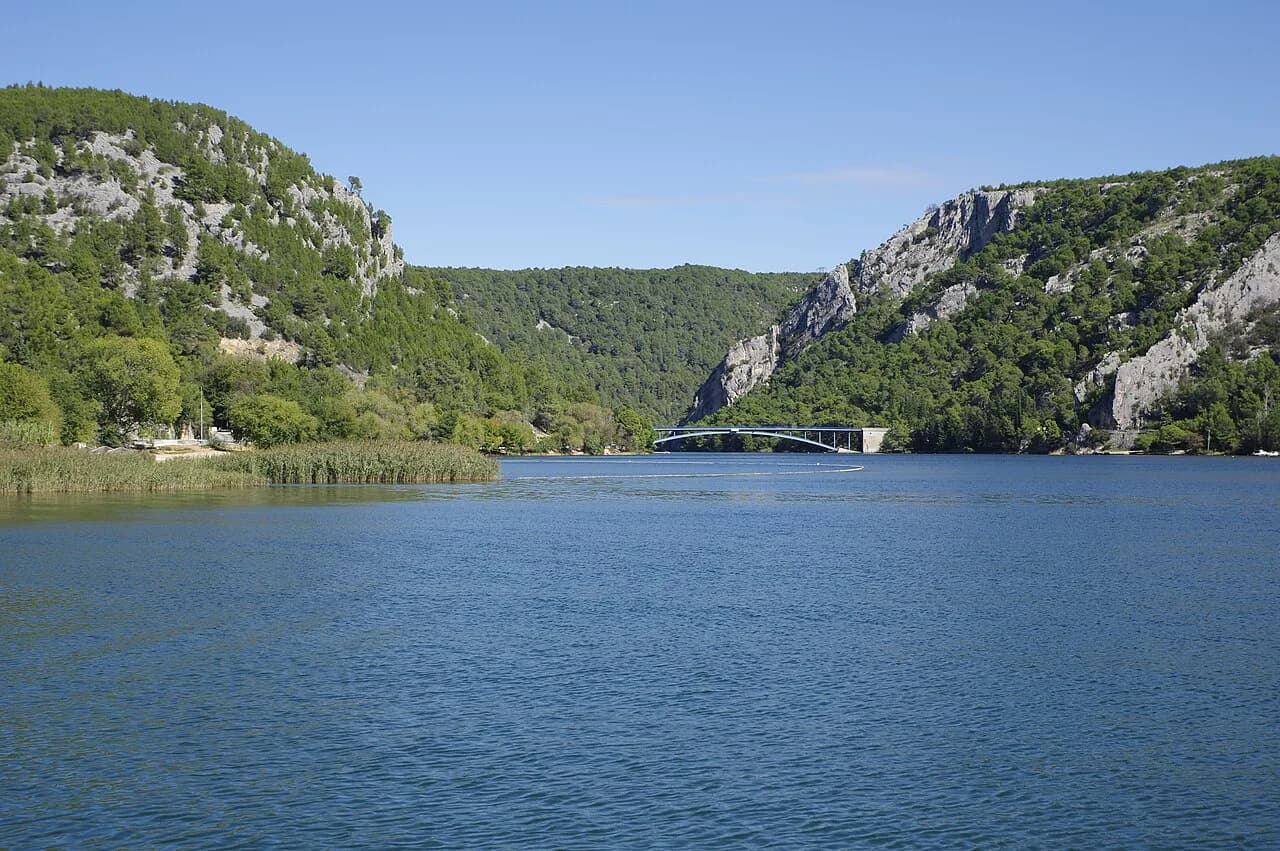
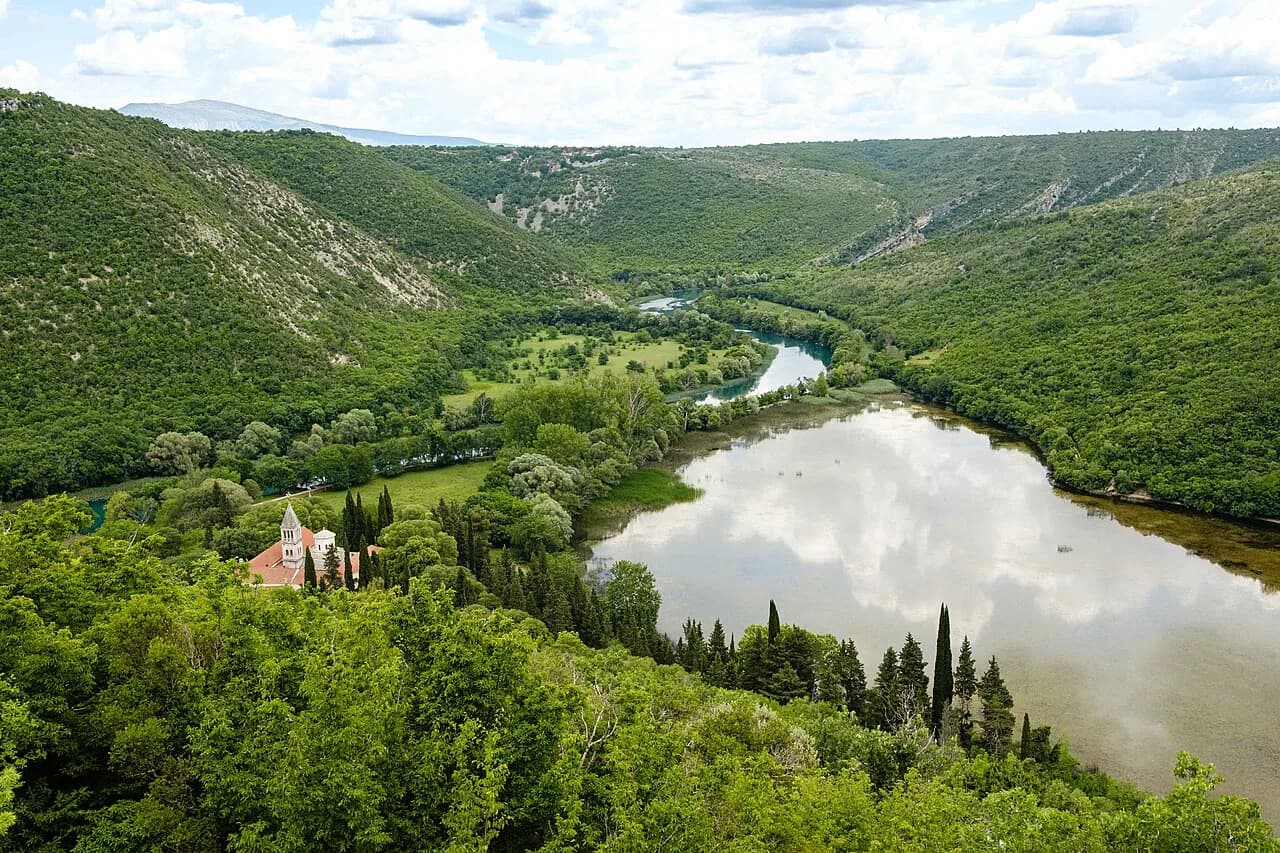
The island lies in Visovac Lake, a broad, calm stretch of the Krka upstream of the main waterfall sites, framed by wooded slopes and karst cliffs. The park authority treats the monastery, church, island and lake as a single natural, cultural, historical and spiritual whole, which is the right way to read the place: the setting is half the visit. Views back across the water from the island edge are the reason many travellers rate it above the busier falls.
It is not a walk-in sight. You arrive by boat, and the crossings are tied to the park's seasonal operation rather than a public ferry line with printed timetables. Practically, that means you plan the island around whichever waterfall site you enter from, not the other way round.
The history that shapes the visit
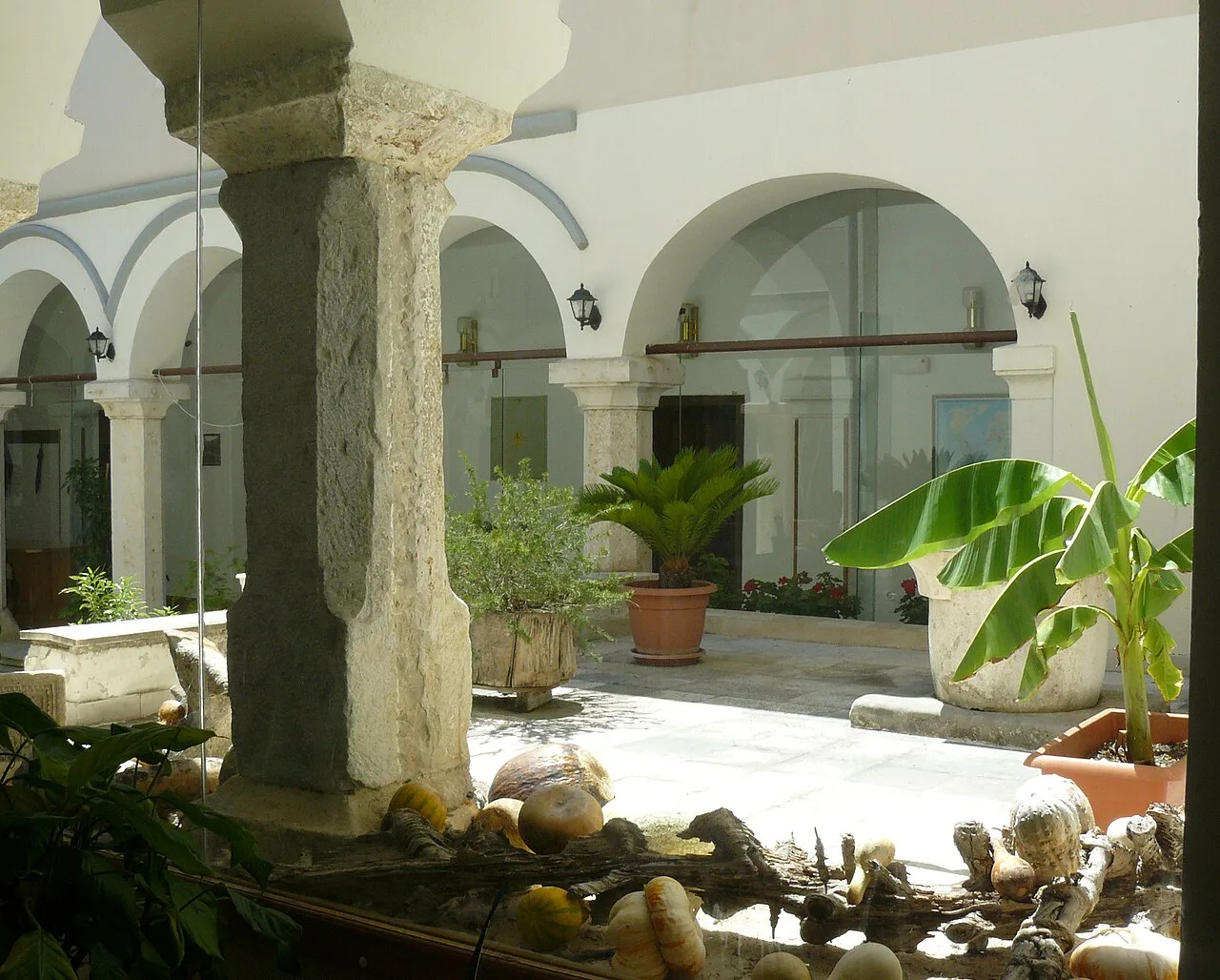
Hermits of the Order of St Augustine lived on the island until the middle of the 15th century, and the Franciscans arrived in 1445. They built the monastery and the church of the Mother of Mercy there, with the church dated to 1576. That sequence explains the layered look of the complex: a long religious presence, Franciscan building in the late medieval and early modern centuries, and a church interior shaped by later rebuilding.
Across its turbulent history the island held its role as a place of peace and prayer, and the Franciscans built a house of spirituality and faith that became one of the cornerstones for the survival of the Croats and the preservation of Croatian national identity. Take the sequence the park authority sets out: Augustinians, then Franciscans from 1445, then the 1576 church of the Mother of Mercy.
What you see on the island
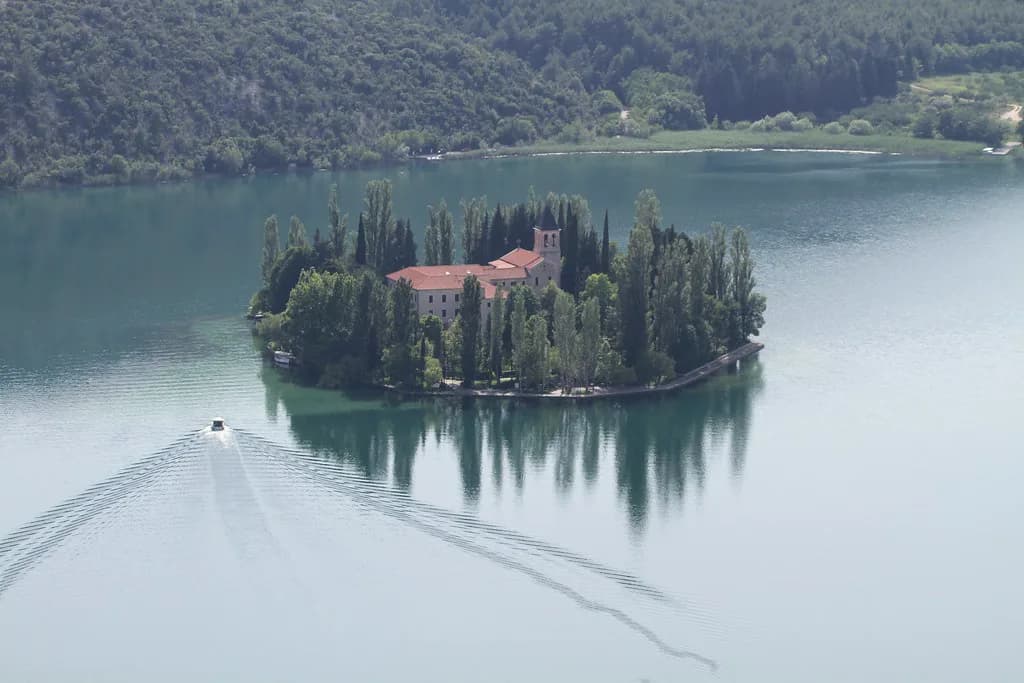
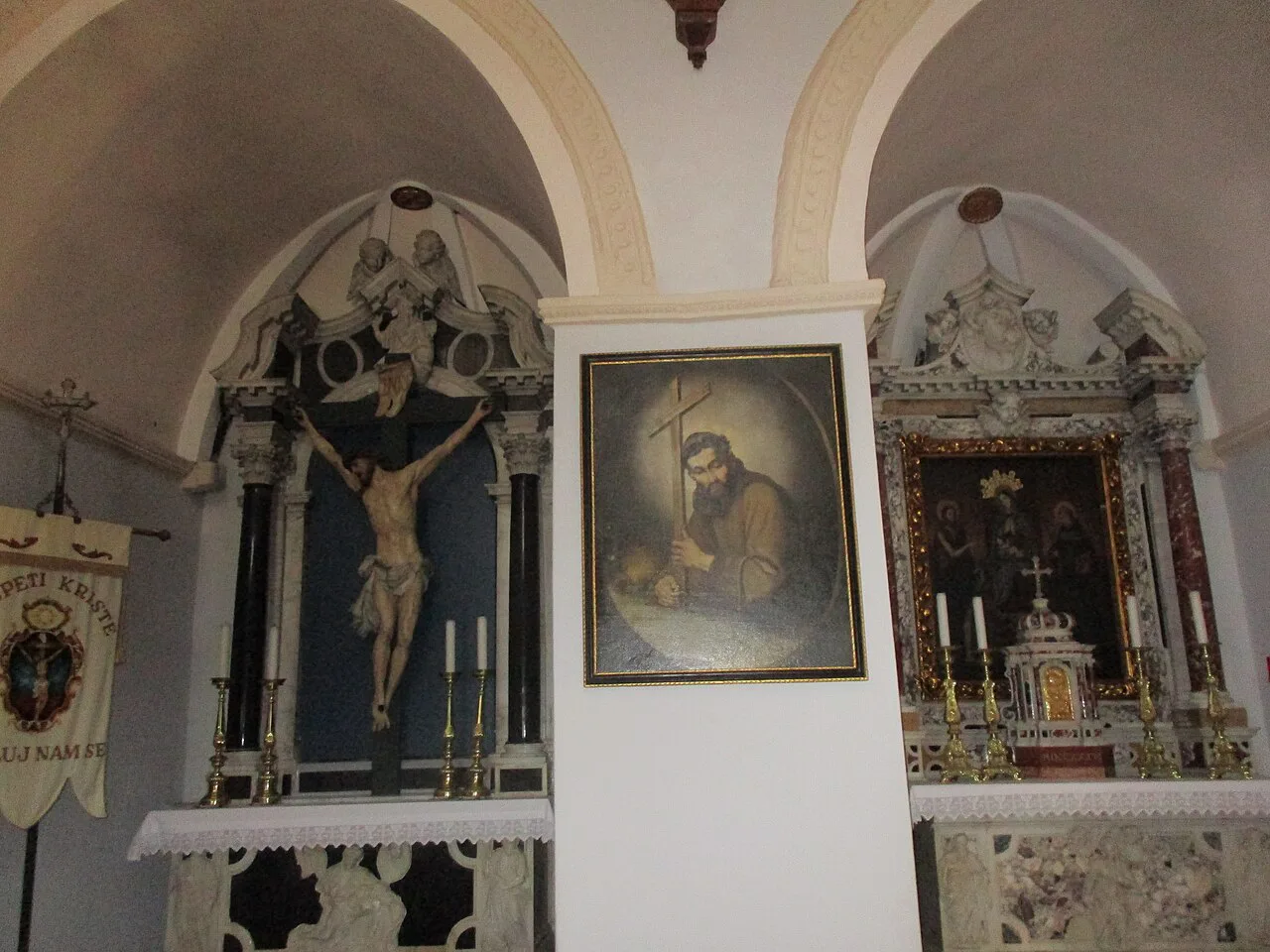
The visit is compact. You see the monastery buildings grouped around the church, the church of the Mother of Mercy itself, and a bell tower rising above the low rooflines. The complex was expanded over the centuries and reconstructed in the 18th century, so what you walk through is a layered religious house rather than a single-period ruin.
The church holds the painting of Our Lady that anchors the whole site, said to have been brought by the Franciscans when they left Bosnia during the Ottoman invasions and found a new sanctuary here. The earliest evidence for the devotion is a poem by Father Pavle Posilović from 1639, and the island is still called Our Lady's Island because of those centuries of worship. Look for the painting before you tour the museum rooms; it makes the artefacts read as devotional objects rather than curiosities.
Outside, the setting does much of the work. The island sits in the lake with densely wooded hills and high karst cliffs behind it, and the water shifts between blue and green through the day. Give yourself ten minutes at the water's edge before the boat back; it is the view most photographs of Visovac are trying to capture.
The collections inside
The monastery holds an archaeological collection, a collection of historical church vestments and vessels, and a library with many valuable books and incunabula. That last word means early printed books from the first decades of European printing, and it is the strongest reason to step inside rather than circle the island. The vestments and vessels are the more immediately legible items if your Latin is rusty.
Among the rarities is an illustrated copy of Aesop's Fables printed in 1487, described as one of only three in the world, alongside a 17th-century sabre linked to a Croatian military leader. Display conditions are modest and the rooms are small, so a slow fifteen to twenty minutes is enough. Check whether photography is permitted before you start shooting; monastery interiors often restrict it.
How you reach it
Boats run to the island from Skradinski buk and Roški slap from April to October. Outside that window the lake crossing is not part of the visitor offer, which is the single most important thing to know when you are planning a trip for early spring or late autumn. Departures follow the park's boat operation rather than a separate public service, so confirm sailings on the day at the jetty.
Which side you start from changes the day. Skradinski buk sits at the main waterfall site; Roški slap sits upstream. If you are weighing the two waterfall sites for the rest of your time, the comparison of what each one offers is worth reading before you fix your route. A wider plan for Krka National Park pulls the waterfall circuits and walking routes together with the island visit.
Tickets and what they cover
There is no separate monastery ticket: entry to Visovac is included in the Krka National Park ticket, and the boat itself runs from Skradinski buk and Roški slap. Buy your park admission before you travel rather than at the gate in high season, when queues build through the morning. The full breakdown of admission categories and what each covers sits on the dedicated tickets page.
Prices are set by the park authority and vary by season and visitor category, so check the current tariff on the official NP Krka price list before you commit. Croatia has used the euro since 2023; ignore kuna figures you find in older posts. Categories, seasonal bands and full admission details are gathered on the Krka National Park Tickets page.
How long to allow, and pairing it with the falls
Allow around an hour on the island itself and treat the crossings as the variable. A sensible shape is a morning at Skradinski buk, a boat to Visovac around midday, and the afternoon at Roški slap or back at the main falls. Booking an early crossing keeps you ahead of the main groups of a full boat.
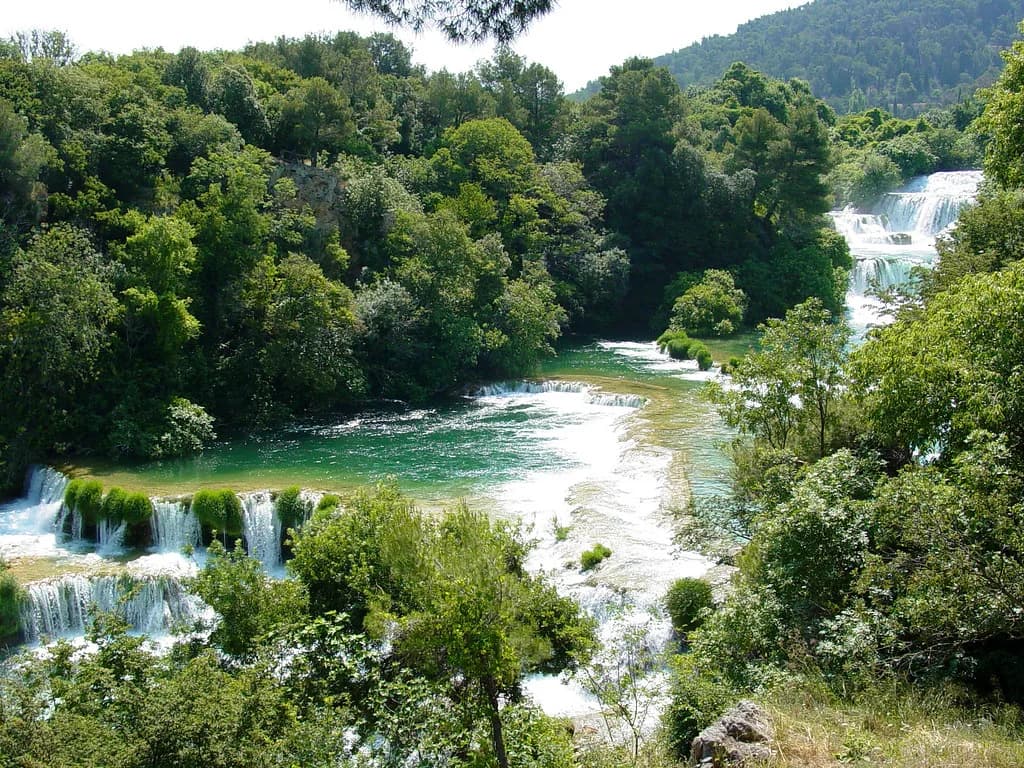
The waterfall sites deserve their own time rather than a rushed pass-through, and the swimming rules at Skradinski buk catch out visitors who assume the pools are open to all. If you plan to build a swim stop into the day, read up first on whether swimming is permitted.
Honest trade-offs
The obvious constraint is boat dependence: outside the April to October boat season the island is not a stop you can add on a whim, and even inside it your visit is governed by departures rather than your own pace. The second is crowding. Visovac is a headline stop on park itineraries, so the church and the museum rooms can feel tight when a full boat lands at once.
The compensations are real. The complex is small enough to absorb in an hour, and the park authority itself treats the monastery, church, island and lake as a single natural and spiritual whole, with the library and vestment collections giving the stop substance beyond the photograph. Go early in the day, keep the island visit short and let the waterfalls take the rest of your time.
Is Visovac worth building into your Krka day?
Yes, if you are visiting between April and October and are already heading to Skradinski buk or Roški slap. The monastery adds an hour of history, a fine lake view and a genuine collection of early printed books to a day built around waterfalls, with entry included in the same park ticket.
Skip it if your dates fall outside the boat season, or if you have only a half-day in the park and want to concentrate on the falls. Either way, settle your admission first through the park's official price list, then set your route around the jetty you will actually use.
Explore more Krka National Park guides
Frequently Asked Questions
Can you stay overnight on Visovac Island?
No. Visovac is a working Franciscan monastery and a visitor stop within Krka National Park, not accommodation. You visit on a boat crossing from Skradinski buk or Roški slap and return the same day; boat access runs from April to October.
Is Visovac Monastery suitable for visitors with limited mobility?
The visit involves boarding a boat and walking through historic monastery buildings, and the island's paths and interiors are not advertised as step-free. If access is a concern, ask the park directly before booking, since the crossing and the building thresholds are the practical obstacles rather than distance.
How does Visovac compare with the Krka waterfalls?
They are different stops on the same day rather than alternatives. The waterfalls are the park's main draw and take several hours; Visovac is a compact hour of church, cloister and collections reached by boat across the lake. Most travellers do both, using the island as the calm middle of a waterfall day.
Sources
Notes from the Croatian coast
Optional updates when our guides change.
You might also like
Continue reading
More guides you'll find useful