Krka National Park Entrances: Which One to Choose
Compare Krka National Park entrances by what they reach, from Skradin's boat to Lozovac, and see which suits a Split day trip or a quieter Roški slap day.
On this page
For most first-time visitors the choice comes down to two names: Skradin, where a boat carries you to Skradinski buk, and Lozovac, the road entrance most drivers and coach groups use. Skradin gives you the river approach and a small town to wander afterwards, while Lozovac gets you to the main falls by road. This guide sets out what each entrance is known to reach and which one fits a day from Split or Šibenik.
What each Krka entrance gives you
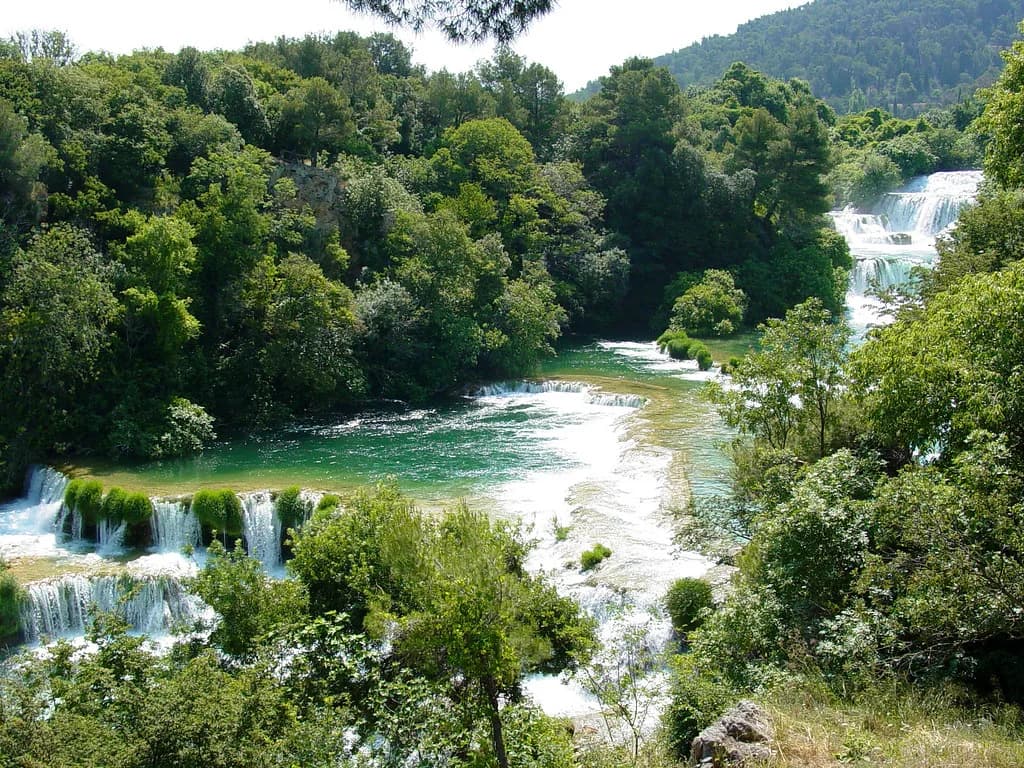
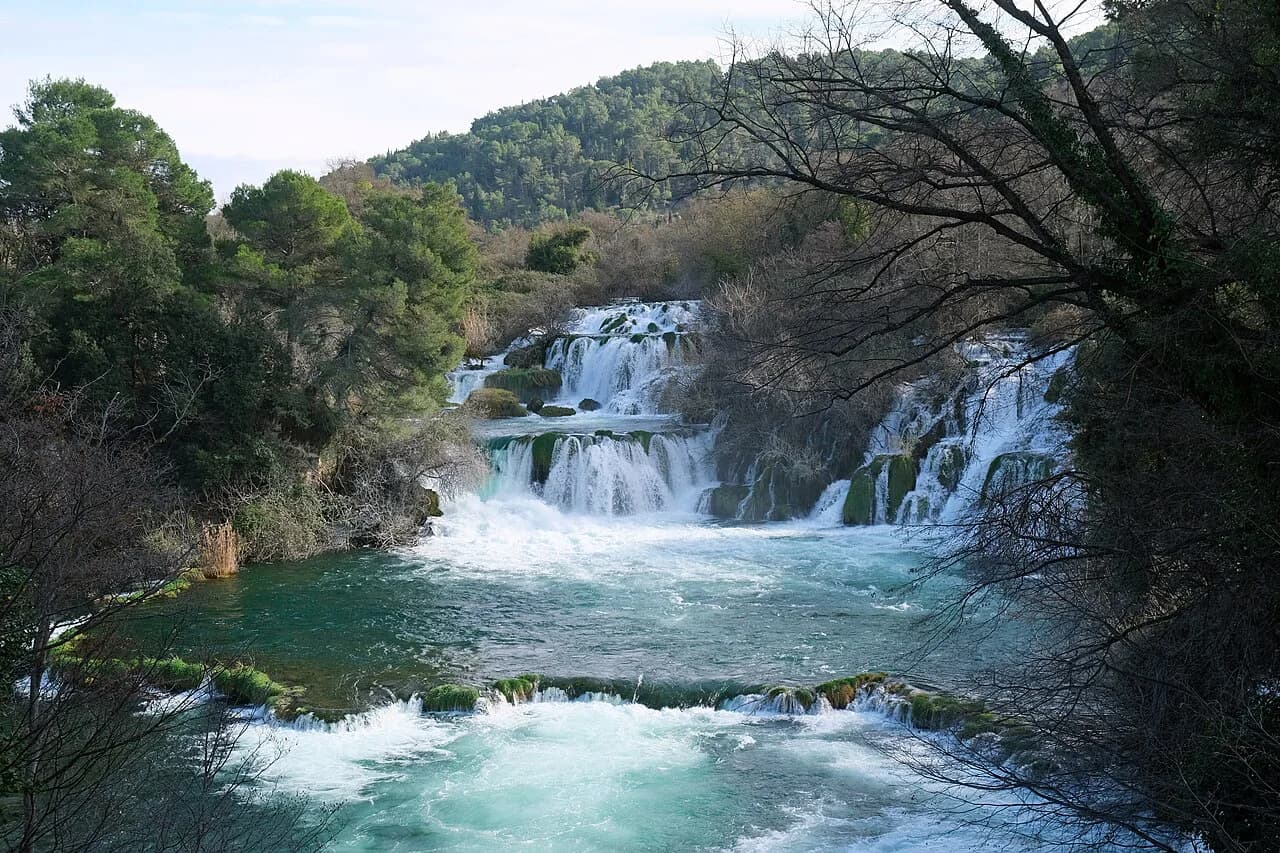
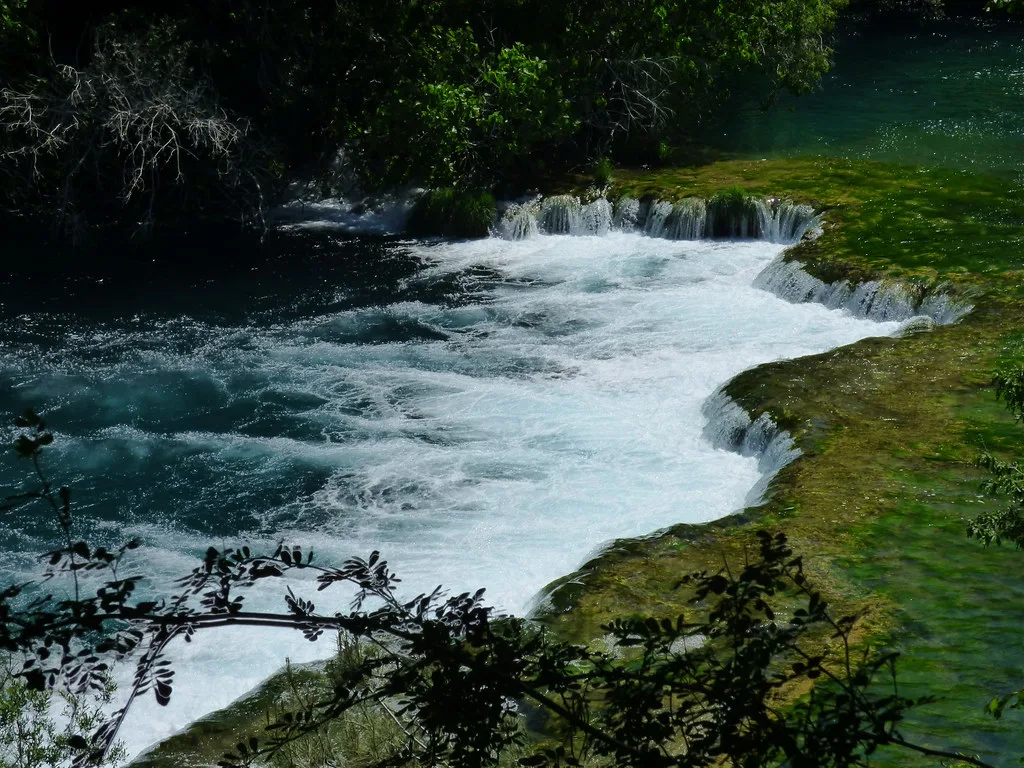
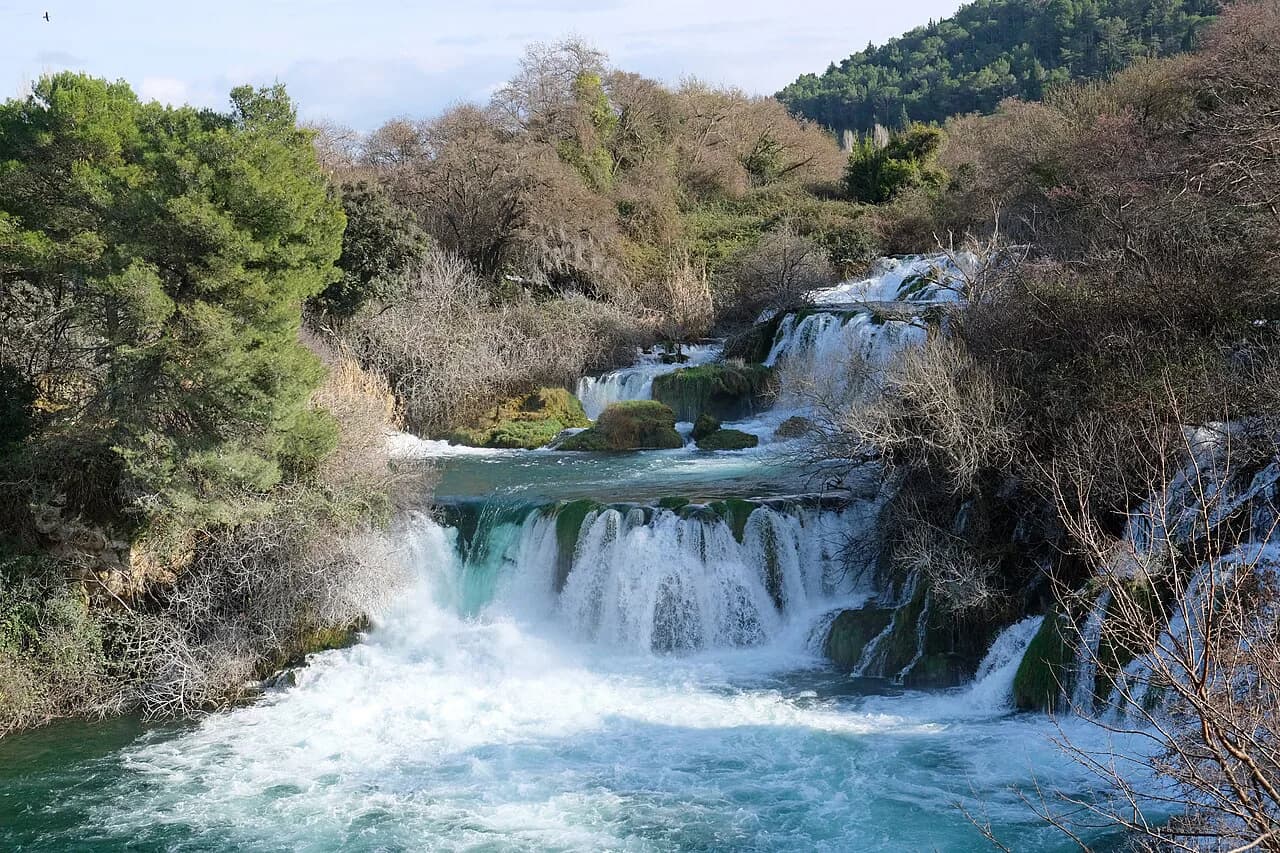
The park authority lists ten entrances across 109 square kilometres, and they do not all lead to the same place: some are closest to the main cascade, others sit near the upstream waterfalls, an island, a Roman site or a visitor centre. Skradinski buk is the headline cascade, reached from Skradin by boat and from Lozovac by road, so those two gates carry most day-trippers. Roški slap, the second famous set of falls, lies upstream from Skradinski buk and is served from the middle stretch of the river rather than from the Skradin side.
The official localities page names the sites the park's entrances serve: Skradinski buk, Visovac Island, the Visovac house Kuželj, Roški slap, the Laškovica visitor centre, the Burnum amphitheatre and the Krka Eco Campus in Puljane. Read it before you pick a gate, because choosing an entrance far from the site you want wastes a morning.

Skradin: the boat entrance to Skradinski buk
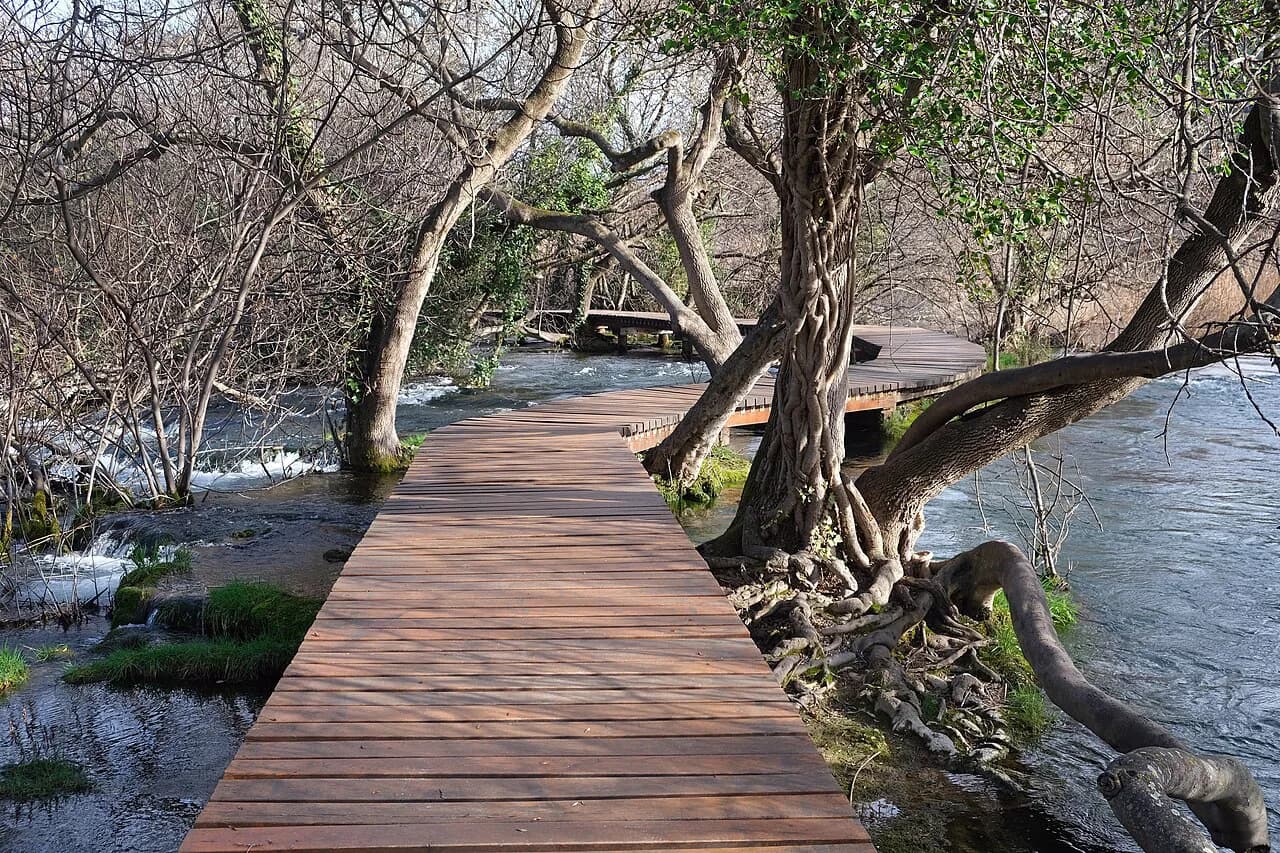
Skradin turns the transfer into part of the day. You enter the park in the riverside town, then take the boat up the Krka to the base of Skradinski buk, where the boardwalks begin. From Split the bus runs to Skradin in roughly an hour and a half over about 93 kilometres, which makes it the simplest car-free route to the falls.
The boat crossing is described by operators as included in the park entrance ticket at Skradin, so you are not buying a separate cruise on top of admission. Skradin also leaves you in a town with a harbour and a centre to walk through at the end of the day, which Lozovac does not.
Swimming has not been permitted within the park boundaries since January 2021, so the old habit of treating the cascade pools as a lido no longer applies. If you want the rule settled before you go, the swimming question is worth reading up in advance.
How the Skradin approach works on foot, by bus and by car
By public transport, take a bus from Split bus station to Skradin and walk to the park entrance in town. By car, the motorway route via the Dugopolje junction and the D56 into Skradin is the quick option, taking a little over an hour from Split, while the coastal road through Trogir and Šibenik adds around half an hour but gives you two old towns on the way.
Parking is the awkward part of the car option, because Skradin fills in high season and spaces near the entrance go first. Arriving early is the practical answer, and it also puts you on an earlier boat before the coach parties land at the falls.
Lozovac: the road entrance and its bus link into the park
Lozovac is the main road gate for drivers and coach groups, used to reach Skradinski buk without the boat crossing. If your priority is maximum time on the wooden walkways rather than a river approach, Lozovac is the more efficient choice. Check the park's working hours and entrance arrangements before committing, as the gates do not necessarily follow identical patterns across the year.
The trade-off is that you skip the Skradin approach entirely, so the day feels like a straight visit to a natural site rather than an outing with a town at either end. Lozovac also suits anyone coming from the Šibenik direction or on a tight schedule, because the road link is shorter than the boat crossing.
Entrances that serve Roški slap and the quieter middle reaches
Roški slap sits upstream from Skradinski buk and is reached from the park's middle-river entrances, alongside the Laškovica visitor centre. This is where you go to see the second great cascade without retracing the Skradin or Lozovac route, and it draws far fewer people than the main falls. The drive between the Skradin area and Roški slap is substantial, so treat them as two separate trips rather than one loop squeezed into a morning.
The same middle-river stretch reaches the Burnum amphitheatre and the Krka Eco Campus in Puljane, both listed as official localities and both useful for adding a Roman or educational stop to a waterfall day. If you have already seen Skradinski buk on an earlier visit, basing a second day on this stretch gives you a genuinely different park. Open a Krka National Park map before you decide which gate serves which site.
Visovac Island and the Visovac house Kuželj
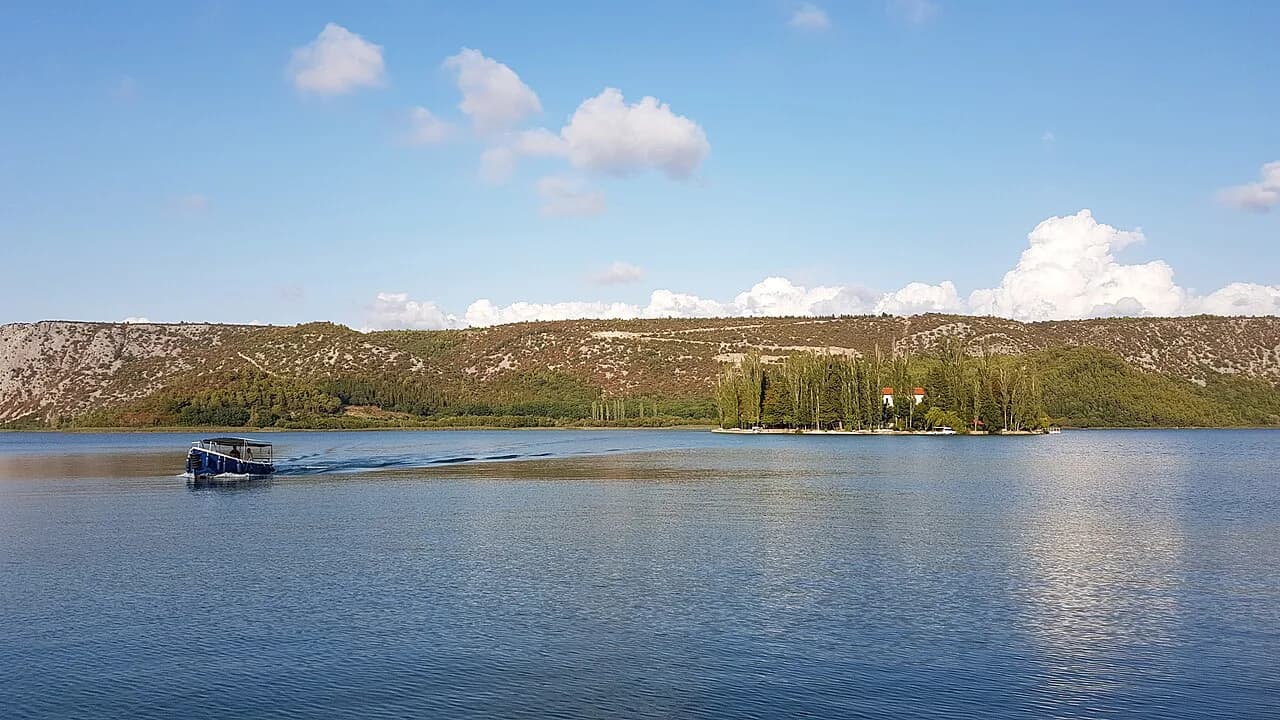
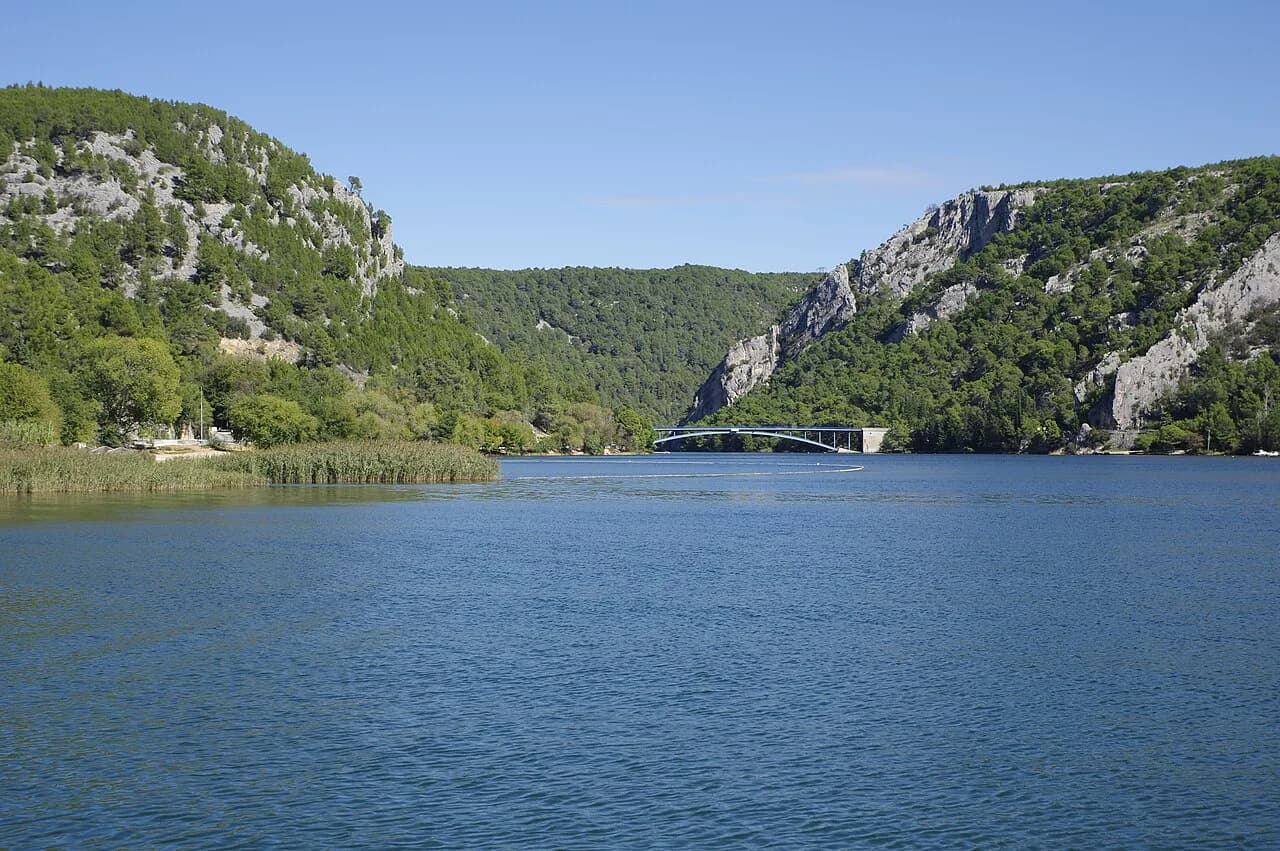
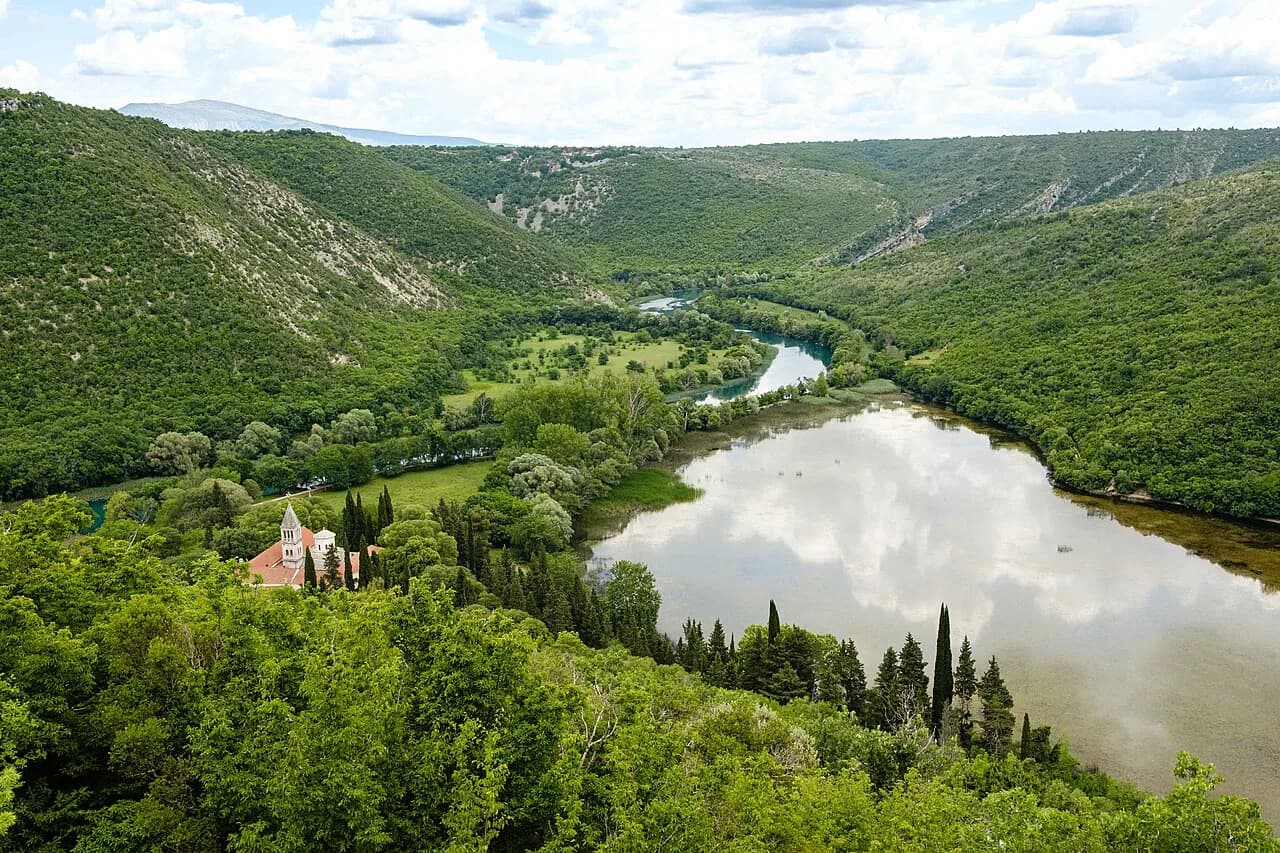
Visovac Island, with its monastery, sits in the lake-like widenings of the river between the two main waterfalls, and the park's boat excursions are the way it is reached. The Visovac house Kuželj is listed as a separate locality nearby, so a day built around the island and Roški slap hangs together naturally.
Reaching the island depends on the boat running on the relevant stretch of river, so it is not something to bolt onto a Skradin morning on a whim. If Visovac is the point of your visit, plan the day around the boat rather than around Skradinski buk.
How long to allow from each entrance
Allow at least half a day for Skradinski buk from either Skradin or Lozovac, and a full day if you want to add Roški slap or Visovac. The boardwalk circuit at the main falls is a walk, not a hike, but crowds slow you down in summer and the boat or road transfers eat into the total. Four to five hours covers the falls, a meal and the return leg comfortably from Skradin.
The upstream sites are where time disappears: the drive between the Skradin side and Roški slap is significant on its own, before you count the walking at either end. A realistic two-waterfall day means starting early and not attempting Visovac as well.
Choosing by season: summer crowds versus the shoulder months
June to September is the busiest stretch, with high temperatures and the heaviest visitor numbers, which makes an early start at either main gate more valuable than any clever routing. April, May, September and October give you comfortable walking conditions and thinner crowds on the boardwalks. If your dates are fixed to August, choose Skradin and take the first boat rather than arriving at midday.
Outside high season, confirm which entrances and boat links are running on your dates before you build a plan around them, since the pattern is seasonal rather than fixed. The park authority's working hours page is the one to read.
Which entrance suits a Split day trip, and which suits Šibenik
From Split, Skradin is the natural choice: the bus runs there directly in about an hour and a half, and the boat carries you to the falls without a car. Lozovac works better if you are driving and want to cut the transfer time at the other end. Either way, the round trip is long enough that Krka deserves its own day rather than a half-day squeezed around Split.
From Šibenik, the park is close enough that the entrance question is mostly about which site you want rather than how far you are travelling; the Lozovac road gate is a natural start for Skradinski buk. Šibenik also makes a sensible base for the middle-river sites.
Tickets and park authority information
Entry is priced by season and by entrance, and the official price list on the park authority's site is the figure to rely on for your dates. Buy online where you can, because turning up at a main gate in July means queueing behind everyone who did not.
The park authority also publishes the park rules, the entrance list and the localities, all of which are more dependable than tour-operator blogs for access detail. Check the official pages before you book, and again if your plans change season.
Mistakes to avoid when picking an entrance
The commonest error is choosing an entrance for a waterfall without checking that it actually serves it: Skradin and Lozovac lead to Skradinski buk, not to Roški slap. The second is underestimating the transfer, whether that is the Skradin boat or the drive between the two waterfall areas. The third is arriving late in summer and spending the best part of the day in a queue.
Finally, do not assume you can swim at the falls, and do not plan the day around a dip that the rules no longer allow. A little planning here is worth more than any amount of advice about footwear.
Krka or Plitvice: a quick trade-off
Krka's advantage is accessibility and the scale of its waterfalls, which makes it the easier day trip from Split and the better fit for a short Croatian itinerary. Plitvice is the larger, more lake-based experience and sits much further inland, so it costs you more travel time. With one free day on the Dalmatian coast, Krka is the low-friction option; with two or three and a car, both are worth the drive.
Within Krka itself, the same logic applies: one waterfall done well beats two done badly. Pick your entrance around the single site that matters most to you, build in the transfer, and leave the second cascade for a return visit. If you are still deciding between the two cascades, the Krka waterfalls overview settles which one that should be.
Which entrance should you book for?
Choose Skradin if you want the boat ride to Skradinski buk and a town at the end of the day; choose Lozovac if you are driving and want the road route to the falls; look to the middle-river entrances if Roški slap is the point of your visit, and to Visovac if the island and its monastery are what you came for. Add half a day for the main falls and a full day if you plan on a second waterfall.
Book through the park authority, confirm the seasonal pattern on its working hours and price pages, and set off early in summer. With the entrance settled, the rest of the day looks after itself.
Explore more Krka National Park guides
Frequently Asked Questions
How do I get from Šibenik to Krka National Park?
Šibenik is the closest city to the park, so the drive to the Lozovac road gate is short. From Lozovac you reach the Skradinski buk boardwalks by road. Buses and tour operators also run from Šibenik to Skradin, where the boat approach begins, but schedules vary by season, so confirm the day before you travel.
Which waterfall in Croatia is the best?
There is no single answer, but Skradinski buk in Krka is the country's best-known cascade and the easiest major waterfall to reach from Split. Plitvice's lakes and falls are larger and more spread out, but they sit much further inland. If you have one day on the Dalmatian coast, Krka's combination of scale and access is hard to beat.
Sources
Notes from the Croatian coast
Optional updates when our guides change.
You might also like
Continue reading
More guides you'll find useful