Skradin, Croatia: A Guide to the Krka Gateway Town
Plan a visit to Skradin, the riverside town at the gateway to Krka National Park, covering its old centre, fortress hill, harbour and boat to the falls.
On this page
Skradin is worth more than the hour most visitors give it on the way to the waterfalls: it is a compact riverside town with a harbour, a fortress hill and lanes of pastel houses, and it makes a calmer base for Krka National Park than a day trip from Split. This guide covers how the town is laid out, what to see in the old centre, how the boat upriver to the falls works and how long to allow, so you can decide between a half-day stop and an overnight.
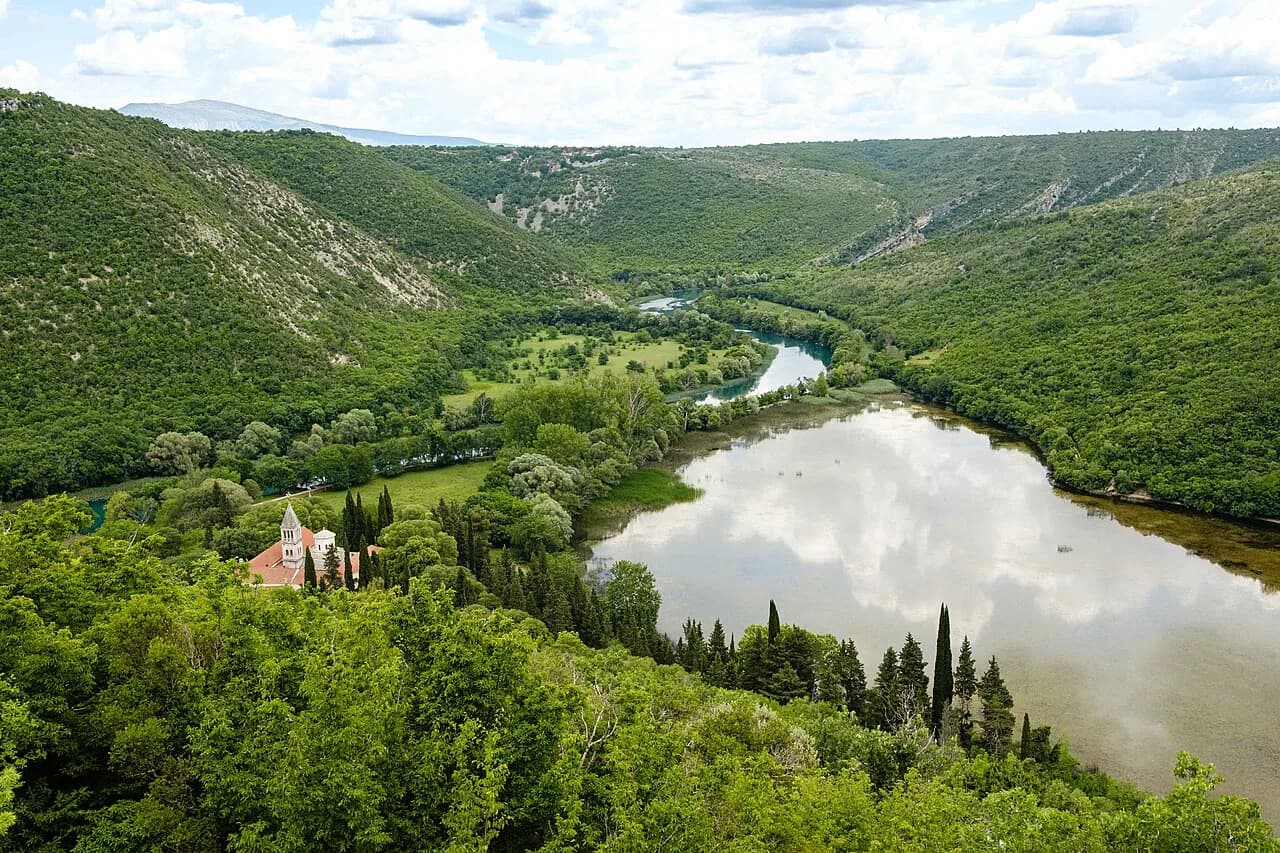
The town sits on the Krka River in Šibenik-Knin County, roughly 17 km from Šibenik and 55 km from Split, and the river is wide enough here that the inlet almost reads as a seaside harbour. That geography explains its role: boats run upstream from the town into the park, and the road entrances to Krka are a short drive away.
What Skradin is and why it sits at the gateway to Krka
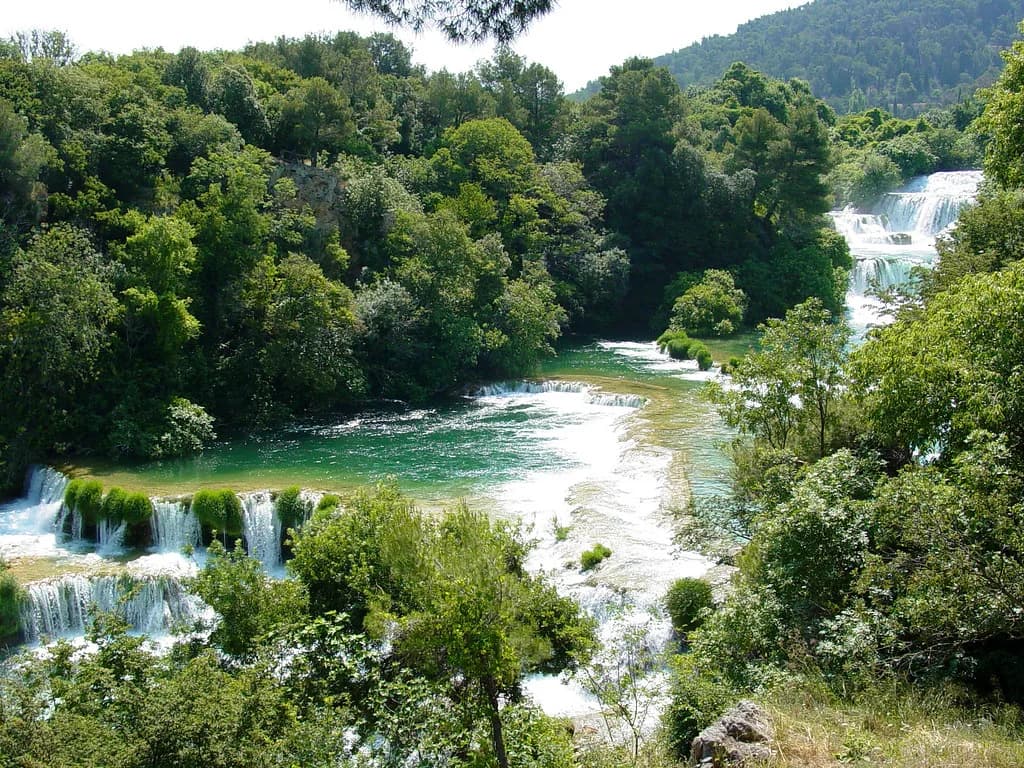
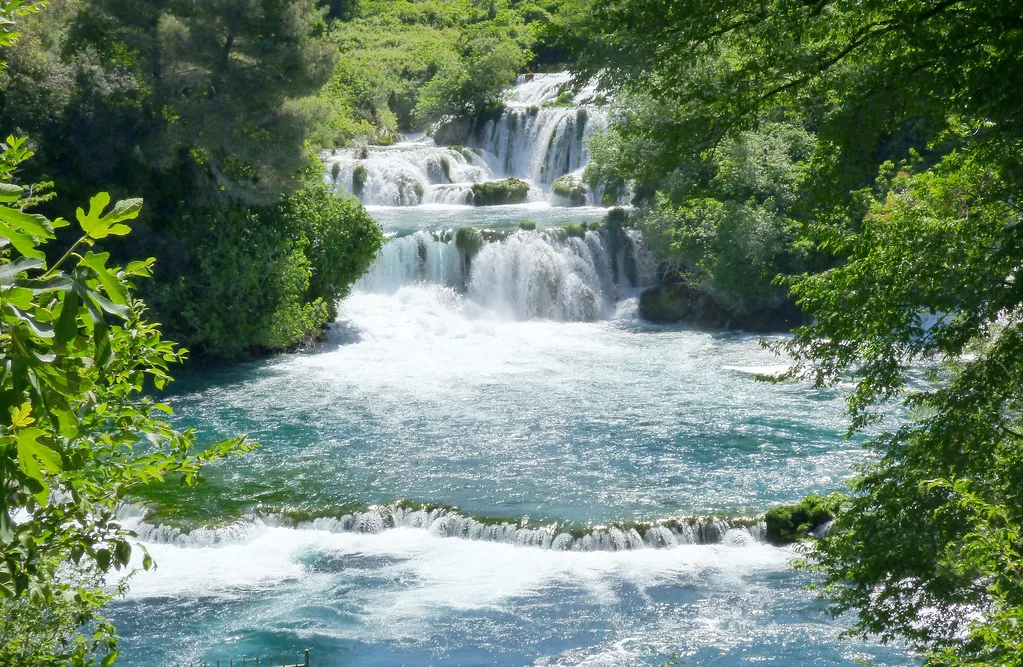
Krka National Park protects 109 km² of river, tufa barriers and waterfalls, with seven main waterfalls, ten entrances and 47 km of hiking trails across the protected area. Skradin is the town on the river's lower reaches that most visitors use as a launch point for the park's best-known falls.
The park authority runs boat excursions within Krka, and the Skradin approach is the one that puts you on the water rather than in a car queue at a road gate. If you are weighing up which gate to use, it helps to compare the Krka National Park entrances before you commit to the boat.
Skradin itself has been settled for at least 5,500 years, and the town dates to 33 BC, with fortifications added in the 10th century and a fortress built on the central hill in the 13th and 14th centuries. As power shifted to neighbouring Šibenik, Skradin declined, and tourism to the river has since put it back on the map.
Where Skradin is: the river, the fortress hill and the V-shaped plan
The town is built in a V shape pointing toward the waterfront, gripping a fortress-topped hill in the middle, with the western arm facing an inlet and marina that fills with yachts in summer. This saves you a wrong turn: whichever lane you take from the waterfront climbs one side of the hill or the other, and the two sides meet near the fortress.
The Skradin marina sits on the inlet, and the waterfront is the orientation point for everything in the old centre, from the church to the foot of the fortress path. Arrive by road and you will park within a few minutes of the harbour, because the historic core is small enough to cross on foot.
How long to stay: a boat stop or an overnight
Skradin gets heavily overrun with tourists in high summer, most of them day trippers heading for the park, and the town is noticeably quieter once they leave in the evening. That is the argument for staying overnight or visiting in the shoulder months of May to June or September to October.
A half-day is enough for the harbour, the church, the lanes and a coffee, plus the boat into the park if you start early. A full day lets you add Turina Fortress and still catch a boat, while an overnight gives you the old centre at dusk and first thing in the morning, when the waterfront is at its best.
In winter the region turns wet and cool and many establishments close for the season, so the town's shoulder-season advantage disappears outside the warmer months.
Walking the old centre: the promenade and the lanes
Start on the harbour promenade, where the pastel-coloured houses line the Skradin waterfront, then take the lanes that climb either side of the central hill. A loop of the waterfront, one lane up and the other down covers the town's main streets in well under an hour.
The lanes are steep in places and largely without shade at midday, so walk them in the morning or late afternoon in summer. The same lanes lead to the fortress path, which makes a single loop of the centre the most efficient way to see the town.
The waterfront and marina: how the town opens onto the river
The inlet is wide enough to make Skradin feel like a coastal town, and the marina on the western side is a popular summer stopping point for yachts. The waterfront doubles as the place to wait for the park boats, so find the departure point before you settle in with a coffee.
From the harbour you look upriver towards the gorge that leads to the falls, the view that explains why the town exists as a gateway. Give yourself ten minutes here before boarding; it sets the scale of the park you are about to enter.
Church of the Blessed Virgin Mary and Skradin's other churches
The Church of the Blessed Virgin Mary is the main church in the old centre and one of several religious buildings in the town, with more churches scattered through the lanes. Treat them as short stops on a walk rather than destinations in their own right, and respect services if you find the doors open.
Opening times for individual churches vary, so build your route around the harbour and the fortress instead and drop in if a door is open.
Turina Fortress above the town: the climb, the ruins and the view
Turina Fortress (Utvrda Turina) sits on the hill at the centre of Skradin, reached by climbing the lanes from the old centre. The ruins are modest, but the position is the point: from the top you look back over the river, the marina and the rooftops, the best view in town.
Allow 40 minutes to an hour for the round trip including time at the top, and go early or late in summer because the climb is exposed. Short of time before a boat, skip it and stay on the waterfront; with a full day, it is the one detour in Skradin that earns its effort.
The clock tower campanile and Skradin Park as short stops
The clock tower campanile rises above the centre and can be climbed for a closer look over the rooftops, and Skradin Park near the middle of town is a shaded spot for a picnic between walks. Both are ten-minute stops that fit a loop of the old centre rather than separate outings, and Skradin Beach on the edge of town is a place to cool off afterwards rather than a reason to come.
The boat from Skradin to Skradinski buk
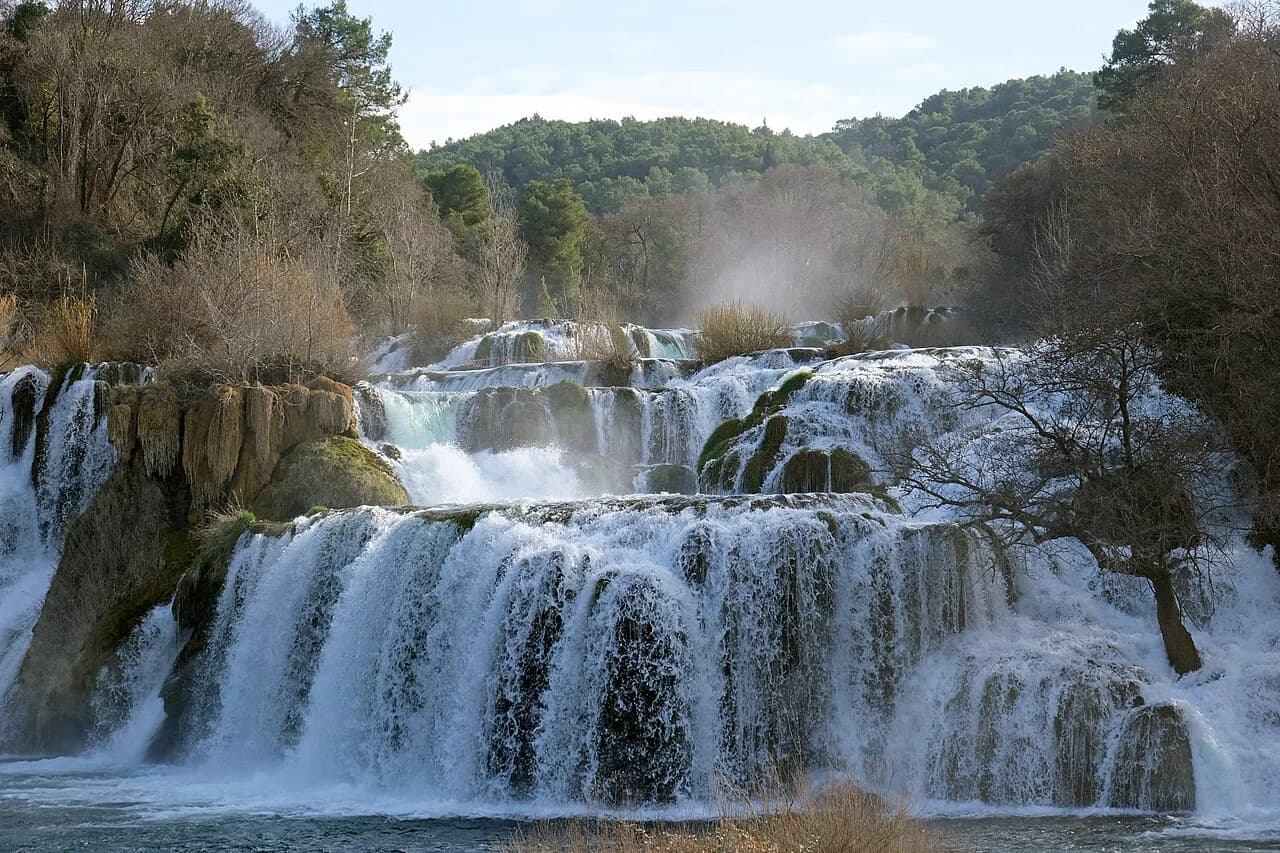
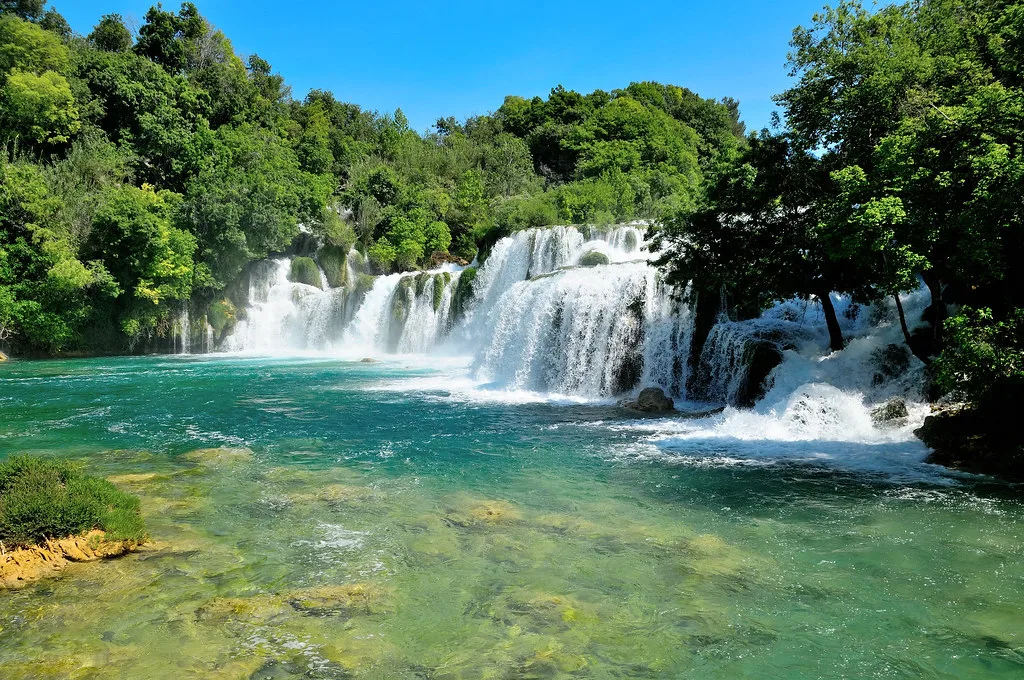
Boats run upstream from Skradin towards Skradinski buk, the cluster of waterfalls most visitors come for, and the park authority publishes the current excursion arrangements and departure point. The ride replaces a drive with a river approach, the main reason to base yourself in Skradin rather than at a road entrance.
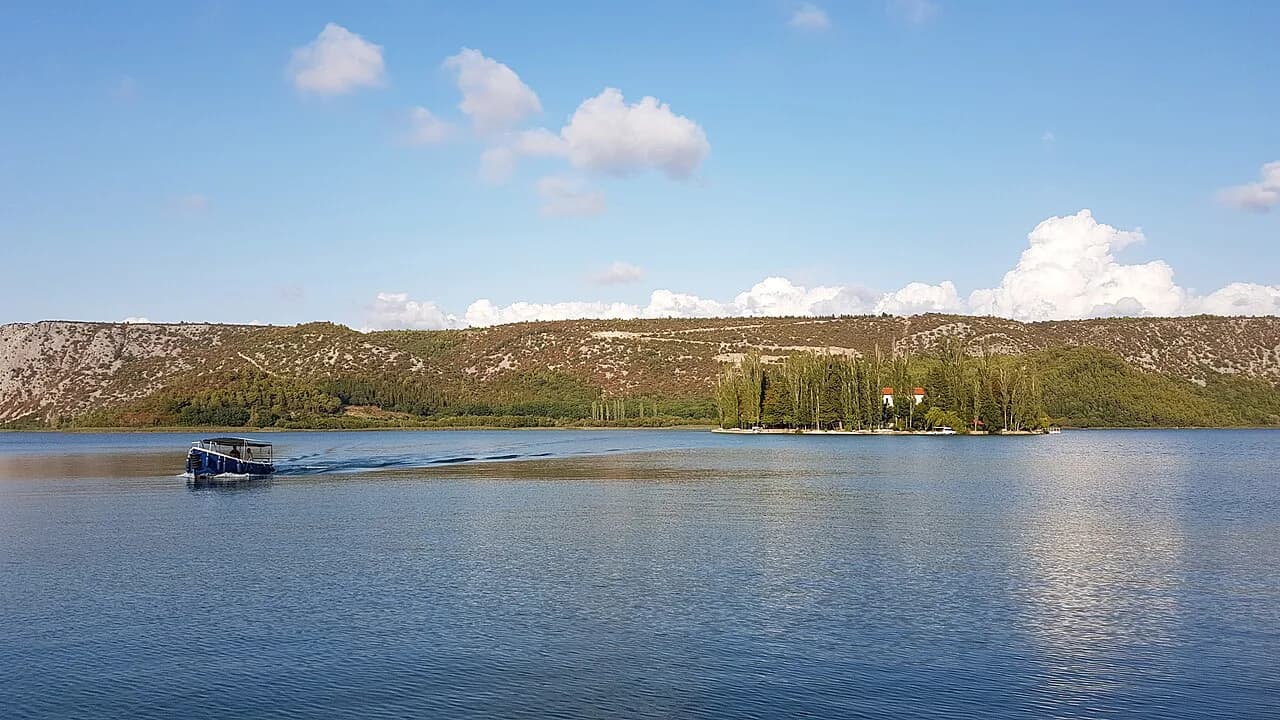
Once inside the park, Skradinski buk is the busiest site, and the quieter reaches upriver at Roški slap and the Visovac monastery reward anyone with more time.
Do not assume you can swim at the falls; the rules are set by the park, and the safest approach is to check can you swim in Krka National Park before you pack a towel.
Getting to Skradin: distances from Šibenik and Split
Skradin is about 55 km northeast of Split and roughly 17 km from Šibenik, so Šibenik is the natural pairing for a short trip and Split is an easy day out by car. The town lies where the Krka widens, which is why the river approach from Skradin works at all.
Having your own wheels makes the surrounding sights far easier to reach, and a car also lets you combine Skradin with a different park entrance on the same day if the boat queue is long. Public transport to the town is limited, so check connections before relying on it.
When to go: summer crowds versus the shoulder months
High summer brings the day-tripper tide, with most visitors arriving for Krka and leaving the same afternoon. May to June and September to October give you the same waterfalls with quieter lanes, and the town is at its most usable for anyone staying the night.
Outside the warmer months the weather turns wet and cool and much of the town shuts down, so plan a Skradin visit for spring, summer or early autumn. The bura wind can make the waterfront cold and blustery even in season, so pack a layer for the boat.
What it costs and what to book
Park admission and boat tickets are priced by the park authority on its price list, and buying online in advance is the simplest way to avoid the ticket queue at the entrance. Check the current price list before you travel rather than relying on older figures.
Opening hours and boat schedules vary by season, and the park publishes both. Book directly with the park authority rather than through a reseller, and our guide to Krka National Park Tickets explains the options.
Where Skradin fits in a Croatian coast trip
The strongest pairing is Šibenik and Krka together: stay in or near Šibenik, use Skradin for the boat into the park, and keep Split for a separate leg. That avoids the long day-trip drive from Split and gives you the town in the evening, when the day trippers have gone.
To see more of the park than Skradinski buk, plan a second day using the Krka National Park map to work out which entrances and waterfalls you can reach by road.
Skradin cake and the town's local sweet
Skradin cake (Skradinska torta) is the town's own sweet, and it is the one local speciality worth seeking out between the harbour and the lanes. Bakeries and cafés come and go, so ask in the centre rather than planning around a specific address.
Overnight in Skradin or just pass through?
Stay the night if you can: the old centre, the fortress climb and the evening waterfront are what separate Skradin from a car park for Krka. If you only have a half-day, arrive early, walk the lanes and take the boat, and accept that you will share the waterfront with the day-tripper tide.
Either way, build the trip around the boat rather than the car, pair the town with Šibenik, and confirm the park's current hours, boat schedule and admission prices before you go.
Explore more Krka National Park guides
Frequently Asked Questions
Is Skradin worth visiting?
Yes, if you treat it as a place to stay rather than a car park. The old centre, the harbour, the climb to Turina Fortress and the boat upriver to the falls are enough for a full day, and the evening is far quieter than the daytime peak. A half-day stop covers the harbour and the church; an overnight adds the fortress at dusk and an early start on the water.
How far is Skradin from Split?
Skradin is about 55 km northeast of Split and roughly 17 km from Šibenik, so Šibenik is the closer base for a short trip. Driving from Split is feasible for a day, but staying nearer the park avoids repeating the drive and puts you in the town after the day trippers leave.
Sources
Notes from the Croatian coast
Optional updates when our guides change.
You might also like
Continue reading
More guides you'll find useful