Roški Slap in Krka National Park: Plan Your Visit Guide
Roški slap is Krka National Park's sixth waterfall, 25.5 m high and 650 m long, known for its tufa 'Necklaces' and restored watermills on the Krka River.
On this page
Roški slap suits travellers who want the second act of the Krka rather than the headline: a 25.5-metre waterfall spread over 650 metres, the sixth and next-to-last fall on the river at 35.5 km from its source. It is the calmer alternative to the crowds at the main cascade, with the tufa 'Necklaces' and restored mills giving it a character the bigger falls cannot match. This guide covers what you actually see there, how it compares with Skradinski buk, how the park entrances and boat routes work, how long to allow, and what the park authority does and does not publish about tickets, hours and swimming.
Read it as a planning page, not a checklist: the decision you are making is whether Roški slap is your one Krka stop, a companion to the main falls, or the place you skip in favour of a shorter day from Šibenik.
What Roški slap is and where it sits on the Krka
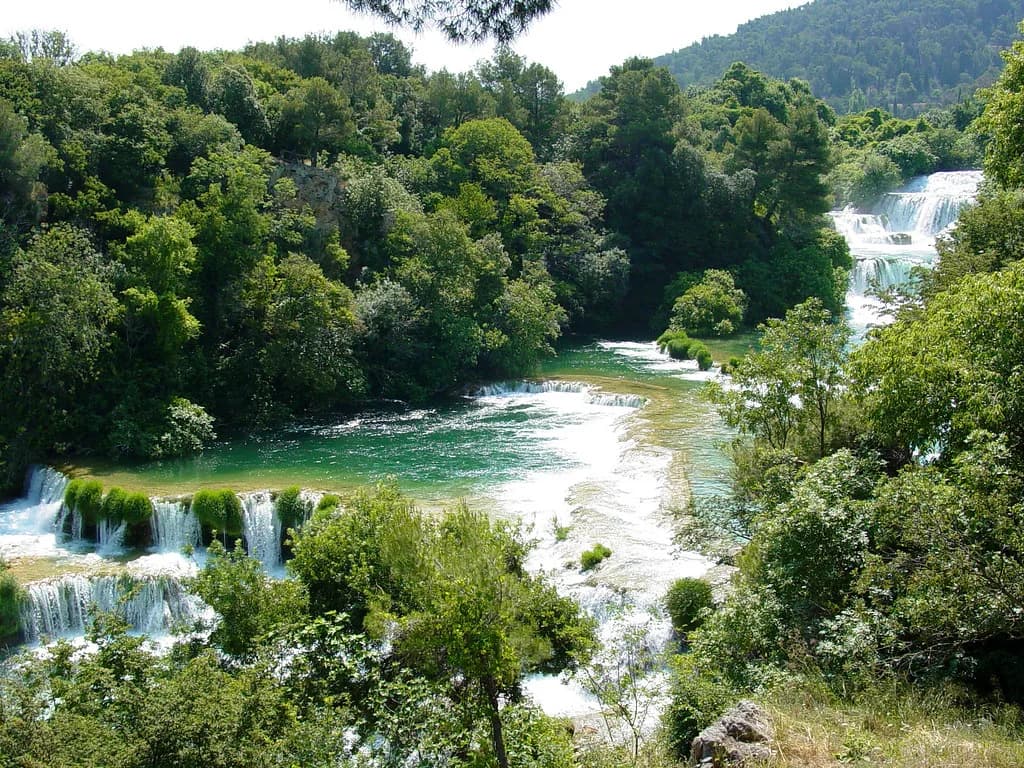
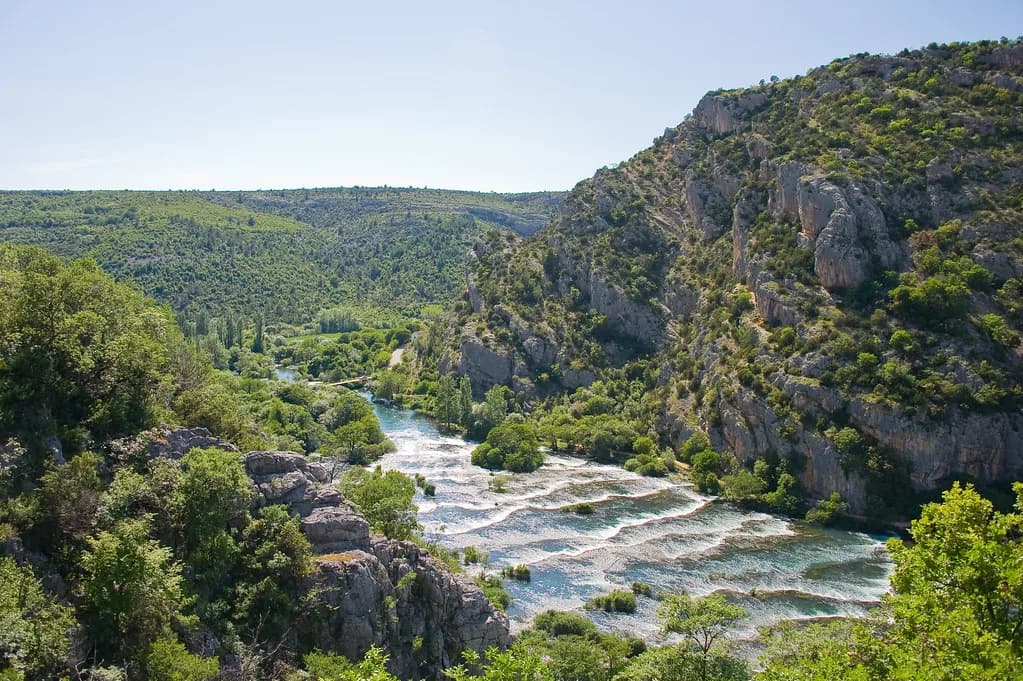
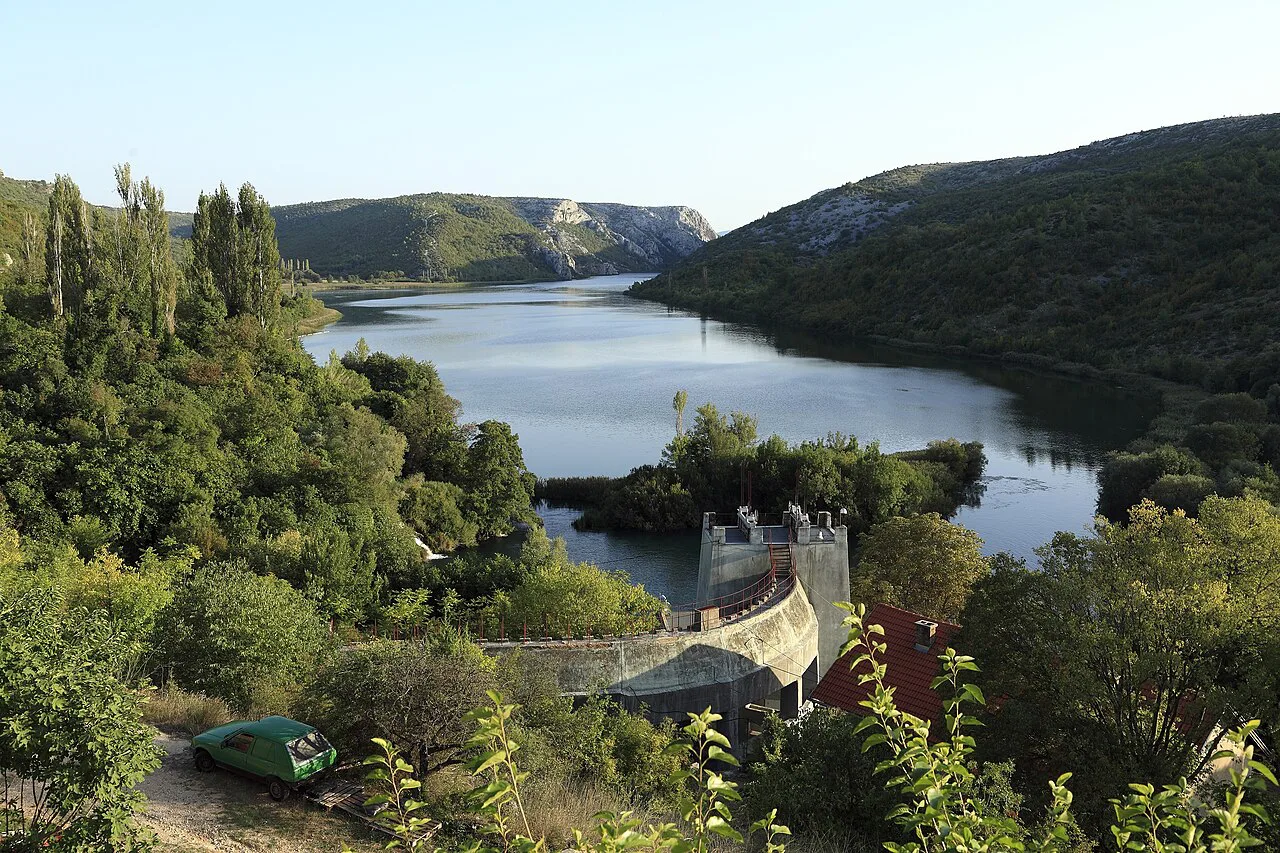
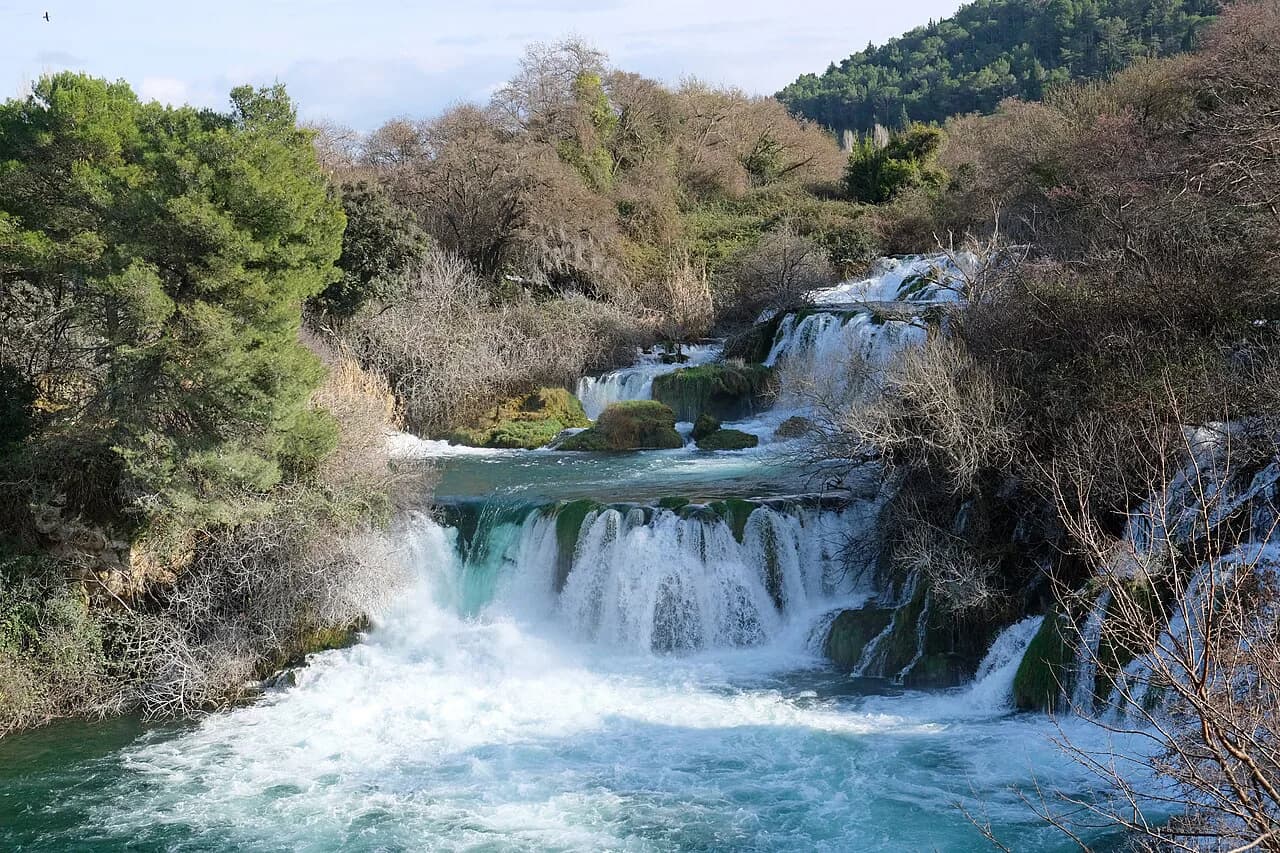
The waterfall takes its name from the hillfort of Rog and stands 25.5 metres high, with its barriers running some 650 metres along the river. It occupies a middle stretch of the Krka, well upstream of the Skradin gateway and downstream of the upper falls. Because the drop is long rather than concentrated, the water arrives as a series of steps rather than a single curtain.
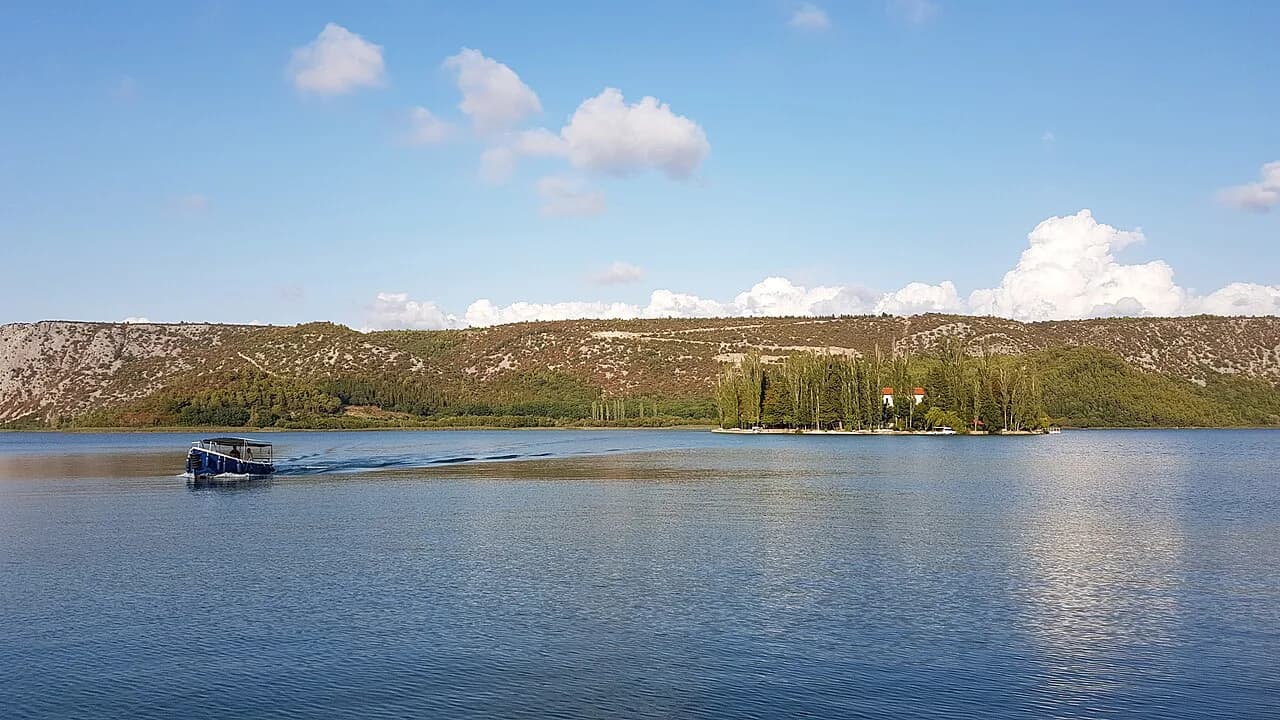
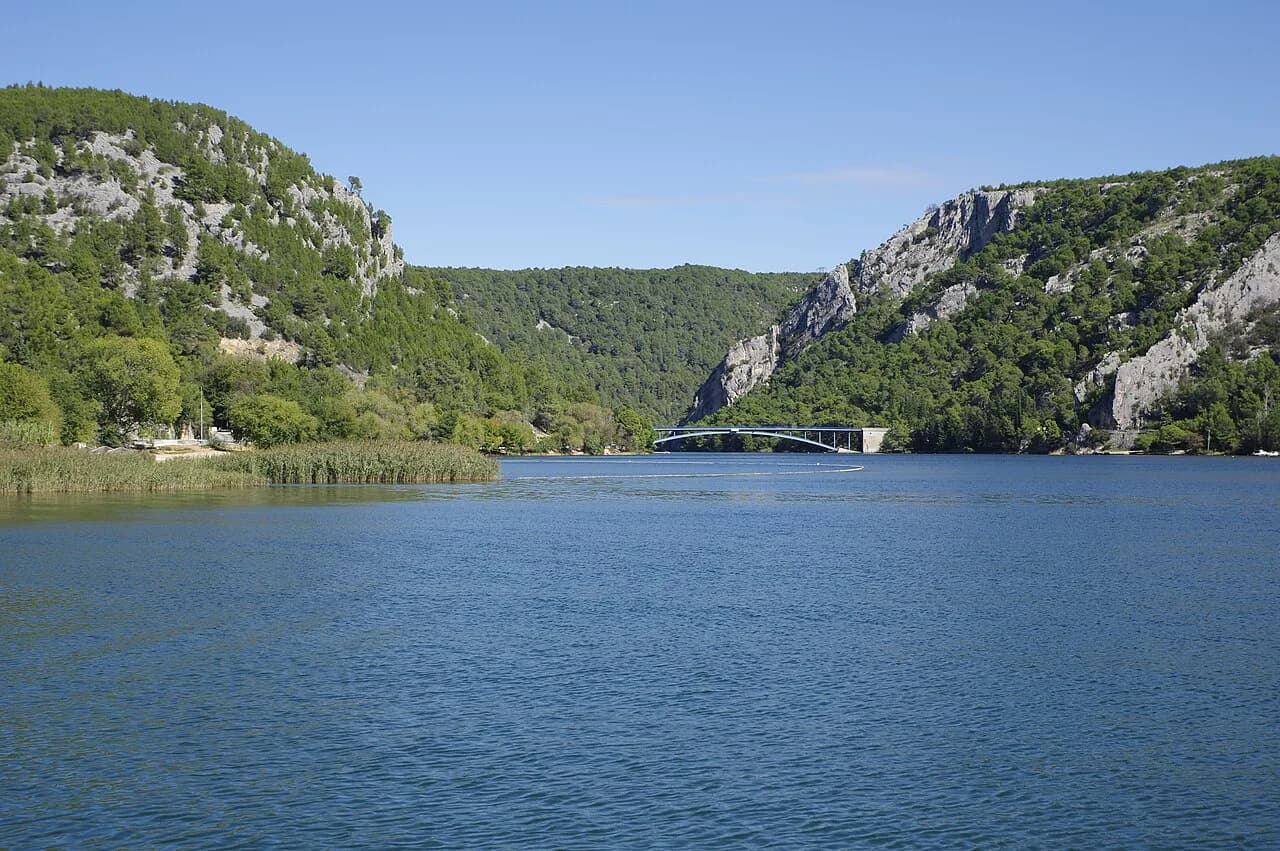
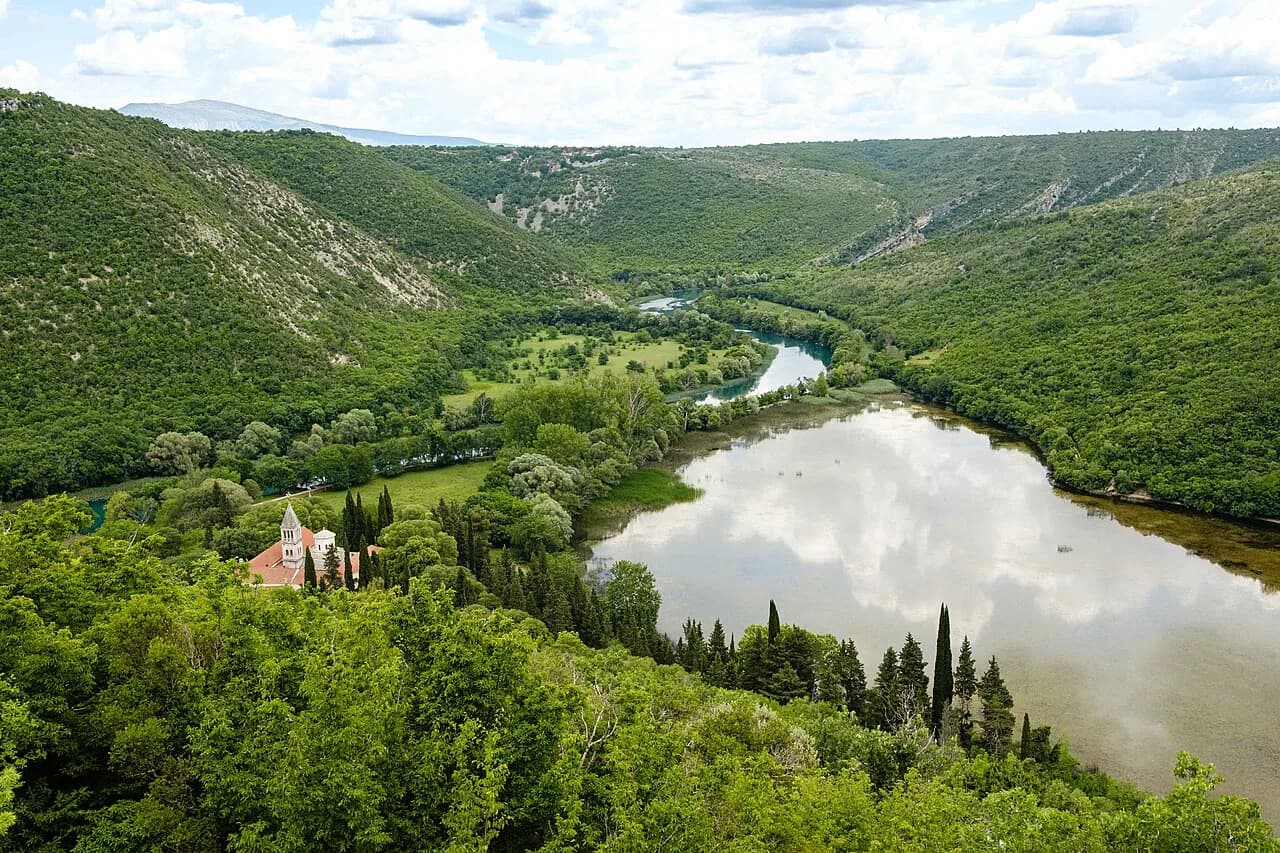
The last and tallest fall widens like a funnel and crashes into Visovac Lake, the broad water upstream on the same river. Understanding that geography helps you plan the upper river, and the whole park's localities and how they connect are mapped out in our guide to Krka National Park.
Vegetation around the barriers is part of the site rather than background: mosses colonise the tufa, reed communities sit in the deeper water, and white willow, purple willow and narrow-leaved ash line the banks.
The 'Necklaces': how to read the tufa cascades
At the head of the barriers, a set of tufa cascades is known as the Necklaces because of their beauty. The ridges, sills, caves and cones the park authority lists at Roški slap become easier to pick out as you walk the barrier system.
The Necklaces sit at the start of the barrier system, so look for them early on the approach rather than expecting them beside the main drop. The funnel-shaped fall comes at the end. If you are comparing the park's tufa scenery, our overview of Krka waterfalls sets the individual falls against each other.
The mills and washing posts you actually walk past
The historical substance of Roški slap is its vernacular architecture: renovated watermills, washing posts used for processing wool, and fuller mills for washing cloth. These are monuments to the region's economic past, and they sit close enough to the falls that you pass them as part of a normal visit rather than as a separate museum stop. Treat them as the reason the site repays time, not as scenery between photo points.
The riverbanks here were joined by a road as early as the Roman period, which explains why this stretch feels like a crossing point as much as a viewpoint. A small flow-through hydroelectric plant was built on the right bank in 1910, and the park authority records it as part of the site's industrial heritage.
Skradinski buk or Roški slap: which suits your visit
Choose Skradinski buk for the classic Krka day: the widest, most photographed cascade, reached from Skradin and the busiest in summer. Choose Roški slap for a longer, quieter river landscape where mills, tufa forms and the lake carry as much weight as the water. If you have two days in the area, doing both gives you the river's two different moods; with one day, pick according to whether you want spectacle or space.
Roški slap sits on the upper river above Visovac Lake, and the lake's island monastery is one of the park's separate localities. Our guide to the Visovac monastery explains what you can see on and around the island and how it fits a river itinerary.
Getting there: park entrances and boat options
The park authority lists ten entrances across 109 square kilometres, and which one you use decides how much river you see on foot. Roški slap has its own locality page among the park's sites, alongside Skradinski buk, Visovac Island, the Burnum amphitheatre and the Puljane eco campus. Before fixing a route, compare the access points in our guide to Krka National Park entrances, because arriving at the wrong one can add a long transfer.
Boat excursions are listed by the park authority as one of the facilities for visitors, and the falls are also served by marked hiking trails and bike routes. Exact boat timetables and fares are seasonal and vary by operator, so book against the current schedule rather than a remembered one. Our explanation of the Skradin to Krka boat covers how the lower-river crossing works.
If you arrive via the lower gorge, the riverside village of Skradin is the usual base for boats into the park. Our Skradin guide covers the layout of the village and its relationship to the falls.
Tickets, opening hours and seasonal dates are published by the park authority and change through the year. Check the current price list and working hours on the official park site, and use our guide to Krka National Park tickets to understand the categories before you buy.
How long to allow and how much walking is involved
Across the park the authority counts 47 km of hiking trails, and Roški slap is one of its listed localities, reached on foot from the surrounding trails and entrances. Allow a half-day if Roški slap is your main stop, and add time if you are combining it with other upper-river sights.
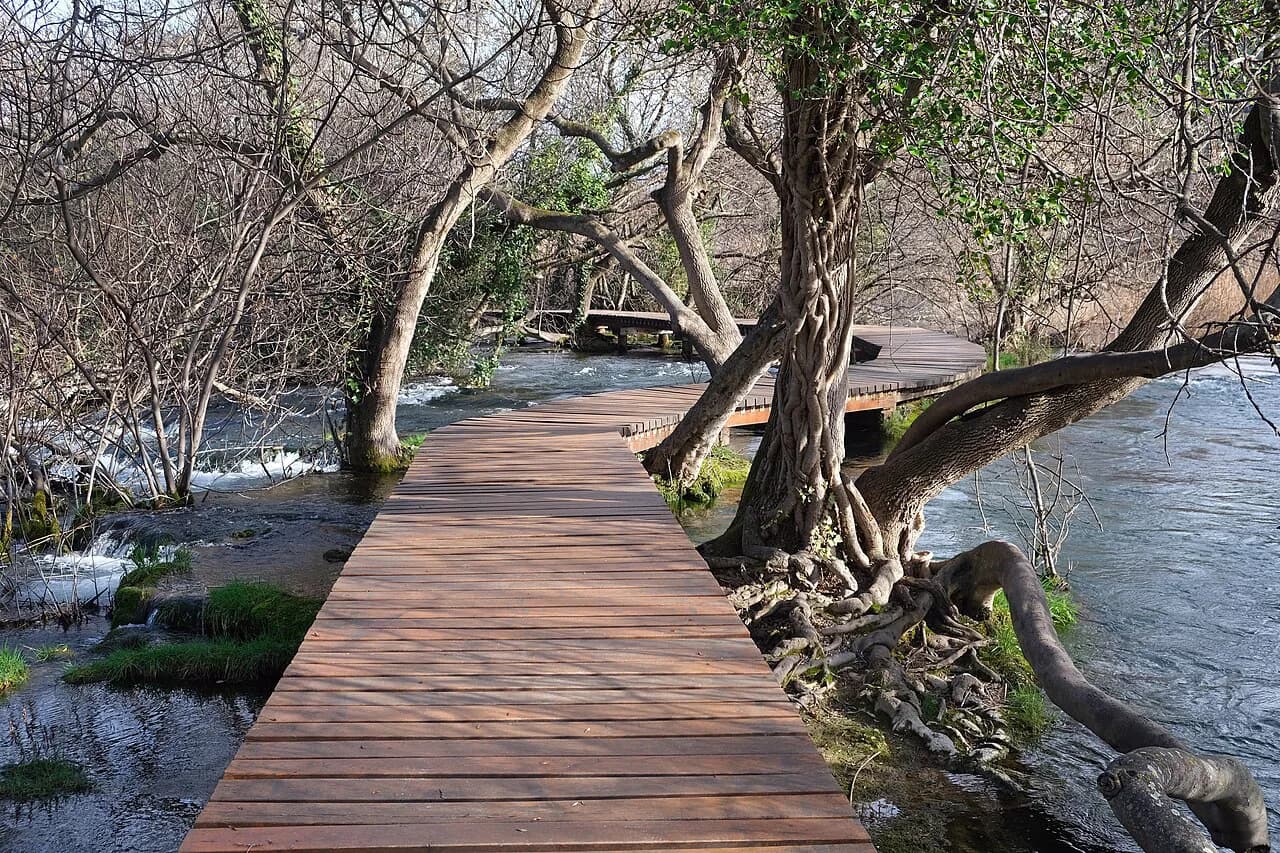
The site's features sit close together, and the ground near a working waterfall is often wet. Wear shoes with grip rather than sandals, and carry water. If you are working from a paper plan, the layout of the sites is easier to follow on a map of Krka National Park.
Swimming at the falls: check the park rules
Swimming rules at Krka are set by the park authority rather than by individual operators or guides. Read the park's own rules before you plan a dip, and treat older blog posts or photos of swimmers as no guide to current access. Our guide to whether you can swim in Krka National Park sets out what is and is not permitted.
When to go: summer crowds and the bura
Roški slap is a spread-out site, which helps absorb summer visitors, but midsummer is the busiest time and an early start is the most effective move if you want quieter water. The bura, the cold north-easterly wind, can make the exposed upper river noticeably chilly even on a bright day, so a windproof layer earns its place.
Plan the Krka day around the weather rather than the calendar, since wind and rain change the experience of the upper river more than a week in the season does.
Oziđana pećina and the 1910 power plant nearby
Near Roški slap, the Oziđana pećina cave preserves the earliest traces of human presence in this area, and it is listed by the park authority alongside the falls. The small Roški slap hydroelectric plant on the right bank dates to 1910 and adds an industrial counterpoint to the mills. Together they turn a waterfall stop into a short lesson in how people have used this stretch of river for thousands of years.
Is Roški slap worth adding to your Krka day?
Yes, if you have the time to reach the upper river and want mills, tufa formations and a lake view alongside the falls. No, if you have a single short day and your priority is the classic cascade at Skradinski buk.
Build the day around one entrance, check the park authority's current price list and working hours before you travel, and leave room for the walk between the Necklaces, the mills and the lake. That sequence, rather than a rushed circuit, is what makes Roški slap memorable.
Explore more Krka National Park guides
Sources
Notes from the Croatian coast
Optional updates when our guides change.
You might also like
Continue reading
More guides you'll find useful