Korčula Old Town: Streets, Sights and How Long to Allow
Plan a visit to Korčula Old Town: its herringbone lanes, St Mark's Cathedral and tower, the medieval walls and the Marco Polo story, with a realistic time budget.
On this page
Two hours covers Korčula Old Town comfortably; add the cathedral tower and a slow pass along the Riva and you have a half-day. The old town is a compact, flat, pedestrianised medieval settlement on a small peninsula at the north-east end of the island, facing the Pelješac Channel, so there are no stairs to climb and no ticketed circuit to complete. This guide covers the street plan, the main sights, a short walking route and how to time your visit around the crowds.
A flat, walled town on a small peninsula
Korčula Town sits on the north-eastern tip of the island, its medieval centre wrapped in walls and facing the narrow Pelješac Channel. Time Out describes it as one of the best-preserved medieval centres in the Adriatic and the most popular south-Dalmatian destination after Dubrovnik, which is the comparison you will hear constantly. The historic core is listed on UNESCO's tentative list rather than as a World Heritage Site, so treat any brochure claiming full inscription with care.
What surprises most visitors is how easy the ground is. The centre is completely flat and pedestrianised, with narrow lanes that fan out from the middle like a fish bone — a layout said to stop the wind funnelling through the streets. That makes the town unusually forgiving for tired legs, and it means a short visit is genuinely restful rather than a scramble over steps.
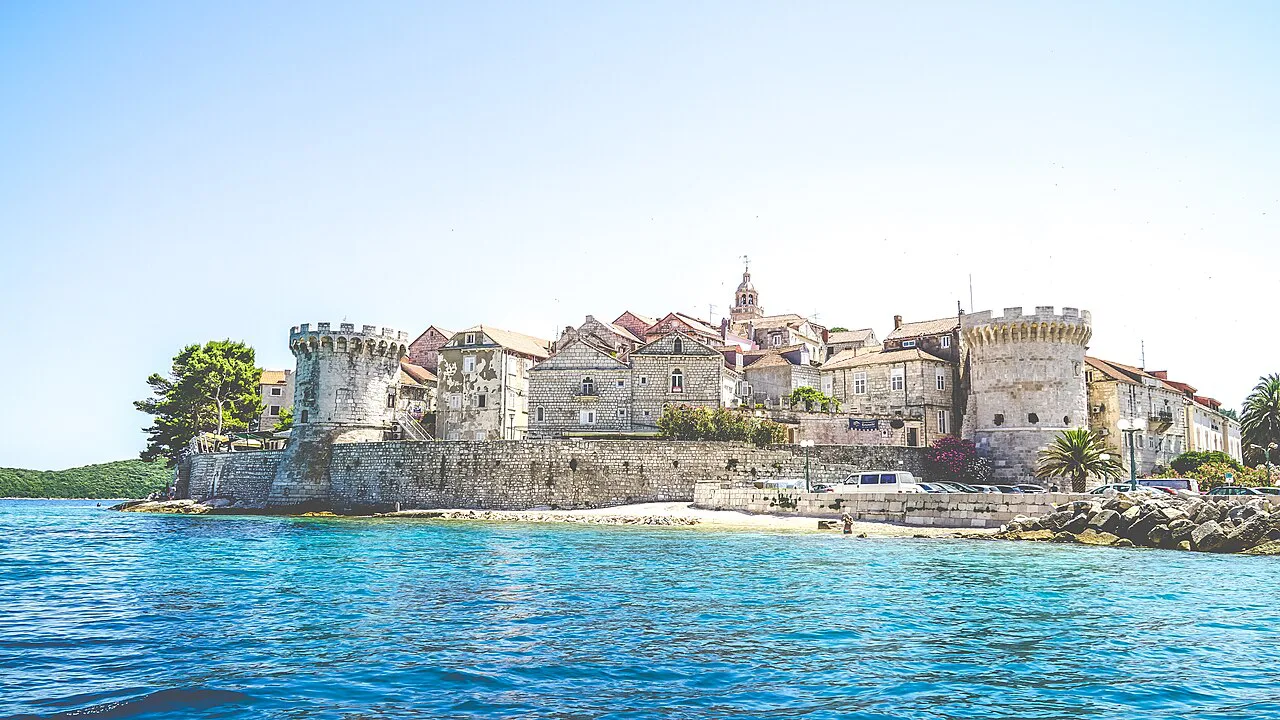
The street plan: lanes like a fish bone
Use the plan as your map. The lanes run roughly parallel off a central spine, so you can pick any alley and end up back on the main axis within a few minutes — getting deliberately lost is part of the experience. Within the stone houses with green shutters you will find art shops, boutiques, tavernas and small wine bars rather than a single sightseeing strip.
The most peculiar detail is that St Mark's Square, at the heart of it all, has no restaurants or bars fronting it. That keeps the square calm, especially early in the morning when you may have it almost to yourself apart from a few of the town's cats. Plan your coffee or lunch on the waterfront instead and treat the square as a place to look at, not to sit in.
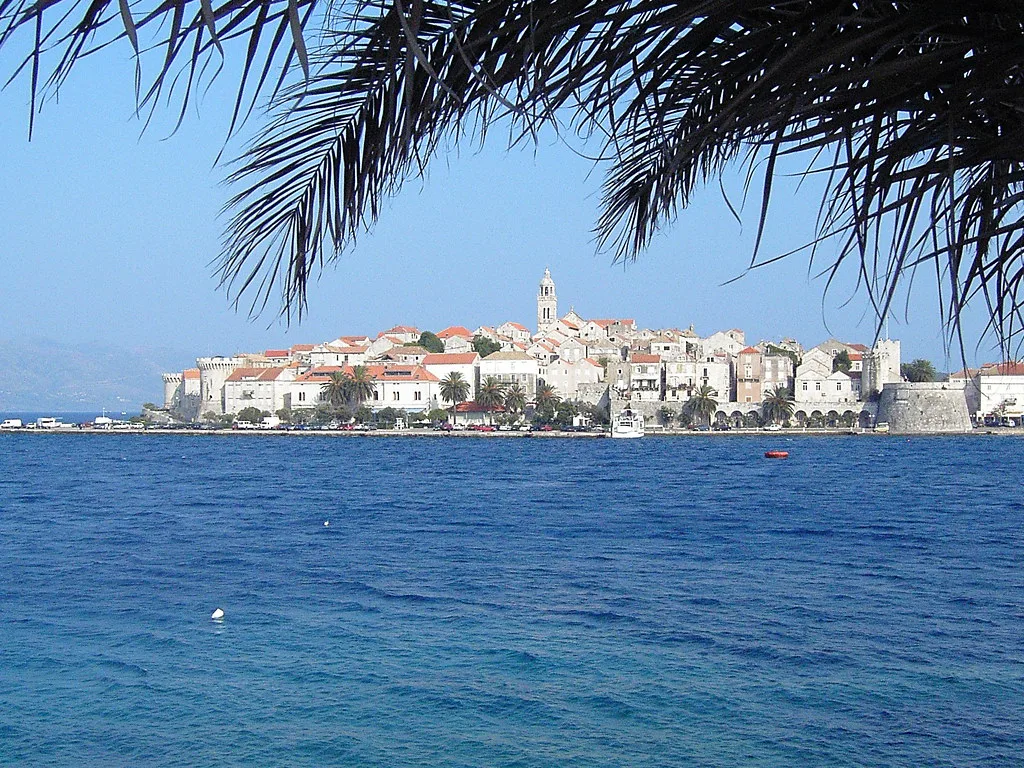
St Mark's Square and the cathedral tower
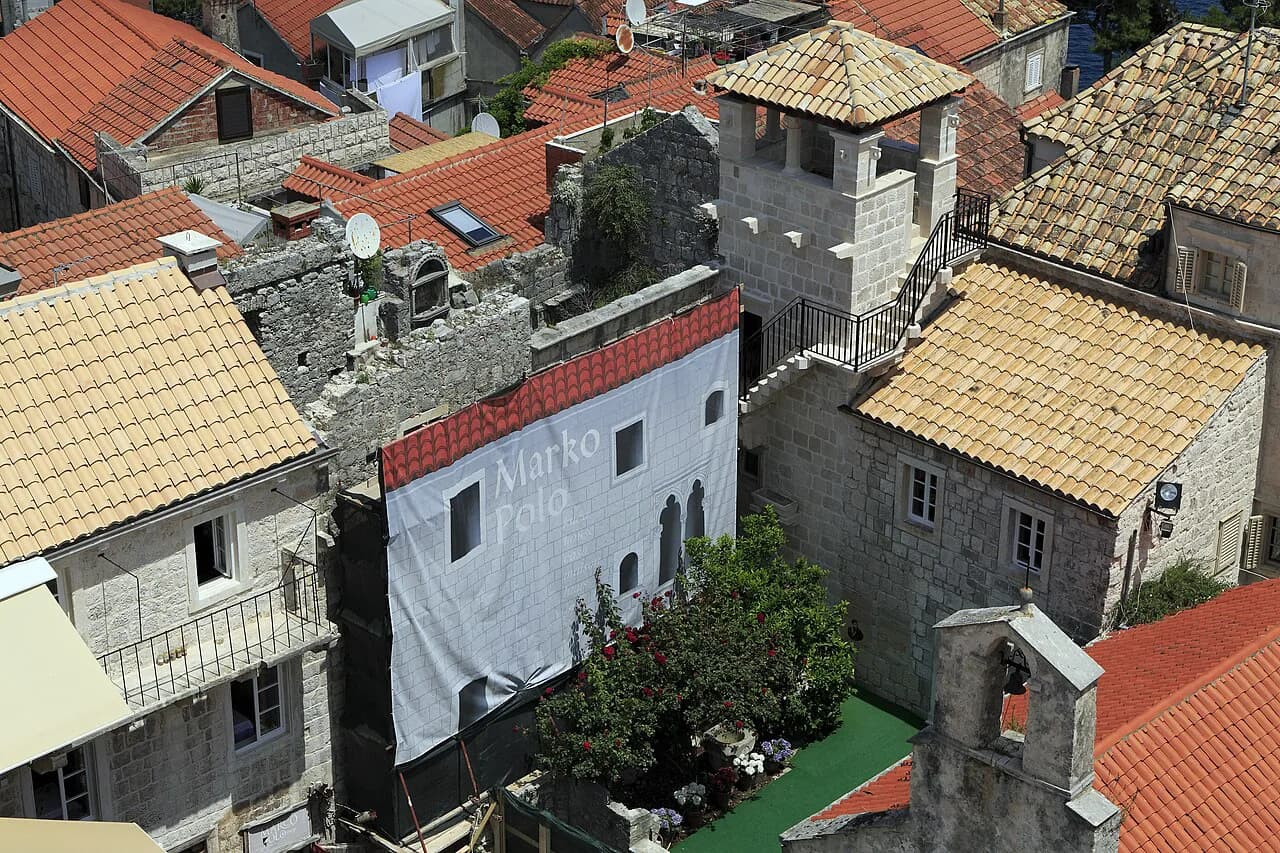
St Mark's Square holds the town's cathedral, its slim belltower visible above the roofs from the approach. The tower is described as a 65-step viewpoint over the terracotta rooftops and the channel, and it is the one thing worth building time around if you want a photograph that explains the town's shape. The cathedral and tower set their own seasonal hours and ticket arrangements, so confirm the current arrangements locally or through the town's tourist office before you rely on them.
The tower aside, the square is a viewing and wandering space. Give it fifteen minutes on the ground and perhaps half an hour if you climb, and you have accounted for the densest part of the old town. Because the square stays quiet even in summer, it is a good place to pause between the lanes and the waterfront.
Walls, gates and towers
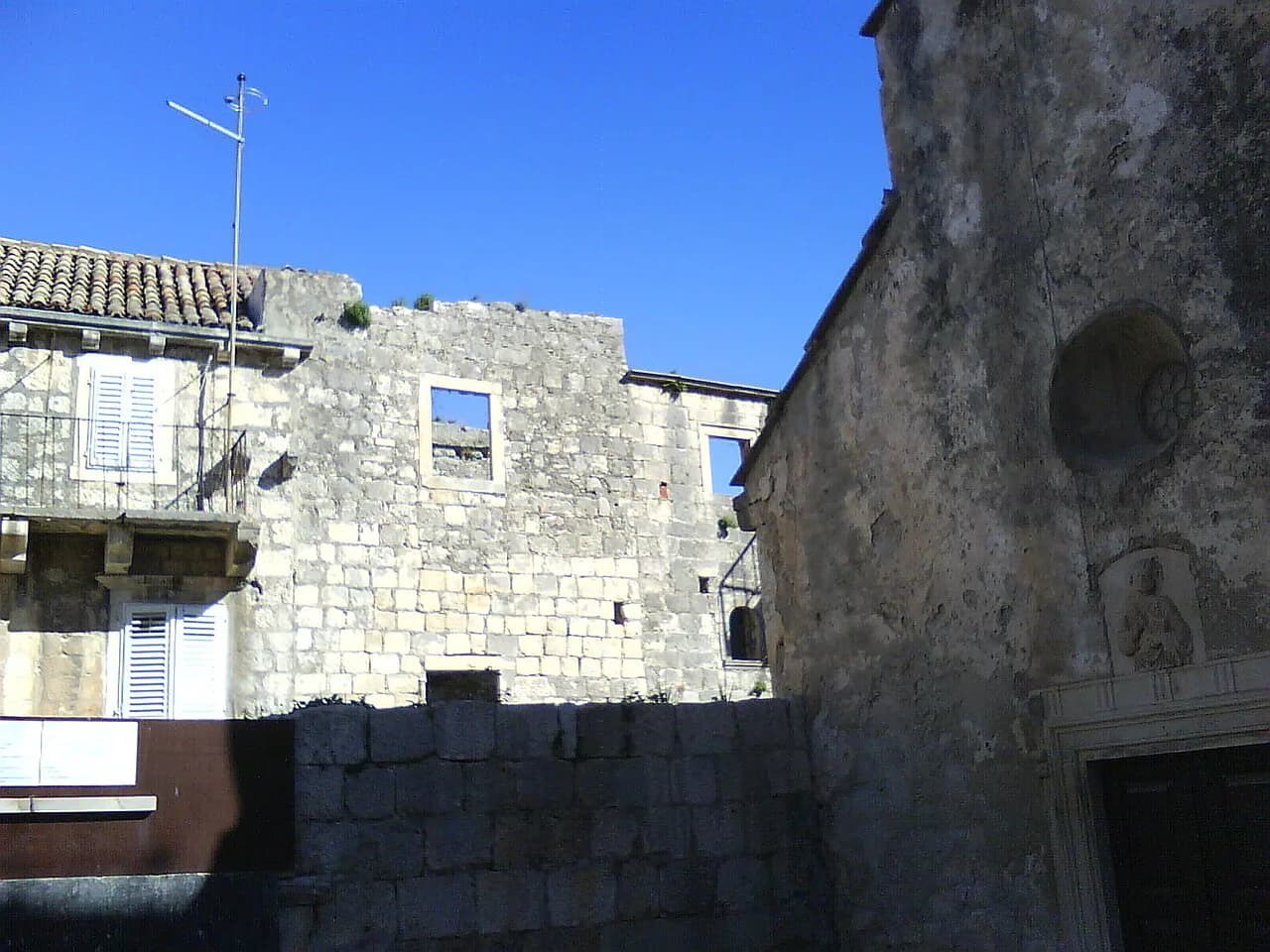
The medieval walls, gates and towers enclose the whole peninsula, and you meet them almost immediately on arrival. Time Out notes that the walls are centred on the slim belltower of St Mark's Cathedral and stand guard over the Pelješac Channel — which is why the sea views from the landward side are as good as the ones from the water. Walking the perimeter and the lanes inside it takes under an hour at an easy pace.
The Riva outside the walls
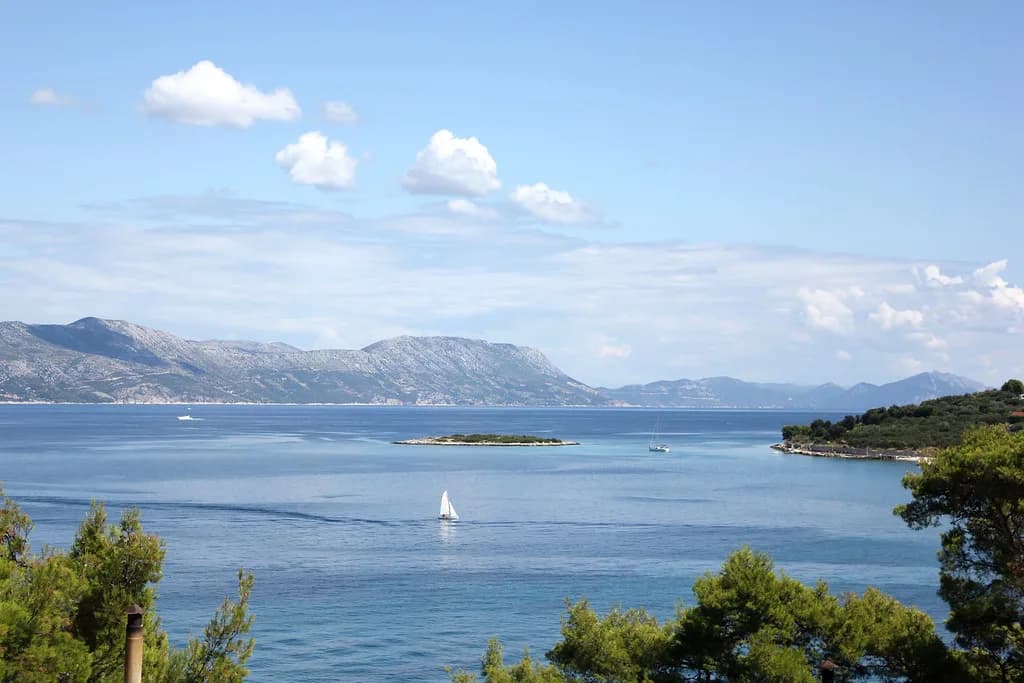
Just outside the walls runs the Riva, the tree-lined waterfront promenade that most distinguishes Korčula from other Dalmatian towns. It is a place for a slow morning or evening stroll under the trees beside the water, with clear views across to the mountains and islands. Mornings are tranquil and some places along it open only from lunchtime, so if you want a waterfront breakfast, check before you commit.
The Riva also gives you the town's best free viewpoint and a natural end to a walk. Rather than treating it as a separate excursion, fold it into the same visit: lanes, square, walls, then the promenade. That sequence takes you from the densest part of the old town out to the open water in one continuous loop.
Marco Polo: the island's claim
Korčula leans hard on Marco Polo, and you will see his name on shops and signs. The claim rests on local tradition rather than settled fact, and the town presents it as part of its identity rather than as a documented biography. If the story interests you, the Marco Polo House in Korčula presents it, and its opening arrangements and any entry charge vary by season, so check at the door or with the tourist office.
Treat the house as an optional stop rather than a core sight. Any entry charge is set by the family or trust that keeps it open and can vary by season.
A short walking route with rough timings
Start at the land gate and walk the central spine first, taking one or two of the side lanes at random for five minutes each. Reach St Mark's Square after about fifteen minutes, climb the tower if you are going up, then continue to the far side and follow the walls back towards the harbour. Allow roughly 45 minutes for the lanes and square without the tower, and an extra half-hour if you climb.
Finish on the Riva with a drink or a meal, which adds another 45 minutes or so to a leisurely visit. If you also want the Marco Polo House or a museum, budget a further 45 minutes and you are at the half-day mark. The town works well as a loop rather than a checklist, so do not over-plan the sequence.
Two hours or half a day?
Two hours is enough to see the lanes, St Mark's Square, the walls and a quick pass along the Riva, and it suits anyone arriving on a ferry with a fixed departure. Half a day lets you add the cathedral tower, the Marco Polo House and a proper sit-down meal on the waterfront without rushing. The trade-off is simple: the tower views and a relaxed lunch are what push you from two hours to four.
If you plan to use Korčula Town as a base rather than a stop, the wider island rewards the extra night. Lumbarda, a short hop south, is known for its sandy beach and its Grk white wine, and the villages inland and along the coast each have their own character. Lumbarda, Korčula is worth a half-day on its own if you have the time.
When to go: mornings and summer crowds
Go early. The lanes and St Mark's Square are at their calmest in the morning, and you can walk the walls and the waterfront before the day's arrivals build up. Time Out calls the town a year-round destination with particular appeal in the medieval core, but summer is when the crowds and the heat are at their peak.
Cruise-ship days change the feel of the town within an hour, though the flat lanes and the quiet square absorb people better than a stair-heavy old town would. If your dates are flexible, a shoulder-season visit gives you the same streets with far more breathing room, and an early start is the simplest way to dodge a busy port day.
Getting there by ferry and on foot
Most travellers arrive by sea. Time Out notes that the town faces the Pelješac Channel on the north-east tip of the island, and ferries and catamarans link it to the mainland and to Split and Dubrovnik; timetables change with the season, so check current sailings before you travel rather than relying on a printed guide. From the port, the old town is a short walk — you are through the gate and into the lanes in minutes.
If you are coming from the western end of the island, Vela Luka is the other main ferry port, with its own connections to Split and Lastovo. Distances on the island are short by road — Condé Nast Traveller puts the west-to-east crossing at around 45 minutes by bus or taxi — which makes a day trip to the old town from elsewhere on Korčula practical. A Korčula island map helps you see how the ports and villages line up.
Is the old town worth the stop?
Yes — Korčula Old Town earns its place on a Dalmatian itinerary precisely because it is small, flat and unhurried. Two hours gives you the lanes, the square, the walls and the Riva; half a day adds the tower and a long lunch by the water. It is a place to walk rather than a ticketed circuit, so the best plan is a loose one.
If you are building a wider island trip, pair the town with Lumbarda for the beach and the wine, Vela Luka for the western port, or the inland villages such as Pupnat and Blato for a quieter half-day. Račišće, on the north coast, makes an easy coastal add-on. Details of each are in the Korčula Island Guide: Town, Villages, Ferries and Timing.
Explore more Korčula guides
Frequently Asked Questions
Can you walk Korčula Old Town without climbing stairs?
Yes. The historic centre is flat, pedestrianised and laid out in lanes that fan out from the middle, so the core sights — the lanes, St Mark's Square, the walls and the Riva — can all be seen on level ground. The one climb is the 65-step cathedral tower, which is optional.
How long does it take to see Korčula Old Town?
Allow about two hours for the lanes, St Mark's Square, the walls and a quick walk along the Riva. Add roughly half an hour for the cathedral tower and more if you want the Marco Polo House or a sit-down meal, which brings a relaxed visit to about half a day.
Do you need tickets for Korčula Old Town?
The old town is a working town rather than a ticketed attraction, and walking the lanes, the square and the walls is free. Individual sights such as the cathedral tower and the Marco Polo House set their own arrangements, so check at the door or with the tourist office.
When is the quietest time to visit Korčula Old Town?
Early morning is calmest, especially in St Mark's Square, which has no bars or restaurants fronting it and stays peaceful even in summer. Summer is the busiest season, so a shoulder-season visit gives you the same streets with more room.
Sources
- BEST Things To Do In Korcula Croatia: You'll Actually Love! - Little Wanderblog
- Korčula travel guide: Croatia’s lesser-known island with unspoiled landscapes | CN Traveller
- Korčula Travel Guide: Restaurants, Hotels, Bars & Beaches | Travel | Time Out Croatia
- Exploring Lumbarda: Korcula’s Charming Wine Village | Unforgettable Croatia
Notes from the Croatian coast
Optional updates when our guides change.
You might also like
Continue reading
More guides you'll find useful