Motovun: Croatia's Hilltop Walled Town Guide
Plan a visit to Motovun, Istria's walled hilltop town, with what to see in the old centre, the walk on the walls and the Mirna valley views.
On this page
Motovun is worth a half day, and a full day if you want to walk the walls slowly and sit with the view. The town is compact: a single gate leads into a short main street, a couple of small squares and St Stephen's Church, all inside a ring of medieval walls above the Mirna valley. This guide separates the town walk from the walls walk, because you can do one without the other, and it covers the uphill approach from the lower car park, the seasons and how Motovun fits a coastal Istria trip.
Where Motovun is and why it looks the way it does
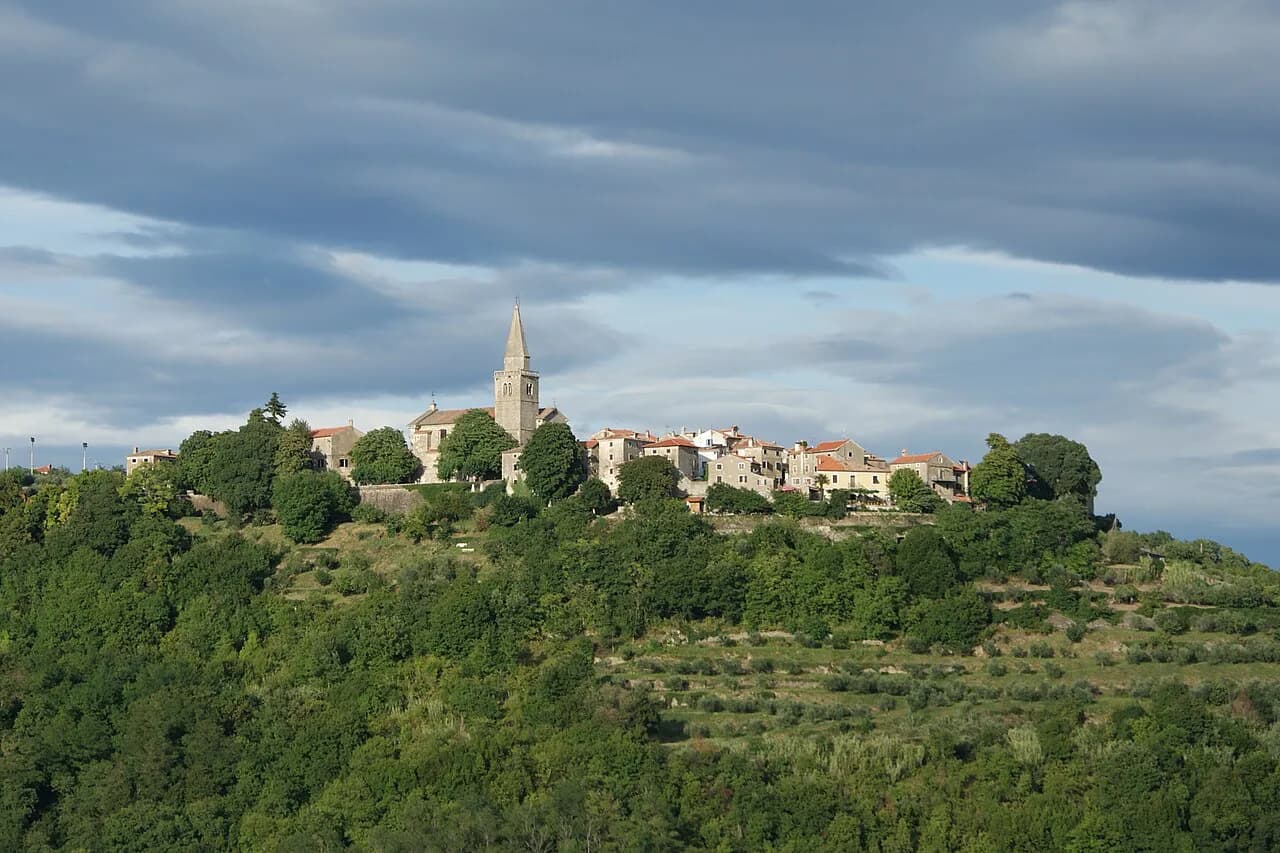
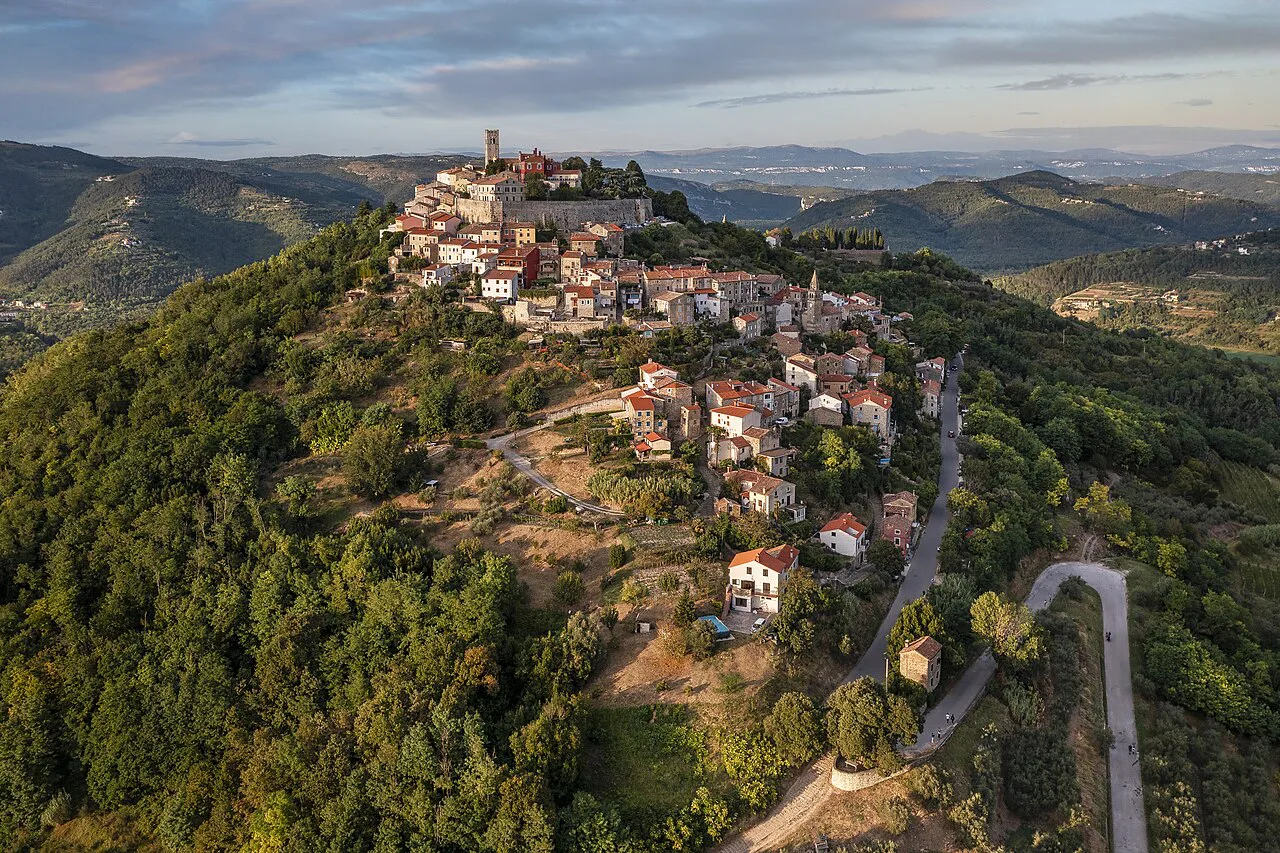
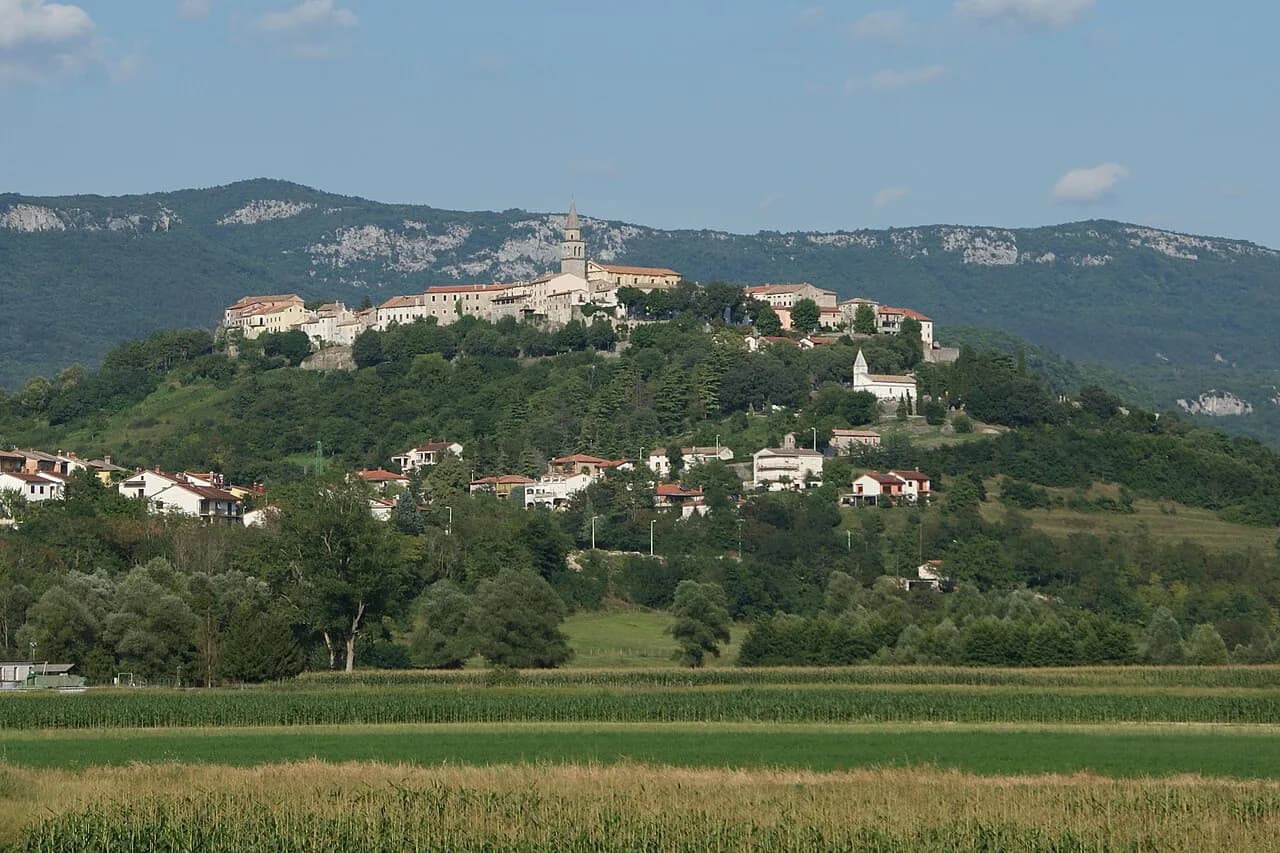
Motovun sits in central Istria, inland from the coast between Poreč and Rovinj, on a hill above the Mirna valley. It began as a fortress site, with Celts and Illyrians building strongholds on the hill before the medieval town took shape, and the outline you walk through today is essentially that defensive shell. The Venetians called it Montona, and the compact form, the gate and the wall circuit all follow from its job as a strongpoint rather than a coastal port.
The setting explains the town's reputation. Vineyards, cypress lines and wooded ridges run away on every side, which is why the town is so often photographed from the road below, and why the walk on the walls is the main event for most visitors. It sits within easy reach of the rest of the region's inland stops, so it slots naturally into a wider look at Istria's Hill Towns rather than demanding a trip of its own.
How to get there and where to park
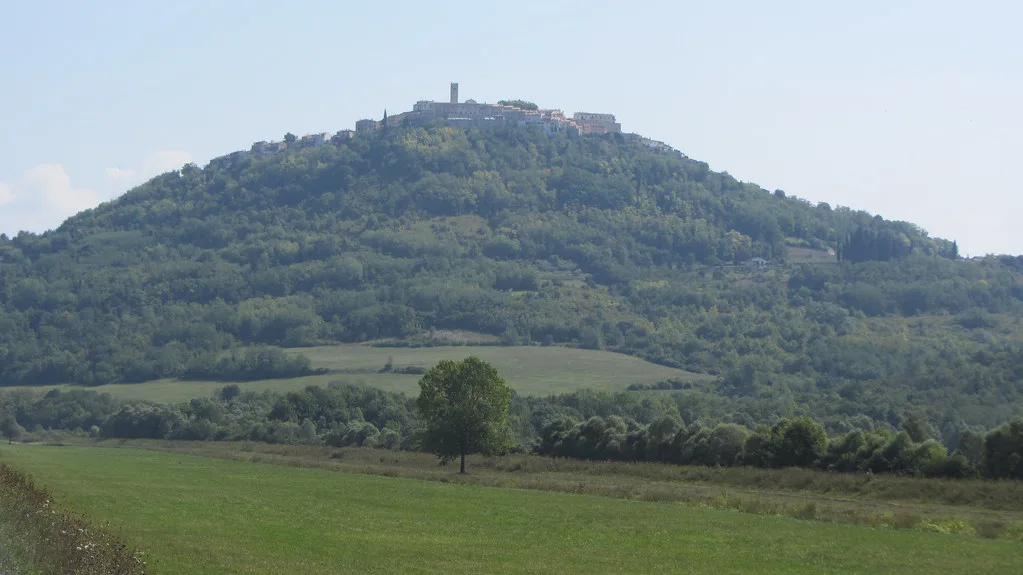
Motovun is easiest by car. Buses in central Istria are slow and thinly spread, so a hire car gives you the freedom to combine Motovun with Grožnjan or Oprtalj in a single morning. Roads climb the hill from the valley floor, and the last stretch into town is steep whichever car park you use.
Parking near the top is limited and fills quickly in the middle of the day. The larger car park at the bottom of the hill leaves you a walk of roughly fifteen minutes uphill to the centre, which is a real constraint in summer heat and with luggage. Parking there costs 4 euros, with lower charges in the winter months, so treat the figure as a guide and check the rates on arrival at the machine.
If you are touring the region by car, an Istria map helps you line up hill towns with coastal bases so you are not doubling back on the same roads. Drivers coming from Poreč or Rovinj should allow for the climb and for a short walk at the end of it, and anyone arriving by bus should plan the return leg before setting off, since departures are sparse. For the practical details, see the Istria.
The old centre on foot: the gate, the main street and the squares
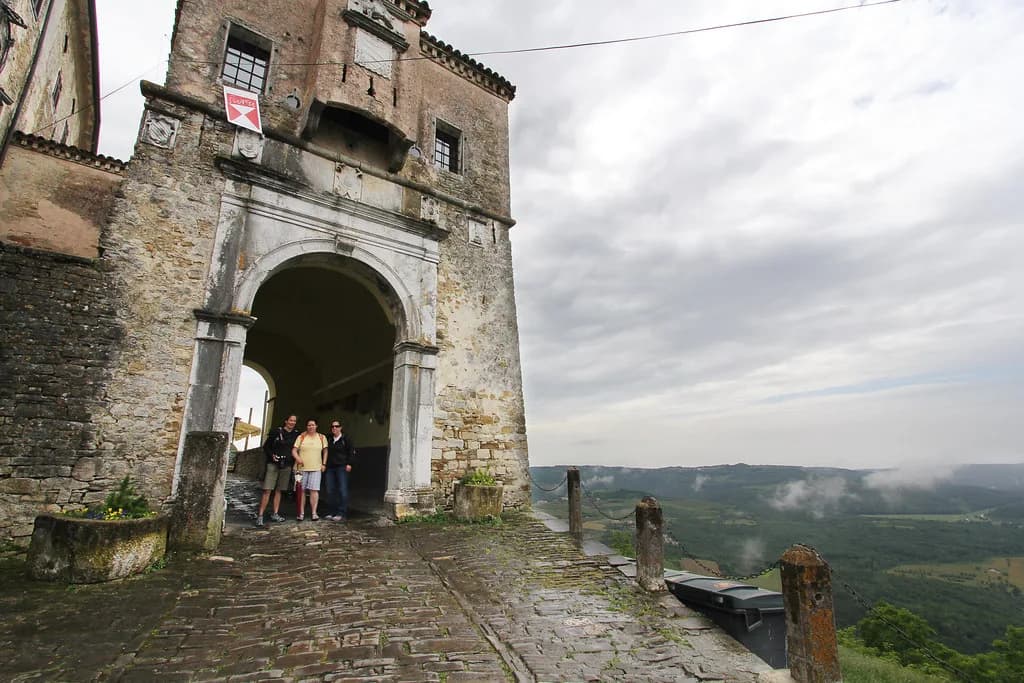
Every visit starts at the town gate, the one way in through the walls on foot. Beyond it, a single main street runs through the centre, opening onto small squares and lined with stone houses, a few galleries and places to eat. The whole circuit is short, so the pleasure is in the wandering rather than in ticking off sights; the cobbles are uneven and slippery when wet, so wear proper shoes.
Give the centre an hour on its own, more if you stop for coffee or lunch. Truffles are the local speciality and appear on menus all over town, but the old streets, not the shopping, are the reason to come. Motorised off-road tours and vineyard visits are offered in the surrounding countryside if you want to fill a longer stay.
St Stephen's Church and its bell tower
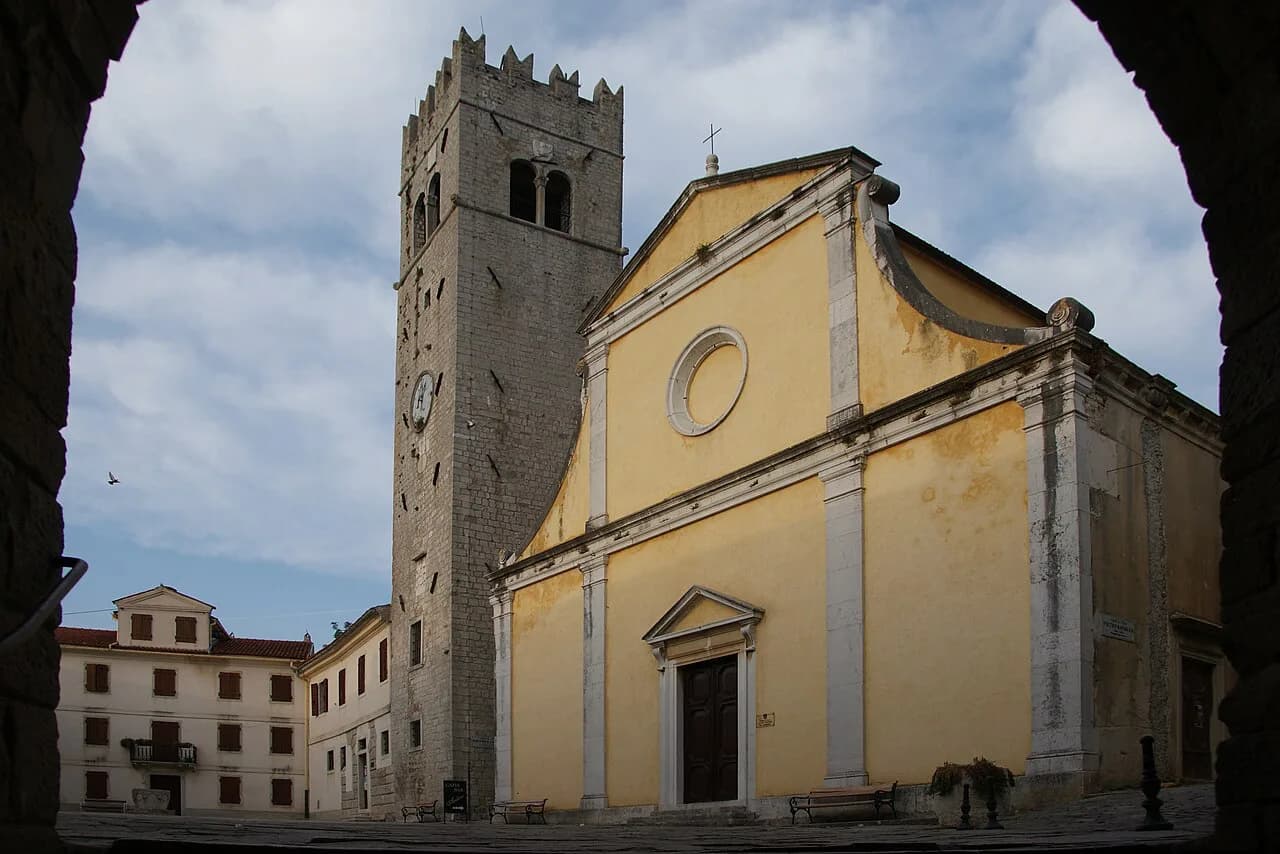
St Stephen's Church stands at the heart of the old town, and its bell tower is the one climb inside the walls. The tower gives you a higher, tighter view over the rooftops and the valley than the walls themselves, and it is a short ascent rather than an expedition. Check opening times at the door, because access to the tower depends on the season and on staffing.
Pair the church with the square outside it, which is the natural place to pause before or after walking the walls. If the tower is shut when you visit, the wall walk still gives you the panorama, so nothing is lost.
Walking the Motovun walls and the Mirna valley views
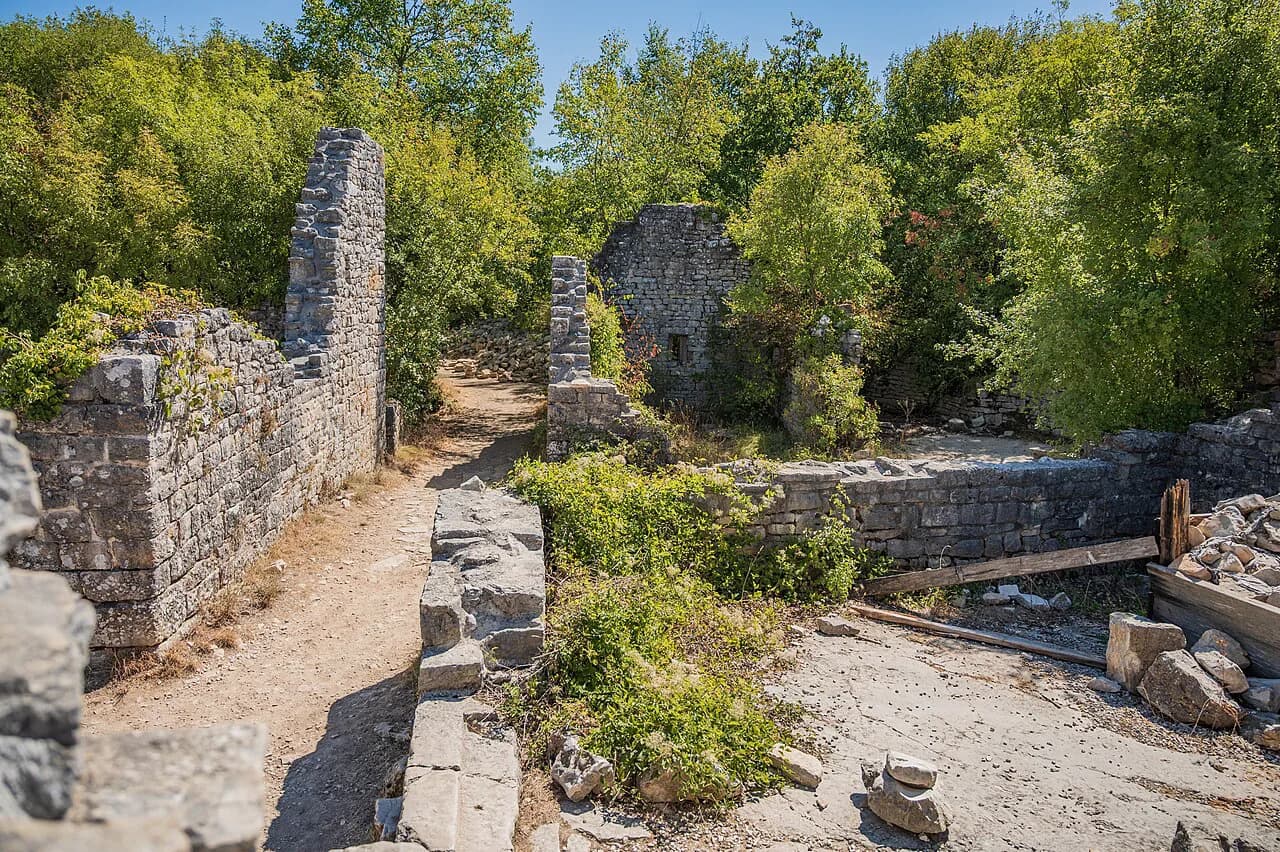
The wall walk is the best thing to do in Motovun and the reason to give the town more than a quick look. The circuit follows the medieval defences and opens onto the vineyards and wooded ridges of the Mirna valley on every side. It takes perhaps half an hour at a gentle pace, though most people linger far longer over the views.
The walls are exposed, so the walk is best done in the morning or late afternoon in high summer, when the stone is not radiating heat. Confirm the current entry arrangements at the gate before you go up, and budget for the wall walk separately from the town itself. Combined with the centre, the church and a coffee, the walls round out a comfortable half day.
How long you need in Motovun
Half a day covers the gate, the main street, the squares and the church, with time for a drink. Add the wall walk and a proper lunch and you have a full day at an easy pace. Most visitors treat Motovun as a stop of a few hours rather than a base, which suits the town's size.
If you want to slow down, the surrounding countryside rewards it with cycling roads and quiet villages. Grožnjan, a hill village of galleries and music, makes a natural second stop on the same day, and Oprtalj offers frescoed churches and its own valley views a short drive away. Pairing two hill towns gives the day more shape than Motovun alone.
When to go: seasons, crowds and the hilltop fog
Late spring and early autumn are the comfortable months: mild air, fewer coach groups and better light on the valley. Summer brings the crowds, and they cluster in the middle of the day when tour groups arrive and leave again by mid-afternoon. Early morning and evening are noticeably calmer, and the town feels quite different once the day-trippers have gone.
In autumn, low fog sometimes hangs around the hilltop, which is exactly what draws photographers late in the season. Treat that as a typical pattern rather than a promise; coastal Istria stays warm well into September, while the inland hills cool faster in the evenings. The bura wind can blow clear and cold in winter, when the town is quiet and some places reduce their hours.
How Motovun fits into an Istria or coast trip
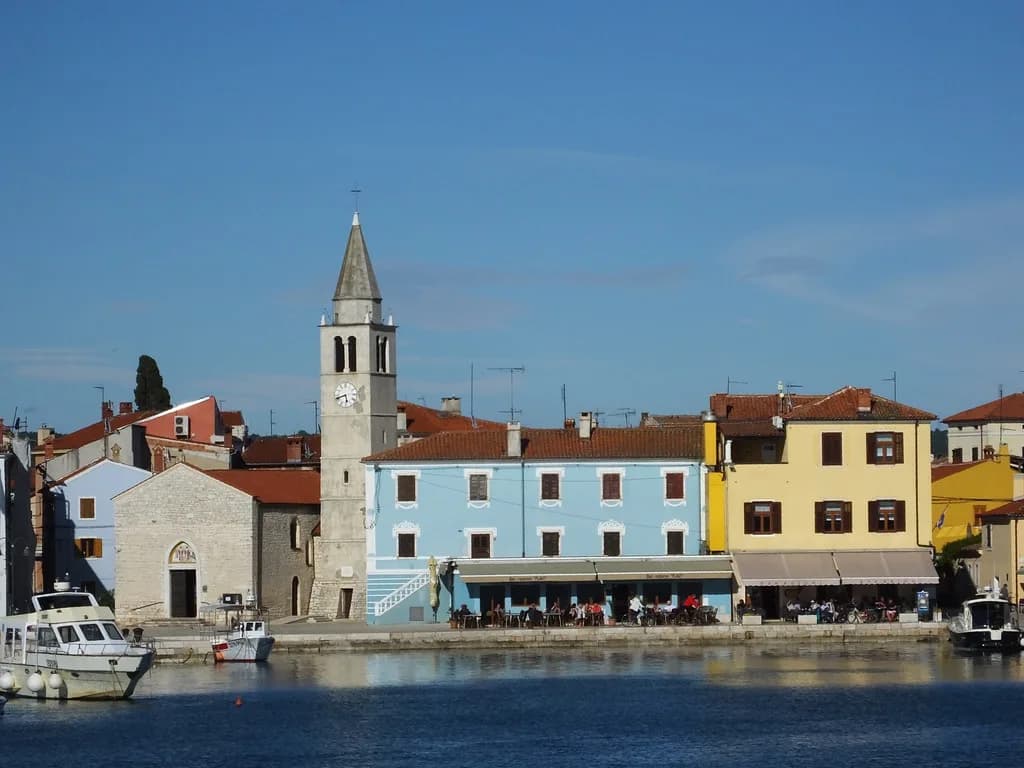
Motovun is an inland stop that pairs with a coastal base rather than replacing one. From Poreč or Rovinj it is a straightforward drive for a half-day outing, and it combines well with the hill towns around it. Bases on the coast, from the harbour at Fažana to the old streets of Bale, give you sea and swimming in the evening after a day in the hills.
The region's inland towns each have a different character: Buzet for truffles, Labin for its hilltop old town above Rabac, and Hum for its tiny walled core. Pick two or three rather than trying to see them all, and keep the driving short. A single inland day, followed by a coastal day, is a good rhythm for a week in Istria.
Is Motovun worth the detour inland?
Yes, if you accept it as a half-day or full-day stop rather than a destination in its own right. Go early or late to dodge the coach groups, park at the bottom and treat the uphill walk as part of the visit, or gamble on a space at the top. The wall walk and the Mirna valley views are what make the detour worthwhile; the town itself is small enough that you will have seen it in an afternoon.
Explore more Istria guides
Frequently Asked Questions
Is Motovun worth visiting?
For most travellers, yes, as a half-day stop. The medieval centre is small, but the wall walk above the Mirna valley is genuinely fine, and the town pairs well with other Istrian hill towns. If you only have one day inland, Motovun and one neighbour such as Grožnjan make a good combination.
What is Motovun famous for?
Motovun is known for its medieval walls and hilltop position above the Mirna valley, and for truffles from the surrounding countryside. It is also a well-known subject for photographers, especially in autumn when fog settles around the hill. The town's Venetian name, Montona, still appears on signs.
Do I need a car to reach Motovun?
A car is the practical way to get there, since public buses in central Istria are slow and infrequent. Parking near the top is limited, while the larger car park at the bottom of the hill leaves a walk of around fifteen minutes uphill. Drivers should allow for the climb and plan the return leg before setting off.
Sources
Notes from the Croatian coast
Optional updates when our guides change.
You might also like
Continue reading
More guides you'll find useful