Dvigrad: Visiting Istria's Ruined Medieval Town
What survives at Dvigrad, the abandoned medieval town in Istria's Draga valley, how the site is laid out, how long a visit takes and the honest trade-offs.
On this page
Dvigrad is worth a stop of roughly an hour if you are driving in south-west Istria: it is an abandoned, ruined medieval town, not a restored hilltop village. What you get is a walled shell of streets, gates, towers and a roofless three-nave church, all open to the sky. This guide covers where the site sits, what survives on the ground, how to reach it, how long to allow and the trade-offs of uneven, exposed ground.
Where Dvigrad sits in the Draga valley
Dvigrad lies in south-western Istria, inland of the Rovinj coast in the Draga valley, in the interior of the peninsula. That position makes it a natural short detour rather than a destination in its own right: you can fold it into a drive between the coast and Istria's Hill Towns further inland.
The surrounding region rewards a wider loop. Pula is known for its Roman amphitheatre and Rovinj for its Venetian lanes, while inland settlements such as Motovun and Grožnjan offer views over vineyards from higher ground.
If you are planning several stops in one day, treat the ruins as one leg of a route through the hill towns rather than the main event. That way the exposed walking and the drive time both sit inside a sensible schedule.
What remains on the ground
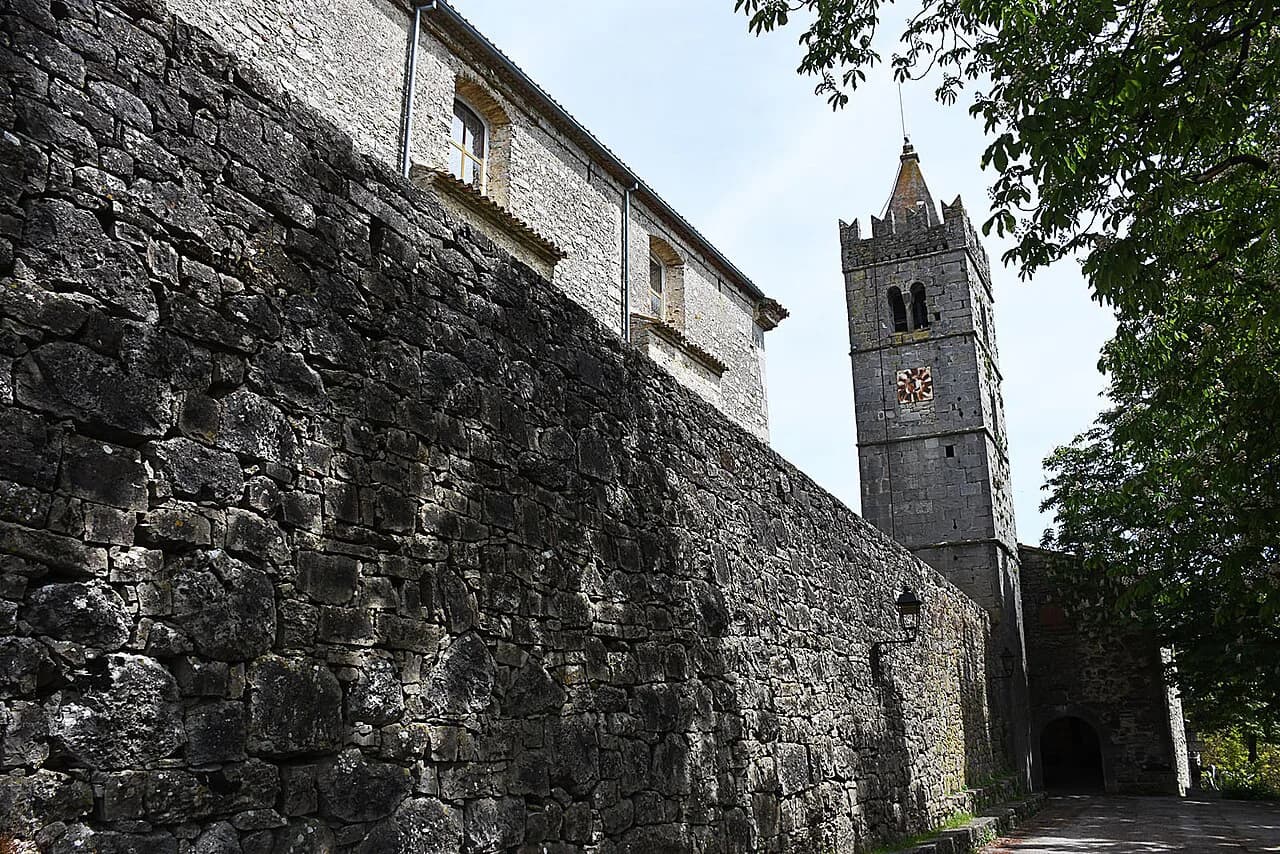
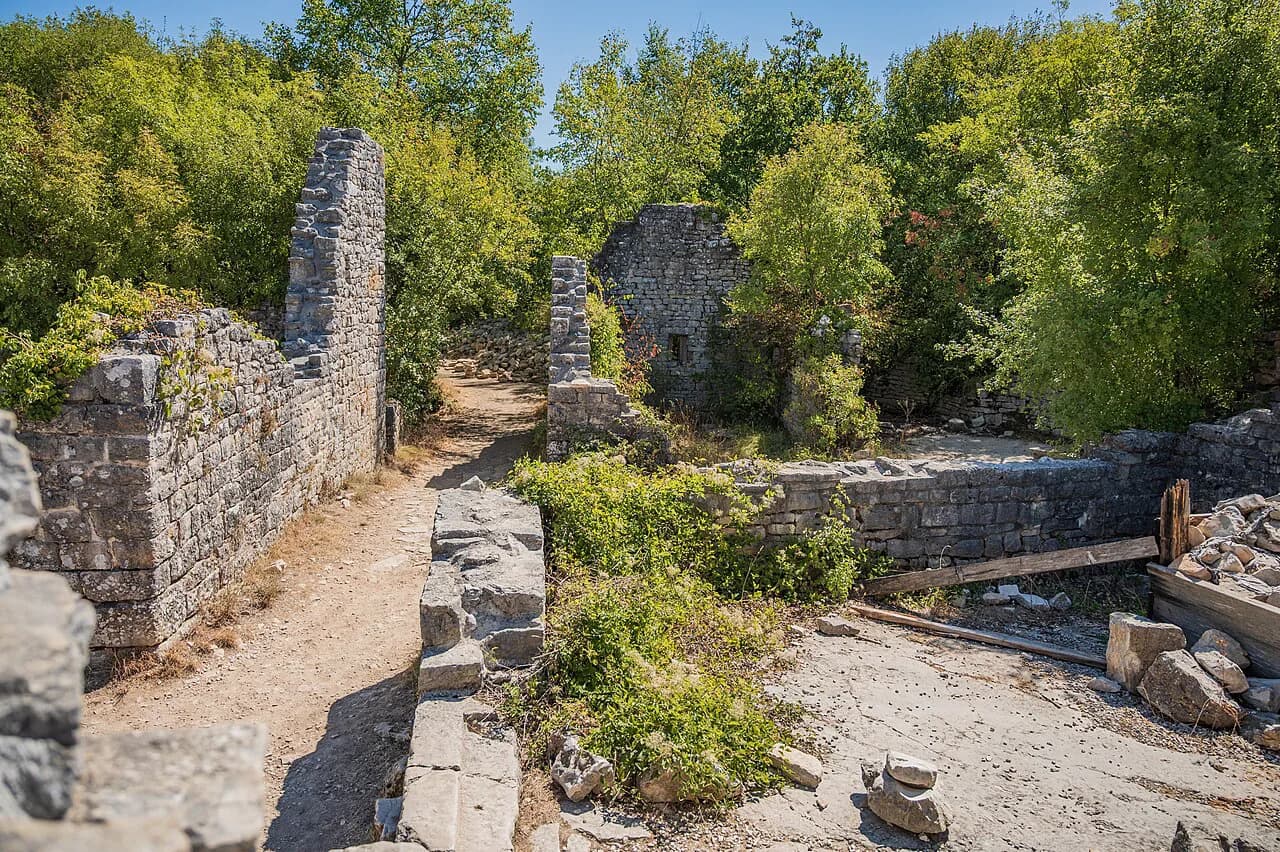
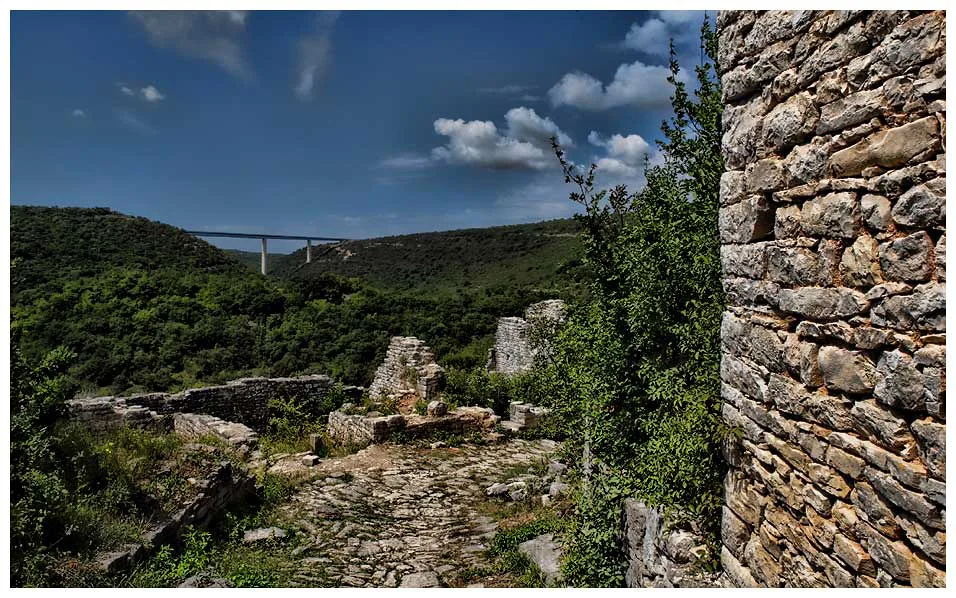
The remains are those of a ruined medieval town, and the site's most striking structure is its three-nave church form. Expect walls, gates, towers and the outlines of houses rather than furnished interiors: this is a shell you read from the outside in.
Historic descriptions put the medieval town at more than 200 structures, counting homes, fortifications, towers, gates, churches and winding streets. That figure is useful for scale rather than as an inventory of what stands today, since much of it survives as footings and fragments.
The Croatian and Italian names, Dvigrad and Duecastelli, both point to the same place, which helps when you cross-check a route or a map. The site is described as an abandoned and ruined medieval town in south-western Istria.
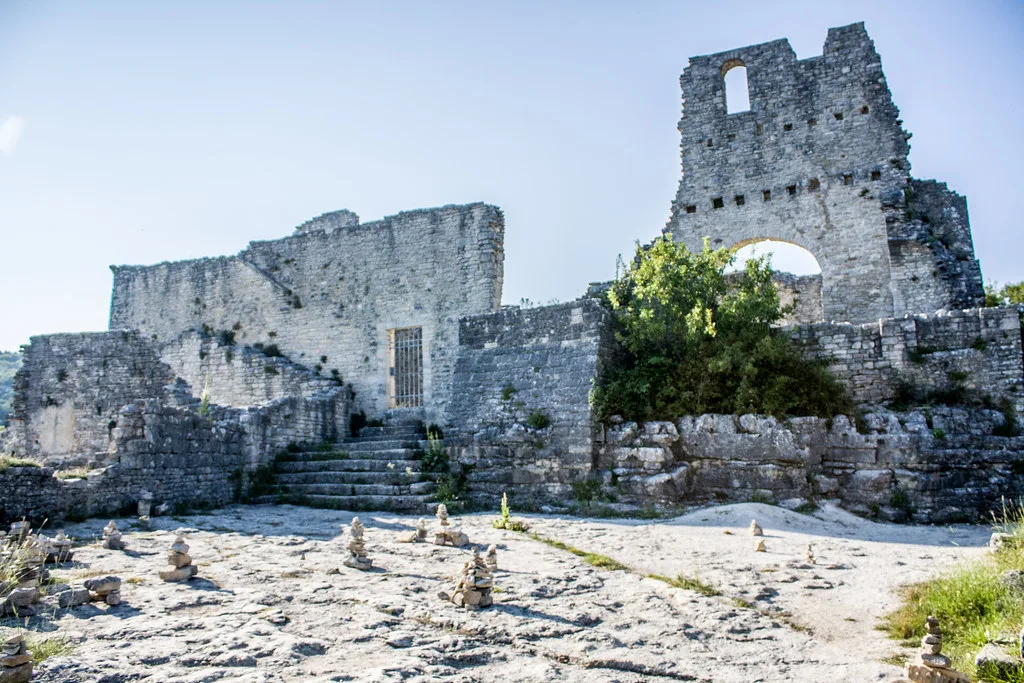
The medieval street plan and the scale of the walled site
Inside the walls the layout still reads as a town: lanes run between building footprints, and gates and towers mark the line of the defences. Because the roofs are gone, you see the plan from above as well as at eye level, which is the real reason to come. Walking it is slow, but the distances are short.
The scale is compact enough to circle on foot without a map, and the surviving street pattern gives a clearer sense of a medieval town than a single rebuilt house would. Keep to the visible paths and worn tracks rather than cutting across loose stone.
How to reach Dvigrad and how much of the visit is on foot
Dvigrad is reached by road, and the visit itself is entirely on foot once you arrive. Coming from the coast, the easiest plan is to drive from the Rovinj or Pula direction and combine the ruins with a stop in one of the inland towns; the valley setting means the last stretch is on quieter country roads rather than a main highway.
The surrounding region warrants a wider loop. Pula is known for its Roman amphitheatre and Rovinj for its Venetian lanes, while inland settlements such as Motovun and Grožnjan offer views over vineyards from higher ground; pair the ruins with one of these inland stops rather than making a special journey.
Parking and facilities at the site are not confirmed in the sources here, so sort them out on arrival rather than relying on a published arrangement. The same applies to any organised tours, which should be booked through a named operator and confirmed directly.
How long to allow on site
Allow around an hour for the ruins themselves. That is enough to walk the walled circuit, look into the church shell and read the street plan without it dragging, which is the right balance for a monument of this size.
If you are a photographer or want to sketch, add time, because the roofless interiors change character as the light moves. Otherwise treat Dvigrad as a half-day excursion at most when combined with one other inland stop.
Best months to come, and what heat and rain do to the ruins
The best months to visit Istria run from late spring through September into early October, with June and September offering warm but pleasant temperatures and thinner crowds than July and August. Those shoulder months suit Dvigrad especially well, because the site has little shade and the stone holds heat.
In high summer, come early in the day or late in the afternoon, and take water with you. After rain the ground is slippery and the lanes hold puddles, so sturdy shoes matter more than they would in a paved town.
Reading the ruins: what a shell like this tells you
A roofless town shows you infrastructure rather than decoration: where the gates controlled movement, how houses fronted onto lanes, and how the church anchored the settlement. It does not tell you much about how people lived inside those walls, so pair the visit with a museum or a standing town if you want domestic detail.
The site is described as an abandoned and ruined medieval town in south-western Istria, with the Croatian and Italian names, Dvigrad and Duecastelli, both pointing to the same place. Treat the visible layout as your main guide rather than reading the landscape for strategic logic, which the sources do not set out.
For a coastal contrast, Fažana is the fishing village that serves as the gateway to the Brijuni islands, and the boat crossing from the mainland puts the region's island history in a different frame.
The honest trade-offs: uneven ground, little shade, no facilities to rely on
The main drawbacks are practical. The ground is uneven, the site is exposed, and there is no reason to count on facilities such as toilets or a café at the ruins themselves. Bring what you need and plan any refreshments for the nearest town.
Accessibility is limited: loose stone and uneven ground make this a site to approach cautiously, especially if you are unsteady on your feet. Families with young children will need to keep them close, particularly near the surviving walls and towers.
Also set expectations about the experience. Dvigrad is a short, atmospheric stop, not a full day out, and it works best when paired with a hill town such as Motovun or a coastal base. If you want a rebuilt medieval town with shops and interpretation, this is not that.
Is Dvigrad worth the detour?
Yes, if you are already driving through south-west Istria and want an hour of genuine medieval townscape without crowds. Go in the shoulder months, wear proper shoes, carry water and combine it with one inland town such as Motovun rather than making a special journey from the coast.
If you have only a couple of days based in Rovinj or Pula, give Dvigrad a pass and put the time into the amphitheatre, the old towns and a boat trip instead. Check current access before you set off, since conditions at a roofless, unstaffed site can change.
Explore more Istria guides
- Bale, Croatia
- Buzet: A Guide to Istria's Hilltop Truffle Town
- Grožnjan
- Hum, Croatia
- Istria Map
- Labin: A Guide to the Hilltop Old Town Above Rabac
- Lim Fjord (Limski kanal)
- Motovun: a guide to the walled hilltop town in Istria
- Oprtalj: Istria's Hill Village of Frescoed Churches and Mirna Valley Views
- The Istria Coast
- Vodnjan: Istria's Old Town, St Blaise Church and How Long You Need
- Vrsar, Croatia
- Pazin Castle
- Roč, Croatia
Sources
Notes from the Croatian coast
Optional updates when our guides change.
You might also like
Continue reading
More guides you'll find useful