Svetvinčenat, Istria: Renaissance Square & Castle Guide
Svetvinčenat is an inland Istrian village built around a Renaissance square and the Morosini-Grimani castle. Here is what to see and how long it takes.
On this page
Svetvinčenat is worth a half-day detour inland from the Istrian coast: the village is built around a single Renaissance square with the Morosini-Grimani fortress at one end and two historic churches beside it, so you can see the essentials on foot in a couple of hours. This guide explains what each element is, sets out a short walking circuit, and covers how long to stay, how the road approach works from the Vodnjan and Orihi directions, and when the village is at its busiest.
What Svetvinčenat is and why it is worth the detour inland
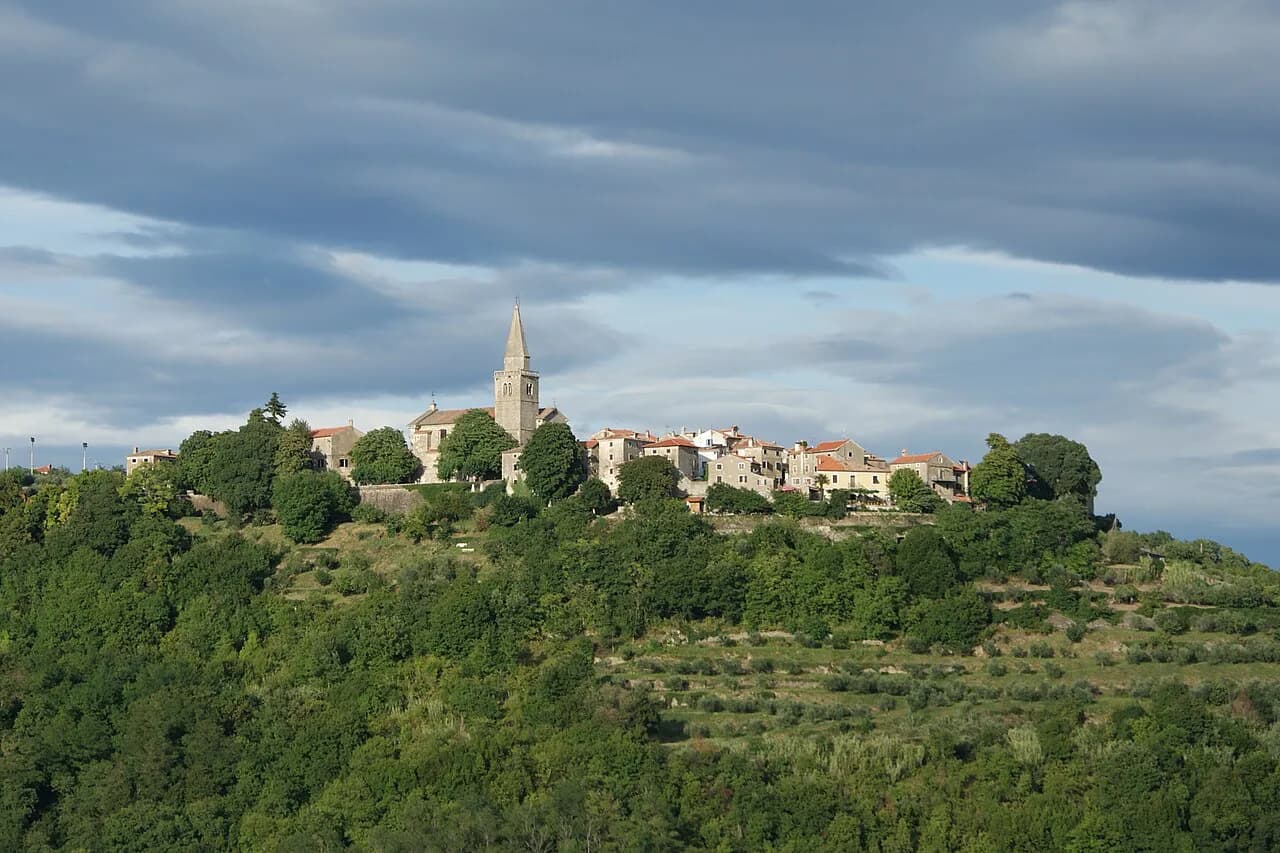
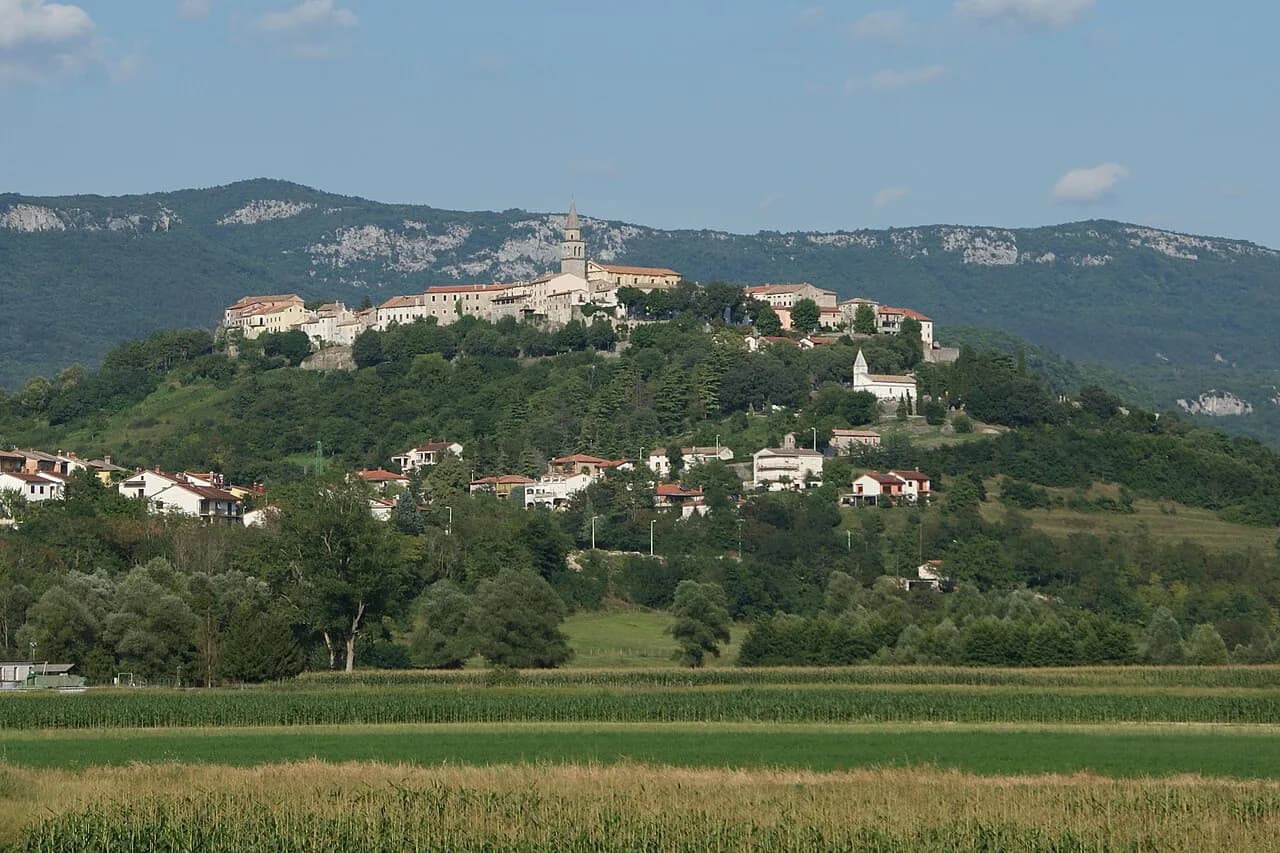
Svetvinčenat — Savičenta in the Istrian dialect — is a small inland municipality in Istria, sitting in gently undulating countryside of fields and Mediterranean vegetation rather than on the coast. That setting is exactly why it reads differently from the harbour towns: no waterfront, no ferry queue, just a compact historic core.
The reason to come is the grouping of sights. A late-medieval fortress, a Renaissance square and two churches of the 15th and 16th centuries stand within a few minutes' walk, so the detour pays off quickly even if you have only an afternoon. If you are already touring the peninsula's inland villages, Svetvinčenat slots naturally into a circuit with the hill towns further north.
Be clear about the trade-off. This is not a town you build a day around: there is no beach of consequence and no long list of museums, and the appeal is concentrated in the square. Treat it as a two-to-three-hour stop between coast and countryside, and it rewards the effort; treat it as a destination in its own right and you may finish early.
The Renaissance square: what you are looking at
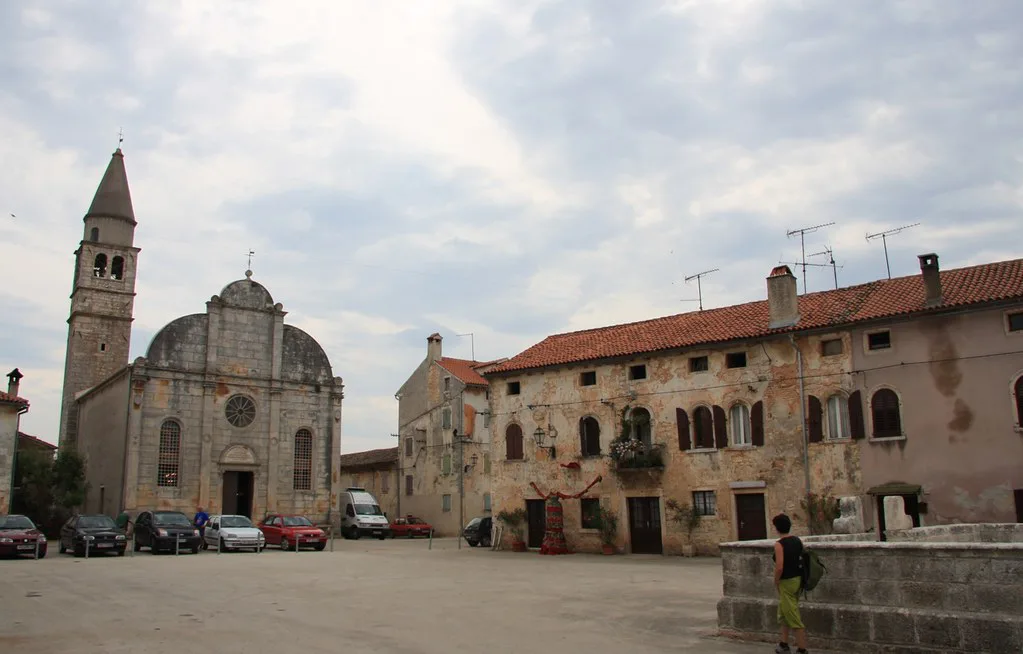
The square is the village's living room and its showpiece at once. It is a planned Renaissance space, which is why the buildings around it line up so neatly: the fortress closes one side, the Church of the Annunciation of Mary stands on the eastern side, and the rest is low, even-fronted houses. Stand in the middle and the whole layout reads in a single turn.
Look at the details rather than the postcard view. The Church of the Annunciation of Mary, on the eastern side of the square, dates back to the 16th century and carries a trefoil Renaissance façade — the three-lobed shape above the door is the feature to pick out. That façade and the fortress walls together explain why the village is described as a Renaissance core rather than a medieval one.
The municipality lists 'Revitalizacija područja zaštićene renesansne jezgre Općine Svetvinčenat' — revitalisation of its protected Renaissance core — among its EU projects, which shows how central the square is to the village's heritage. Allow time to sit on the square as well as cross it; the place works best at slow pace.
The Morosini-Grimani castle: the village's main sight
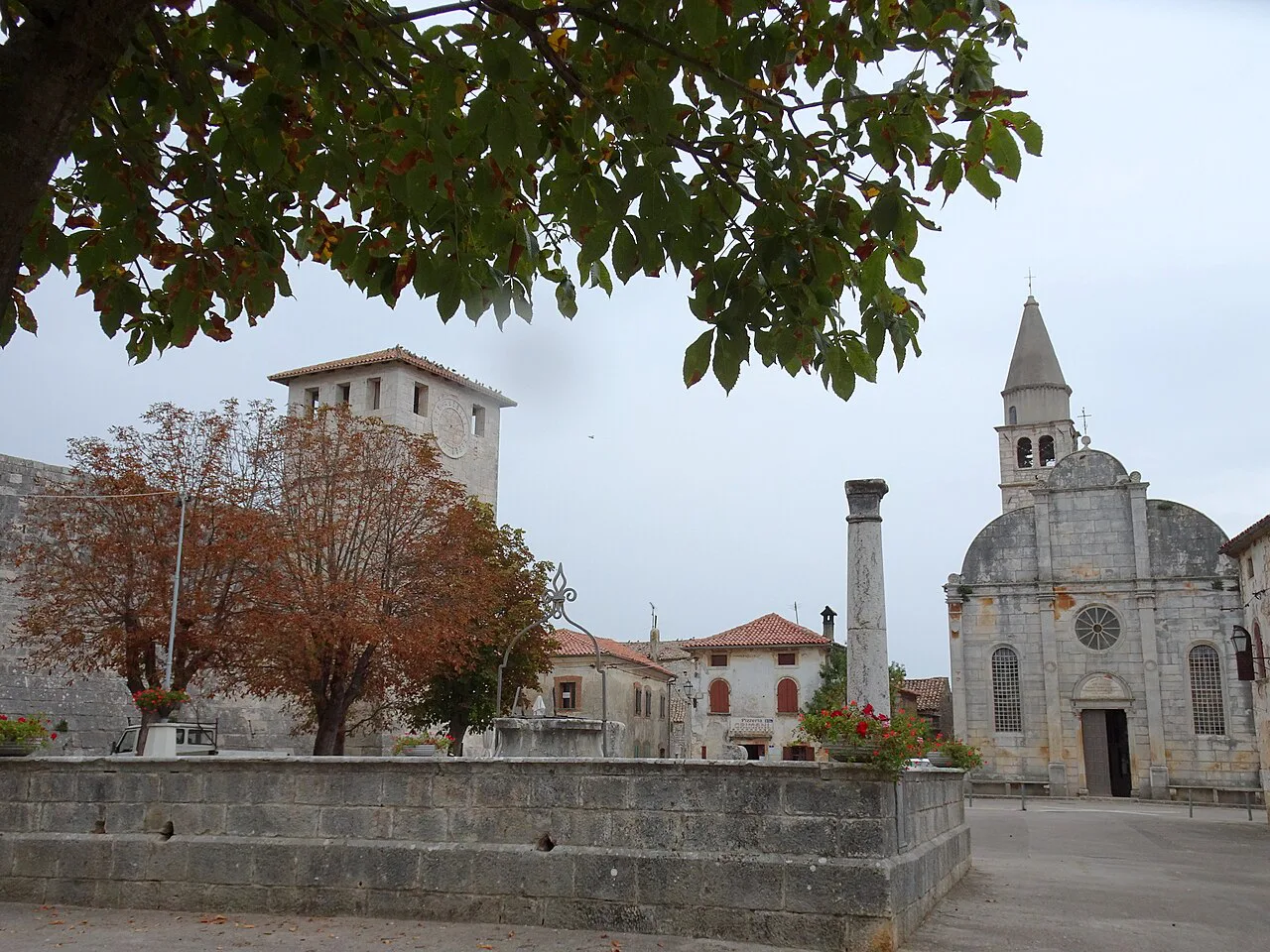
The Morosini-Grimani fortress is the sight to plan around. It is a late-medieval building; hiking-route notes give its first mention as 983, and its name comes from the Venetian Morosini and Grimani families who held it. Treat that early mention as a documentary reference, not a construction date — the fabric you see is later than the first record.
In spring and summer the fortress is used for programmes and events, which changes the experience: on an event day parts of it may be occupied, while on a quiet day you can cross the square and approach the walls at your own pace. That seasonal use is the main variable in planning a visit, more than the weather.
Whether you can go inside, and on what terms, is published by the municipality rather than fixed here. Check the Općina Svetvinčenat site for the current visiting arrangements before you drive out, and plan the rest of the circuit so the castle is not the only thing on your list.
The churches around the square: St Catherine and the Annunciation of Mary
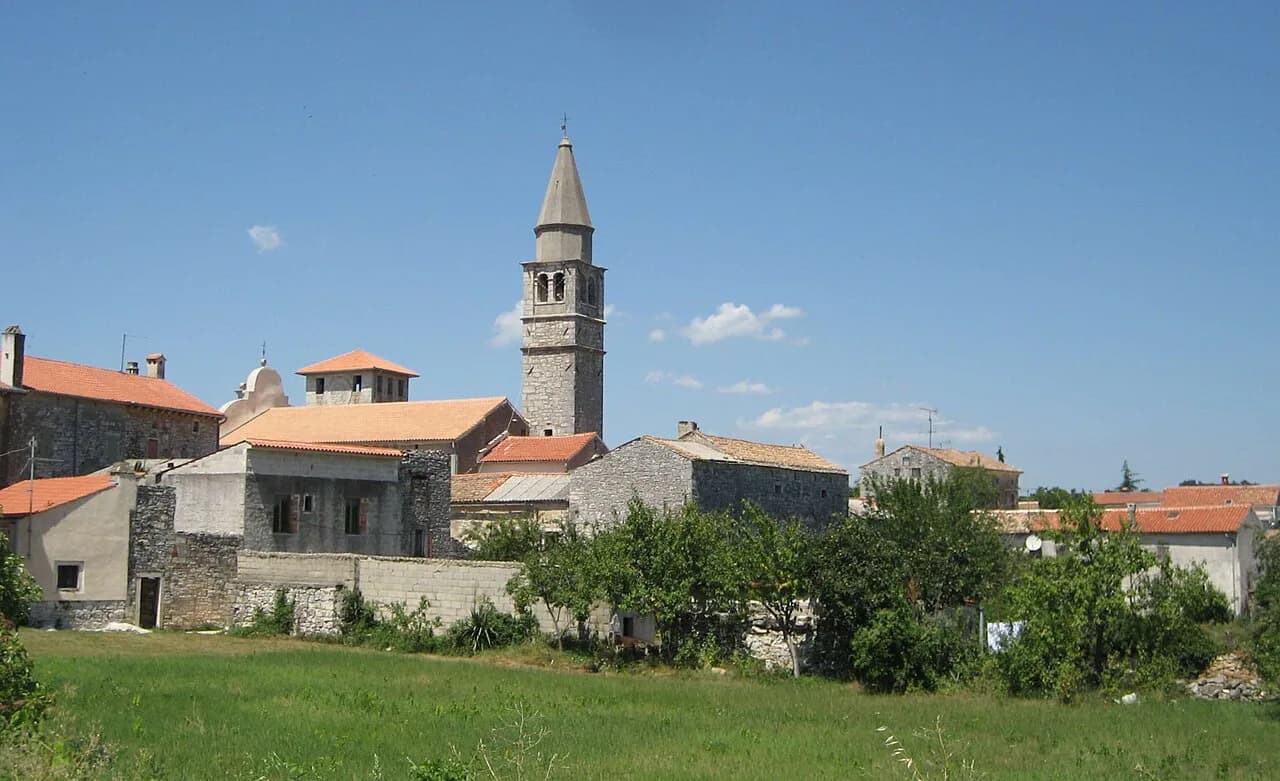
Two churches anchor the visit, and they are easy to confuse. The Church of the Annunciation of Mary is the one on the square's eastern side with the Renaissance façade; the Church of St Catherine is a simpler 15th-century building with a bell gable and an 18th-century portico.
Seeing both takes very little time and gives you the village's two architectural periods side by side: the plain late-Gothic/early-Renaissance style and the more decorative 16th-century work. Treat the exteriors as the certain part of the visit, and an open door as a bonus rather than something to count on.
A short walking route through the old centre
Start on the square and work outwards rather than following a fixed trail. From the open space, look east to the Annunciation façade, cross to the fortress side for the walls and entrance, then walk the lanes behind the parish church to find St Catherine's bell gable. The whole loop is a matter of minutes on foot, not kilometres.
For a longer leg, the roads out of the village are the draw. The Svetvinčenat–Vodnjan road is a well-surfaced asphalt cycle route popular with riders, though traffic can be heavy at times. The A9 segment towards Orihi runs past small villages, and riders recommend it downhill rather than uphill, because the surface is better that way.
If you are stringing villages together, use an Istria map to see how Svetvinčenat sits relative to the coast and the interior before committing to a route; the road network here is straightforward but the distances add up.
How long Svetvinčenat needs
Give Svetvinčenat two to three hours. That covers the square, the fortress exterior, both churches and a slow coffee on the square, with time to read the buildings rather than photograph and leave. If the fortress is open and you go inside, add another half-hour.
A half-day is the realistic ceiling for most travellers, and that is the honest trade-off of an inland stop: high density of interest, small footprint. Pair it with something else on the same loop rather than stretching the visit, and you get a better day out of the same drive.
Getting there from the Istrian coast
Svetvinčenat is reached by road, and the approach that matters for most visitors is from Vodnjan, towards the coast. A separate cycle segment, the A9 road towards Orihi, runs from the interior through villages and farmland. There is no rail station and no ferry, so a car, bike or organised transfer is the practical way in.
Coming from the coast, Vodnjan is the natural last town before turning inland, which makes Svetvinčenat an easy add-on to a southern Istria day rather than a separate expedition. If your base is further north, the village fits better into a hill-town circuit, and the wider Istria guide sets out how the regions connect.
Bus links to this inland village are sparse, so check the timetable before planning a day around a connection; a taxi from Vodnjan is the fallback, and for cyclists the Vodnjan road is the obvious link.
When to go: summer events and the quieter months
Spring and summer are when the fortress comes alive with programmes, so if you want the village with something happening, aim for the warmer half of the year. The seasonal programme has to come from the organiser, so check the fortress arrangements before you plan a visit around an event.
Outside those months Svetvinčenat is quiet, which for many is the point: the square, the churches and the lanes are all exterior sights that do not depend on opening times. The trade-off is that a village this small feels empty out of season, and any indoor access becomes less certain.
Cyclists should treat this as an inland ride rather than a coastal one: the lanes are exposed and the summer heat builds through the day, so the sensible window is a morning start.
Practical notes: parking, the euro and seasonal openings
Croatia uses the euro, so there is no currency exchange to worry about in the village; bring card and some cash as you would anywhere small. Budget for the possibility of a small charge at the fortress and check current prices with Općina Svetvinčenat or the ticket desk before you travel.
Parking in a village of this size is informal: you park at the edge of the centre and walk in, which suits the pedestrian square. Expect the usual summer pressure around event days, when the fortress programme draws a crowd into a very small street plan.
If your trip runs across the peninsula, the other inland stops are worth comparing before you fix the route — Motovun for the walled hilltop, Grožnjan for the arts colony, and Bale for its own castle core. Each is a different shape of detour, and together they make a coherent inland day.
Is Svetvinčenat worth the detour?
Yes, for a half-day and for travellers who value architecture over beaches. The Renaissance square, the Morosini-Grimani fortress and the two churches form a compact circuit you can walk in an afternoon, and the inland setting is a genuine change of register from the coast.
The conditions are simple: come by car or bike, plan two to three hours, and check the fortress arrangements with the municipality before setting out if going inside matters to you. Build the rest of the day around a second inland stop, and Svetvinčenat earns its place on the itinerary.
Explore more Istria guides
Sources
Notes from the Croatian coast
Optional updates when our guides change.
You might also like
Continue reading
More guides you'll find useful