Zrmanja River, Croatia: Canyon, Waterfalls and Boat Trips
The Zrmanja river runs 69 km through karst canyons to Novigrad. See how the waterfalls, the Krupa tributary and boat trips fit together, and when to go.
On this page
The Zrmanja river is a 69 km karst waterway in the Zadar region that springs in southern Lika below Postak mountain and reaches the sea near Novigrad. The national tourism board describes it as a karst snake furrowing through limestone across six canyons. This guide sets out how the river is laid out, where the waterfalls sit, and how to choose between a boat trip, a kayak and the canyon trails.
Most visitors treat the Zrmanja as two separate outings: the quiet upper course for paddling, and the lower stretch from Obrovac to Novigrad, which is navigable for the final 10 or so kilometres by smaller vessels only. Plan the river around those two halves rather than expecting one long cruise.
Where the Zrmanja rises and reaches the sea
The source lies in southern Lika at the foot of Postak mountain, and from there the river runs 69 kilometres toward the coast. Its mouth sits beside Novigrad, a small historical town that makes the most natural base for the lower river. The upper course is the stretch to think about if you want scenery without engines.
The national tourism board frames the river as a paddling destination, noting that its course cuts through six canyons in the limestone. That canyon country is why the river feels enclosed and why the water stays a distinct turquoise in the photographs. It also explains why access points matter: you drive to a specific bridge or village, not to a single riverside promenade.
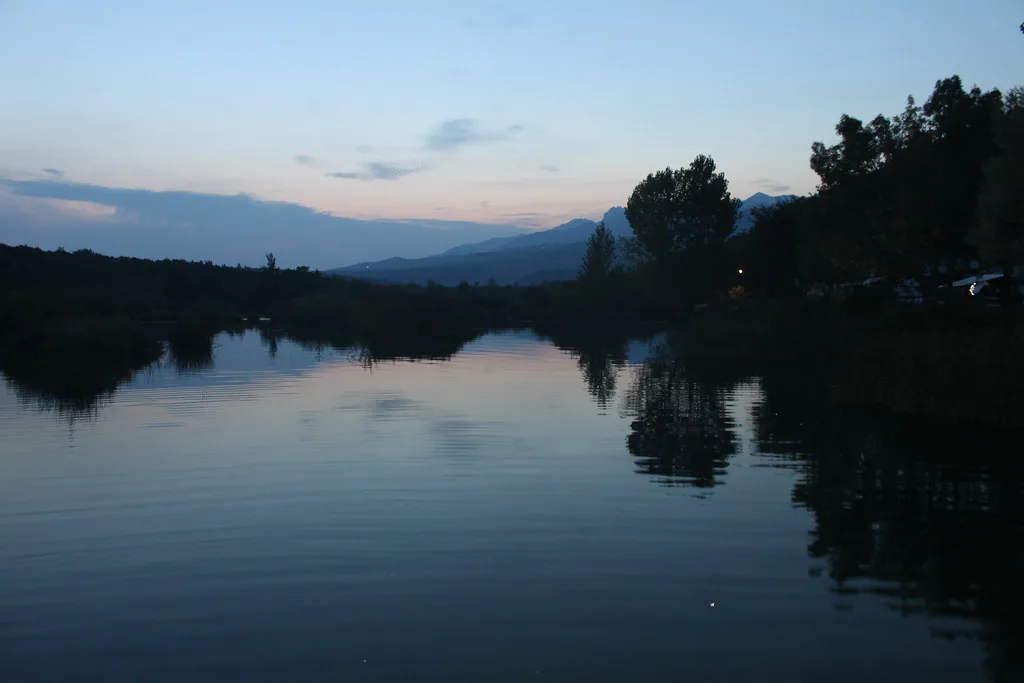
How the river is laid out: upper course, Krupa and the lower stretch
Think of the Zrmanja in three parts. The upper course, below Postak, is where kayak and canoe tours run. The Krupa is the river's most important tributary, a stream in its own right with cascades and waterfalls of many heights and shapes. The lower stretch runs from Obrovac to Novigrad and is the section boats use.
The Krupa deserves its own slot in the plan rather than being treated as a footnote to the Zrmanja. Its cascades end in a series called Deveterac, the Niner, which finishes in the 13 m Veliki Buk waterfall near the point where the Krupa is joined by the Krnjeza. Near the Krupa's source stands a monastery dating to the 14th century.
The lower river is navigable for roughly the last 10 kilometres, from Obrovac down to Novigrad, and only for smaller vessels. Do not build a day around a long river cruise; build it around a short run with a stop. From Obrovac it is only four kilometres to Jankovića buk, the river's last waterfall.
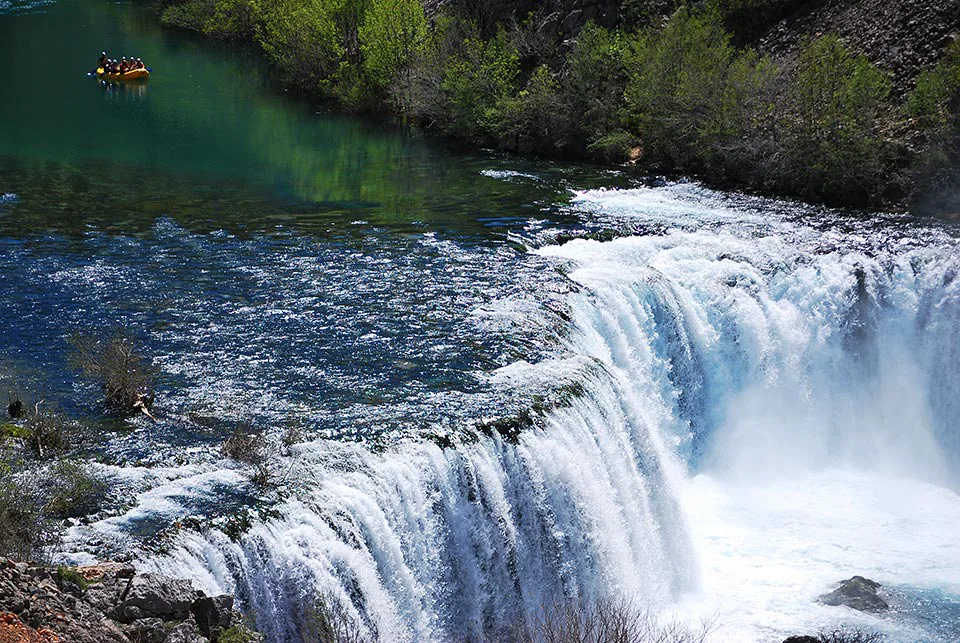
Jankovića buk and Veliki Buk: the waterfalls worth planning around
The two waterfalls most often confused are on different watercourses. Jankovića buk is the Zrmanja's own last waterfall, four kilometres from Obrovac. Veliki Buk, at 13 m, belongs to the Krupa system and closes the Deveterac sequence. Keeping that straight saves a wasted drive.
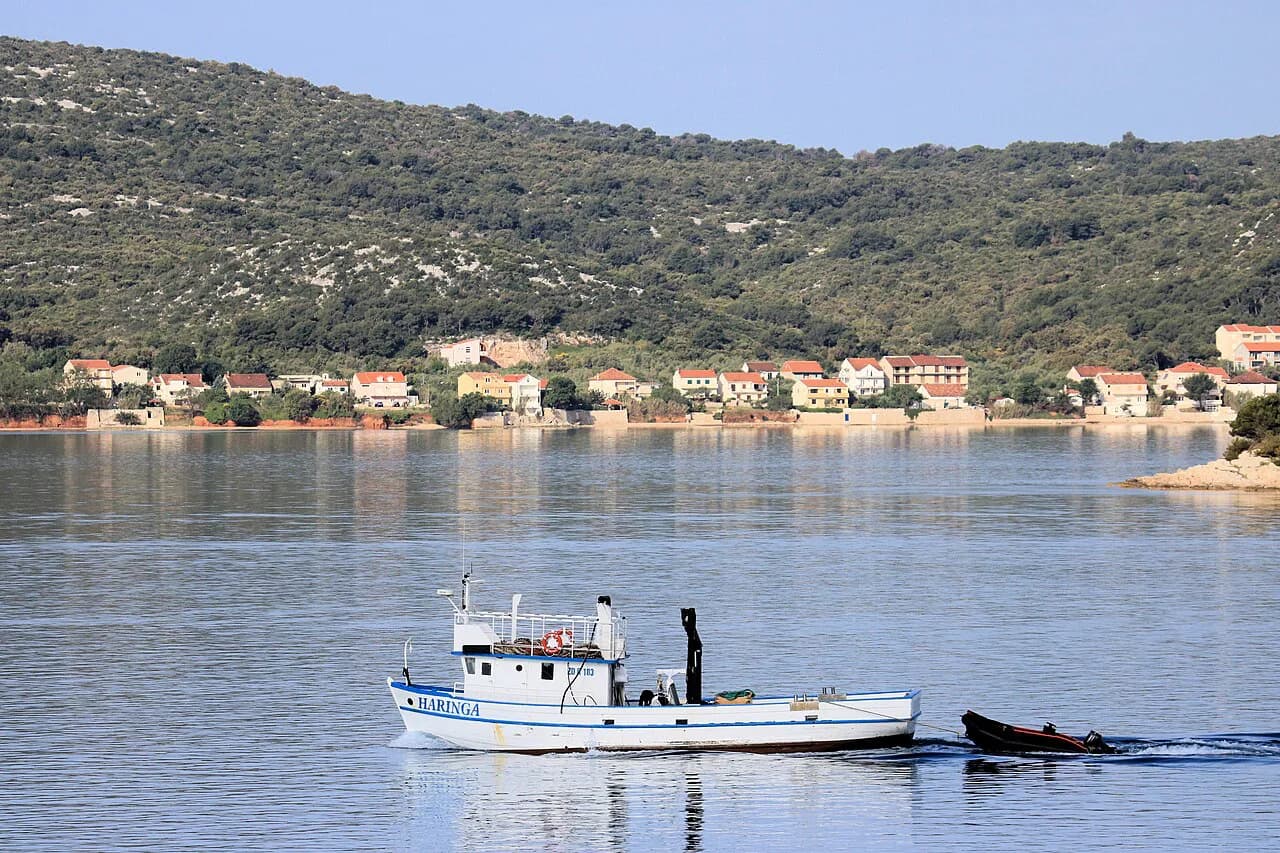
The standard boat trip from Novigrad to Obrovac runs up to Jankovića buk, where passengers can swim in the water below the fall. That swim is the reward for choosing the boat over the car, and it is the reason to bring a towel even on a short outing. Boats run on the lower river, so this is not a canyon paddle.
Boat, kayak or raft: choosing how to be on the water
For most travellers the choice comes down to three modes. A boat from Novigrad gives you the lower river and the waterfall swim with no paddling. A kayak or canoe on the upper course is the slowest and most immersive way to read the canyon. Rafting is the third option, and the season is the surprise.
Rafting on the Zrmanja is described as running through the year apart from the summer months, which reverses the usual assumption that summer is adventure season. If rafting is the reason for your trip, treat July and August as the months to avoid and build the visit around the rest of the year. Confirm rafting availability and conditions with the company you book before travelling.
The most relaxed way to see the upper course is by kayak or canoe, which lets you take the canyon at your own pace. Guides run trips from across the Zadar region, including from Zaton Holiday Resort, and they usually include a Dalmatian meal. Book through an operator rather than turning up at a bridge expecting to hire on the spot.
Hiking trails, old water mills and the Kudin most bridge
Walkers can follow trails in the canyon along and across the river, which suits anyone who wants the scenery without committing to a paddle. The route passes old water mills, once vital to local life and now disused but still standing as landmarks. Allow more time than the distance suggests, because canyon paths climb and drop.
On the Krupa side, the Kudin most is a dry-stone bridge of the suhozid type, built according to legend by a young man who needed to cross to reach his beloved. It is a small detour that rewards anyone already exploring the tributary. Pair it with the 14th-century monastery near the Krupa's source.
Novigrad and Obrovac: the two base towns on the river
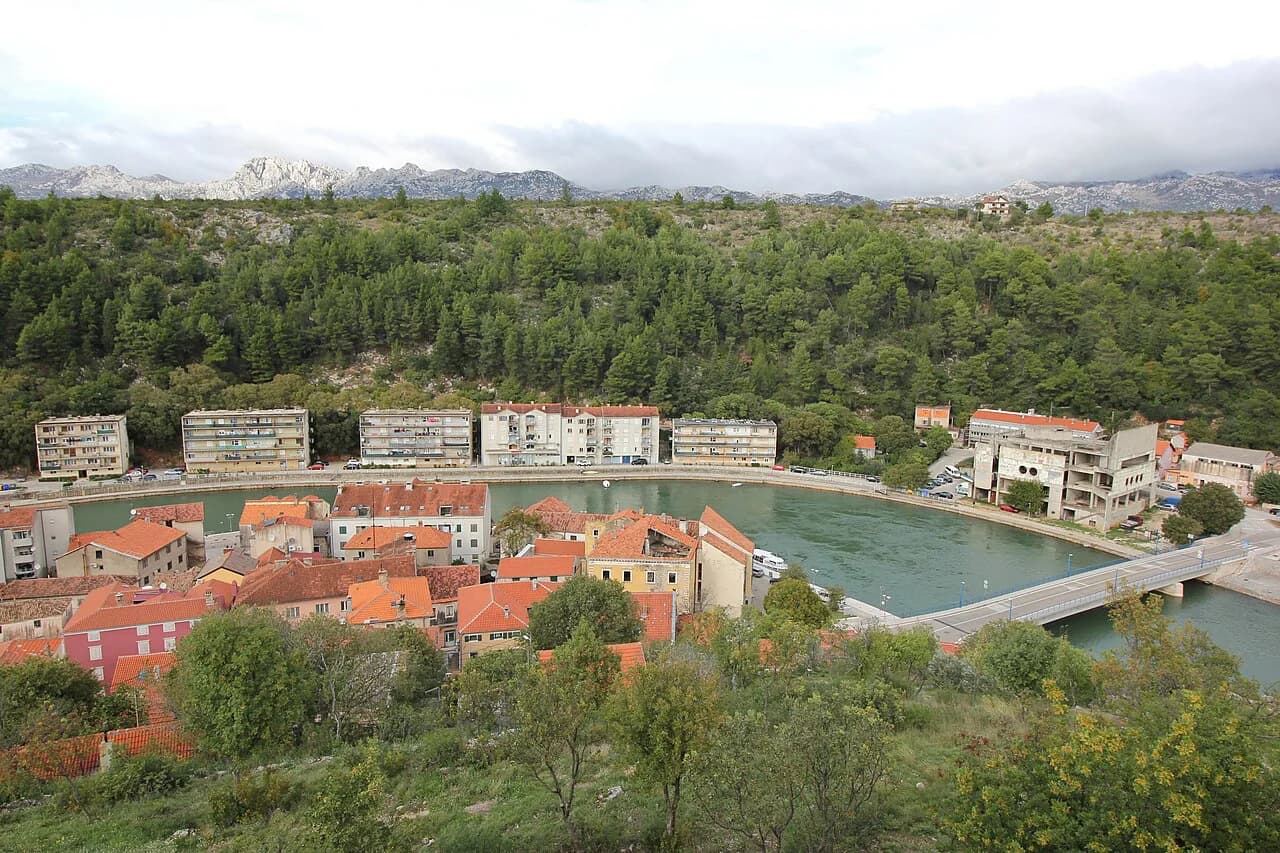
Novigrad sits at the river mouth and is the starting point for boat trips up to Jankovića buk. Obrovac is the other anchor, four kilometres from that same waterfall and the access point for the navigable lower stretch. Both towns have a long story to tell, and the old water mills along the river are the visible remnant of the working life that once depended on it.
Neither town is a resort, so treat them as practical bases rather than destinations in themselves. The driving logic is simple: pick Novigrad for the boat, Obrovac for the waterfall approach and the lower river road. If you are travelling down the Dalmatian Coast, the Zrmanja sits naturally between the Zadar area and the inland parks.
When to go: summer water, quieter months and canyon shade
Summer brings the warmest conditions and the most company, and the canyon offers shade when the coast is at its brightest. It is also the season when rafting is not offered, so anyone set on that should look at late spring or early autumn instead. The national tourism board and local operators both present the river as an active outing rather than a sunbathing stop.
Swimming below the waterfall is part of the appeal of the lower river: the boat trip from Novigrad to Obrovac stops at Jankovića buk so passengers can swim in the water below the fall. Judge the water and conditions for yourself on the day. Outside high summer, expect fewer people on the water and more variability in conditions.
How long the river needs and what to combine it with
Give the Zrmanja a full day if you are paddling or taking the boat plus the waterfall swim, and half a day if you are driving between Obrovac and Novigrad with a stop at Jankovića buk. Adding the Krupa and the Kudin most pushes it toward a long day. It is not a place to squeeze in between two coastal stops.
The river works best as a contrast to the coast rather than an add-on to a beach day. If your itinerary already includes the old towns and islands, place the Zrmanja between Zadar and the inland parks and keep the following day light. For more inland scenery on the same trip, see the Dalmatian hinterland guide, the Imotski Lakes guide and Klis Fortress, all within reach of a wider Dalmatian drive.
Which Zrmanja outing should you book?
Book the boat from Novigrad if you want the waterfall swim with no effort, and the upper-course kayak if you want the canyon at close range. Choose rafting only outside the summer months, since that is when Zrmanja rafting tours are run. Whatever you pick, check the day's conditions and departure point with your tour provider before you set off.
If you are building a wider Dalmatian itinerary, the Zrmanja pairs well with the Zadar region and the inland parks; the Dalmatian hinterland guide covers the inland stops that combine naturally with a river day. For the practical details, see the Trogir.
Explore more Dalmatia guides
- Biograd na Moru
- Biokovo Skywalk
- Cathedral of St Lawrence, Trogir
- Kaštela: A Guide to the Seven Castle Villages Between Split and Trogir
- Nin, Croatia
- Omiš: the Old Town, the Fortresses and the Cetina Gorge
- Primošten
- Salona: the Roman city ruins at Solin, near Split
- Vodice, Croatia
- Čiovo: the Island Joined to Trogir by Bridge
Frequently Asked Questions
Can you swim in the Zrmanja river?
Yes. Swimming is part of the lower river's appeal: the boat trip from Novigrad to Obrovac stops at Jankovića buk, where passengers can swim in the water below the waterfall. Judge water and conditions on the day and follow the boat crew's advice.
Is the Zrmanja river near Zadar?
It lies in the Zadar region, with its mouth near Novigrad and its source in southern Lika below Postak mountain. You reach it by road from the Zadar area rather than on foot from the city, so plan transport to Novigrad or Obrovac and work from there.
What is the Zrmanja river known for?
It is known for karst canyon scenery, waterfalls and active days on the water. The national tourism board highlights a course cutting through six canyons, while the river's most important tributary, the Krupa, holds the 13 m Veliki Buk waterfall. The Zrmanja's own last fall is Jankovića buk, four kilometres from Obrovac.
Sources
Notes from the Croatian coast
Optional updates when our guides change.
You might also like
Continue reading
More guides you'll find useful