Primošten, Dalmatia: Old Town, Beaches & Vineyard Terraces
Plan a visit to Primošten: the island old town with its gate and ramparts, St George's Church, the Babić vineyard terraces and how long the town needs.
On this page
Primošten deserves a night rather than a passing stop: the walled island centre, the climb to St George's Church and the vineyard terraces behind the town fit comfortably into one leisurely day. If you only have a few hours, the gate, the church and one lap of the shaded lanes still give you the essence. This guide sets out the layout first, then the sights, the time you need and how the town sits between Split, Trogir and Šibenik.
The town is a former island fishing village, settled at the end of the 15th century by families fleeing Turkish incursions into Bosnia; the island is now joined to the mainland, which is where the modern part and the Raduča peninsula stand. Read on for the route through the centre and an honest view of when to come.
What Primošten is: a former island fishing village
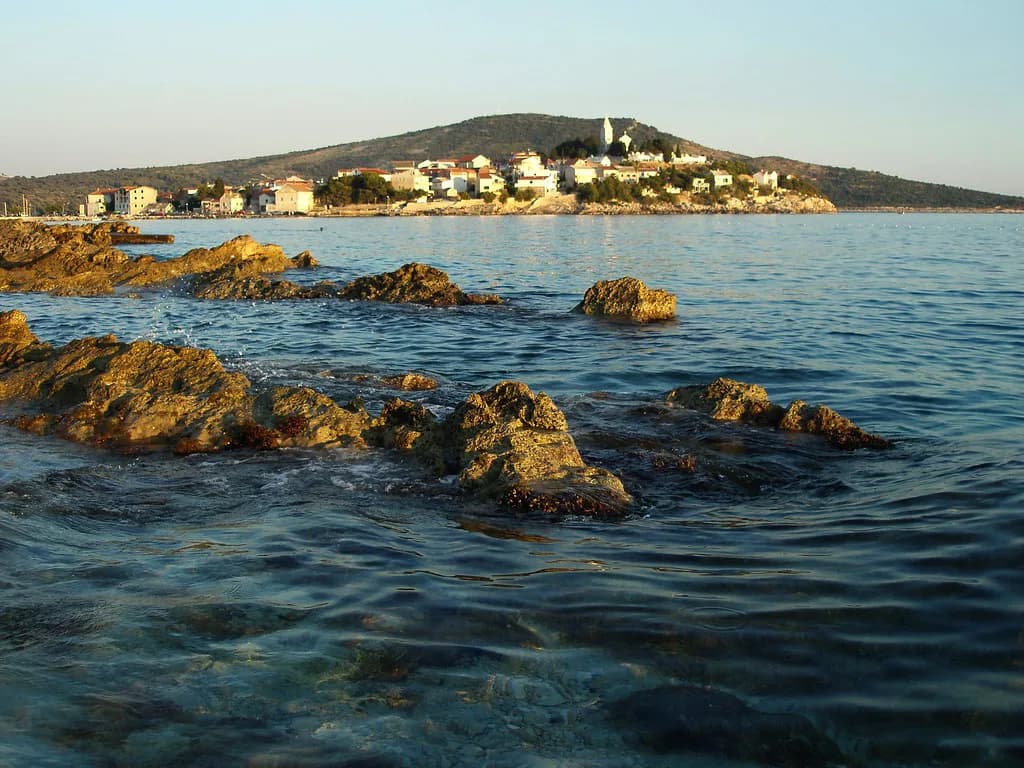
Primošten's old centre occupies a small former island, once separated from the shore and now linked to the mainland where the newer town has grown. The name is usually explained as 'provided with a bridge', a reference to the crossing that joined island to coast.
That island-to-mainland story is the key to reading the place. Everything historic sits on the little hump of rock; everything modern, including the Raduča recreation peninsula, spreads along the shore. Visitors who expect one continuous seafront town often end up puzzled about which half they are in.
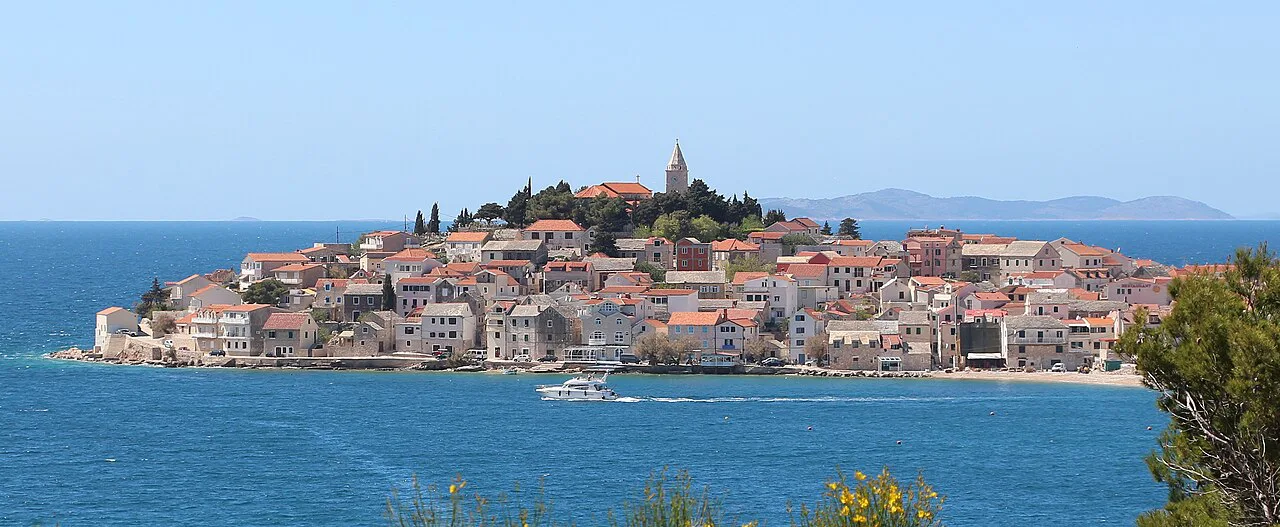
Where Primošten sits on the Dalmatian coast
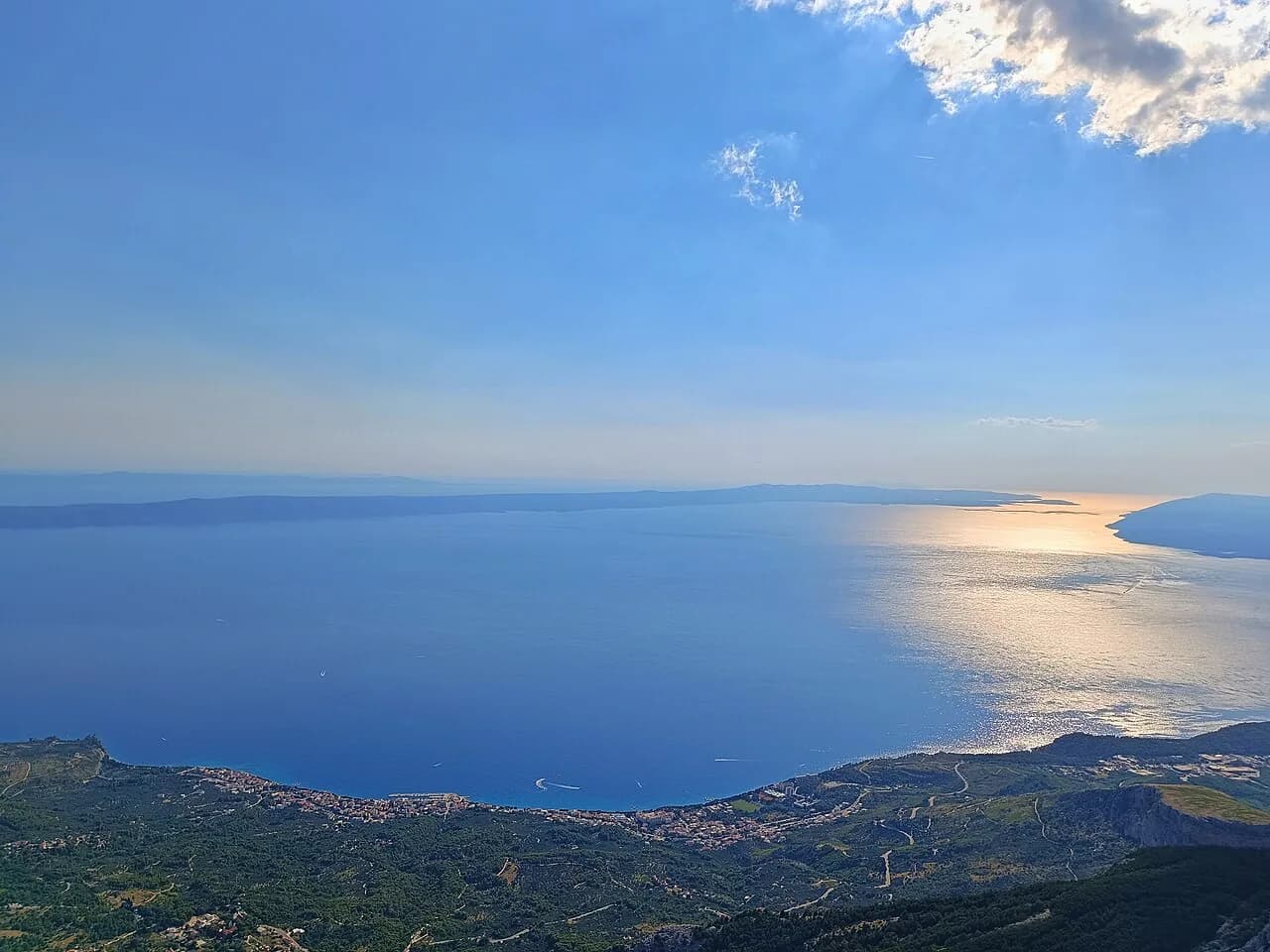
Primošten lies in the southernmost part of northern Dalmatia, roughly 50 km north of Split, 32 km from Trogir and 25 km from Šibenik. That puts it on the natural coastal route between the Split area and the Šibenik-Knin coast, making it an easy stop rather than a detour.
For a coast trip, think of it as a hinge. Come from Split or Trogir and you arrive from the south; come from Šibenik or the Krka side and you arrive from the north. Either way, the drive is short enough to combine Primošten with a wider run along the Dalmatian coast without losing a day to travel.
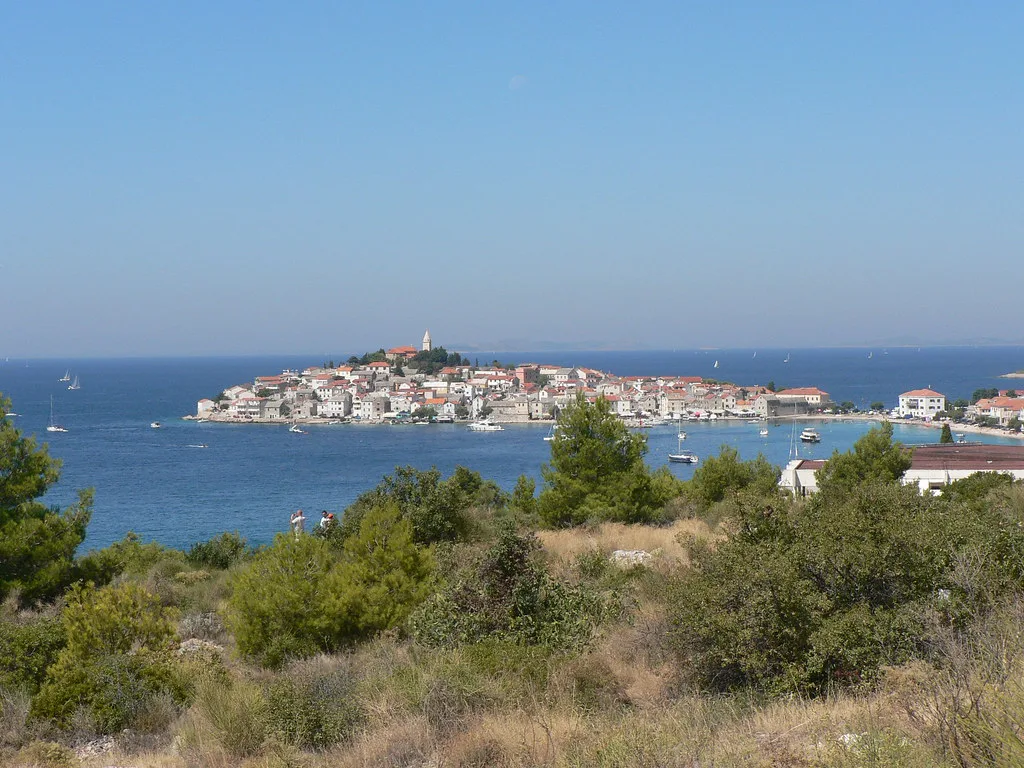
The old town layout: gate, ramparts and the bridge crossing
The historic centre was fortified with walls and towers, and a drawbridge was once the only link to the mainland. A large entrance gate and stretches of the ramparts survive from the period of Venetian domination, so the entry you walk through is the town's original threshold rather than a decorative arch.
Walk through the gate and you are immediately inside a tight, shaded grid of narrow streets lined with shops, cafés and restaurants. Because the old town is small, you can orientate yourself in minutes: the lanes climb gently towards the church hill, and the sea is never far behind you.
St George's Church and the view over the town
St George's Church has dominated the town since the 15th century, and its present shape dates from the second half of the 18th century, when it was extended into a baroque monument. Inside are a baroque altar and a venerated icon of the Virgin Mary in a silver frame.
The reward for the climb is the outlook: rooftops, the harbour and the surrounding coast open up from the church's high position. Treat the church as the fixed point of any walk and let the lanes bring you back to it. Opening times and any entry charge are a matter for the parish, so confirm them locally before you build a day around going inside.
The lanes and small square behind the gate
The centre's narrow streets offer shade, which matters in high summer, and they are lined with small shops, cafés and restaurants. Some original fishermen's houses survive among the later buildings, so look up at the stonework as well as into the windows.
Just behind the entrance gate is a small square that hosts evening cultural events in season, from performances and live music to traditional dances and religious celebrations. If you are staying overnight, this is where the town's evening gathers; if you are passing through by day, it is still a good place to pause.
The Babić vineyard terraces
Primošten is ringed by the vineyards of Babić, planted on stone terraces, and the grape gives one of Dalmatia's best-known quality red wines. The terraces are part of the landscape rather than a separate attraction, and the stone walls that hold them are as much a feature of the view as the vines.
Fishing, fruit and vegetables have long been the local livelihood alongside the vines, and that agricultural backdrop explains why Primošten feels quieter and more workaday than a resort. Treat the terraces as scenery to notice on the approach and on any walk out of town; this is a town guide, not a wine-tasting itinerary.
A short walking route through the centre
Start at the entrance gate so the ramparts and the old drawbridge crossing make sense as a single idea. Follow the lanes uphill to St George's Church for the panorama, then come back down through the small square behind the gate for a coffee and a look at the fishermen's houses.
Finish by walking out to the shore for the view back at the island hump: this is the angle that shows you what the town once was. A loop of this kind is short and unhurried, which is the point of Primošten rather than a tick-list of monuments.
How long Primošten needs
A half-day covers the gate, the ramparts, St George's Church and the lanes with time for a drink in the square. Add an afternoon and you can use the Raduča peninsula, the recreation area on the mainland side, and linger over a meal. Staying a night is the honest recommendation if the town's evening atmosphere is what you came for.
The town suits travellers who like a calm, romantic base with pebble beaches in the centre and a pine-fringed shoreline nearby. It is not a big-city stop, and its small scale is the reason a few hours feel generous rather than rushed.
When to go: summer heat against quieter months
Primošten has a Mediterranean climate, with hot, dry summers and mild, wet winters. June to August is the peak season and the busiest, which for a small walled centre means the lanes and the church hill fill up in the middle of the day.
Spring and early autumn give pleasant weather with fewer visitors, and they are the better bet if you want the old town to be quieter and the terraces green rather than scorched. Winter is quiet and less appealing for outdoor sightseeing. If you are extending the trip inland, the Dalmatian hinterland guide covers the region behind the coast.
Getting there from Split Airport and nearby towns
The nearest airport is Split-Kaštela, about an hour's drive from Primošten on the coast road according to family-guide estimates; the town itself sits about 50 km from Split, 32 km from Trogir and 25 km from Šibenik. Trogir and Šibenik are close enough to combine with Primošten in a single day of travelling.
Ferries are run by operators such as Jadrolinija on the wider Dalmatian network, but Primošten is a road stop rather than a ferry port, so plan the approach by car or bus. Trogir, with its old centre on its own small island, is the obvious companion stop south of Primošten.
Where Primošten fits with Krka, Kornati and the Šibenik coast
Primošten works well as a base for the Šibenik-Knin hinterland. Krka National Park, with Skradinski buk and Roški slap, and the Kornati islands offshore to the north-west are among the day trips run from the region. For contrasting inland sights, see the Imotski Lakes guide and the Klis Fortress guide.
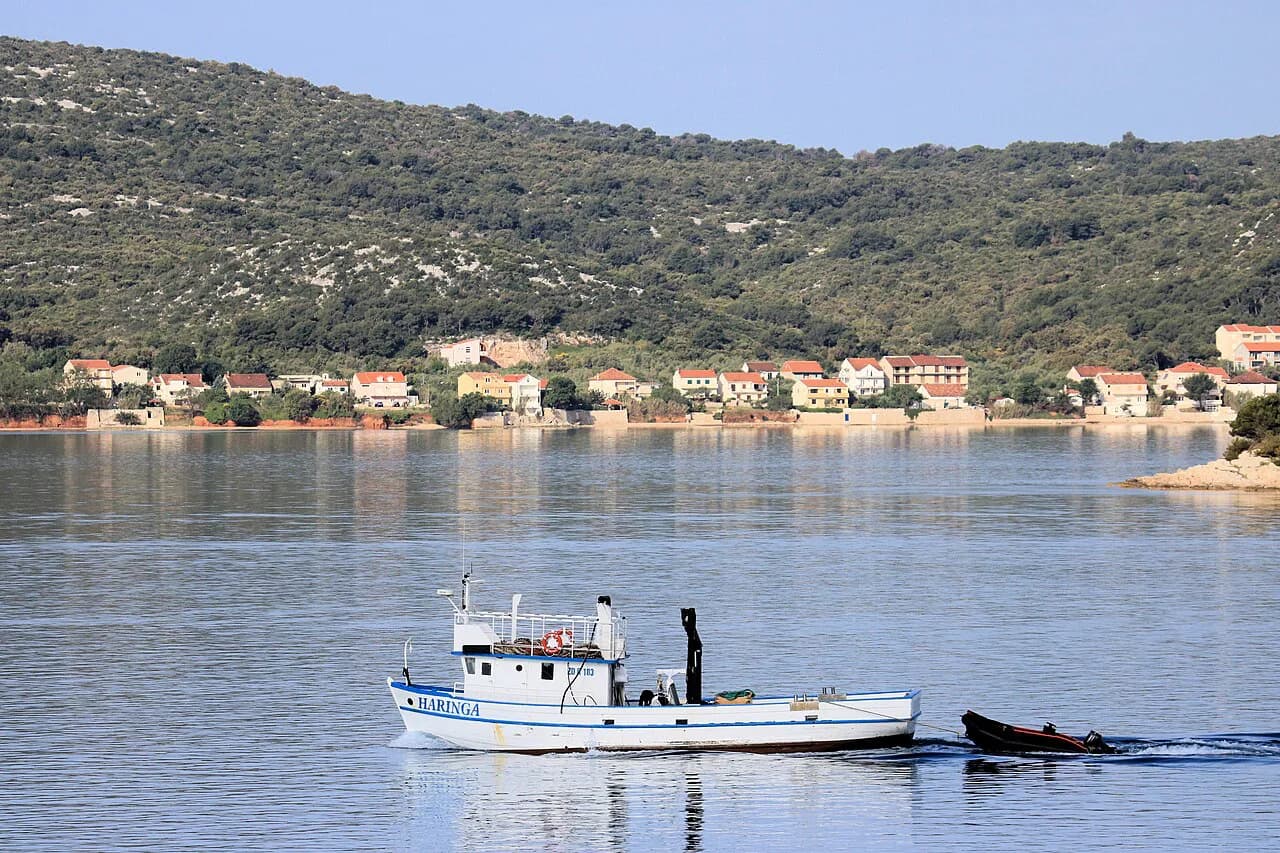
Boat trips to the national parks and neighbouring towns run from the region, and Primošten's own small harbour is the sort of place where you notice fishing boats rather than cruise terminals. Build the town into a wider Dalmatian coast route, and Kornati and Krka become add-ons rather than separate journeys.
Should Primošten be a night or a stop?
Give Primošten a night if you can: the walled island centre, the church hill and the evening square are best without a timetable. If the itinerary is tight, a half-day still delivers the gate, the ramparts and the view.
Place it between Trogir and Šibenik on a Dalmatian coast route, come in spring or early autumn to dodge the peak-season press, and confirm church opening and any local charges when you arrive.
Explore more Dalmatia guides
Frequently Asked Questions
Is Primošten worth visiting if I only have a few hours?
Yes. A short visit covers the entrance gate and surviving ramparts, the climb to St George's Church for the view, and a circuit of the shaded lanes with a pause in the small square behind the gate. The old centre is compact enough that a few hours feel unhurried rather than rushed.
Can you walk around the old town of Primošten easily?
The historic centre sits on a small former island and is walkable in a loop, with narrow lanes climbing gently towards the church. Expect uneven stone underfoot and steps on the approach to St George's Church, and keep the gate as your reference point when the lanes branch.
Do I need a car to reach Primošten?
A car makes the approach simple, since Primošten lies roughly 50 km from Split, 32 km from Trogir and 25 km from Šibenik, with Split-Kaštela airport about an hour's drive away. Buses serve the coast too; check current services locally.
Sources
Notes from the Croatian coast
Optional updates when our guides change.
You might also like
Continue reading
More guides you'll find useful