Trogir Guide: Dalmatia's UNESCO Old Town Stay Length
Plan a visit to Trogir in Croatia: the UNESCO island old town, St Lawrence's Cathedral and Kamerlengo fortress, and how long to allow before moving on.
On this page
Allow half a day for Trogir at minimum, and a full day if you want the cathedral bell tower and the Kamerlengo fortress as well as the lanes. The old town is compact enough to cross on foot in minutes, but the sights sit at opposite ends of the island, so a little planning saves you walking the same street twice. This guide covers the layout, the named sights, how long each part takes and how Trogir fits a longer run down the Dalmatian coast.
Where Trogir is and how the old town is laid out
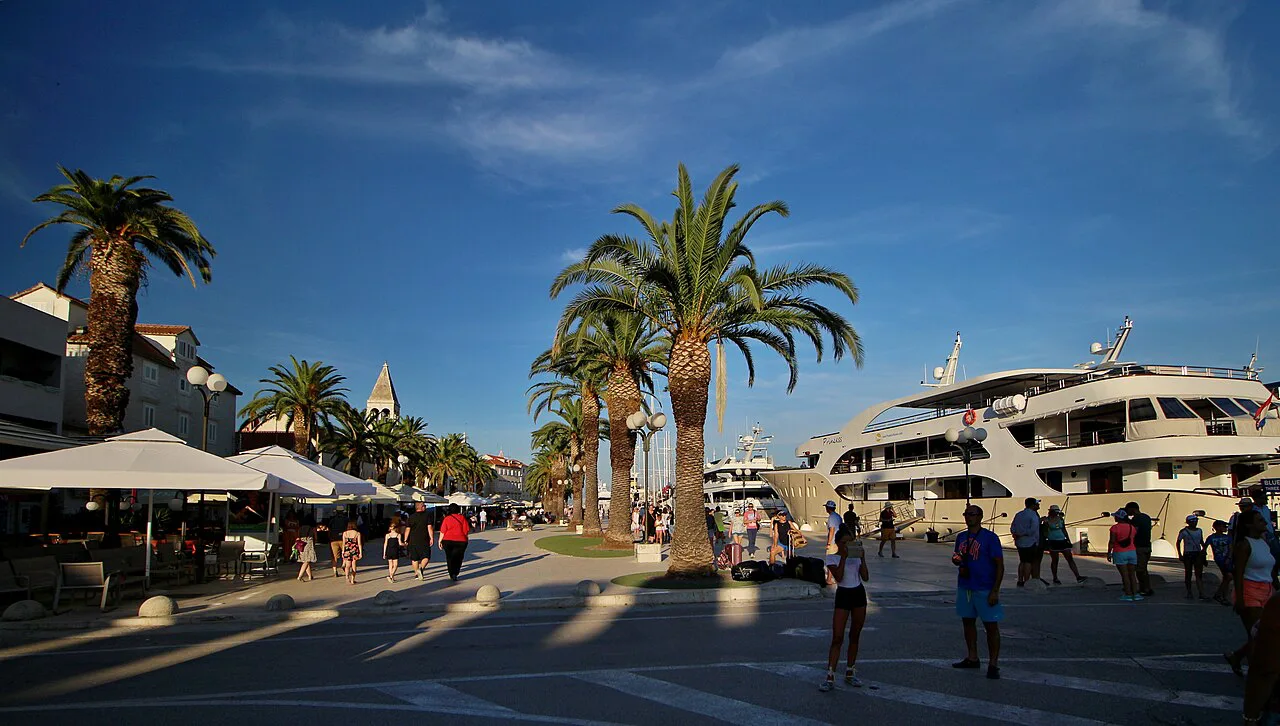
Trogir is a small historic town and harbour on the Adriatic in Split-Dalmatia County, and its old centre occupies an island close to the mainland, with the larger island of Čiovo alongside. That island setting is the reason the whole visit feels enclosed: you arrive across a bridge, and within a few steps you are inside a tight grid of stone lanes with no through traffic. Approach on foot and the town presents itself as a gate, a waterfront and a square rather than a sprawl.
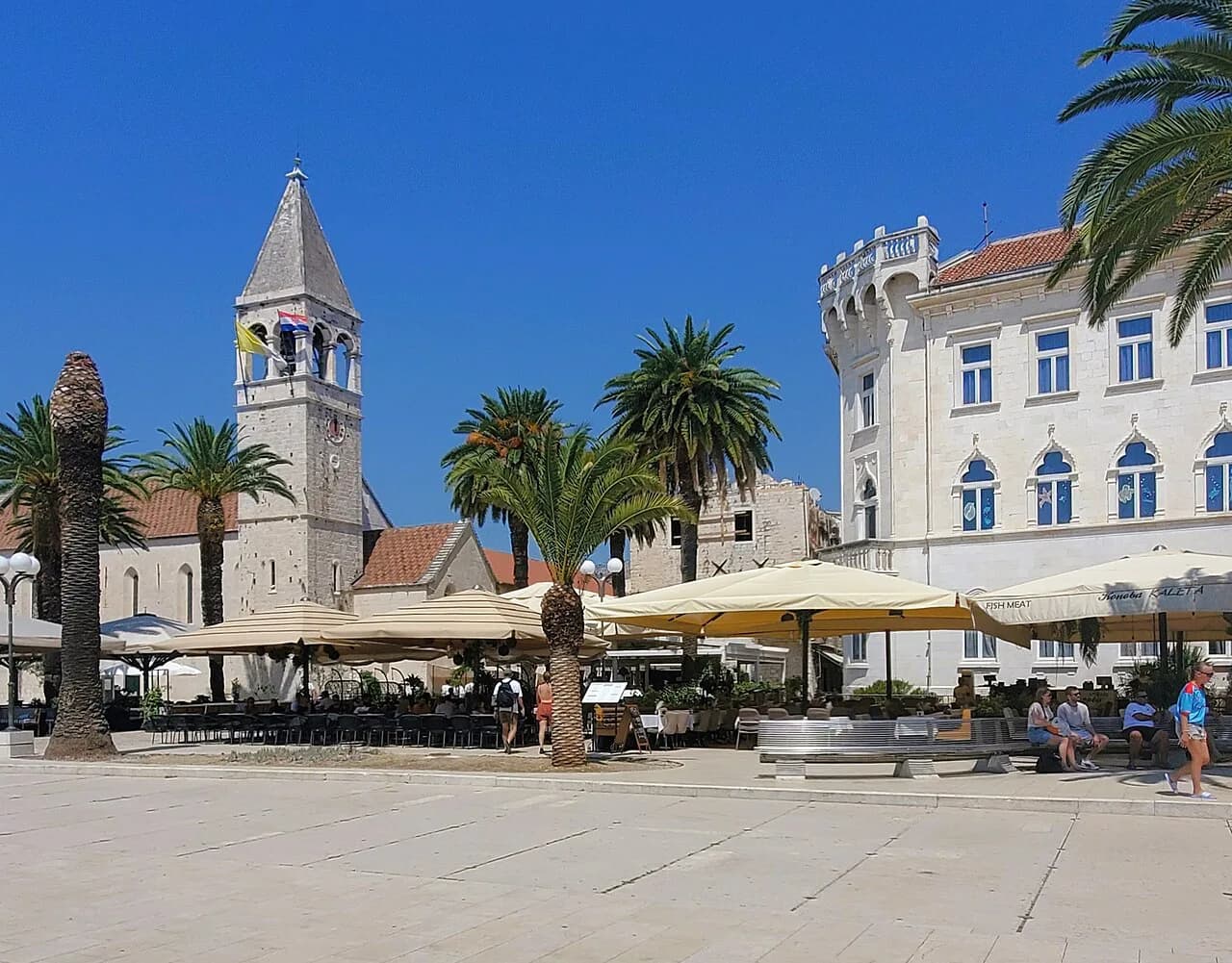
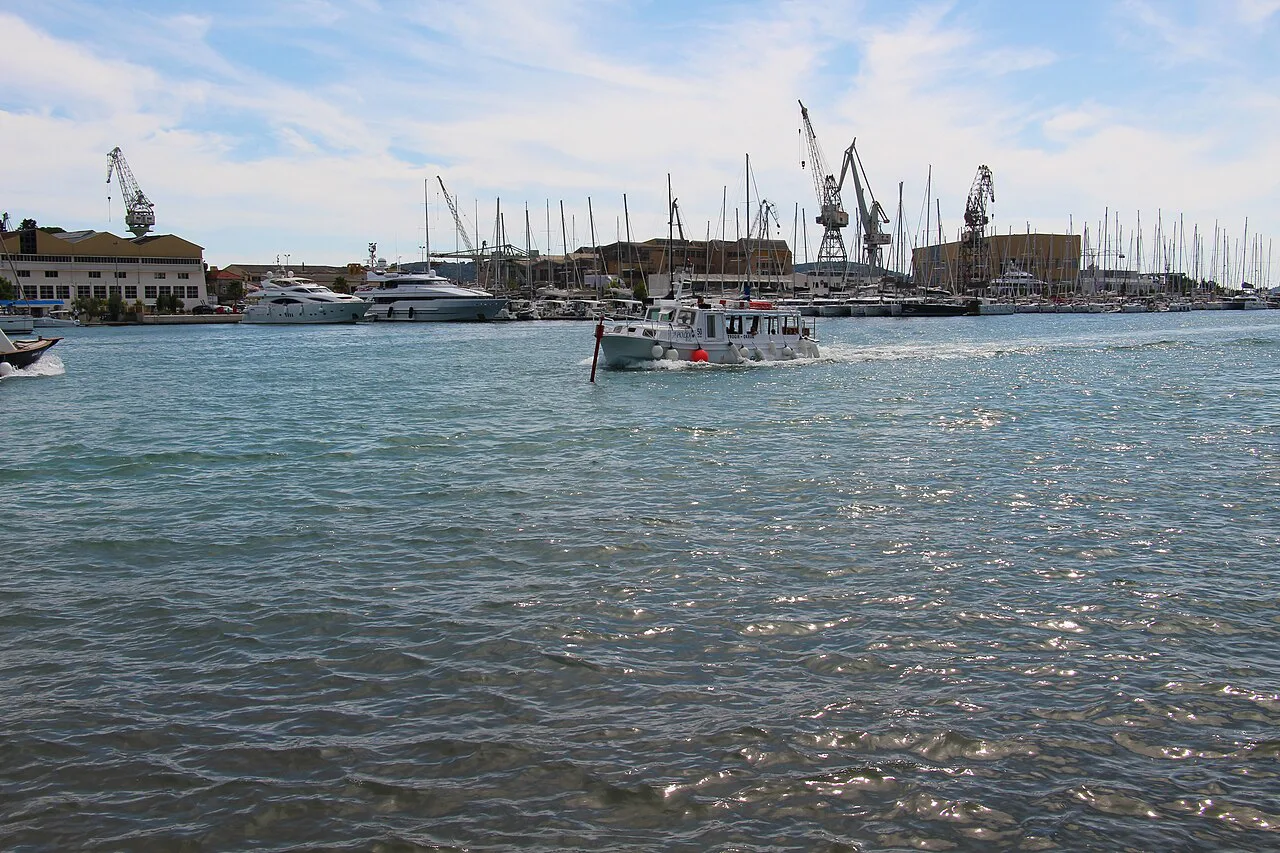
The Riva, Trogir's waterfront promenade, runs along the edge of the island and is the natural place to start and finish, with the main square set just behind it. From the square, lanes run towards the land gate and the fortress tip, so the town reads as a short strip rather than a grid to get lost in. A bridge carries you across to Čiovo, which is why the island feels less like a detour and more like a link in the coast road.
Two gates frame the old town for pedestrians: the landward gate on the mainland side and the sea-facing approach off the Riva. Because everything sits within a few hundred metres, walk one line from the square to the fortress and back along the waterfront rather than criss-crossing the lanes.
Why Trogir is a UNESCO World Heritage site
Trogir's historic centre holds UNESCO World Heritage status, which is why coach groups, guided walks and day-trippers from Split treat it as a scheduled stop rather than an incidental one. In practice the middle of a summer day concentrates visitors in the square and along the Riva, while the smaller lanes and the fortress end stay quieter, so timing your cathedral visit for early morning or late afternoon matters more than choosing a different month.
The designation shapes what you are looking at: the town is valued as a whole ensemble of Romanesque and Venetian-era buildings rather than as a single monument. The pleasure is in the streets, the Loggia, the palaces and the stone doorways as much as in any one ticket, so give the lanes time rather than rushing between two headline sights.
The Cathedral of St Lawrence and its bell tower
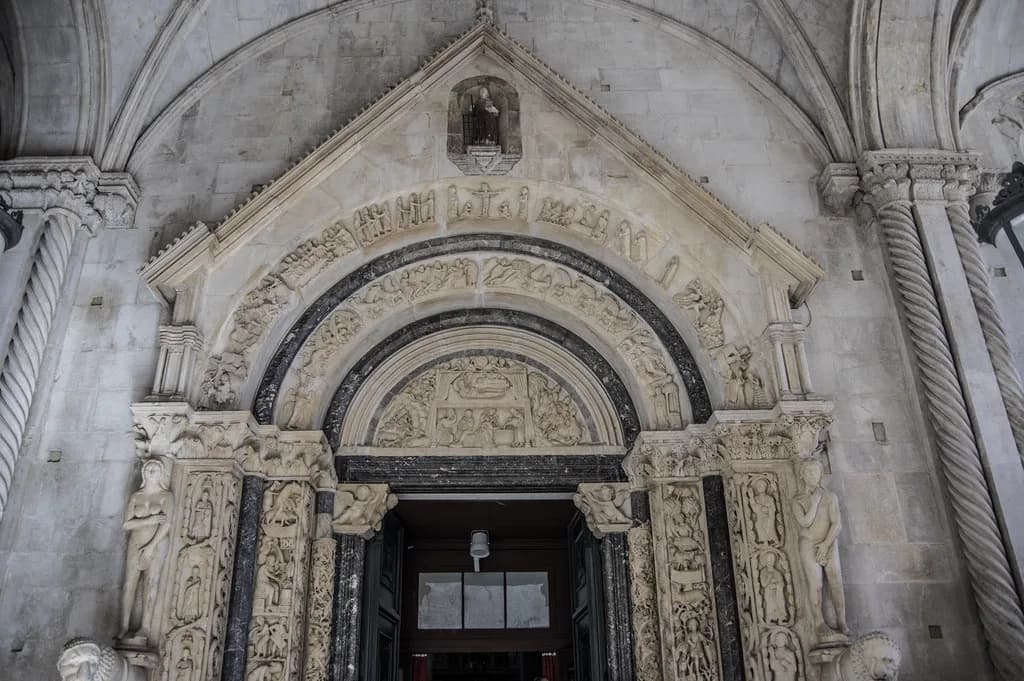
The Cathedral of St Lawrence, Trogir, sits just off the main square and is the town's principal interior to see, with a carved Romanesque portal that stops people at the doorway before they even go in. Inside, the nave, chapels and stonework reward a slow fifteen to twenty minutes rather than a glance from the back. Step out and look up at the bell tower: the climb is the reason many visitors give the town a full day rather than a half.
The tower climb is narrow, stepped and exposed, so it suits travellers comfortable with tight stairways and heights, and it is not a quick lift to a viewing platform. Go early or late to avoid standing on the stairs in a queue, and carry water in July and August. Entry arrangements and any charges are set locally and change with the season, so confirm them at the cathedral door before you build the day around the climb.
Kamerlengo fortress at the western tip
Kamerlengo fortress closes the western end of the island, a squat stone stronghold with walls and a courtyard that you can walk across for views back over the old town and out to sea. It is the second half of a full-day visit: the cathedral gives you the interior and the tower, the fortress gives you the town in outline. The open, unroofed interior means full sun in the middle of the day, so a late-afternoon visit is more comfortable.
The fortifications belong to the town's Venetian period, when Trogir was a fortified harbour under the Venetian Republic, and reading the walls that way makes the waterfront make sense. Tickets and opening seasons for the fortress are managed locally rather than centrally, so check the entrance before you commit the afternoon to it. If the fortress is closed, the walk along the western waterfront still opens up the same outlook over the old town and the sea.
Other named stops: the Loggia, the palaces and the waterfront
The City Loggia stands on the main square, an open colonnaded hall that has served as the town's public room and remains the natural place to pause and orient yourself. Nearby are the Čipiko palaces, a cluster of family residences whose carved windows and courtyards show how the town's wealth was displayed. Both are quick exterior stops that take minutes, which is why they belong in the walking line rather than on a checklist.
A walking order that avoids backtracking
Start at the landward gate, cross to the main square and take the City Loggia and the cathedral first, while the light is good and the queues are short. From there, walk west through the lanes to Kamerlengo fortress at the tip, then return along the Riva so the waterfront and the Čipiko palaces close the loop. That order keeps you moving in one direction and puts the open, sun-exposed fortress at the end of the walk.
If you only have a couple of hours, cut the fortress and the tower and do the square, the cathedral portal, the Loggia and the Riva; that is the town's essential circuit. If you have a full day, add the tower climb and the fortress, with a slow lunch or a wander across to Čiovo in between. Either way, wear shoes that cope with polished stone, which gets slippery in the lanes.
How much time Trogir needs
A half day covers the old town comfortably: the square, the cathedral exterior and a look inside, the Loggia, the lanes and the Riva. A full day adds the bell tower and the Kamerlengo fortress and lets you sit down for a proper meal instead of eating standing up. Two nights turns Trogir into a base rather than a stop, which pays off if you want the lanes and the waterfront in the quiet of early morning and after the day-trippers have gone.
The trade-off is real: the sights themselves do not fill two days, so a longer stay only works if you use Trogir as a launch point for the surrounding coast. Decide whether you are on a route stop or a slow stay before you commit to accommodation, and the length question answers itself.
Getting there from Split and fitting it into a coast trip
Trogir sits close to Split on the same stretch of coast and the two are linked by road, which makes the town an easy half-day or an overnight stop on the way north or south. Bus and ferry timetables along this coast change with the season, so check current times with the bus and ferry companies before you plan a tight connection rather than relying on a printed schedule. Because the old town is on an island, allow a little time at each end for the bridge approach and for parking on the mainland side.
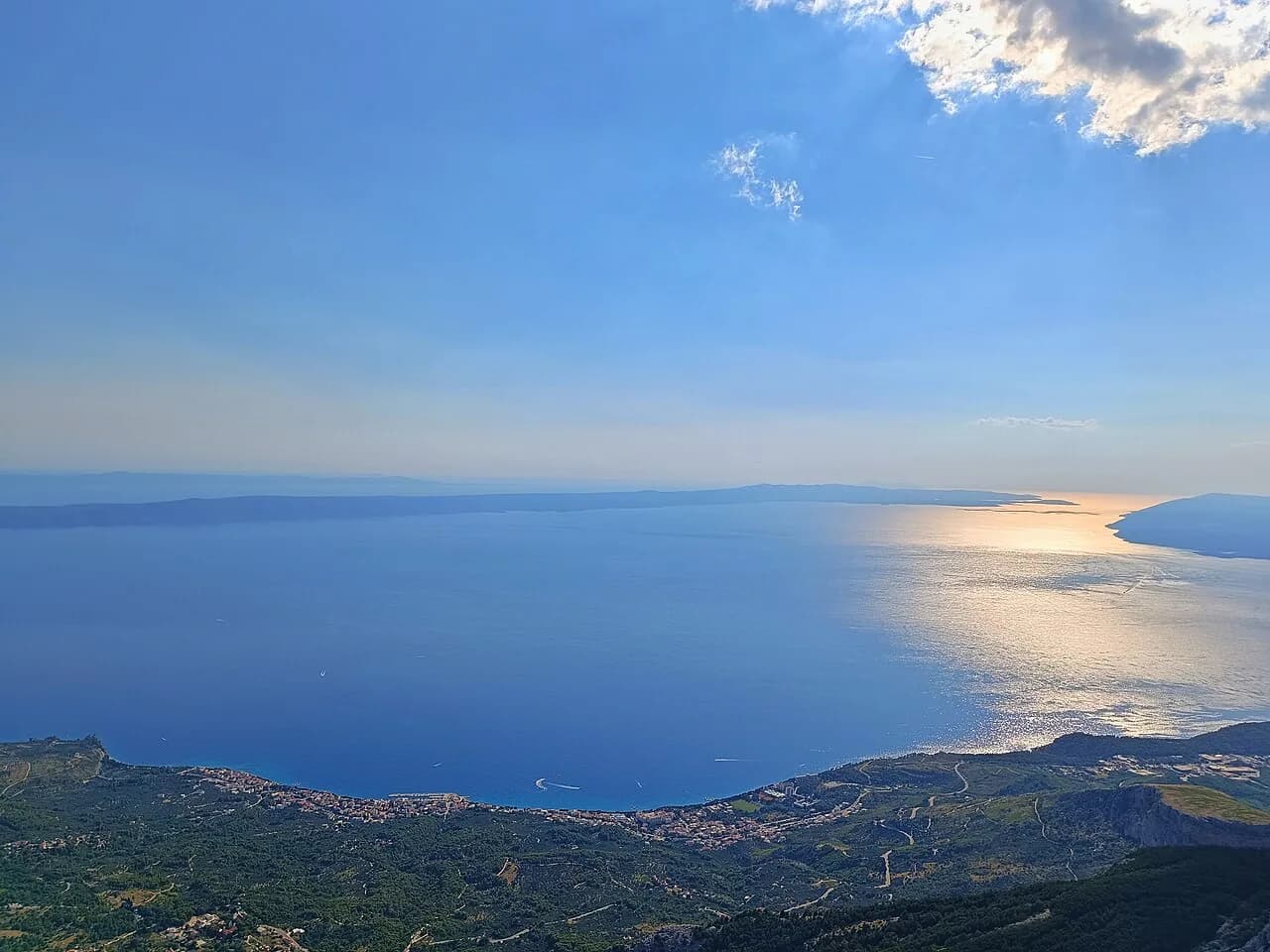
On a longer run down the coast, Trogir slots naturally between Split and the towns to the south, the villages along the shore between the two making an easy call. Further south, the Makarska Riviera and the mountains above it make a logical next overnight, with the Biokovo Skywalk a high viewpoint above the coast, while inland the Cetina river offers a different day entirely. Treat Trogir as a hinge rather than a destination in its own right and the route plans itself.
Travellers heading north instead can pair Trogir with Šibenik, Krka National Park and the quieter inland villages, where old watermills and hilltop fortresses sit minutes off the coast road. That inland side is worth a half day of its own if you have a car and want a break from stone streets; the Dalmatian hinterland guide covers the watermills, fortresses and archaeological sites in more detail.
When to go: crowds, heat and the bura wind
Late spring and early autumn give you warm days and noticeably thinner crowds, while July and August bring the crush, the heat and the coach groups at their peak. The shoulder months also make the tower climb and the open fortress courtyard far more pleasant, since neither offers much shade. If you want the old town lanes to yourself, early morning in any month is the reliable answer.
The bura is the cold, gusty northerly wind that can arrive off the mountains and change a mild day on this coast within hours, so a light windproof layer earns its place even in summer. On a bura day the waterfront is exposed and the fortress is bleak, which is the moment to spend longer inside the cathedral and the lanes. Watching the forecast the evening before is more useful here than any fixed plan.
Should you stay in Split or Trogir?
Split has the ferry port, the island connections and the larger city's evening life, which makes it the better base if your trip is about hopping to Hvar, Brač or Korčula. Trogir has the quieter evenings, the car-free lanes and the sense of a small town winding down after the day visitors leave. Stay in Split for logistics, stay in Trogir for atmosphere, and accept that you will trade one for the other.
A workable compromise is two nights in Trogir at the start or end of a coast trip and the rest of the time in Split, so you get the small-town mornings without losing ferry access. Where to sleep is a separate question from what to see, and this guide deliberately sticks to the town itself. Beaches near Trogir are a short hop across to Čiovo, but they are not the reason to come.
What Trogir's stone lanes are like
Trogir's stone lanes, gates and waterfront give it the look of a ready-made set, and visitors often say so. The town does not need the association: the Romanesque portal and the fortress walls stand on their own.
Half day or overnight in Trogir?
Choose the half day if Trogir is one stop on a coast route and you want the square, the cathedral and the Riva without rearranging your itinerary. Choose the overnight if you want the bell tower, the fortress and the empty lanes at breakfast, and accept that the town itself will not fill two full days. Either way, walk the gate-to-fortress line once rather than circling back, and start early.
Explore more Dalmatia guides
Frequently Asked Questions
Is Trogir an island?
Its historic centre sits on a small island close to the mainland, reached on foot across a bridge, with the larger island of Čiovo alongside. The old town itself is compact and easily crossed on foot in a few minutes.
Is Trogir worth visiting?
Yes, if you want a compact, car-free old town with a major cathedral, a waterfront promenade and a fortress, all within a short walk. It suits a half day well and a full day if you add the bell-tower climb and the fortress walls.
How do you get from Split to Trogir?
The two towns sit on the same stretch of coast and are connected by road, so the journey is short. Bus times vary by season, so check them before you rely on a tight connection.
What can you do in Trogir in a day?
Start at the land gate and the main square, take in the City Loggia and the Cathedral of St Lawrence in the morning, walk to Kamerlengo fortress in the afternoon and return along the Riva. That order covers the town without walking the same lane twice.
Sources
Notes from the Croatian coast
Optional updates when our guides change.
You might also like
Continue reading
More guides you'll find useful