Nin, Croatia: The Island Old Town, Its Sights and How Long to Stay
Nin is a small island old town near Zadar with Roman remains, pre-Romanesque churches, salt pans and a Meštrović statue. What to see and how long to allow.
On this page
Nin is worth half a day, and a full one only if you add the Museum of Salt and the churches beyond the centre. The town is a tiny island of stone lanes set in shallow water about 14 kilometres from Zadar, so it slots neatly into a Zadar-based trip rather than demanding a stay of its own. This guide covers how the island centre is laid out, which sights sit inside it, what lies beyond the Stone Bridge and how Nin fits the wider Dalmatian Coast.
The pitch is simple: history at close quarters, with Roman remains, pre-Romanesque churches and a salt-making heritage all within a short walk. Beaches get a mention here but are not the reason to come. Opening arrangements differ between the museums and the individual churches, so confirm at the door or with the tourist board in Nin before you build a day around one of them.
What Nin is and where it sits
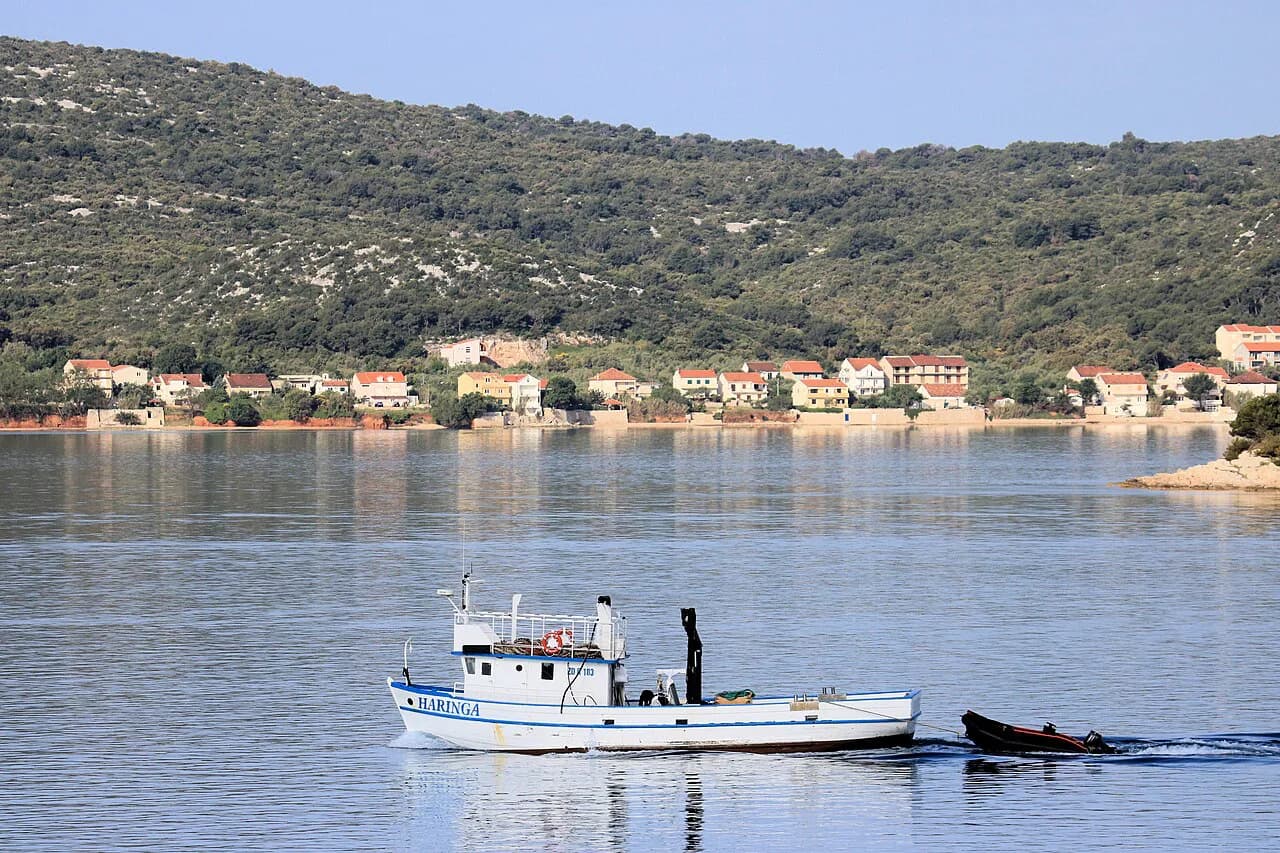
Nin is a small island town in shallow water on the Nin riviera, which also takes in Grbe and Zaton, the municipalities of Vir, Privlaka and Vrsi, and Petrčane, which falls under Zadar. Zadar itself, the county town, is 14 kilometres away, which makes Nin an easy half-day from the city. Zadar's archipelago is made up of 265 islands, islets and reefs, so the water in this part of the coast is busy with small craft in season.
Distances along this stretch of coast are short by road: Biograd is 45 kilometres from Nin, Pag 75, Šibenik 90 and Knin 105. That matters when you plan a route, because Nin can be a morning stop on the road between Zadar and Šibenik rather than a separate leg. If you are working along the coast in stages, the wider Dalmatian Coast guide is the place to sort the order of stops.
How the town is laid out
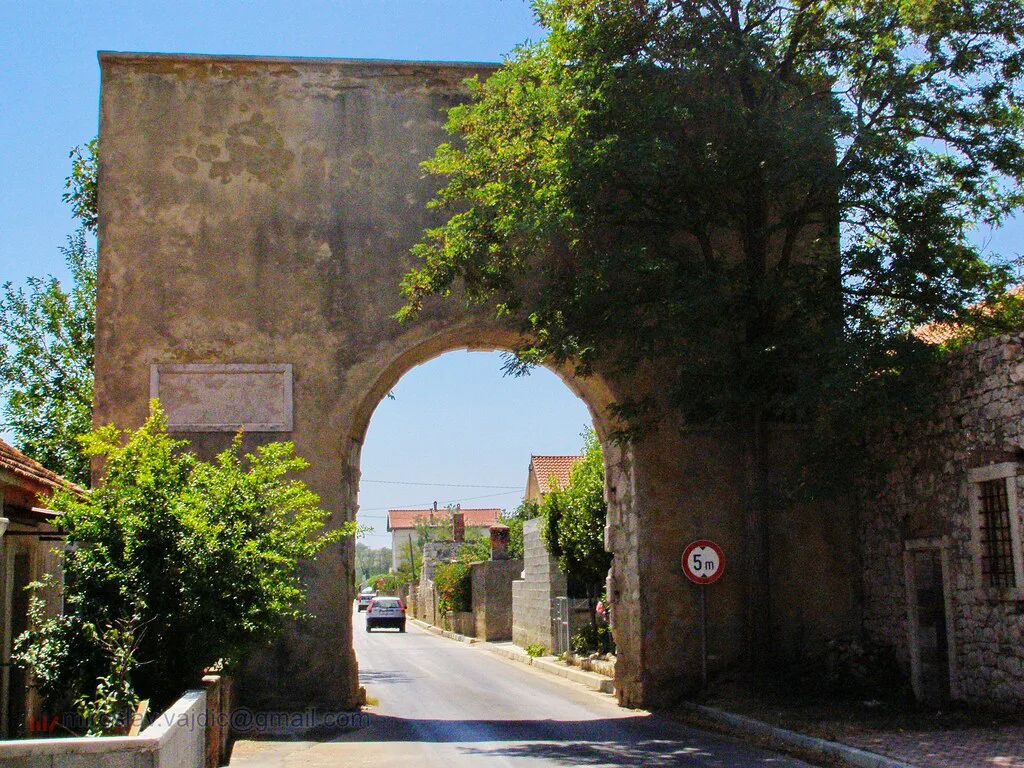
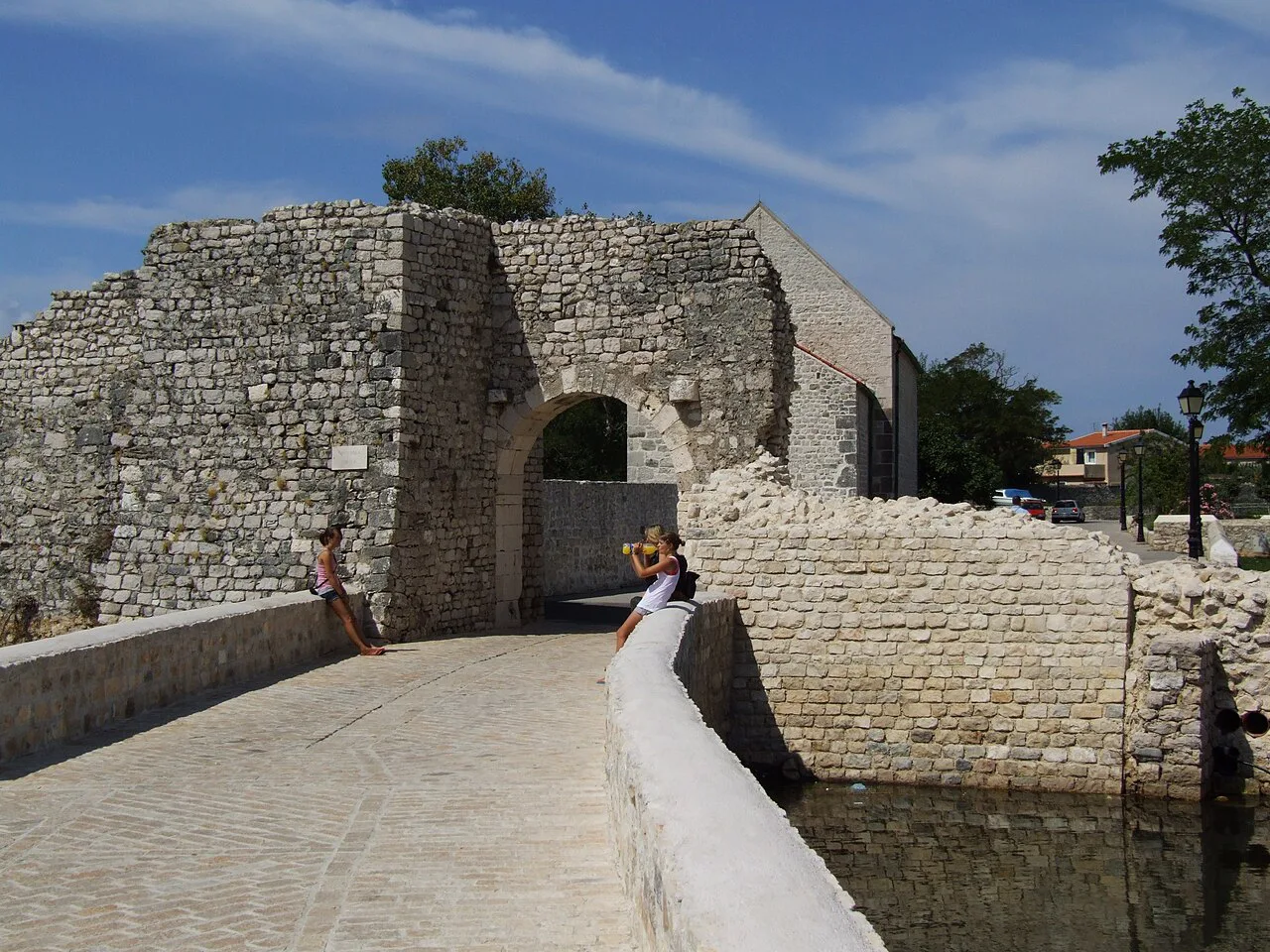
The historic core is an island, reached from the mainland side by the Stone Bridge, which crosses shallow water. The bridge is a short walk in itself, and it sets the pattern of a visit: park on the mainland side and walk across, because the lanes inside are narrow and best handled on foot. Once over the bridge, everything in the old centre is within a few minutes of everything else.
A local operator dates the Stone Bridge to the 16th century and describes arches and stone pillars spanning the channel; treat the dating as its own and enjoy the view back over the shallows, which is the better reason to linger. For a town of this size, the layout is the story: water on all sides, a single approach, and a tight knot of churches and museums at the middle.
What to see in the old centre
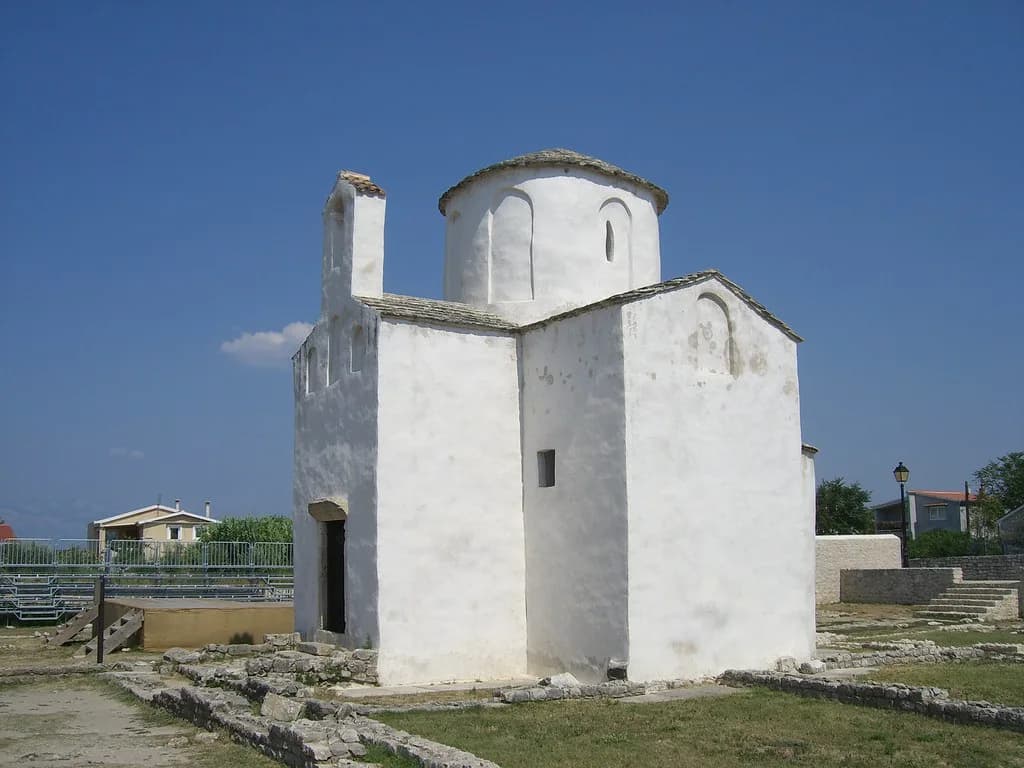
Start with the Roman Temple, whose remains are believed to have been dedicated to the goddess Diana and stand partly reconstructed. Then move to the Church of the Holy Cross, a small pre-Romanesque building with stone carving and a preserved apse, which a local operator dates to the 9th century. Note that the same operator gives the Church of St Anselm as another name for Holy Cross, while the tourist board lists St Anselm as a separate building, so check which you are looking at before you set off.
The Baptismal Font of Duke Višeslav, the gold and silver church treasury and the Museum of Nin Antiquities all appear on the tourist board's cultural heritage list, alongside the Museum of Salt and the old Croatian boat Condura Croatica. Allow an hour or so to work through the centre's museums and treasury at an unhurried pace, longer if the treasury holds your attention.
The Croatian national tourism site carries a short round-up of Nin highlights worth a look before you leave the island. Do not try to see everything: three or four stops done properly beat a tick-list sprint around a centre this compact.
Churches beyond the centre
The Church of St Nicholas, the Church of St Anselm and the Church of St Ambrose also appear on the tourist board's cultural heritage list, and the tourist board is the reliable place to confirm what is open when you arrive. Set aside extra time and, ideally, a car for this part of the day, since they do not fit into the old-town stroll.
Grgur Ninski and the Meštrović statue
The bronze Grgur Ninski is the work of the Croatian sculptor Ivan Meštrović and honours Bishop Gregory of Nin, who argued for the use of the Croatian language in religious ceremonies. The local legend says rubbing the statue's big toe brings luck. Treat it as a photo stop of a few minutes, not a sight that needs its own slot in the plan.
The salt pans and the Museum of Salt
Salt is the reason Nin exists in the form you see. The pans along the Nin lagoon were the source of the town's prosperity, providing work, trade and income, and the Museum of Salt explains the trade and the methods behind it. Exhibits cover the harvesting process, the tools of the salt workers and the channels and pools where seawater is left to evaporate.
The museum also runs guided looks at the pans themselves, which is where the story lands. Check what is running on the day you visit, since the salt landscape changes with the season and the harvest. If you have time for only one museum in Nin, this is the one that explains the town rather than merely displaying it.
How long Nin needs
Give the island centre half a day: the Roman Temple, the Church of the Holy Cross, the font, the treasury and the antiquities museum, plus the bridge walk, fill three to four hours without rushing. A full day allows the Museum of Salt and the churches beyond the centre, plus a proper pause over coffee. If Nin is a stop on a longer run south, pair it with somewhere else rather than stretching it.
A natural pairing is Zadar itself, 14 kilometres away. Inland, Krka National Park stretches between Knin and Skradin and sits 95 kilometres from Nin, a full-day outing rather than an add-on. Build the route around one anchor sight a day and Nin stops being a tick-box.
When to go
Summer brings the crowds, and Nin's compact centre shows it: the bridge and the lanes around the Roman Temple are where it concentrates. The shoulder months either side are calmer and better for the walking route, with the same sights and far more room to look at them. Pack a layer for the wind across the open channel, which can cut through the lanes.
How Nin fits a coast trip
Nin works best as a first or last stop out of Zadar, before or after the islands and parks. The Paklenica National Park entrance is about 50 kilometres away and Plitvice Lakes 146 kilometres, so both are day trips from a Zadar base rather than from Nin itself. Use the town as a gentle introduction to the region's stone-and-water formula.
If you want to push further inland afterwards, the Dalmatian hinterland guide is the right next read, with the Imotski lakes and the fortress at Klis as the obvious anchors. If Nin's Roman remains leave you wanting more, the coast further south has Roman sites on a different scale entirely, but plan them as a separate leg.
Getting there and around
Nin is roughly a 20-minute drive from Zadar, which makes it an easy morning or afternoon out. Park on the mainland side of the Stone Bridge and walk in; the lanes in the old centre are narrow and best left to pedestrians. Further along the coast, Biograd is 45 kilometres away and Šibenik 90, both straightforward road connections.
Nin is a road destination: you drive there and walk the island centre. Boats in the area are for the water itself, with organised trips running to the Kornati and Telašćica, and to Krka, during the season. Confirm any sailing with the trip company before you rely on it for a day's plan.
Is Nin worth the half-day from Zadar?
Yes, if you want a compact island town with real Roman and early medieval substance rather than a beach stop. Go early or in the shoulder months, walk in over the Stone Bridge, and spend your time in the church treasury and the Museum of Salt rather than trying to see every church beyond the centre. Skip it if your time in Zadar is short and you have not yet seen the city itself. For the practical details, see the Trogir.
Explore more Dalmatia guides
- Biograd na Moru
- Biokovo Skywalk
- Cathedral of St Lawrence, Trogir
- Kaštela: A Guide to the Seven Castle Villages Between Split and Trogir
- Omiš: the Old Town, the Fortresses and the Cetina Gorge
- Primošten
- Salona: the Roman city ruins at Solin, near Split
- Vodice, Croatia
- Čiovo: the Island Joined to Trogir by Bridge
Frequently Asked Questions
How do you get to Nin from Zadar?
By road: Nin is about 14 kilometres from Zadar, a drive of roughly 20 minutes in normal conditions. There is no ferry crossing to arrange. Parking is on the mainland side of the Stone Bridge, with the old centre on foot.
How long should you spend in Nin?
Half a day covers the island centre, including the Roman Temple, the Church of the Holy Cross, the Baptismal Font of Duke Višeslav, the treasury and the Museum of Nin Antiquities. A full day allows the Museum of Salt and the churches beyond the centre, such as St Nicholas and St Anselm.
Do you need tickets for Nin's sights?
The tourist board's heritage page does not publish ticket prices or opening hours for the museums and churches in Nin. Allow for paid entry at the museums, and check hours with the tourist board in Nin or at the door; the churches beyond the centre may not be open on the day you visit.
Sources
Notes from the Croatian coast
Optional updates when our guides change.
You might also like
Continue reading
More guides you'll find useful