Kamerlengo Fortress, Trogir: What to See Inside
Kamerlengo Fortress guards the western tip of Trogir's old town island. Here is what a visit involves, from the ramparts and tower to the view over the marina.
On this page
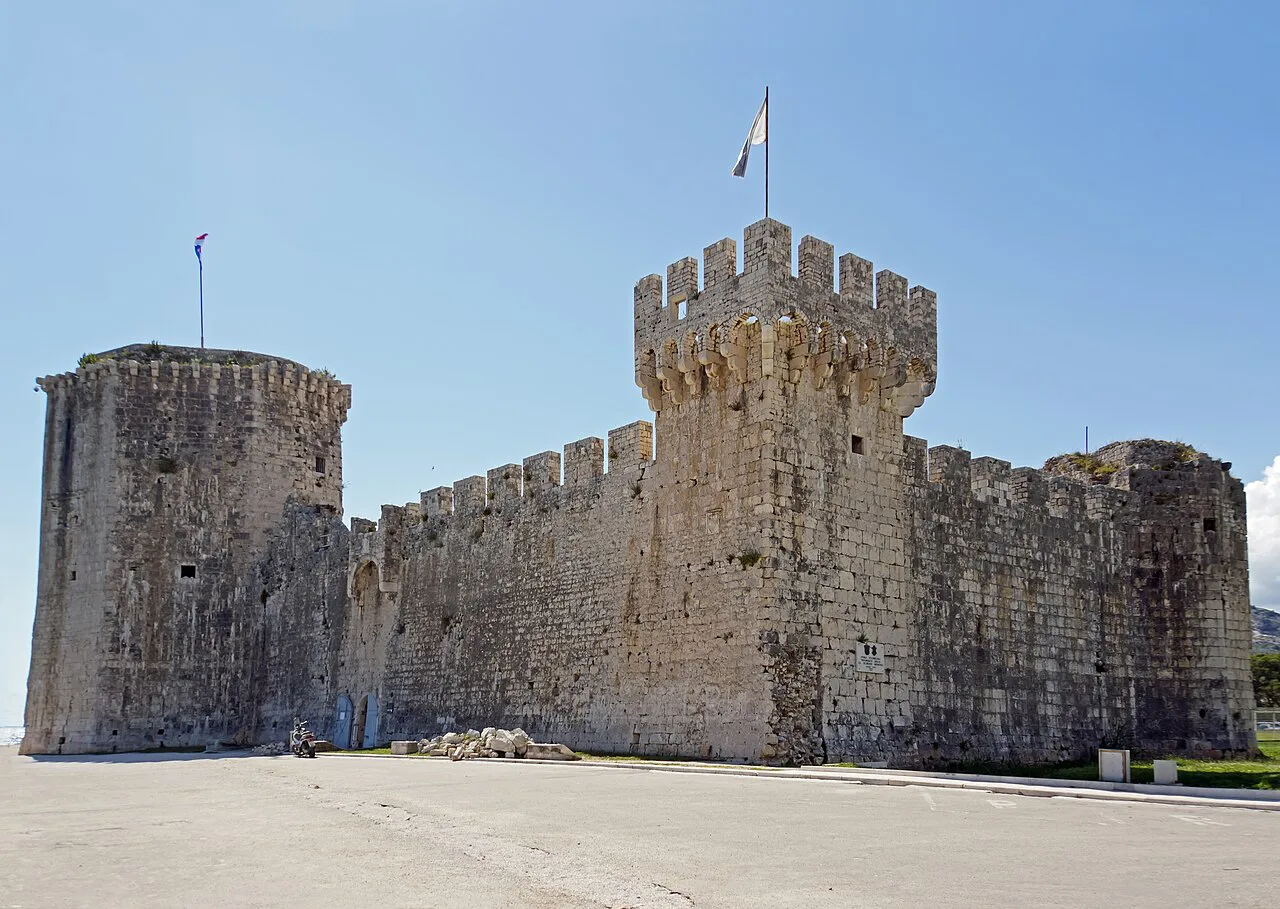
Kamerlengo Fortress is worth 30 to 45 minutes of a day in Trogir: you come for the ramparts, the tower and the view back across the old town island to Čiovo, not for exhibits inside. The 15th-century Venetian fortress sits at the western edge of the walled town, so it works best as the last stop on a loop from the bridges rather than as a destination in itself. This guide covers where it stands, what you actually climb, how to pair it with St Mark's Tower, and how to check the entry terms before you pay.
What Kamerlengo Fortress is
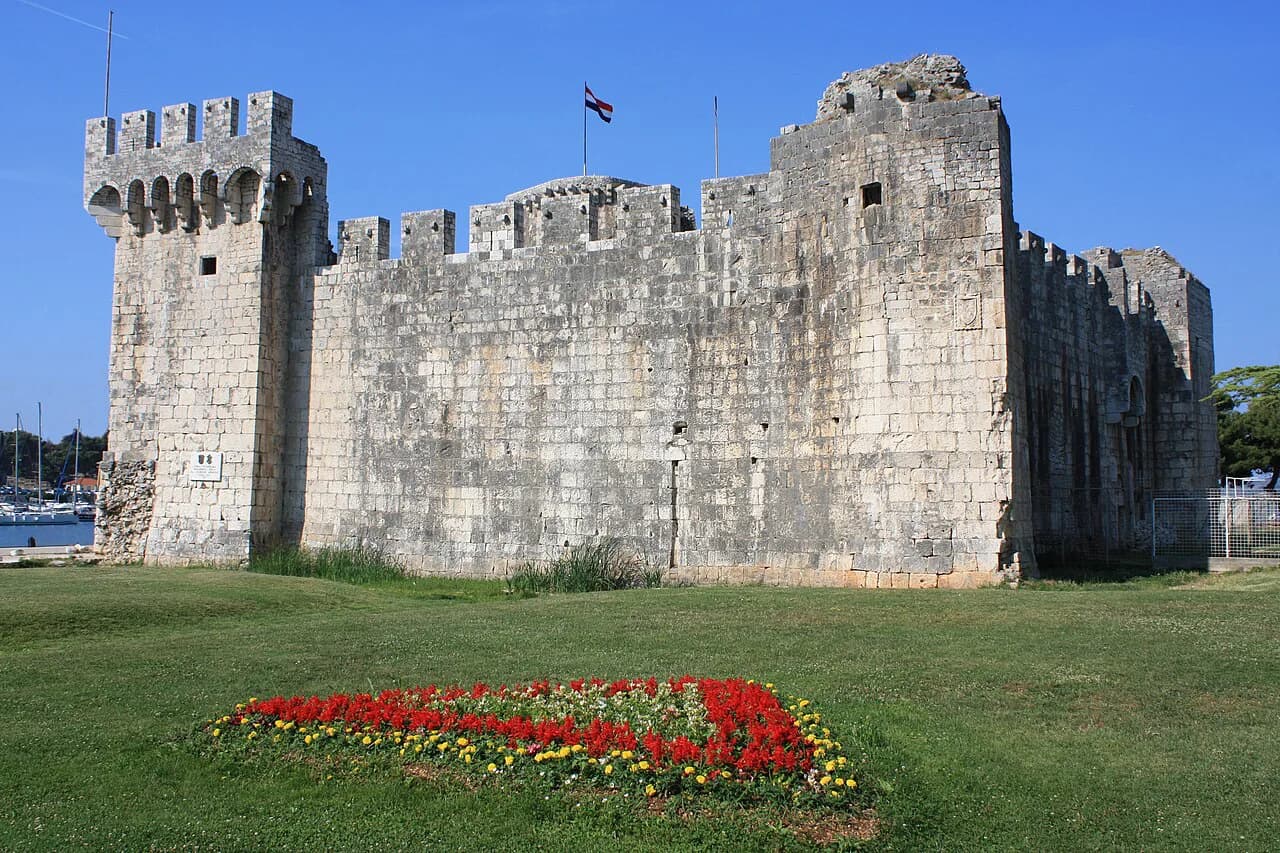
Kamerlengo is a small fortified castle from the 15th century, built to guard the seaward approach to Trogir during Venetian rule. It stands on the old town island, a UNESCO World Heritage site whose medieval fabric survived because the town stayed confined to its island. The fortress anchors the western corner of that island, which is why it appears on shortlists of castles around Trogir.
Treat it as a fortification rather than a museum. The draw is the structure itself: low walls around an open court, a corner tower and a walkway that lifts you just high enough to read the shape of the old town below. If you arrive expecting galleries or furnished rooms, you will be disappointed; if you arrive expecting a vantage point, you will not be.
Where it sits in the old town
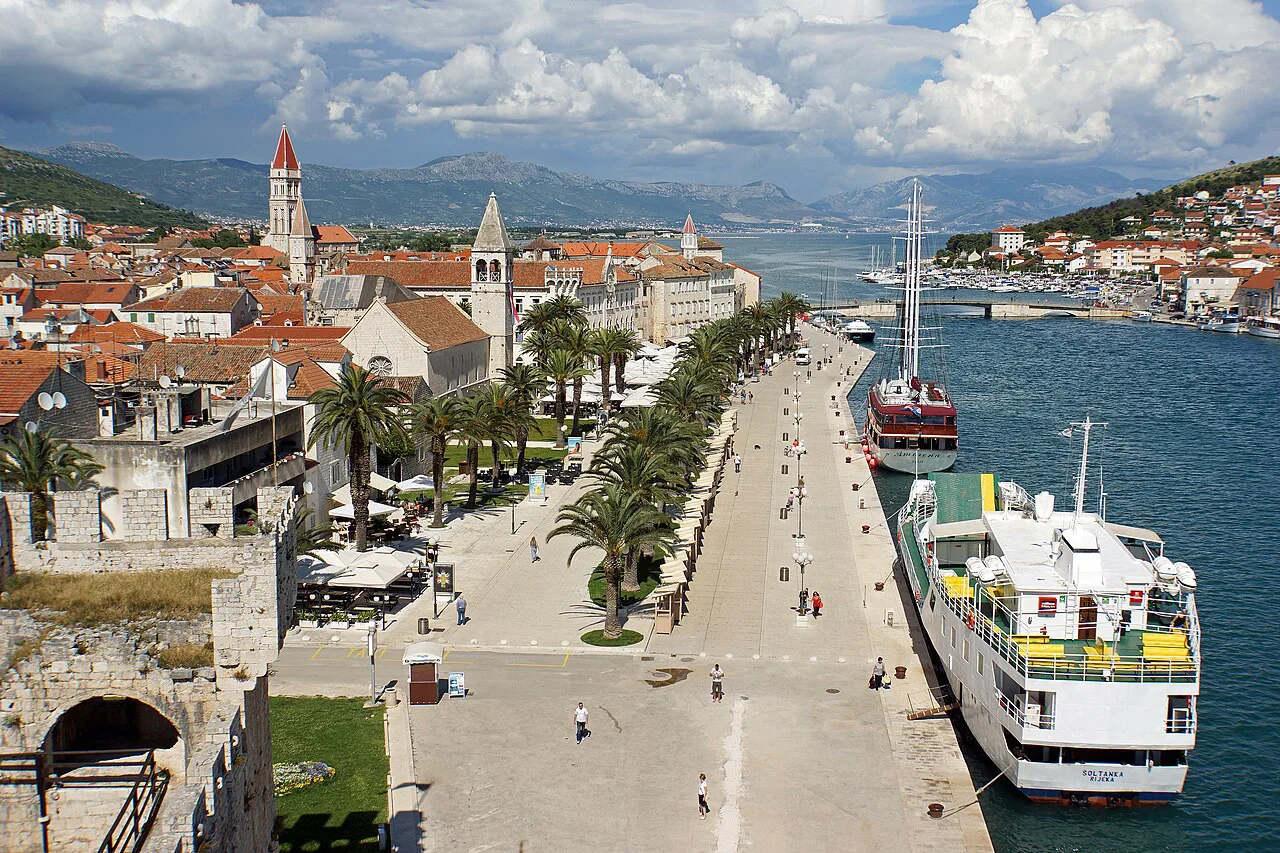
The fortress occupies the tip of the old town island, next to the marina where the Riva runs along the southern edge of town. The Riva is the natural approach: walk it westwards from the main square and the fortress closes the view at the end. That position, facing the water and the island of Čiovo across the channel, explains its job in the defensive scheme; the walls ran north from here to St Mark's Tower and turned back inland.
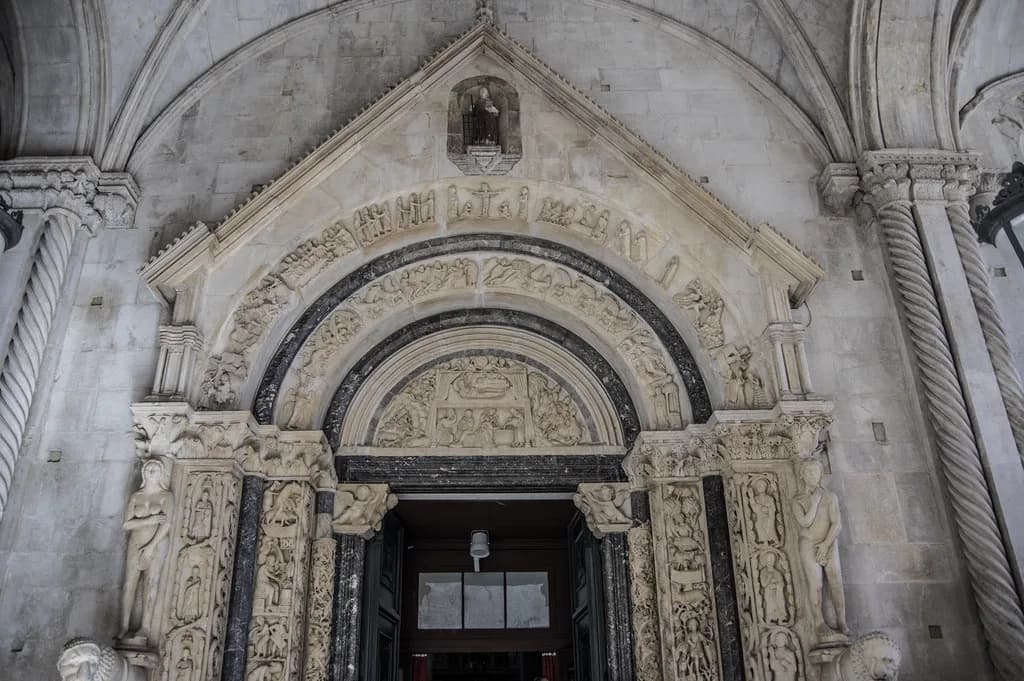
Because the old town is small, everything is close. The Cathedral of St Lawrence, Trogir and the main square sit a few minutes inland from the fortress, so a sensible circuit is bridges, main square, cathedral, then the Riva west to Kamerlengo. Do the fortress last and you finish beside the boat moorings rather than doubling back through the lanes.
Getting there from the bridges and bus station
Trogir's old town is on an island joined to the mainland by bridges, and the bus station sits on the mainland side within a short flat walk of those bridges. From there you cross, enter the lanes and follow signs or simply the flow of people towards the water. There is no need for a taxi or a local bus to reach Kamerlengo from the centre.
If you are based in Split, Trogir is an easy half-day by road along the coast, and the fortress makes a logical full stop to that trip before you head back. Allow time on both sides of the visit for the lanes and the Riva, since the fortress itself is quick. Drivers should expect the old town to be car-free and park on the mainland side.
The ramparts and tower: what you climb
The visit is vertical but modest. You go up onto the walls and into the tower, and the reward is a sweep of the old town roofs, the harbour and the marina, with Čiovo beyond. Visitors single out the all-round view from the top of the tower and along the rampart as the reason to go up.
The best-known angle looks back over the old town and the marina, which is why late afternoon and early evening are the popular slots: the light comes across the water and the stone warms up. Mornings are quieter but flatter in colour. Neither is a secret, so on a busy summer day expect company on the tower.
How long to allow and when to go
Give Kamerlengo 30 to 45 minutes if you climb everything and linger over the view, and rather less if you only walk the walls. Add that to roughly two to three hours for the old town as a whole, including the cathedral and a coffee on the Riva. It is not a place that fills an afternoon on its own.
Timing matters more than duration here. The old town island is compact and heavily visited, so the fortress is at its most comfortable early or late in the day, outside the peak hours when groups move through. There are steps and open parapets, so wear shoes you can climb in and keep an eye on children at the edges.
Tickets and entry
You pay at the gate to go in; there is no free public access to the walls or tower. The fortress can be visited on a purchased entrance ticket, and admission tickets are listed as cash only, so carry some euros rather than relying on a card. Check the current fee and payment method at the entrance before you commit, since any figure you see online may be out of date.
Croatia has used the euro since 2023, so any kuna amount you find on older travel pages and community tips is historical and not a current price. Read the price posted at the ticket window or gate instead, and ask there whether card payment is accepted.
Inside: the courtyard and walls, and honest expectations
Inside, the fortress is fairly bare: an open courtyard, plain walls and not much interpretation. One widely shared description calls the interior quite bare, with restoration work still in hand, so plan on atmosphere and views rather than displays. That is the trade-off you are accepting with the ticket.
The upside of an empty interior is that you can move through quickly and spend your time where it counts, on the tower and the rampart walk. Photographers should allow extra minutes at the top rather than in the court. If you want substance indoors, put the money towards the cathedral and its treasury instead and treat Kamerlengo as the viewpoint.
Nearby fortifications: St Mark's Tower and the walls
St Mark's Tower, Kula Svetog Marka, stands at the north-west end of the old town, facing the mainland, and was originally joined to the city wall. It is the counterpart to Kamerlengo: one guards the landward approach, the other the sea. Walking between the two traces the line of the defences across the island in a few minutes.
That short circuit is the best value in town for anyone interested in how Trogir defended itself, and it costs only the time it takes to cross the island. Add the land gate and a look at the surviving stretches of wall and you have a coherent picture of a Venetian port town without a single long museum visit.
Is Kamerlengo Fortress worth it?
Yes, with conditions. If you have half a day in Trogir and want one elevated view of the island, the harbour and Čiovo, Kamerlengo delivers it in well under an hour and slots neatly onto the end of a walk along the Riva. If you are chasing interiors, exhibitions or a full afternoon's sightseeing, the bare courtyard will feel thin.
The wider context helps you decide. Trogir is one stop on the Dalmatian coast, which runs from the Split hinterland down through Omiš and the Cetina gorge to Makarska, so a fortress visit is a small piece of a larger route. Travellers with limited days should weigh Kamerlengo against the cathedral and the lanes, then plan the rest of the coast accordingly.
Where Kamerlengo fits on a Dalmatian coast trip
Trogir sits close to Split and Kaštela, so Kamerlengo is easily combined with the Roman ruins at Salona or a morning in the castle villages. Each of those is a short drive, which lets you build a full day without moving hotels. Plan the fortress for the end of the afternoon when you return.
Further along the coast, Primošten and Vodice make natural next stops if you are driving north towards Šibenik. None of these needs long, and pairing them with Trogir gives a coast itinerary that mixes a walled island town with open waterfronts. Keep the fortress as a short, high-value pause rather than a headline sight.
Should you climb Kamerlengo or walk the walls instead?
Climb Kamerlengo if you want the view back over the old town and marina, and accept a bare interior as the price of it. Walk the Riva and trace the walls to St Mark's Tower instead if you would rather keep your euros for the cathedral and stay at ground level.
Either way, check the current ticket price and payment method at the gate, since online figures lag behind, and go early or late to avoid the busiest hours on the tower.
Explore more Dalmatia guides
Sources
Notes from the Croatian coast
Optional updates when our guides change.
You might also like
Continue reading
More guides you'll find useful