
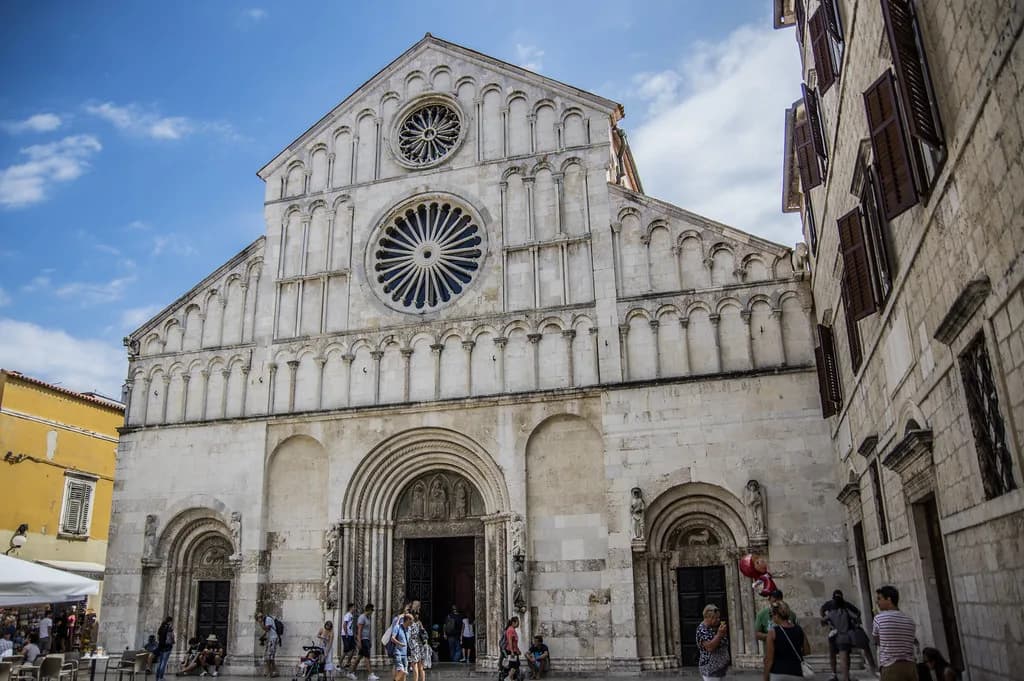
Zadar Cathedral (Katedrala sv. Stošije): What to See and How Long to Allow
Zadar Cathedral, properly the Cathedral of St Anastasia (Katedrala sv. Stošije), is the church to build a morning around: it is Dalmatia's largest cathedral and a Romanesque landmark, known for its rose windows and a calm, wide nave. Give it 45 to 60 minutes as part of an old-town walk, and treat the bell tower as a separate decision rather than an assumption. This page covers where the cathedral stands, how to reach it on foot, what to look for inside, how the tower fits in, and which nearby sights pair naturally with it.
What Zadar Cathedral is and where it stands
The Cathedral of St Anastasia sits inside the compact old town on the Zadar Peninsula, the historic core that fills the tip of the peninsula. It is Romanesque in style, known as the largest cathedral in Dalmatia, and its rose windows and nave are the features most associated with it.
Because the old town is small, the cathedral works best as one stop on a loop rather than a standalone outing. Pair it with the Roman forum and the round Church of St Donatus immediately beside it, then walk on to the waterfront and the Riva. That plan keeps you within a few minutes' walk between each stop.
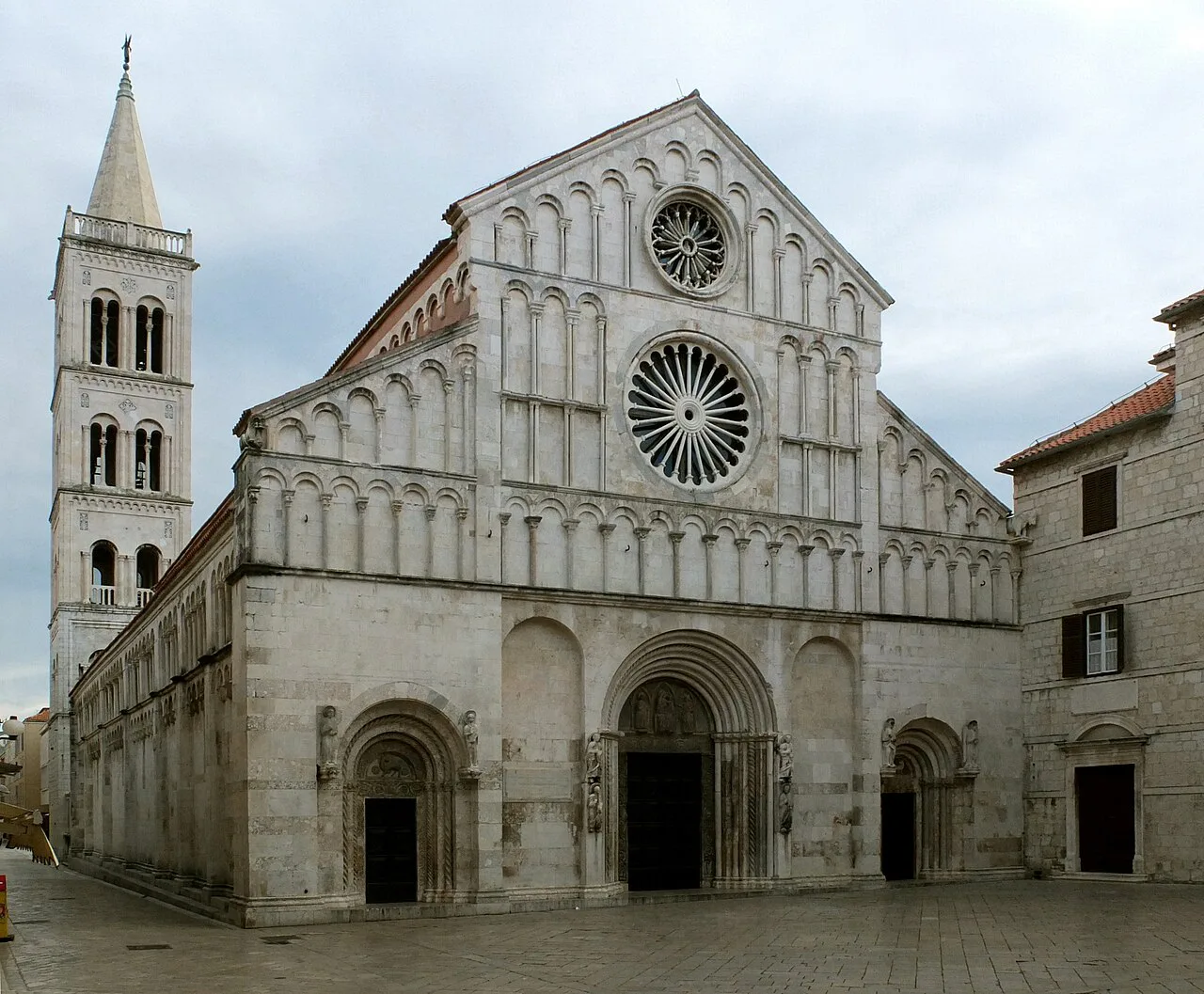

How to reach it on foot, and how long to allow
Walk. The old town is pedestrian-scale, so you arrive from the Riva waterfront or from the Land Gate (Kopnena vrata) on the eastern side and reach the cathedral in minutes from either. There is no practical reason to take transport within the peninsula.
Set aside 45 to 60 minutes for the cathedral itself: the nave and aisles, the rose windows and a pause in the pews. A full old-town loop with the forum, St Donatus and the waterfront comfortably fills a half day.
Go early in the day if you want the interior without the groups that build up around the forum and waterfront later. The cathedral is a working church, so quiet is expected inside and services take priority over sightseeing.
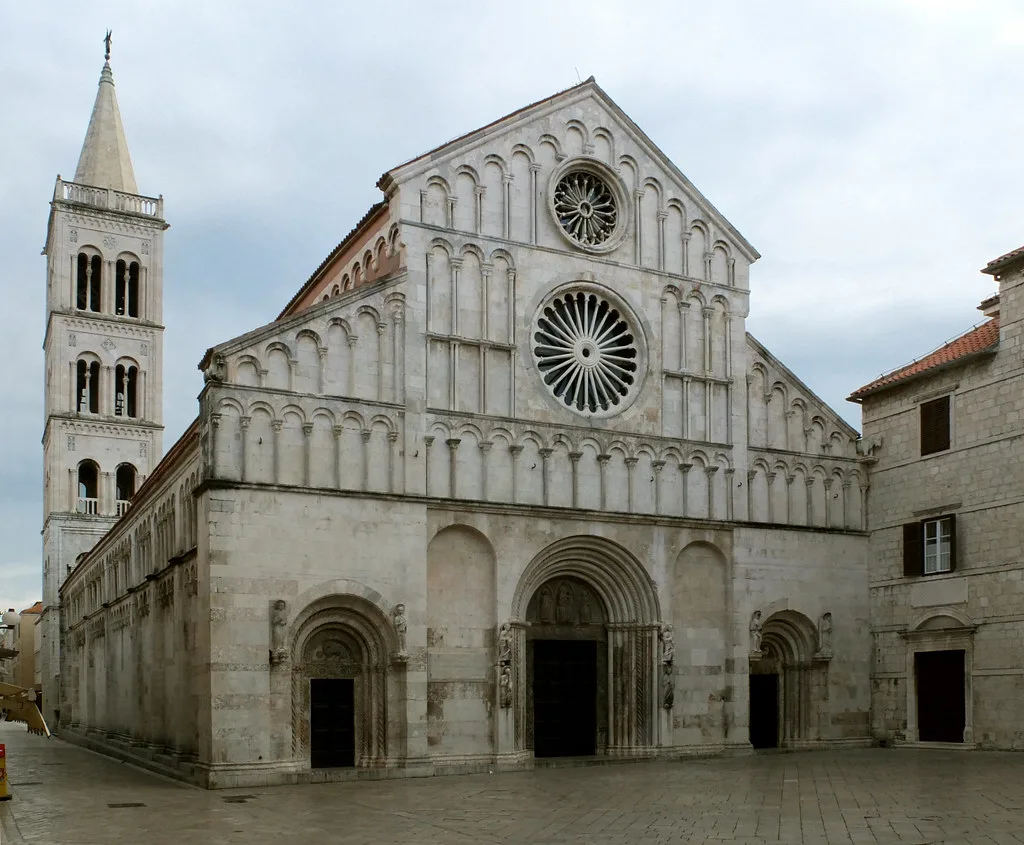
The interior: what to look for in the nave and stonework
Start with the nave. The cathedral is a Romanesque building, and the long arcade, the heavy stone columns and the sense of proportion are the main event; walk the full length before turning to the details.
Then look up and around for the rose windows, the feature most often singled out at St Anastasia's. The stonework rewards slow looking: walk the full length before turning to the details.
Because this is an active Catholic cathedral, parts of the building may be in use for services; respect any roped-off sections rather than treating them as an obstacle.
If you want a deeper architectural read, bring a short guide or an offline note on Romanesque churches, as there is no guarantee of English-language interpretation throughout. That preparation turns a quick look into the longer visit the building deserves.
The bell tower: whether climbing is part of the visit
The bell tower of St Anastasia is a separate structure from the nave, and climbing it is an optional extra rather than part of the standard cathedral visit. Decide on the day: the reward, when it is open, is a rooftop view over the old town's terracotta roofs and the Adriatic beyond.
Expect a narrow stone ascent with uneven steps and limited passing space, which is not ideal for anyone uneasy with heights or enclosed stairwells. Wear shoes with grip and carry nothing bulky. Check at the cathedral entrance whether the tower is admitting visitors that day and whether it carries its own charge, since entry is not necessarily included with the church.
Tickets and opening hours: confirm before you go
Treat opening times and any entry charge as seasonal and confirm them at the cathedral itself on the day. Ask about church entry and the bell tower separately, since they can differ, and check ahead locally if you are planning around a specific arrival time.
Churches in Croatia frequently close to visitors during Mass and reopen afterwards, so build slack into your morning rather than scheduling the cathedral to the minute. If you are visiting outside the main season, expect shorter visiting windows.
Anything you pay in Croatia is in euros, and any charge at the cathedral is a modest amount settled in cash or by card at the entrance; confirm both on arrival.
What else is within a few minutes' walk
The Roman forum is the immediate neighbour, a sunken expanse of Roman paving beside the cathedral, and the round pre-Romanesque Church of St Donatus stands on it. Both are open-air or briefly visited, so they slot into the same hour.
Walk west to the waterfront and the sea organ Zadar, where steps descend into the water and the swell produces the sound that gives the site its name. Next to it, the Greeting to the Sun, Zadar's solar-glass circle, is a natural stop at sunset. Both are free public spaces and best outside the busiest midday hours.
Two more stops round out the old town. The Five Wells Square (Trg pet bunara) sits near the land gate, while the Church of St Simeon, a short walk away, shelters its celebrated reliquary. The archaeological museum suits anyone wanting the deeper history after the cathedral.
Why the church carries St Anastasia's name
The cathedral is dedicated to St Anastasia under the Croatian form Stošije. The dedication explains the name visitors see on maps and signs, where the formal Croatian title and the English 'St Anastasia's' refer to the same building.
The Romanesque body of the church, with its rose windows and wide nave, is the clearest expression of its medieval origins. Read the masonry rather than expecting a single explanatory panel, and use a guidebook if the dating matters to you.
Who the cathedral suits, and who should skip it
The cathedral suits anyone interested in Romanesque architecture, quiet interiors or a short, cool pause in the middle of an old-town walk. It is also the obvious choice for travellers who want one substantial church rather than a circuit of smaller ones.
Skip it if your priority is the waterfront and the sunset, or if time in Zadar is limited to a couple of hours — the forum, St Donatus and the Sea Organ deliver more for a short stop. Travellers with mobility limits should note that the tower climb is unsuitable and the nave alone is the better visit.
The honest trade-off is a working church in a crowded quarter: mornings are calmer, the middle of the day is busiest around the forum, and early evening belongs to the waterfront. Schedule the cathedral for the quieter slot and let the crowds have the sunset.
Is Zadar Cathedral worth a stop on your old-town walk?
Yes, for 45 to 60 minutes within a wider old-town loop, and on one condition: go for the Romanesque nave and rose windows rather than for an attraction with set hours and a fixed ticket price. Confirm entry and tower access at the door, then walk out to the forum, St Donatus and the waterfront while the light is still good.
Explore more Zadar guides
Frequently Asked Questions
Is Zadar Cathedral free to enter?
Admission arrangements and any charge for the church or its bell tower are set locally and change by season, so confirm at the cathedral entrance on the day rather than relying on a listing. Ask about the church and the tower separately, since they can differ. Any payment is made in euros.
How long does it take to visit the bell tower of St Anastasia?
Allow around 30 to 45 minutes for the climb and the view if the tower is open, on top of 45 to 60 minutes for the cathedral interior. The staircase is narrow and uneven, so avoid it in slippery weather or if you dislike enclosed spaces.
Can I visit the cathedral on a Sunday?
As an active Catholic cathedral, it may be closed to visitors during Mass, and visiting windows vary by season. Check at the door or with the parish before setting out, and plan the visit around services rather than the other way round.
What else should I see near Zadar Cathedral?
The Roman forum and the round Church of St Donatus sit right beside the cathedral, and the Sea Organ and Greeting to the Sun are a short walk west along the waterfront. The Five Wells Square, the Church of St Simeon and the archaeological museum round out a half day.