
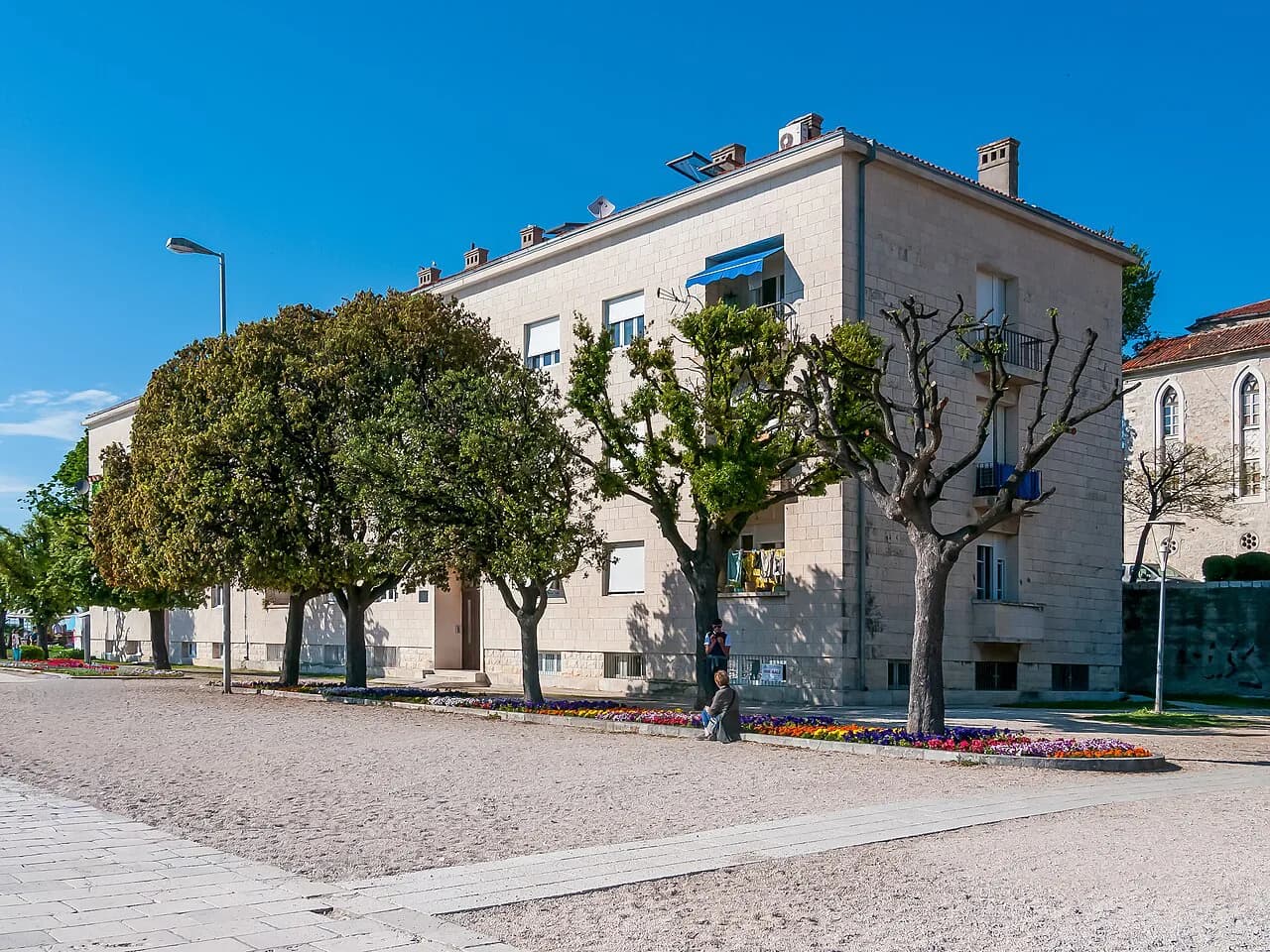
Zadar Neighborhoods: 4 Area Guides
Zadar spreads out from the walled peninsula (Poluotok) along the coast: Arbanasi grew up south-east of the centre, Voštarnica lies just across the harbour bridge, and Borik is the green resort quarter to the north-west. These guides say what each area is like and how far it is from the old town.
Zadar neighborhood guides
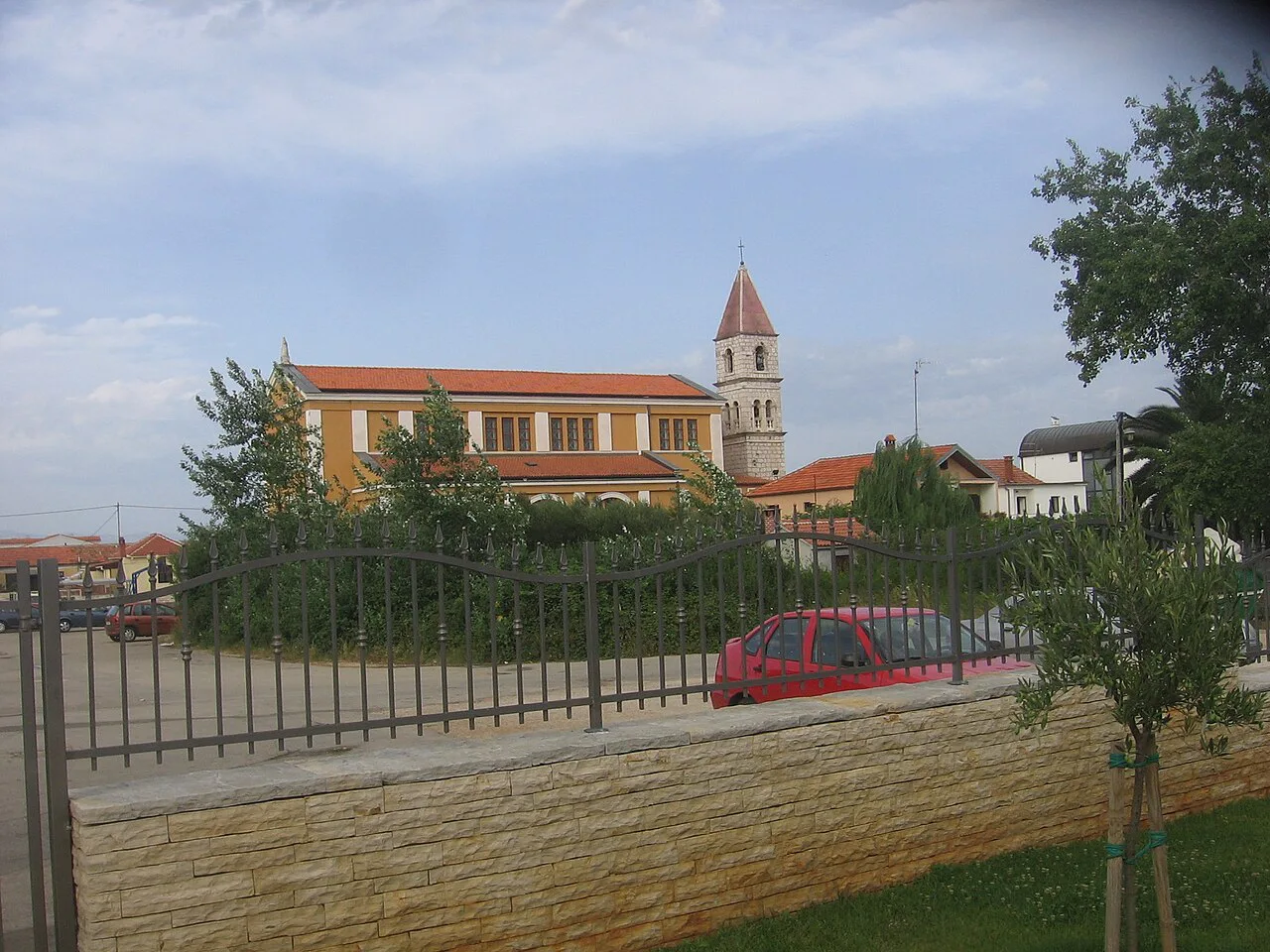
Arbanasi, Zadar: a Neighbourhood Guide and What's There
Arbanasi is a flat residential neighbourhood in Zadar, known for the Land gate, the church of crkva Gospe Loretske and Stadion Stanovi, and for its long-standing Arbanasi community. It rewards a short walk rather than a dedicated half-day.
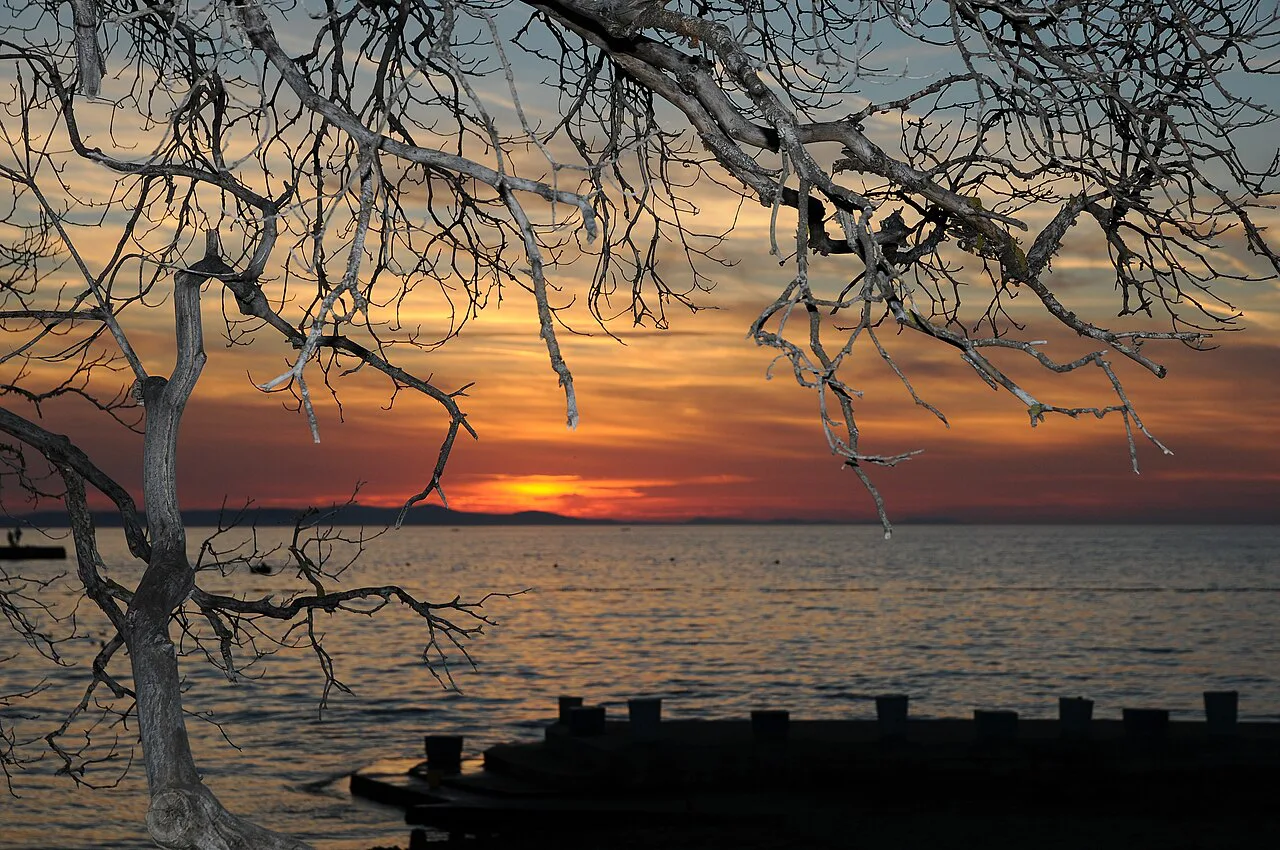
Borik, Zadar: Zadar's Leafy Northern Beach District
Borik is Zadar's northern beach district, about 4 km from the old town, built around a pebble beach with pine shade, one sandy cove and a concrete plateau. Bus 5A reaches the door, cafés line the shore, and the old town sights need a ride into the centre.
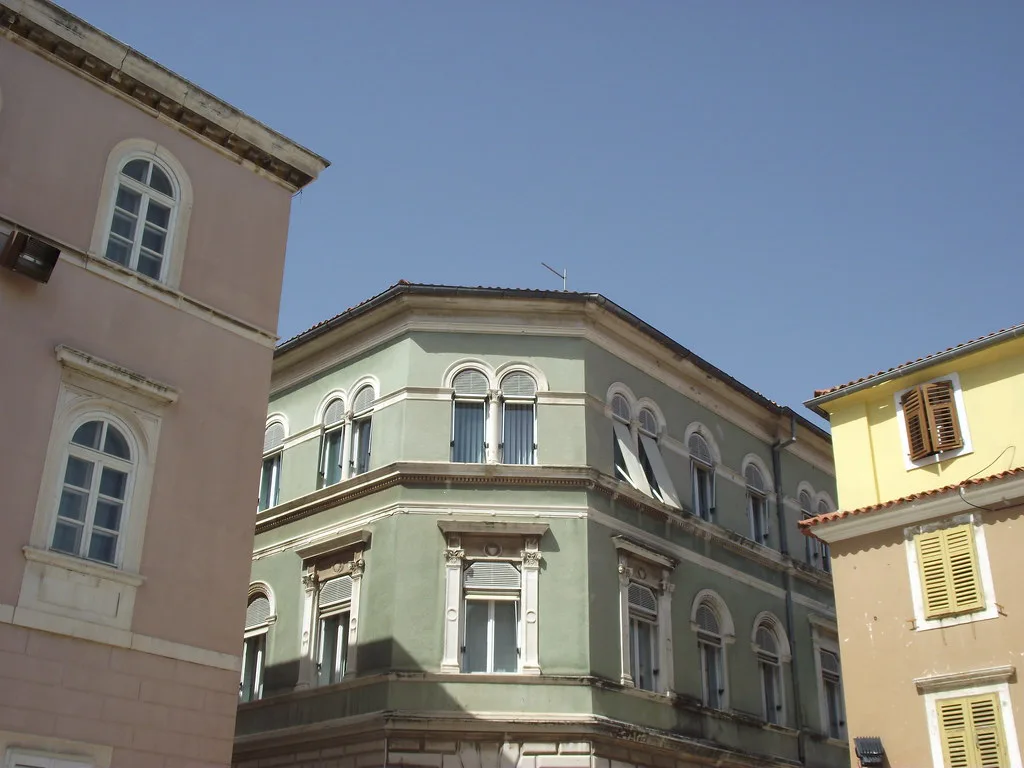
Poluotok, Zadar: A Guide to the Old Town Peninsula
Poluotok is the peninsula that holds Zadar's entire old town, a compact walking district where the Riva, the Roman forum and the Sea Organ sit minutes apart. This guide covers what is on it, who it suits, how you arrive now that ferry traffic has moved to Gaženica, and where the summer crowds gather.
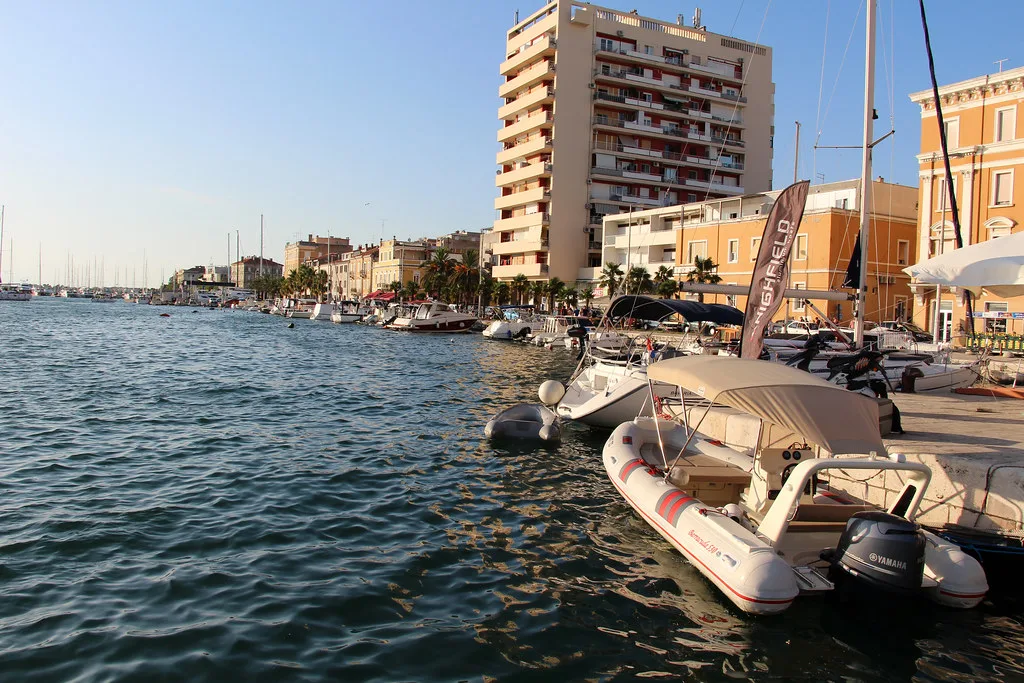
Voštarnica, Zadar: A Local Neighbourhood Guide
Voštarnica is Zadar's first urbanistically planned residential quarter, built through the 1960s and 1970s. It is lived-in city fabric rather than a sight, best used as a quiet base within walking distance of the Old Town, the Roman Forum and the Sea Organ.