
Arbanasi, Zadar: a Visitor's Guide to the Quarter

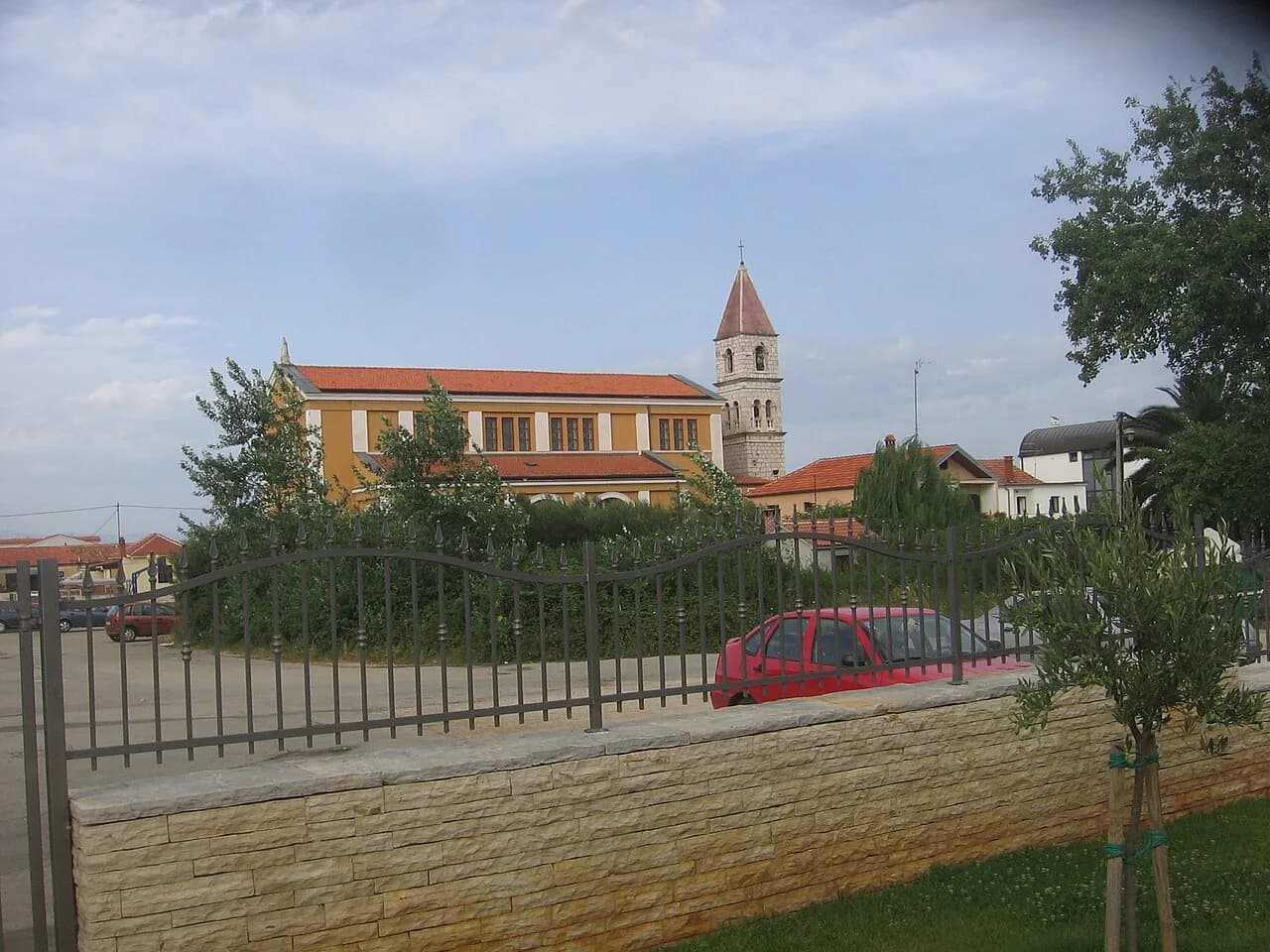
Treat Arbanasi as a short walk rather than a sight in its own right: a living residential neighbourhood in Zadar, with the Land gate, the church of crkva Gospe Loretske and Stadion Stanovi as its landmarks. It sits beside the Ričina and Jazine I neighbourhoods and is close to the city's bus and railway stations. This guide covers what the quarter is, who the Arbanasi community are, what you actually see and who it suits.
What and where Arbanasi is
Arbanasi is a suburb of Zadar in Zadar County, bordered by the Ričina and Jazine I neighbourhoods. The land is low and flat, at roughly two metres above sea level, so the walking is easy. Its landmarks are the Land gate, the church of crkva Gospe Loretske and the Stadion Stanovi football ground.
The quarter is also recorded under the Italian name Borgo Erizzo, a reminder that this part of Zadar sat inside the Venetian and later Italian cultural orbit for centuries. That dual naming is worth knowing because you will still see both forms on maps and in older accounts of the city. For orientation, use the Land gate and the central Zadar neighbourhoods as your fixed points.

Who the Arbanasi are
The quarter takes its name from the Arbanasi, an ethnic community in and around Zadar in northern Dalmatia who are of Albanian origin. Their presence here is long-standing and separate from the modern suburb that grew up around them, which matters for how you read the place: this is a neighbourhood with a distinct community history, not a theme-park old quarter.
Within the community the Arbanasi keep their own name for themselves, Arbëneshë, part of a cultural identity of their own rather than simply an extension of the city centre. For a visitor, the practical upshot is modest: you are walking through a lived-in district whose story is social rather than monumental. Treat the streets themselves, not a single ticketed attraction, as the thing to see.

How the quarter is laid out
The Land gate is the focal point of the whole area. It is a city gate that most visitors reach from the central Zadar streets, and it is the simplest anchor to start from when exploring the quarter. Use it as your fixed point: from the gate, the neighbourhood opens up towards Stadion Stanovi, the church and the everyday civic buildings.
On the neighbourhood side you will pass everyday civic infrastructure as much as monuments, including the local library, Gradska knjižnica - Arbanasi, and the Mjesni odbor Arbanasi government office. The church of crkva Gospe Loretske and Stadion Stanovi sit within the same compact area, which is why an unhurried loop takes well under an hour. The quarter is small enough that getting lost costs you nothing.
What you actually see
The Land gate is the one piece of architecture most visitors will stop for, a surviving city gate where the central streets meet the neighbourhood. From there, crkva Gospe Loretske is the quarter's parish-scale church, a modest building rather than a monumental one, and Stadion Stanovi is a working football ground. None of these is a museum piece; they are the fabric of a functioning neighbourhood.
If you want a concentrated sight, the Archeological Museum Zadar is listed among the places of interest in the area around Arbanasi, and the central Zadar sights are a short walk beyond the Land gate. That makes the quarter a sensible first or last stop on a Zadar day rather than a separate excursion. Plan your indoor visits elsewhere in the city and use Arbanasi for the walk in between.
Where Arbanasi sits in a Zadar day
Slot Arbanasi into the walk between the bus or railway station and the city centre, and you get the quarter for free. Arrive by bus or train, cross Arbanasi past the Land gate, and you are in the heart of the city without a detour. Leave it as a standalone destination and you will probably feel short-changed, because the sights are few and spread thin.
Compared with the old town's concentrated set pieces, Arbanasi is quiet, residential and largely free of queues, which is exactly its appeal on a crowded summer afternoon. If you want the waterfront promenade and the peninsula's core, that is Poluotok, Zadar; if you want a greener, beachier edge of the city, look at Borik, Zadar instead. Arbanasi's role is the connective tissue between them, and the wider Zadar Neighborhoods: 4 Area Guides sets them all out.
Who it suits and who it does not
Arbanasi suits travellers who like ordinary neighbourhoods, layers of community history and the pleasure of walking a city rather than ticking off tickets. It also suits anyone staying near the stations or arriving late, since the quarter sits close to both. Photographers who prefer textured streets and a working football ground to polished squares will find more here than the guidebooks suggest.
It does not suit anyone wanting a half-day of sights, a beach afternoon or a concentrated dose of Venetian architecture. There are no must-see interiors to fill an itinerary, and the quarter's modest landmarks will not hold children for long. If your time in Zadar is short, walk through Arbanasi on the way to the old town and spend the hours on the peninsula.
Getting there and getting around
The simplest approach is on foot from the city centre, passing by the Land gate; the quarter is flat and compact, so you need no transport once inside. Zadar Bus Station and Zadar Railway Station are both listed among the notable places near Arbanasi, which makes the neighbourhood an easy first or last stop if you are arriving or leaving overland. From Gaženica, the port area to the south, you will need to cross the city rather than walk.
Wear comfortable footwear for paving, and carry water in high summer because shade is patchy away from the city's walls. The bura can make the open stretches near the stations feel raw even on a bright day, so a windproof layer earns its place outside July and August. Distances are short enough that a map on your phone is all the navigation you need.
Practical points for visiting
Check current details for the Land gate, crkva Gospe Loretske and the other landmarks locally before you build a plan around them. Croatia has used the euro since 2023, so any kuna figure you encounter is historic. The gate itself is an outdoor structure you pass through, which keeps things simple.
The quarter is residential rather than a visitor-facing strip, so plan your meals and longer stops in the city centre. If you are choosing between Zadar neighbourhoods for a base, the guides to Borik, Zadar and Poluotok, Zadar will tell you more than Arbanasi can. Come here to walk, look and move on.
Is Arbanasi worth the walk?
Yes, if you are already crossing between the stations and the city centre, and no if you were planning to build a day around it. The Land gate gives the walk a purpose, crkva Gospe Loretske and Stadion Stanovi fill in the picture, and the Arbanasi community's long history gives the streets a meaning that the buildings alone do not. Budget an hour, keep it as a connector, and spend the rest of your day on the peninsula.
Explore more Zadar guides
Frequently Asked Questions
What does Arbanasi mean?
The name refers to the Arbanasi, the Albanian-origin community settled in and around Zadar whose presence gives the quarter its identity. The district is also recorded under the Italian name Borgo Erizzo, so both names appear on maps and in older accounts of the city.
Is Arbanasi the same as Zadar's old town?
No. Arbanasi is a separate residential neighbourhood in Zadar with its own landmarks — the Land gate, crkva Gospe Loretske and Stadion Stanovi. The old town, with its Roman and Venetian sights, sits on the walled peninsula towards the waterfront.
How long do I need in Arbanasi?
About an hour on foot is enough for the Land gate, the church of crkva Gospe Loretske and the streets around Stadion Stanovi. The quarter is flat and compact, so it works best as a walk between the bus or railway station and the city centre rather than a stand-alone visit.
Do I need to book anything to visit Arbanasi?
There is nothing specifically set up to book for the quarter itself; the Land gate and the streets are simply walked through. For any interior you want to see, check current details locally before relying on specific opening times.