
Sea Organ Zadar: Visiting the Morske orgulje on the Riva

The Sea Organ is Zadar's waterfront sound installation, built into the stone steps of the Riva so that waves drive air through pipes below and produce a low, shifting melody you hear rather than visit. It is open to the street, has no gate and needs no ticket, so the stop is about timing and expectations rather than queues or opening hours. This guide covers how the mechanism works, where the steps sit relative to the old town, how long to allow and what to see on the same walk; see also Zadar Attractions: 13 Visitor Guides for the wider old town.
Come for 30 to 45 minutes, ideally with the Sun Salutation next door, and treat the organ as a piece of public architecture rather than a performance with a start time. The notes change with the sea and wind, so a calm day and a brisk one sound quite different, and no two visits are alike.
What the Sea Organ in Zadar actually is
Morske orgulje is an architectural sound art object on the Zadar waterfront that doubles as an experimental musical instrument, with the sea itself acting as the player. It is not a museum, a concert venue or a ticketed attraction: the seating is public stone terracing, and people sit, lean and walk over it throughout the day. The Croatian name is worth knowing because signs and maps around town use Morske orgulje rather than the English.
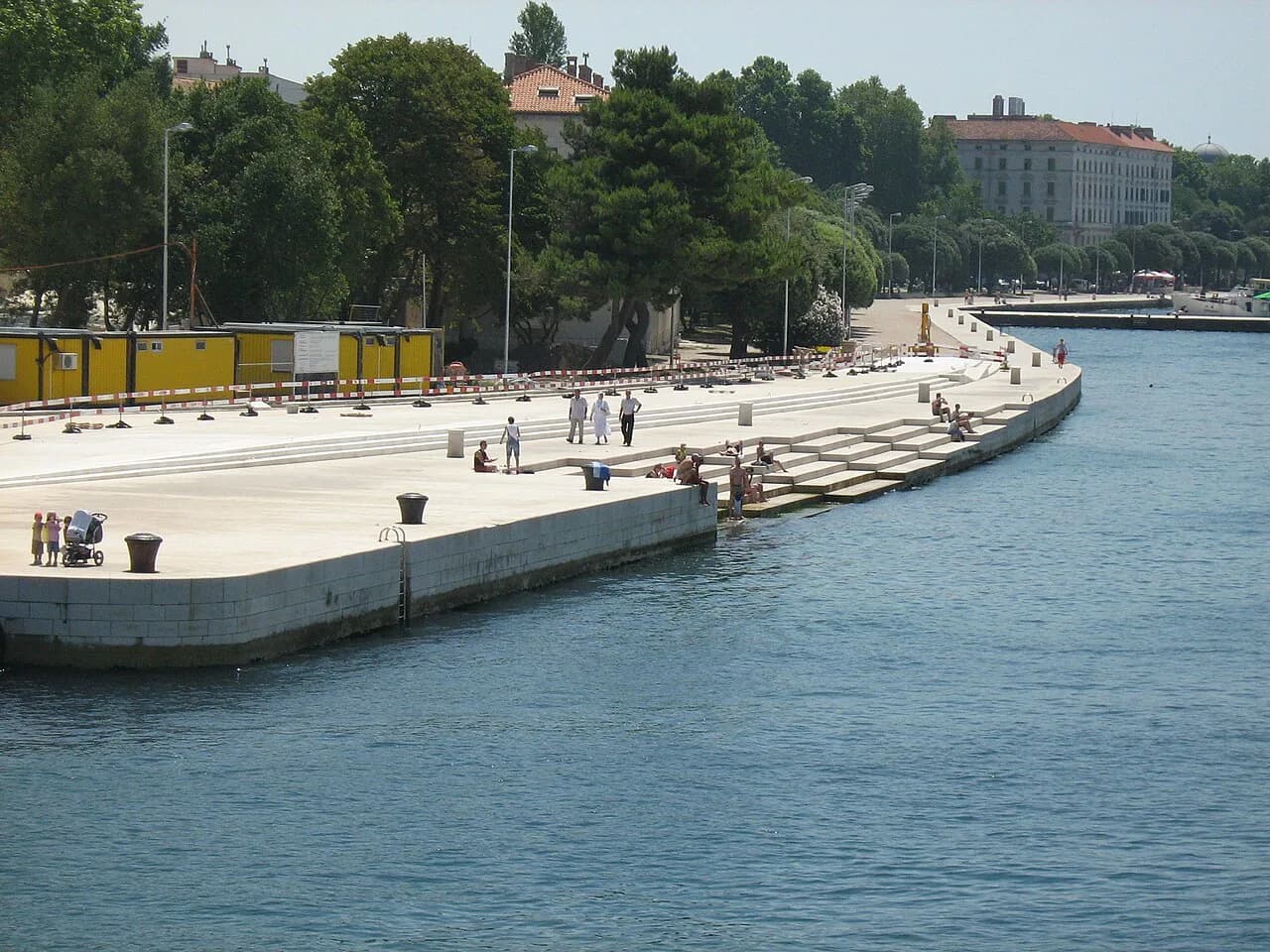
The installation stretches out over about seventy metres of the Zadar waterfront, so it reads as a long piece of shoreline rather than a single object. That length matters practically: there is no one best spot, and you can walk the whole run to hear how the sound shifts along it.
How the Sea Organ works
The principle is simple enough to explain without acoustics jargon: the stone waterfront was cut and reshaped, and beneath it sit pipes and a resonant chamber. As waves wash in and out, they push air through the pipes, and the air moving through tuned openings produces the chord-like tones you hear. Because the sea supplies the air, the tempo and volume follow the water rather than any schedule.
This is why the sound never repeats exactly. A gentle swell gives slow, breathy notes; choppier water pushes them faster and louder, and the wind adds its own layer. If you are hoping to hear it at its most musical, watch the water for a minute before deciding where to sit.
Where it sits on the Zadar waterfront
The organ occupies the tip of the Zadar Peninsula, on the Riva at the northwestern end of the old town, where the waterfront wraps around towards the Sun Salutation. From the Roman Forum Zadar and the Church of St Donatus in the heart of the old town, it is a flat walk of roughly ten minutes through the grid of streets.
Walking is the sensible way to arrive, because the old town's lanes are pedestrian and parking near the tip is limited in summer. Approach along the Riva from the Sea Gate side and you get the whole waterfront in sequence, with the organ as the payoff at the end.
What you see and hear when you arrive
You will find broad, shallow steps descending towards the water, with people sitting in loose rows facing the Adriatic. The sound is quiet at the edges and clearer where you sit close to the openings, so move along the steps until you find a spot where the notes carry. There is no stage, no barrier and no commentary, which is exactly why some visitors stay ten minutes and others settle in for an hour.
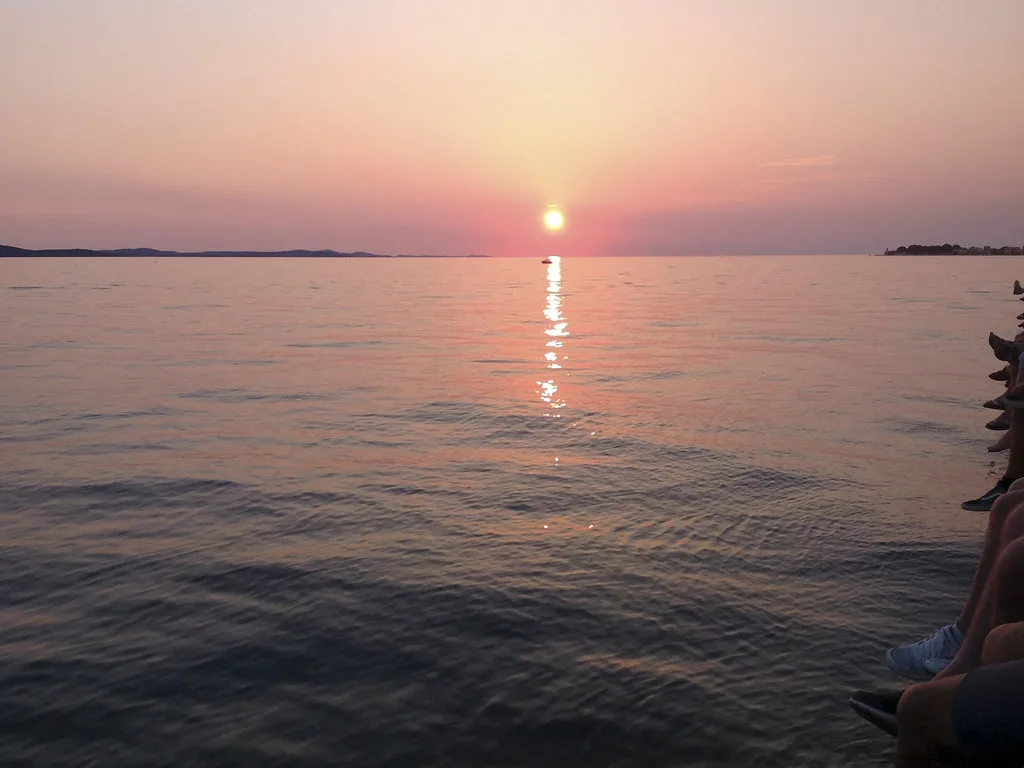
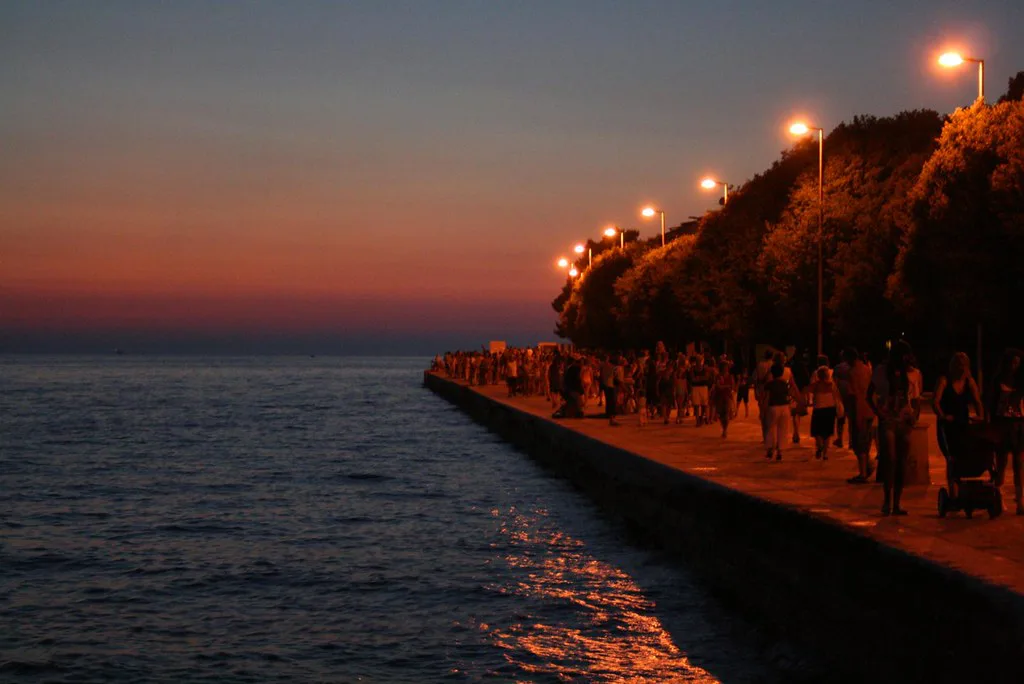
The steps face open water and the sunset, so late afternoon and evening are the busiest and the most atmospheric. Morning is quieter and better for listening closely, though the light is flatter for photographs. Bring something to sit on if the stone is hot or wet.
How long to allow and when to come
Budget 30 to 45 minutes for the organ itself, including sitting and walking its length, then add the Sun Salutation and the Riva for a natural one-to-two-hour waterfront stop. It works as a short pause between the old town's museums and churches rather than as a half-day in its own right.
Summer evenings bring the heaviest footfall, and the steps fill quickly around sunset when tour groups pass through. The bura, the cold northerly wind, makes the waterfront uncomfortable and sends spray across the steps, while calmer southerly weather is gentler for sitting out.
Can you swim at the Sea Organ?
Swimming at the organ steps is not what the installation is for: the stone terracing is seating, and the water immediately below is open harbour water used by boats. If you want a swim, treat the city beaches further round the peninsula as the proper place and keep the steps clear for people listening.
Conditions change with the weather, and there is no lifeguard arrangement to rely on, so judge the sea on the day rather than planning a dip here in advance.
Is it worth visiting, and who it suits best
Yes, provided you expect a free piece of public waterfront art rather than a show. It suits anyone already walking the old town, families needing a low-cost pause, and anyone interested in how architecture and sound can be combined. It is a poor fit for travellers wanting a ticketed highlight with interpretation or shelter on a wet, windy day.
What's nearby on the same walk
The Sun Salutation, a ground-level solar installation that lights up after dark, sits immediately beside the organ, making the two a single stop at dusk. Behind them the Riva runs along the harbour, and the old town's core is a short walk inland.
Inland, the Roman forum and the Church of St Donatus anchor the historic centre, and the city walls and gates frame the peninsula. The Museum of Ancient Glass and the Archaeological Museum give you indoor options if the weather turns.
Should the Sea Organ be on your Zadar shortlist?
Put it on the list, but slot it in as a waterfront pause of half an hour rather than a destination in its own right. Pair it with the Sun Salutation at dusk and the old town's forum and churches earlier in the day, and the walk covers itself.
The only real planning decisions are timing and weather: go early for quiet or late for the light, and skip the steps when the bura is blowing spray across them.
Explore more Zadar guides
Frequently Asked Questions
How does the Zadar Sea Organ make sound?
Waves push air through pipes and a resonant chamber built beneath the reshaped stone waterfront, and the moving air produces tuned, chord-like tones. Because the sea supplies the air, the tempo and pitch change with the swell and wind rather than following any fixed pattern.
Do you need tickets or opening hours for the Sea Organ?
No. The organ is an open-air installation set into the public steps of the Riva, with no gate, no admission fee and no set visiting hours. You can walk up to it at any time of day, though the steps are busiest around sunset in summer.
Where exactly is the Sea Organ in Zadar?
It runs along the waterfront at the tip of the Zadar Peninsula, where the Riva meets the Sun Salutation. From the Roman forum and the Church of St Donatus it is a flat walk of about ten minutes through the old town.