
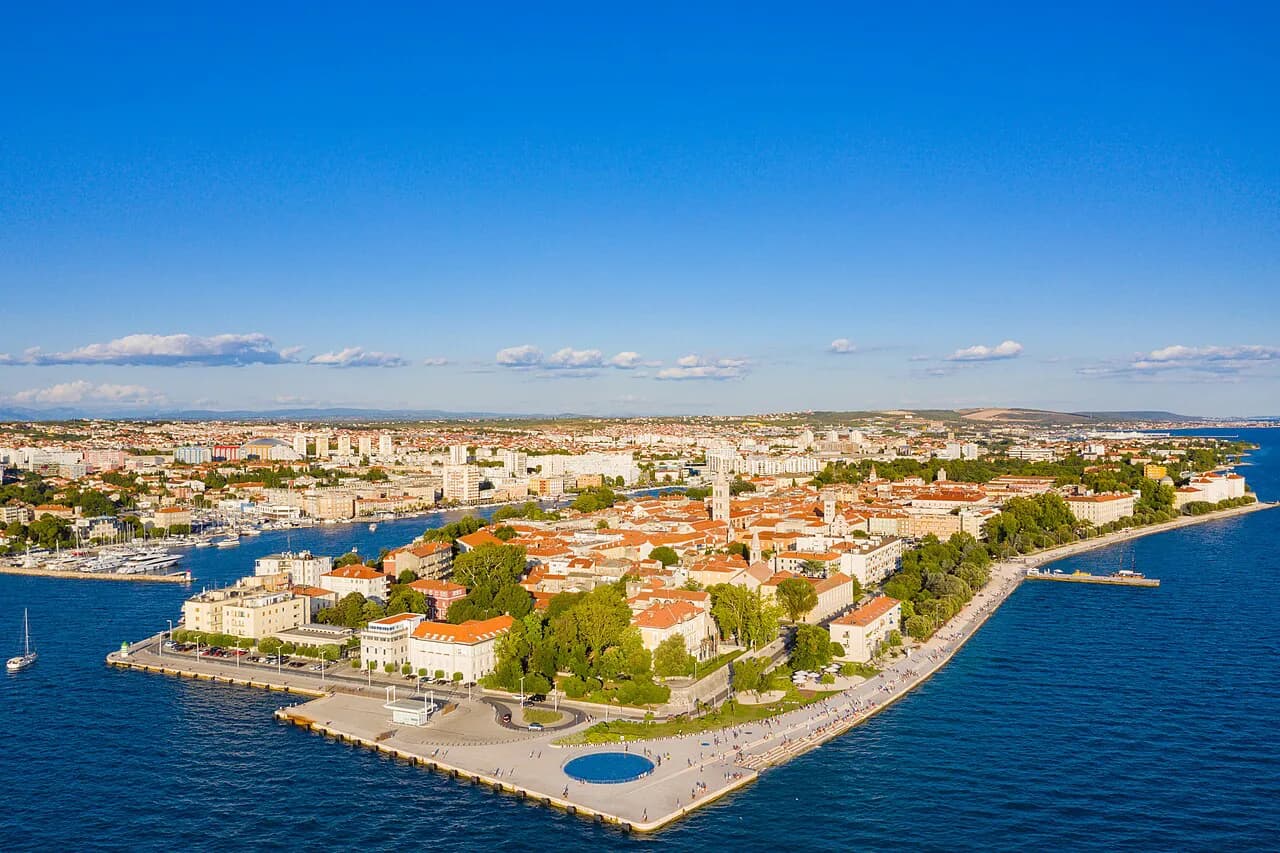
Greeting to the Sun, Zadar: Visiting the Waterfront Light Installation

The Greeting to the Sun is a free, open-air installation on Zadar's waterfront, best visited just after sunset when its solar-charged glass plates begin to glow. The page covers its layout, location, what happens at dusk, timing and nearby sights. It is one stop on a waterfront sequence rather than a ticketed attraction.
What the Greeting to the Sun is
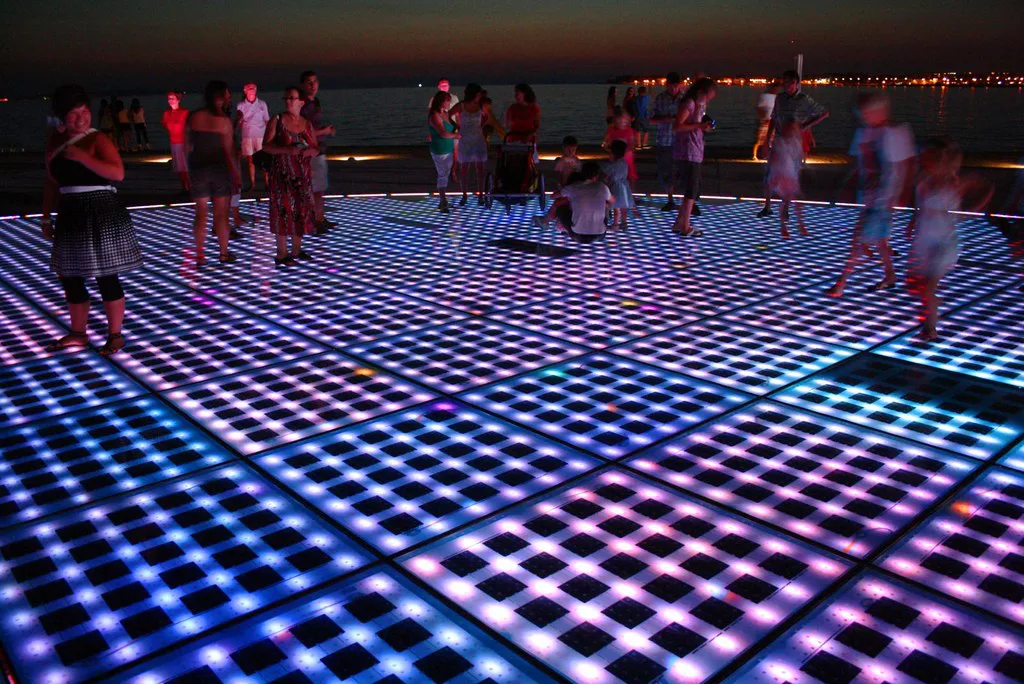
The work is by Croatian architect Nikola Bašić, who also designed the adjacent Sea Organ. It is a 22-metre-wide circular platform set with 300 multi-layered glass plates that capture sunlight by day and release it as a changing light display after dark.
The glass plates work as solar collectors, so the installation is self-sufficient and its display is powered by the day's sun. You walk across the surface rather than view it from a barrier, which makes it a tactile stop for a few minutes rather than a gallery visit.
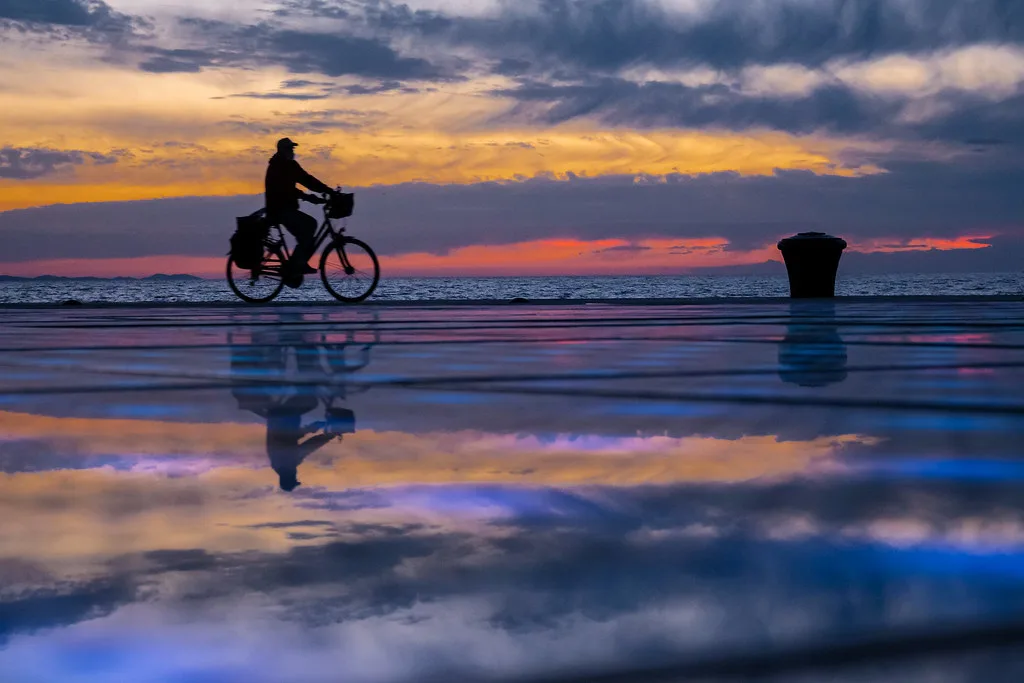
Where it sits on the waterfront
The installation is on Zadar's waterfront, a short stroll from the Sea Organ and the Roman Forum. The two installations sit within steps of each other, so plan to see them as a pair. The Old Town lanes and Kalelarga are close behind.
Walking from the Old Town is straightforward: head for the water and follow the Riva. The waterfront is where the city meets the sea, and the installation is on that promenade rather than hidden in a courtyard. If you are arriving by ferry or bus, it is worth glancing at the official Zadar tourist board site for any seasonal notices about the waterfront before you set out. For a wider set of city sights, see Zadar Attractions: 13 Visitor Guides.
What happens at dusk
As the sun sets, the glass plates light up in colours and patterns that change through the evening. The solar energy collected during the day is what powers the display. Visitors can walk over the installation and watch the transition from passive collector to active light.
The effect is subtle rather than a laser show: the pleasure is in the shifting colours underfoot and the setting beside the water. It is also free to see, with the installation described as open to the public every day with no set hours or ticket needed.
When to go: sunset timing and seasons
Arrive about 30 minutes before sunset to watch the sun go down and the plates begin to glow. Sunset time shifts through the year, so check a sunset table for your date rather than relying on a fixed hour. The installation is open to the public every day with no set hours.
Summer brings lively crowds and warm evening air, which makes the waterfront energetic but harder to enjoy quietly. In the off-season the atmosphere is calmer and you can spend longer on the platform without jostling. Either way, the display needs darkness to show at its best.
Pairing it with the Sea Organ
A few steps from the circular platform, the Sea Organ is a set of marble steps descending into the water with 35 tubes beneath that turn wave movement into sound. When the sea is calm — locals call it bonaca — the sound is soft; in wind it grows louder.
Together the two installations make one waterfront stop: listen to the Adriatic Sea through the steps of the Sea Organ, then cross to the glass platform for the light. The combination is what many visitors remember, so allow time for both rather than rushing one. See our Sea Organ Zadar guide for the listening side and the wider Zadar Attractions: 13 Visitor Guides for other city sights.
How long to allow and what to bring
The installation itself takes only a few minutes to walk across; the real time is spent waiting for the light and watching the sunset. Plan a short stop of about half an hour around sunset, longer if you also linger at the Sea Organ. Bring a camera for the light display and a light jacket in cooler months.
Nearby: the Roman Forum and St Donatus
A short stroll from the waterfront brings you to the Roman Forum and the Church of St Donatus, a 9th-century round church that is one of the city's symbols. See our Church of St Donatus, Zadar guide for what to look for inside and around it.
These are add-ons rather than a full day: the Forum and St Donatus sit close enough to combine with the waterfront in one evening. For a wider set of sights in the city, see the Zadar Attractions: 13 Visitor Guides collection and pick the stops that fit your time.
Practical points: tickets and opening
There is no ticket and no fixed opening time — the installation is open to the public every day with no set hours. That means you can visit at any hour, but the light display needs darkness and is best just after sunset.
Because there is no staffed entrance or schedule, check the official Zadar tourist board site for any seasonal notices about the waterfront before you go.
Is the Greeting to the Sun worth the stop?
Yes, if you are already on the waterfront at sunset: it is free, takes minutes, and pairs naturally with the Sea Organ. Do not build a day around it. Go about 30 minutes before sunset, listen to the steps, then watch the plates light up.
Explore more Zadar guides
Frequently Asked Questions
What time is the Greeting to the Sun in Zadar?
The installation has no set hours and is open to the public every day. The light display starts after sunset, so check a sunset table for your date and arrive about 30 minutes before to see the transition.
Do you need tickets for the Greeting to the Sun?
No. It is open to the public with no ticket and no set hours. Just walk onto the waterfront platform.
Who said Zadar has the best sunset?
The claim is widely attributed to Alfred Hitchcock, who is said to have called Zadar's sunset the most beautiful in the world. It is an attribution rather than a verified quote, so treat it as local lore.