Ston, Croatia: Walls, Salt Pans and How Long to Stay
Ston in Croatia is worth a half day for its 5.5 km medieval walls and working salt pans. Here's how the town and Mali Ston fit together and what to see.
On this page
Allow half a day for Ston. The town is small, the old centre takes twenty minutes to cross, and the headline sights — the medieval walls and the working salt pans beside them — sit within a few minutes' walk of each other. A full day only makes sense if you plan to walk the whole wall circuit in summer heat or continue down the Pelješac peninsula afterwards.
Ston sits at the narrowest point of the Pelješac peninsula, about five kilometres from the Adriatic highway, which is why it works so well as a stop rather than a base. The walls run between Ston and Mali Ston around the salt pans that fill the low ground, and everything else in this guide is arranged around those three pieces.
What Ston is and why it matters
Ston is a fortified salt town, and that single fact explains almost everything a visitor sees. The Republic of Ragusa — Dubrovnik's old state — walled the settlement in the fourteenth century to protect the salt pans, which were a major source of its wealth. In the Middle Ages salt was precious enough to be called 'white gold' here.
The town's layout follows the terrain: walls climb the hillside behind Ston, drop towards the water, and continue to Mali Ston on the far side of the salt pans. The walls are easiest to grasp whole from above or on the approach, before you park and start walking.
Ston is also a working town rather than a museum piece, with people living in the old grid of streets behind the defences. Treat the centre as somewhere to wander rather than a ticketed circuit, and save your structured time for the walls and the salt pans.
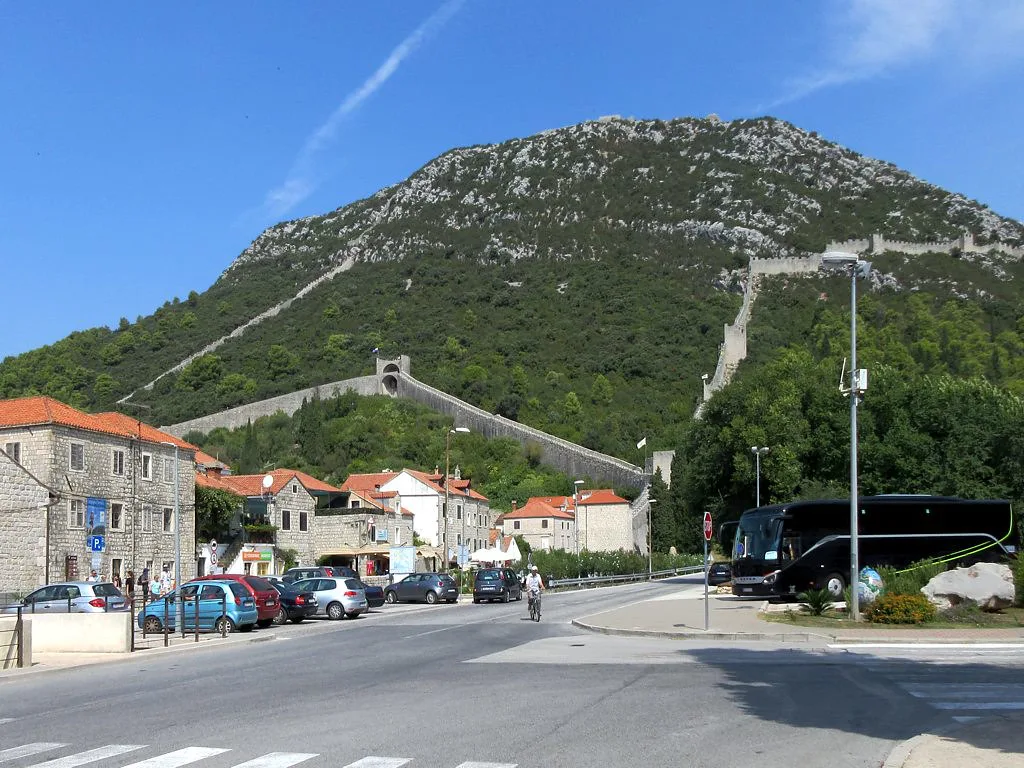
Ston and Mali Ston: two towns, one walled system
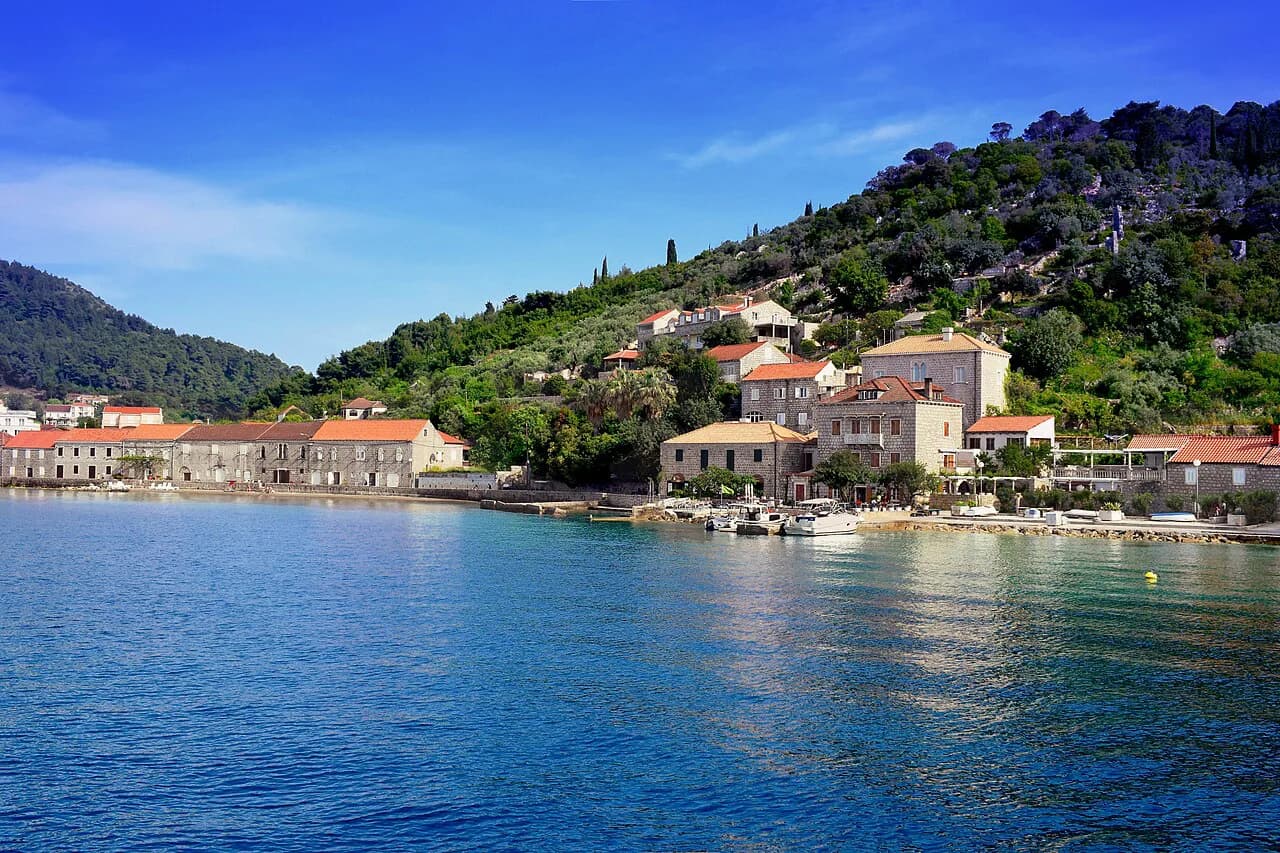
Visitors often treat Ston and Mali Ston as one place, and that is the most common mistake here. Ston is the larger settlement, with the old centre, the main car park and the usual start of the wall walk. Mali Ston sits at the other end of the walled system, on the inlet, and holds the Koruna fortress.
The walls themselves link the two towns, and a road runs around the salt pans, so you can walk the ramparts one way and return by road if you have the time and the legs. If you only have a couple of hours, choose Ston's centre and the salt pans, and leave Mali Ston for a longer visit. Details of the wider peninsula, including the road down to Orebić, sit in the Pelješac guide.
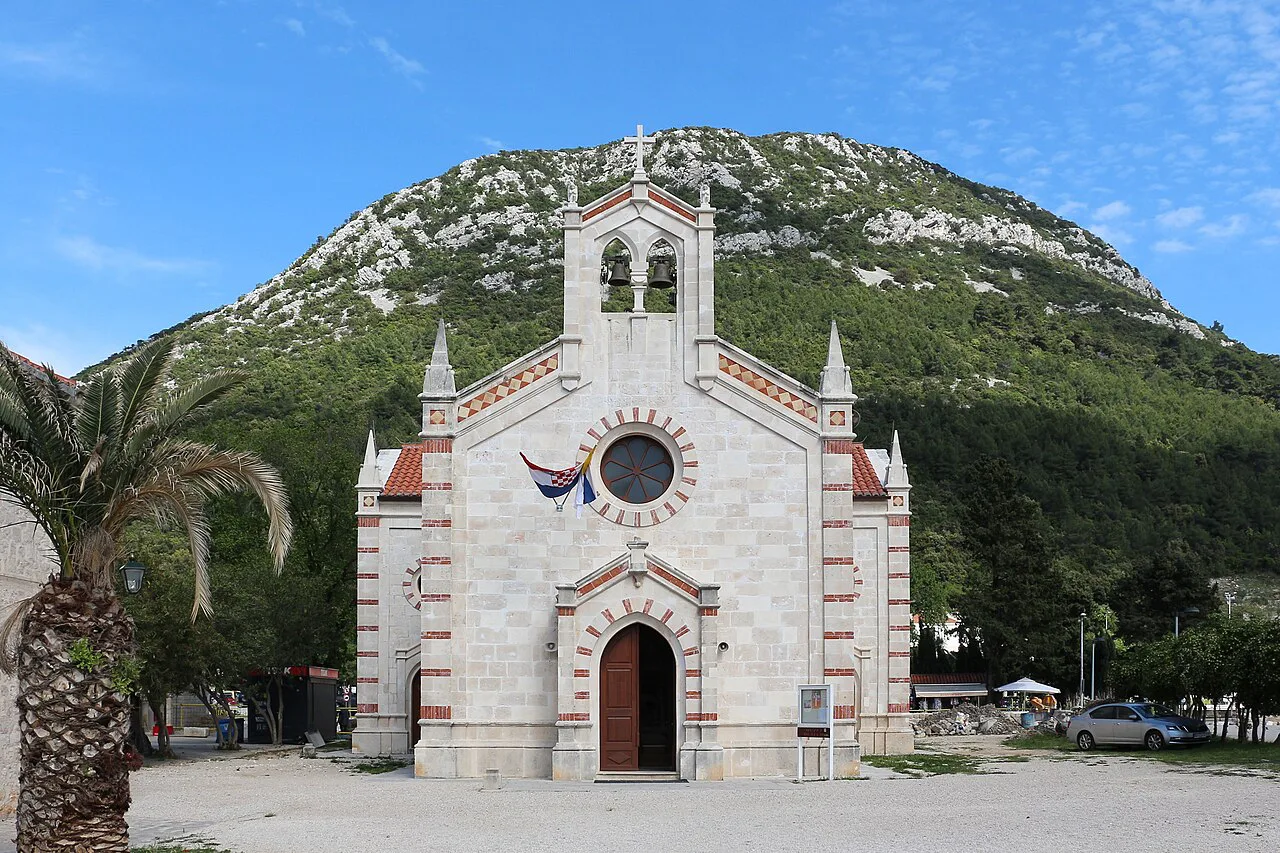
The Walls of Ston: how far and how high
The walls today run about 5.5 kilometres and link Ston to Mali Ston in an irregular pentagon. The original system stretched over roughly seven kilometres and incorporated forty towers and six fortresses. That scale is why the circuit feels bigger than the town it protects.
The walk is a stair climb, not a flat promenade. Expect stone steps, uneven surfaces and long exposed stretches with little shade, so trainers or walking shoes matter more than anything else you carry. The exposed sections are also where summer heat bites hardest.
You do not have to commit to the full length. Walking a section from Ston, taking in the views over the rooftops and salt pans, and coming back down gives you the essential experience without committing to the whole traverse. The full traverse to Mali Ston is the better part of a morning or afternoon once you add the return.
The fortresses along the wall
Four fortresses come up most often on the wall route: Bartolomio, Podzvizd, Kaštio and Koruna. The first three sit within the Ston stretch and break up the climb, while Koruna is the fortress associated with Mali Ston. Knowing the names helps you judge how much further you have to go.
Koruna is the one to prioritise if you are walking only one direction. It is the fortress tied to Mali Ston and the inlet, so it pairs naturally with a look at the harbour side of town. Walk Ston to Mali Ston, see Koruna, then return by the road around the salt pans.
The Stonske Solane salt pans
The salt pans — Stonske Solane — are the reason the walls exist, and they are still worked. The basins sit between Ston and Mali Ston in a grid that looks like a chessboard from above, and salt has been harvested here since antiquity. This is a working site, not a display.
Harvest runs through the warm months, when seawater is let into the basins and left to evaporate in the sun. Late summer is when the pans are at their busiest and most photogenic, and early September brings a salt festival at which visitors can harvest their own and take it home. Treat the pans as somewhere to walk beside rather than through, and keep to the paths.
Treat the pans as a working landscape rather than a visitor attraction with a fixed programme. Harvest here has run since antiquity and the method has changed little, so what you see depends on the season and the day's weather.
The old centre on foot
Ston's old centre is compact and easy to cover without a plan. The main street runs through the grid behind the landward walls, with small squares opening off it, and the whole thing takes about twenty minutes at an unhurried pace. Look up as much as ahead: the fortifications frame almost every view.
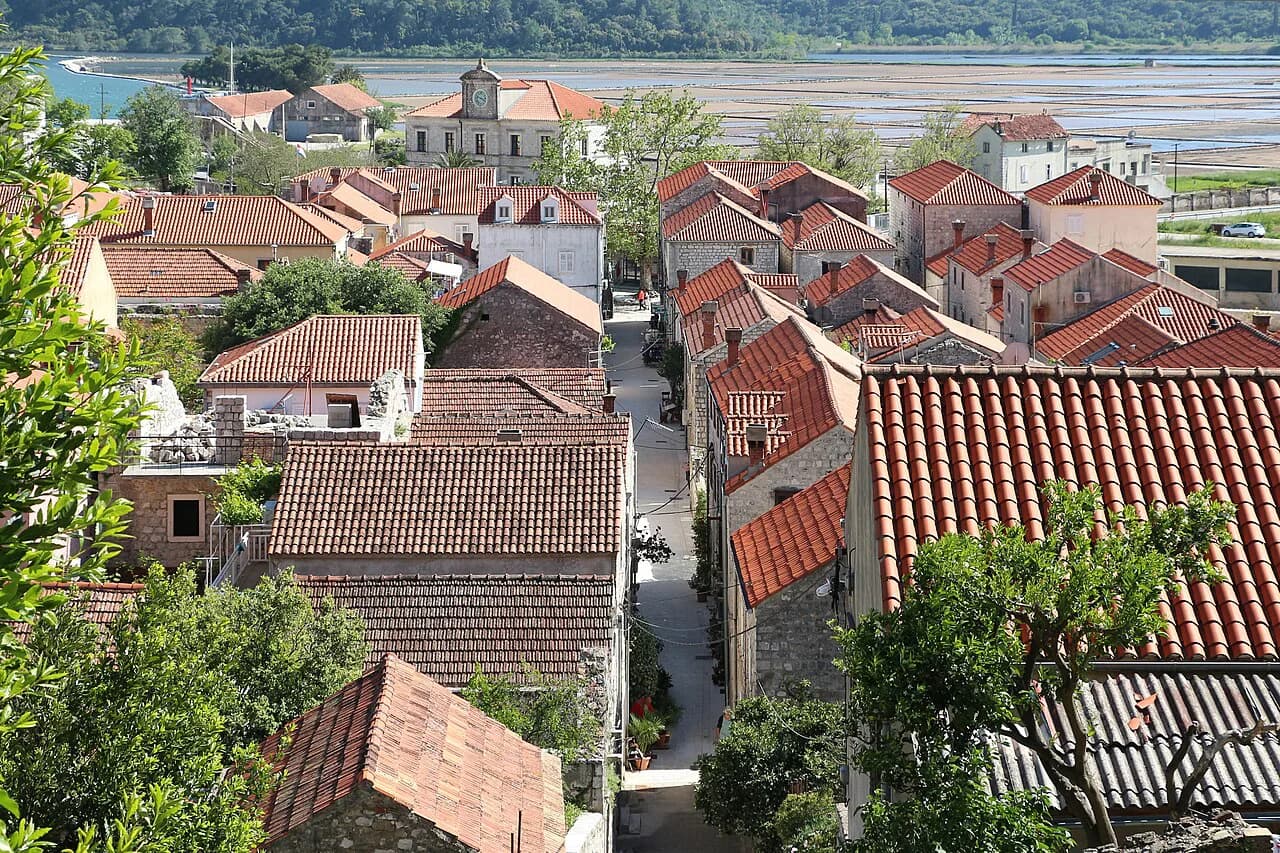
The most rewarding short walk is from the centre up to the wall entrance and along the first stretch of ramparts. From there you get the classic view over the rooftops towards the salt pans and the inlet beyond, which is the shot most people come for.
How long Ston needs: half day or full day
Half a day is the honest answer for most travellers. That covers the old centre, a section of the walls and a walk along the edge of the salt pans, with time for coffee. It fits neatly into a drive between Dubrovnik and Korčula or a loop down the peninsula.
A full day only pays off if you want the complete wall traverse to Mali Ston and back, plus Koruna and a slower look at the salt pans. Add the heat factor: in July and August, the exposed ramparts are best walked early or late, with the middle of the day left for the shade of the town and the pans.
Ston as a stop on a coastal trip
Ston sits between Dubrovnik and the Pelješac peninsula, which makes it a natural break on the run towards Korčula and the islands beyond. It is not a destination in its own right for most visitors, and treating it as a half-day stop keeps the rest of a Southern Dalmatia itinerary intact.
If you are short of time, do not drop the walls for the salt pans or the reverse — do a shortened version of both. The pans take fifteen minutes to walk beside; the ramparts take forty. Leave out Mali Ston first if something has to go.
Travellers basing themselves nearer Dubrovnik often pair Ston with a day around Cavtat, which is a different kind of stop altogether; Cavtat: A Guide to the Old Town, Sights and Peninsula Walk covers that option separately.
Getting there without a car
Buses run from Dubrovnik to Ston on the Adriatic highway, with the journey taking a couple of hours depending on the service. Timetables change with the season, so check the carrier's own timetable listing before you travel rather than relying on a printed guide.
From the bus stop in Ston it is a short walk to the salt pans, and the main wall entrance sits in the centre of Ston. If you are coming from the islands, the regular ferry line between Prapratno on the Pelješac side and Sobra on Mljet links the two, and Prapratno is a short hop from Ston by road or on foot.
Driving is the simplest option: from Dubrovnik the run on the Adriatic highway takes about an hour and a half, and there is parking at the salt pans. If you are continuing down the coast and want a base on the peninsula, Orebić is the usual choice.
When to go
Late spring and early autumn are the kindest months for the walls. The steps are exposed, and summer heat makes the climb harder than the distance suggests, so an early start in July or August is worth the effort.
The salt harvest gives the pans their character, and the late-summer weeks are when the basins are most active. Outside the harvest season the pans are quieter and the site feels more like landscape than industry, which is a different but worthwhile experience.
Oysters and Prapratno beach, in brief
Ston and Mali Ston are known for oysters from the sheltered inlet, and a plate of them is the local thing to do if seafood is your reason for stopping. Prapratno, a short distance from town, has a sandy beach that works as a swim stop before you carry on down the peninsula.
Is Ston worth the stop?
Yes, for half a day, and mainly for the combination of walls and salt pans that you will not see elsewhere on the coast. Walk a section of the ramparts, look down on the grid of basins, and move on — that is the right shape for most trips.
If you have the time, add the full traverse to Mali Ston and Koruna, and time your visit for the harvest season or the shoulder months to avoid the worst of the heat. Check current wall opening hours and any salt-pan tour times before you set out.
Explore more Southern Dalmatia guides
Sources
Notes from the Croatian coast
Optional updates when our guides change.
You might also like

Continue reading
More guides you'll find useful