Pelješac Peninsula: Ston, Orebić and How to Get Around
Plan a trip to the Pelješac peninsula: Ston's walls, Orebić and the ferry to Korčula, the Sveti Ilija climb and the road past the vineyards.
On this page
Pelješac is a long, narrow finger of land in southern Dalmatia, joined to the mainland near Ston and reaching west towards Korčula, so the sensible plan is to travel it end to end rather than tick off a single sight. Most travellers give it one or two days, using Orebić at the western tip for the crossing to Korčula and Ston at the eastern neck as the first stop off the main road. This guide covers the layout, the road and ferry options, Ston's walls and salt flats, Orebić, the Sveti Ilija climb and the villages in between.
Where Pelješac sits on the southern Dalmatian coast
The peninsula runs roughly east to west, attached to the mainland at Ston and tapering towards Orebić and the channel opposite Korčula. That shape matters: distances look short on a map, but the coast road winds, and the far end is a long way from the near end in driving terms. It belongs to the wider southern Dalmatia region, which runs from the Neretva delta down through Dubrovnik's hinterland and the islands offshore.
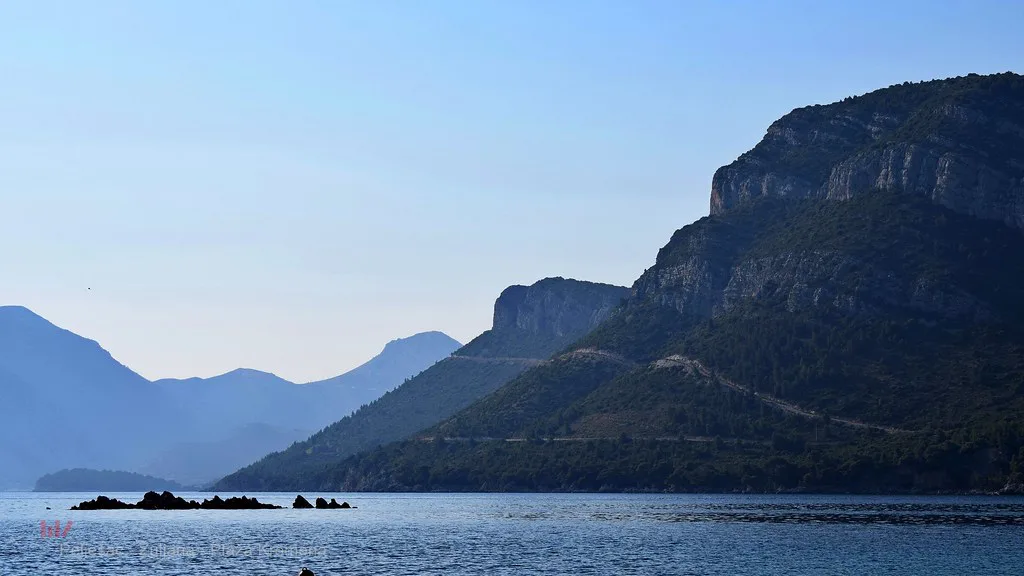
About 8,000 people live on the peninsula, which explains why so much of it still feels empty between the villages. Expect karst ridges, terraced vines, small harbours and long stretches of road with nothing but stone walls and scrub. Even in high summer you can drive for a while without passing another car once you leave the main axis.
How to reach Pelješac by road from Dubrovnik and the Neretva corridor
Driving is the most flexible way to arrive, and Ston makes a natural first halt on the road south towards Dubrovnik. Come up the coast from Dubrovnik or the Neretva corridor and the peninsula is reached with Ston at its neck, which keeps the approach simple and lets you break the drive. The far end at Orebić is reached by continuing along the peninsula road rather than by a separate boat.
From Dubrovnik the peninsula is usually approached up the coast, with Ston as the first natural halt. Reaching Orebić from Dubrovnik is put at about an hour and a half by road, which makes the far end viable as a day trip at the start or end of a Dubrovnik stay. If you are based in Cavtat, allow a little extra for the run up the coast before turning onto the peninsula.
Hiring a car for the day is the simplest option if you want Ston and Orebić in one push, because local buses along the peninsula are infrequent. Fuel up before you leave the main corridor; filling stations thin out once you are past Ston. Croatia uses the euro, so budget in euros.
Getting around without a car: ferries and boats
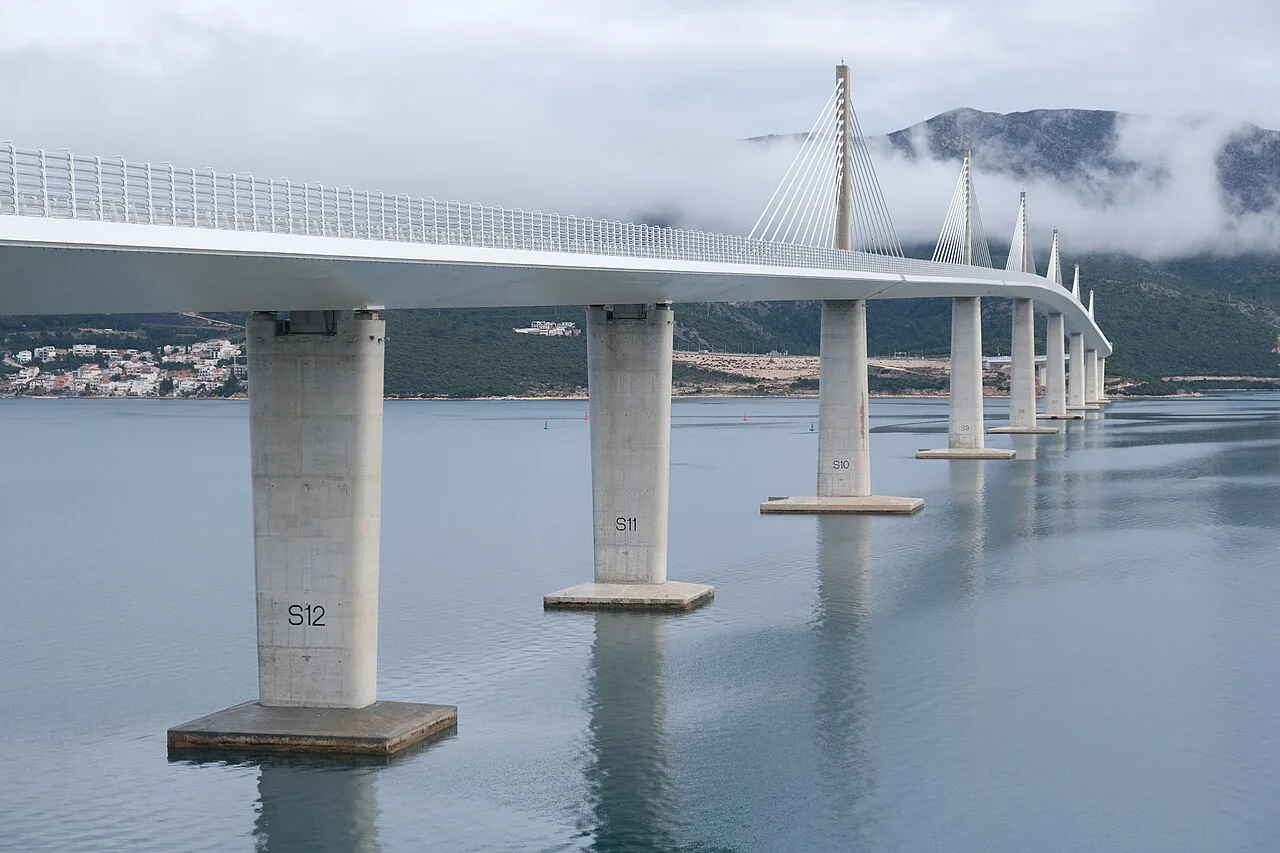
The key crossing for foot passengers is the short hop between Orebić and Korčula town, which puts the old town of Korčula within easy reach of the peninsula. Ferries carry vehicles too, so the same route is used by drivers heading to the island. Jadrolinija is the state ferry operator for Croatian coastal and island routes, and its published timetable is the one to trust for departure times, which shift between summer and winter schedules.
Without a car, the practical pattern is to arrive by bus or taxi at Ston, then take a bus or pre-booked transfer west to Orebić and use the ferry from there. Local buses link the main villages but run infrequently, so build slack into the day rather than planning tight connections. Walking the whole peninsula is not realistic for most visitors; it is too long and the road is not a continuous footpath.
If you want to combine the peninsula with island hopping, the Elaphiti islands lie off Dubrovnik to the south-east and have their own ferry and catamaran routes, which makes a Pelješac-plus-islands itinerary awkward unless you have a car. The two are separate trips best done on separate days.
Ston: the walls, the salt flats and how long to allow
Ston has two distinct attractions and they are often confused: the defensive walls climbing the ridge above town, and the salt pans spread out below on the Mali Ston side. Treat them as separate visits. The walls are a stiff climb along a long, exposed ridge; the salt works are a flat wander, with salt harvesting still part of Ston's story, contrasting with the grey stone around them.
The fortifications at Ston are frequently billed as the biggest stone wall outside China, and the ridge line is genuinely impressive from the road. Allow a couple of hours if you plan to walk a decent stretch in summer heat, with water and a hat; the stone holds the sun and there is little shade on the upper sections. Anyone with a fear of heights should know that parts of the parapet are low and the drop is real.
The salt flats are the quieter draw and suit anyone who wants an easy hour rather than a climb. The pans are worked for salt and the shallow rectangles of water and white salt contrast sharply with the grey stone around them. Ticket prices and opening months for both the walls and the salt works change with the season, so check at the entrance before you commit a morning.
Ston itself is small, with a compact centre, a main street and a harbour at Mali Ston where the boats come in. It works well as a half-day stop rather than a base. If you are travelling between Dubrovnik and the peninsula, arriving early beats arriving at midday when the coach parties pile in.
Orebić: the waterfront, the monastery and the ferry to Korčula
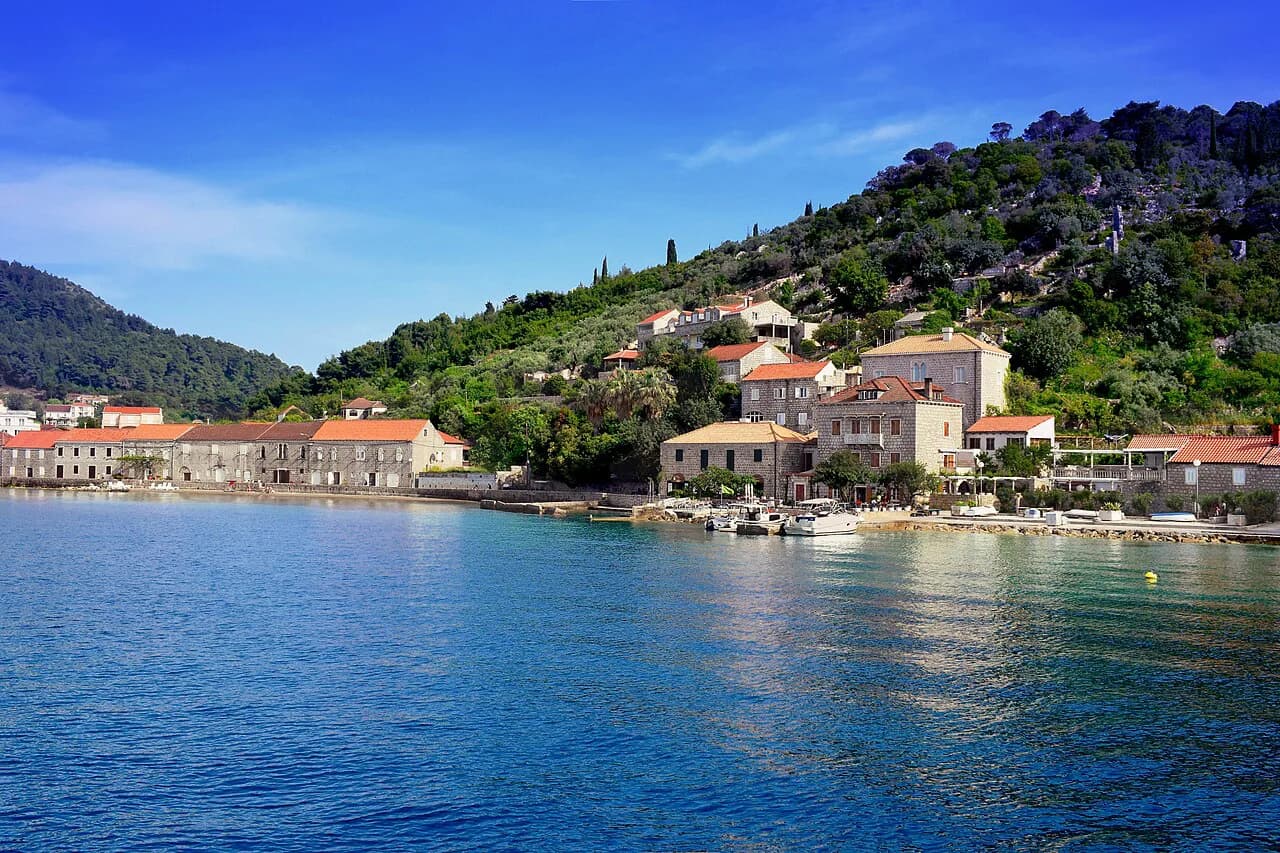
Orebić is best understood as a ferry port with a resort attached, and that framing changes how you plan the day. The town faces the Pelješac channel, with a long waterfront of captain's houses and a quay where the boats to Korčula load; the crossing is short and the island's old town is visible across the water. Arrive with time to spare before a sailing, because car queues build in the hour before departure in summer.
Above the town sits the monastery of Our Lady of the Angels, a historic complex with a church and a small museum, and it is a worthwhile stop before or after the ferry. It is also the traditional starting point for the climb up Sveti Ilija, so you can combine the two if you have a morning free. Orebić has a reputation as one of the sunniest spots in Croatia, which makes it pleasant out of season and punishing in a July heatwave.
Beyond the ferry, Orebić has a small maritime heritage and a scattering of pebbly coves along the shore road towards Kučište. It is a functional, likeable town rather than a showpiece, and most visitors pass through rather than linger. Give it a night if you want the early ferry without a dawn drive from Ston.
The climb to Sveti Ilija and the views over the peninsula and islands
Sveti Ilija is the ridge that dominates the western peninsula, and the summit gives the best view in the area: the Pelješac channel, Korčula, the open Adriatic and, on a clear day, a long stretch of the Dalmatian coast. The ascent from near Orebić is a serious half-day outing, put at a four-hour climb, so treat it as a proper hill day rather than a stroll. Carry more water than feels necessary and start early to avoid the midday sun on the upper slopes.
The path is rocky and exposed for much of its length, with little shade and a loose surface underfoot on the steeper sections, so boots are better than trainers. The bura wind can make the ridge cold and gusty even on a warm day. If the cloud is down or the wind is up, save the climb for another visit and drive the coast road instead.
The villages along the way: Kučište, Viganj and Trpanj
Heading west from Ston, the road passes through small settlements that each have a slightly different character. Kučište sits on the north shore with a pebbly front and steady wind, which is why it has become a base for kitesurfing, with schools and rental outfits in the village. Viganj has the same wind exposure and a long shingle beach facing the channel.
Trpanj lies on the northern side of the peninsula, reached by a separate road over the ridge, and has its own small harbour and a quieter feel than Orebić. The road across the ridge is steep and narrow in places, so allow more time than the distance suggests, and treat the villages here as places to stop rather than as a through-route to the mainland.
These villages are places to stop for an hour, swim and move on rather than destinations in their own right, and that is part of their appeal. Outside July and August many places shut or run reduced hours, so base yourself in Orebić or Ston in the shoulder months.
Postup and Dingač: what the vineyard country looks like from the road
The southern slopes above Orebić are the vineyard country, divided between the Postup and Dingač areas, both known for robust red wines from the Plavac Mali grape. You do not need to book a tasting to appreciate them: the road west from Orebić climbs through terraces of vines stacked above the sea, with dry-stone walls holding the soil in place. It is the most scenic drive on the peninsula and worth doing slowly.
The terraces are steep and the road is narrow with passing places, so drive with care and expect to meet the occasional local van coming the other way. There are viewpoints where you can pull over and look down the slope to the channel. Wine tasting is a separate pursuit that fills a day on its own; here the vineyards are scenery, not an itinerary.
When to go: summer crowds versus the bura and seasonal closures
July and August bring the warmest sea and the most reliable ferry and bus frequencies, but also the heaviest traffic on the coast road, fuller car ferries and higher prices in euros. June and September suit most travellers better: warm enough to swim, quieter on the road and with most places still open. May and October can be lovely but the weather is less certain and some seasonal businesses wind down.
The bura is a cold, gusty northerly wind that can arrive suddenly, shut down boat services and make the ridge above Orebić uncomfortable. It is most common in winter and early spring but can blow at any time of year, so check the forecast before committing to a ferry crossing or a summit day. When it is up, stay low, drive the sheltered side of the peninsula and keep plans flexible.
Off-season travel on Pelješac means accepting that some konobas, kiosks and boat operators close and that ferry timetables thin out; check current opening hours before you set out. Croatia has used the euro since 2023, so expect prices in euros.
How long you need and how to split a day or two on the peninsula
With one day, drive from Dubrovnik or the Neretva corridor to Ston in the morning, walk part of the walls or the salt flats, then continue to Orebić for the afternoon and the view across to Korčula. That is a long day with a lot of driving, and it works best if you start early and do not try to climb Sveti Ilija as well. Two days lets you sleep in Orebić, take the morning boat to Korčula and return for the evening.
With three days, add the Sveti Ilija climb on a clear morning and drive the Postup and Dingač road in the afternoon, then use the rest for the villages towards Viganj and Trpanj. If you are building a longer southern Dalmatia itinerary, put Pelješac between Dubrovnik and Korčula rather than treating it as a detour. The ferry from Orebić is the natural link onwards to the island.
Which end of Pelješac should you base yourself in?
Base in Orebić if your priority is the ferry to Korčula, the Sveti Ilija climb or the vineyard road, and accept the longer drive to reach it. Base near Ston if you want the walls and salt flats without a trek, or if you are breaking the journey between Dubrovnik and the peninsula. A night in each is the best compromise if you have two days to spare.
Whichever end you choose, plan around the ferry timetable and the wind rather than the other way round, and keep the driving realistic: the coast road is slow and the peninsula is longer than it looks. Book nothing tight on the day you cross to Korčula.
Explore more Southern Dalmatia guides
Frequently Asked Questions
How do you pronounce Pelješac?
The name is pronounced roughly PEL-yeh-shats, with the stress on the first syllable. The š is an sh sound and the final c is a ts, so it does not rhyme with the way many visitors first guess.
Do you need a car to see Pelješac?
A car makes the peninsula far easier, because the villages are spread along a long, winding coast road and local buses are infrequent. Without one, the practical approach is to reach Ston and Orebić by bus or transfer and use the Orebić ferry to Korčula rather than trying to tour the whole peninsula.
Can you cross from Orebić to Korčula with a car?
Yes, the Orebić to Korčula crossing carries vehicles as well as foot passengers, and it is the usual link between the peninsula and the island. Schedules change by season, so check the published timetable before planning your day around a sailing.
Sources
Notes from the Croatian coast
Optional updates when our guides change.
You might also like
Continue reading
More guides you'll find useful