Ston Walls: How Long the Walk Is and What You'll See
The Ston Walls run 5.5 km between Ston and Mali Ston, with around 40 towers and five fortresses. Here is how the route is laid out and how to check access.
On this page
The Ston Walls are a 5.5 km fortified line linking Ston and Mali Ston, reinforced with around 40 towers and five fortresses and built by the Republic of Ragusa. For most visitors the realistic aim is a half-day: take the Ston-side stretch for the ridge views, or plan the full route between the two towns if you have the time and the legs.
This guide covers the scale of the fortifications, where the two ends sit, the difference between the full traverse and the shorter Ston-side climb, the salt pans and Pelješac views from the top, and how to time the walk around heat, the bura wind and summer crowds.
What the Ston Walls are and who built them
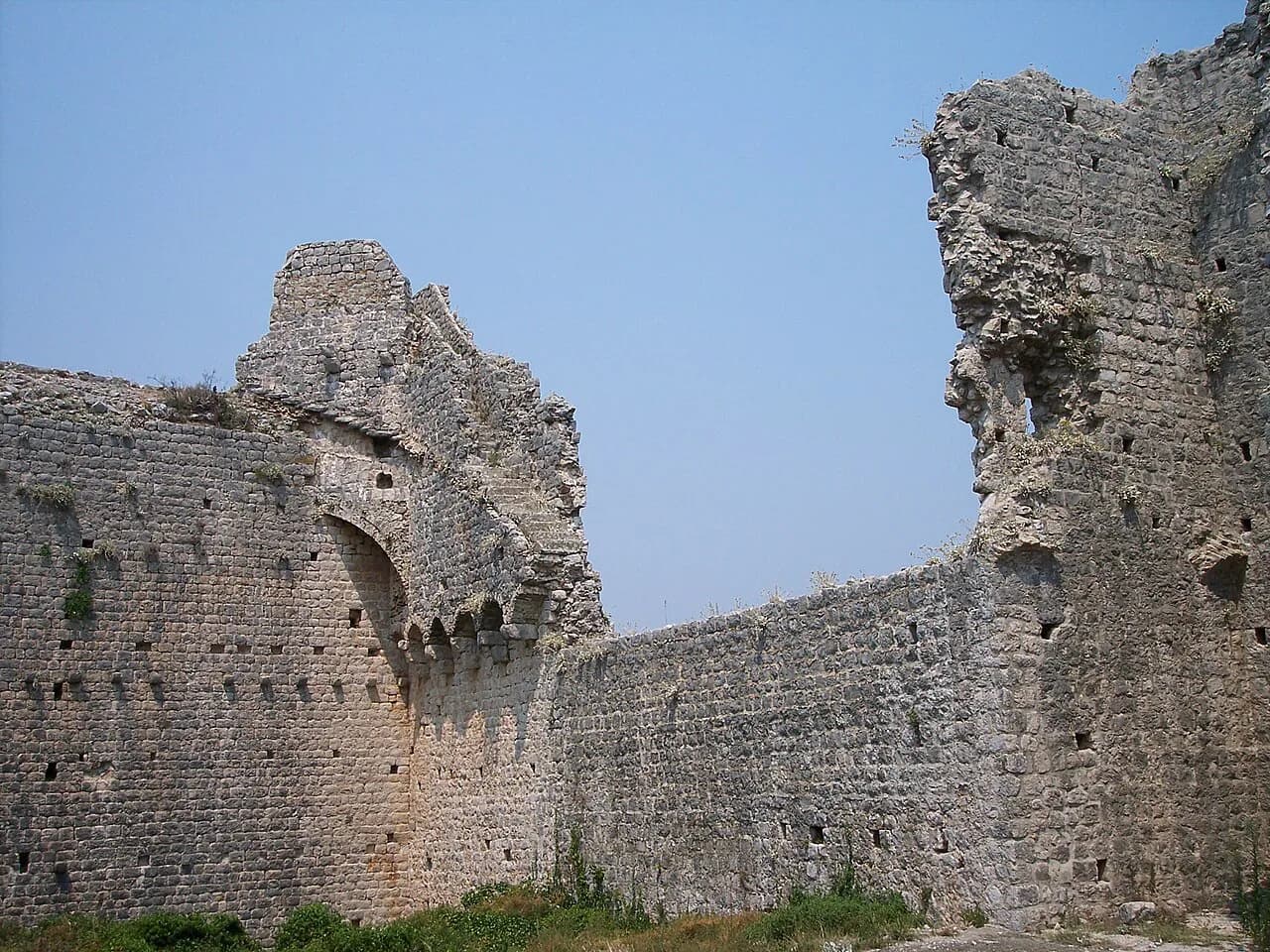
The Walls of Ston form a defensive system built by the Republic of Ragusa, the Dubrovnik Republic that controlled this stretch of coast. The circuit runs between Ston and Mali Ston, the two small settlements at the base of the Pelješac peninsula, and is reinforced with around 40 towers and five fortresses.
The walls are the main reason many travellers stop here rather than pass straight through on the coastal road. If you are building a wider itinerary around the peninsula and the coast south of Dubrovnik, the southern Dalmatia region guide is the place to start before fixing dates.
The scale in numbers
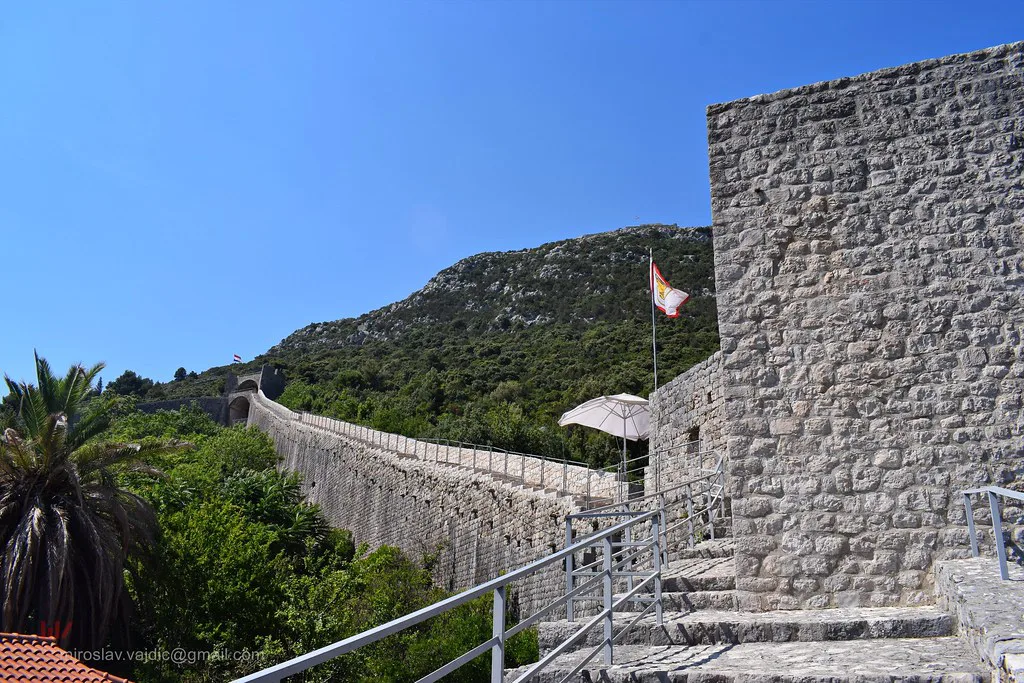
The headline figure is 5.5 km of wall between Ston and Mali Ston, reinforced with around 40 towers and five fortresses. That length refers to the full circuit linking the two towns rather than a single walkable stretch.
The tower and fortress count tells you what to expect from the terrain: the line rises and falls along the ridge, with towers spaced along it and fortresses anchoring the summits. That is the shape of the route, and it explains why the traverse is not a flat stroll.
Where the walls start: Ston end versus Mali Ston end
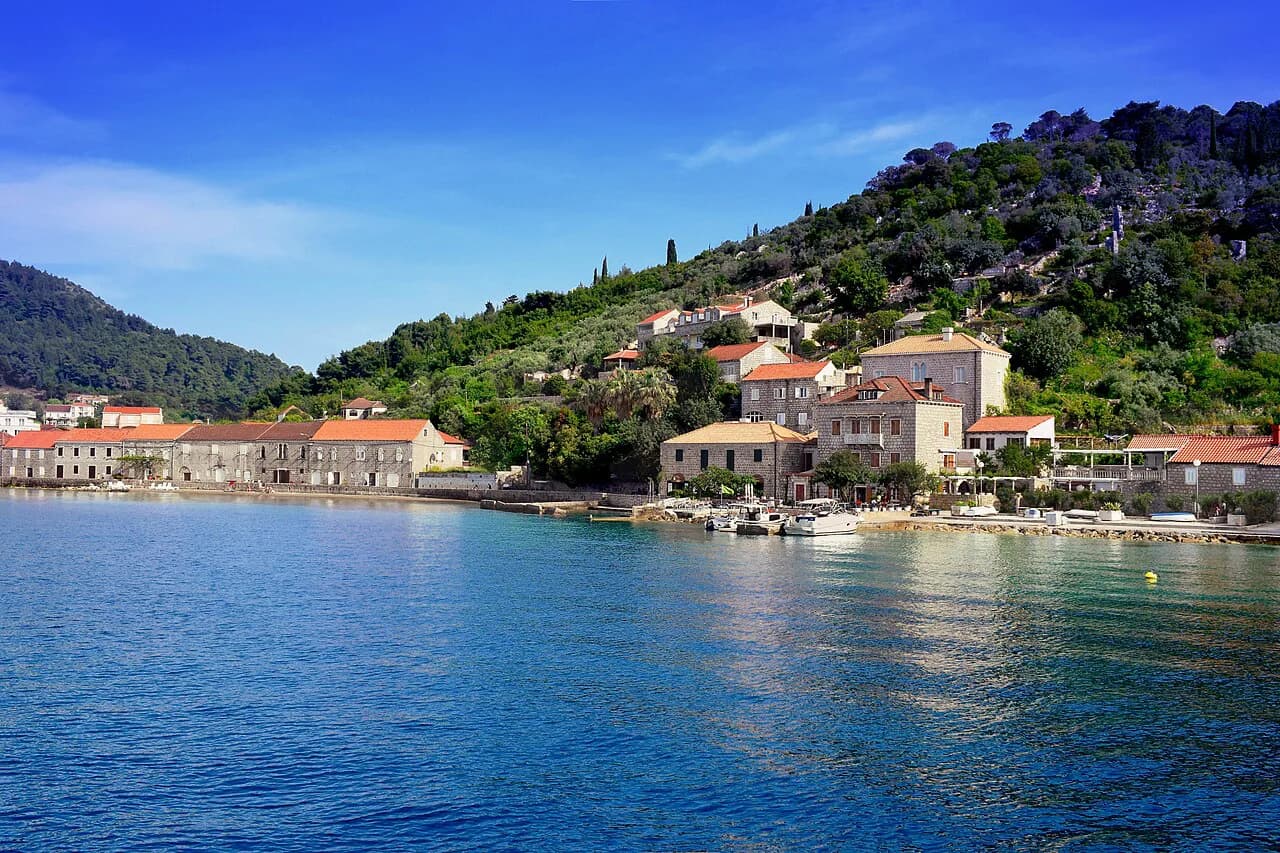
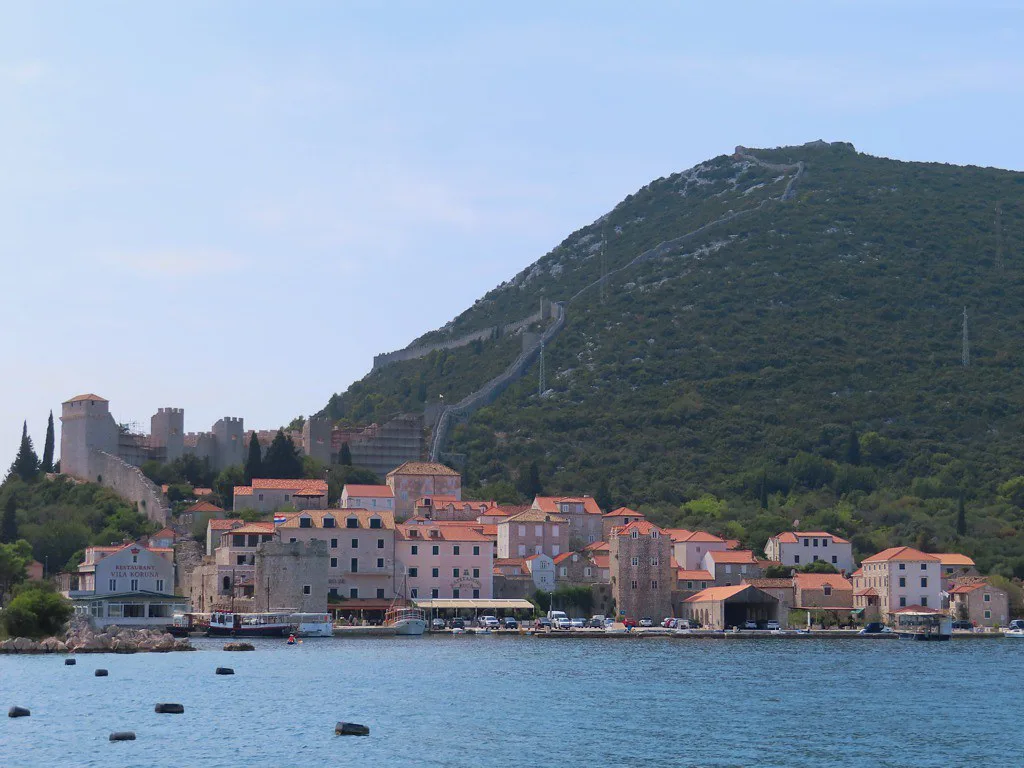
The two ends are the Ston end and the Mali Ston end. Ston is the larger of the two settlements, at the base of the Pelješac peninsula; Mali Ston sits at the other end of the wall. Whichever end you start from, set your finish point first.
Planning from the Ston end, you would climb the longer stretch first and come down into Mali Ston; planning from Mali Ston reverses that. Whichever end you choose, you need to work out how you get back to your starting point, either by walking the road or by arranging transport in advance.
If you are staying on the peninsula, Mali Ston is the natural base for the seaward end, while Ston is better placed for the inland approach and the salt pans. Both are covered in more detail on the Ston page.
How the full Ston to Mali Ston route is laid out
The full traverse would follow the wall from one town to the other, climbing the ridge and passing the towers and fortresses along the way. The lie of the land means you should allow a generous stretch of time rather than an hour: the line runs about 5.5 km between the two towns, the surface is stone with steps in places, and the ridge has little shade.
Terrain is the hidden cost. The wall stands exposed on both sides, so expect sun for most of the route, and the steps and uneven stone call for proper footwear rather than sandals. Carry more water than you think you need, and do not count on refreshment on the wall itself.
The full route suits walkers who are comfortable with an hour or two of continuous exposed walking and who have arranged the return leg. If you are unsure about fitness or the weather, the shorter Ston-side climb gives you most of the scenery for a fraction of the effort.
The shorter Ston-side option
The shorter Ston-side option is the practical choice for a short visit: you climb from the Ston end, take in the ridge views over the salt pans and the two towns, and come back down the same way. It gives you the panorama without committing to the whole traverse or the return transport.
This is also the better option when the day is hot or the bura is blowing, because you can turn back at any point. The ridge is unsheltered, so the shorter climb lets you test the conditions before committing to the full route.
If you only have a couple of hours in Ston, pair the short climb with a look at the salt pans below rather than trying to fit in both towns. The salt pans are the second reason to stop here, and they are at their most photogenic from the wall.
What you see from the top
From the ridge you look down over the two towns at either end of the wall and across to the Pelješac peninsula beyond.
The view is the reason to climb even if you skip the full traverse: you can see the scale of the fortifications and both settlements in one sweep, with the peninsula's higher ground forming the backdrop.
Tickets and access
A visitor review reports an entrance price of €10, but no official source in the material confirms that figure for the current season, so treat it as a guide rather than a quote and check the price at the entrance before you budget.
It is also unclear from the available information whether one ticket covers the whole wall or only a section, so ask when you buy. The Ston tourist board, the official body for the area, is the place to confirm opening arrangements and the current ticket rules.
The bura wind and summer heat
The bura is a cold, gusty northerly wind that funnels down the Adriatic coast, and on an exposed ridge it turns a pleasant walk into a struggle. The wall is unsheltered, so if the forecast mentions a strong bura, the shorter climb or a lower-level visit is the sensible choice.
Summer heat is the other constraint. The ridge catches the sun all day, and the stone radiates it back, so early morning and late afternoon are the comfortable windows. Midday in July and August is the time to be in the salt pans or the harbour rather than on the wall.
Crowds and timing
Ston sits on the coastal road and draws day-trippers from Dubrovnik, so the wall can be busy in the middle of the day in high season. The wider southern Dalmatia coast sees cruise-ship surges, and the wall is no exception; going early or late avoids the worst of it.
The practical timing rule is to aim for the wall before the day-trippers arrive and to save the salt pans and harbour for the middle of the day. That way the exposed sections are done while it is cooler and quieter, provided access is confirmed.
What else is nearby: Ston, Mali Ston and the salt pans
The salt pans are the second attraction in Ston. The Ston tourist board lists the area's sights and activities, including its historic sites and the salt pans.
Mali Ston, at the seaward end of the wall, is the quieter of the two. If you are continuing down the coast afterwards, Cavtat: A Guide to the Old Town, Sights and Peninsula Walk covers the next stop south of Dubrovnik, and the Konavle guide covers the inland side.
Further afield, the Elaphiti islands make a natural extension by boat, and the ferry network that serves them is worth understanding before you commit to a day on the water.
Practicalities: footwear, water and where the walk leaves you
Wear shoes with grip, because the stone is worn and the steps are uneven. Carry at least a litre of water per person, and more in summer, and do not assume any shade or refreshment on the wall.
If you plan the full traverse, you finish in the other town and need to get back. The simplest plan is to walk the road between the two, which is short, or to arrange a lift before you set off. If you take the shorter Ston-side climb, you end where you started and can add the salt pans without any logistics.
Which version of the Ston Walls should you plan for?
Choose the Ston-side climb if you have two hours or less, if it is hot, or if the bura is blowing; you still get the ridge views and the salt pans. Plan the whole traverse only if you have a half-day, proper shoes and a plan for getting back from Mali Ston, and check the opening arrangements first.
Either way, check the opening arrangements and the ticket price at the entrance before you go, because the price circulating online is not confirmed for the current season.
Explore more Southern Dalmatia guides
Frequently Asked Questions
How long does it take to walk the Ston Walls?
The full traverse between Ston and Mali Ston is a long outing, not a quick stroll: there are 5.5 km of wall, the surface is stone with steps in places and the ridge has little shade, so leave yourself a generous half-day including the return leg. The shorter Ston-side climb is the usual choice for a shorter visit, but the exposed ridge and steps still slow you down. Confirm opening arrangements before you set out.
How long are the walls and how many towers do they have?
The Walls of Ston run 5.5 km between Ston and Mali Ston and are reinforced with around 40 towers and five fortresses. They were built by the Republic of Ragusa. That length refers to the full circuit linking the two towns, not a single continuous walkable stretch.
Sources
Notes from the Croatian coast
Optional updates when our guides change.
You might also like
Continue reading
More guides you'll find useful