Sinj, Croatia: What to See in the Town of the Alka
Sinj is a small Dalmatian hinterland town built around the Alka tournament, its fortress and its museums. Here is what to see and how long to allow.
On this page
Sinj suits a half-day to a full day, not a flying stop between coastal towns. The old centre is compact and walkable, the Old Town fortress (Grad) sits directly above it, and the Museum of the Alka of Sinj gives you the tournament's costumes and weapons at any time of year rather than only in August, when the Alka culminates.
This guide covers the layout of the centre, the basilica and its painting, the climb to the fortress and the view back over the Sinj field, plus the smaller sights that fill out a walk. It also explains where Sinj sits within the wider Dalmatian hinterland and the honest trade-off: extra inland travel time in exchange for a town that feels nothing like the coast.
What Sinj is and where it sits in the Cetinska krajina
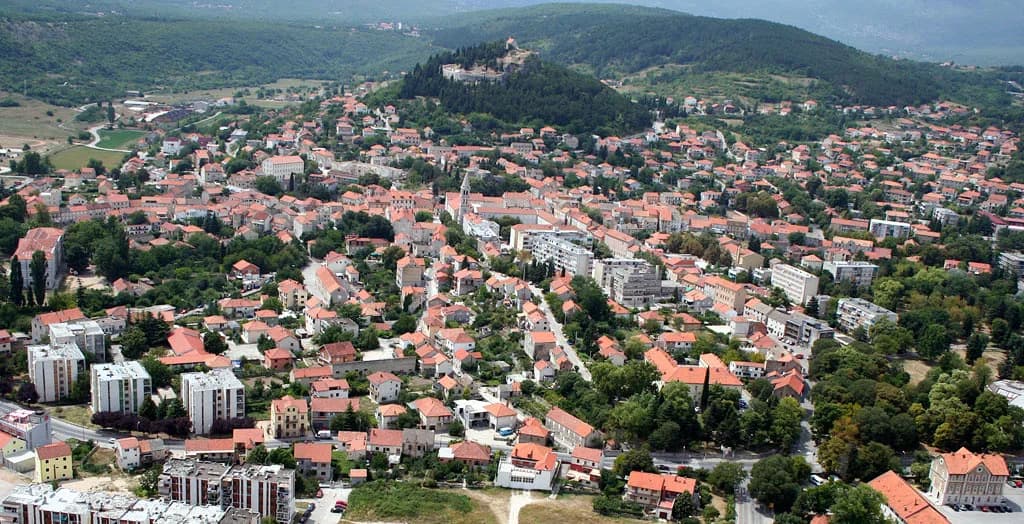
Sinj is an inland town in the Cetinska krajina, the limestone country of the Cetina river basin behind the coastal ridge. It is the urban centre of a farming plain, the Sinj field, ringed by mountains, and its identity is bound up with the Alka, a knightly tournament that culminates each August.
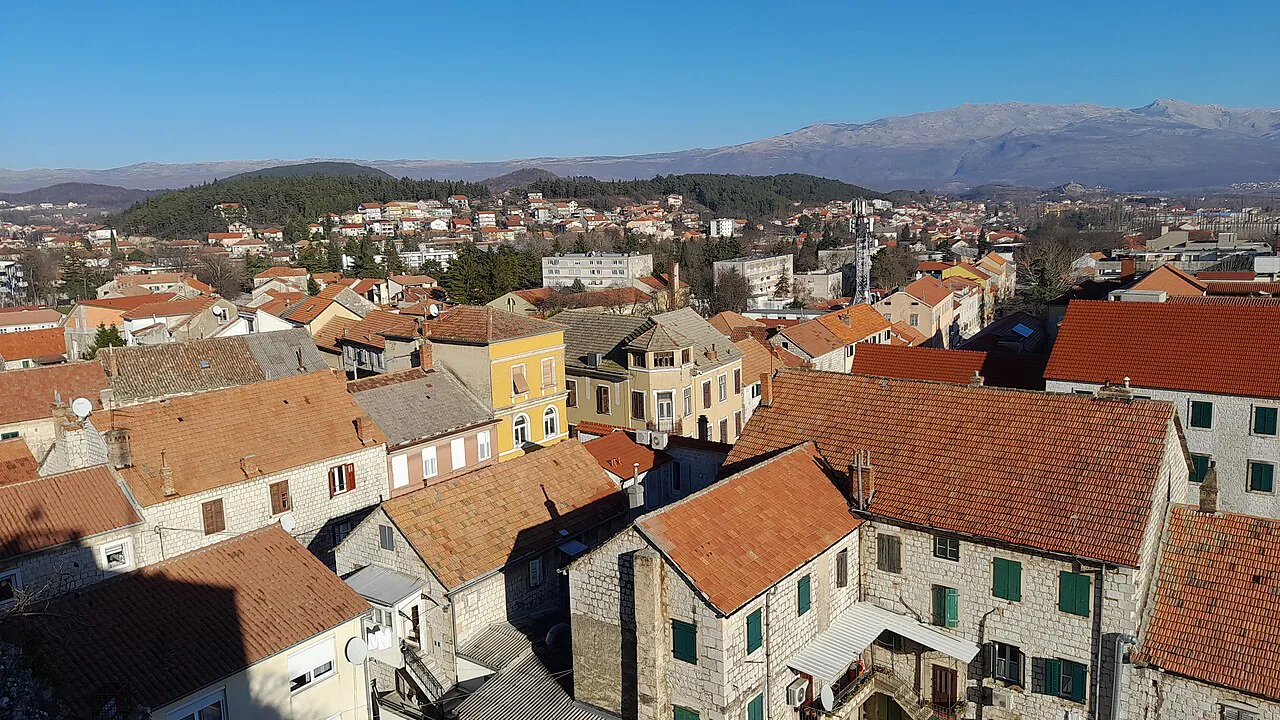
The useful mental map is simple: a stone core of streets and a central square, with the old Grad fortress on the hill immediately above and the Kamičak fort on the other side of the centre. Everything on this page sits within a walkable ring, which is why the town works as a self-contained stop rather than a series of drives.
The old centre: the Piazza and the stone streets
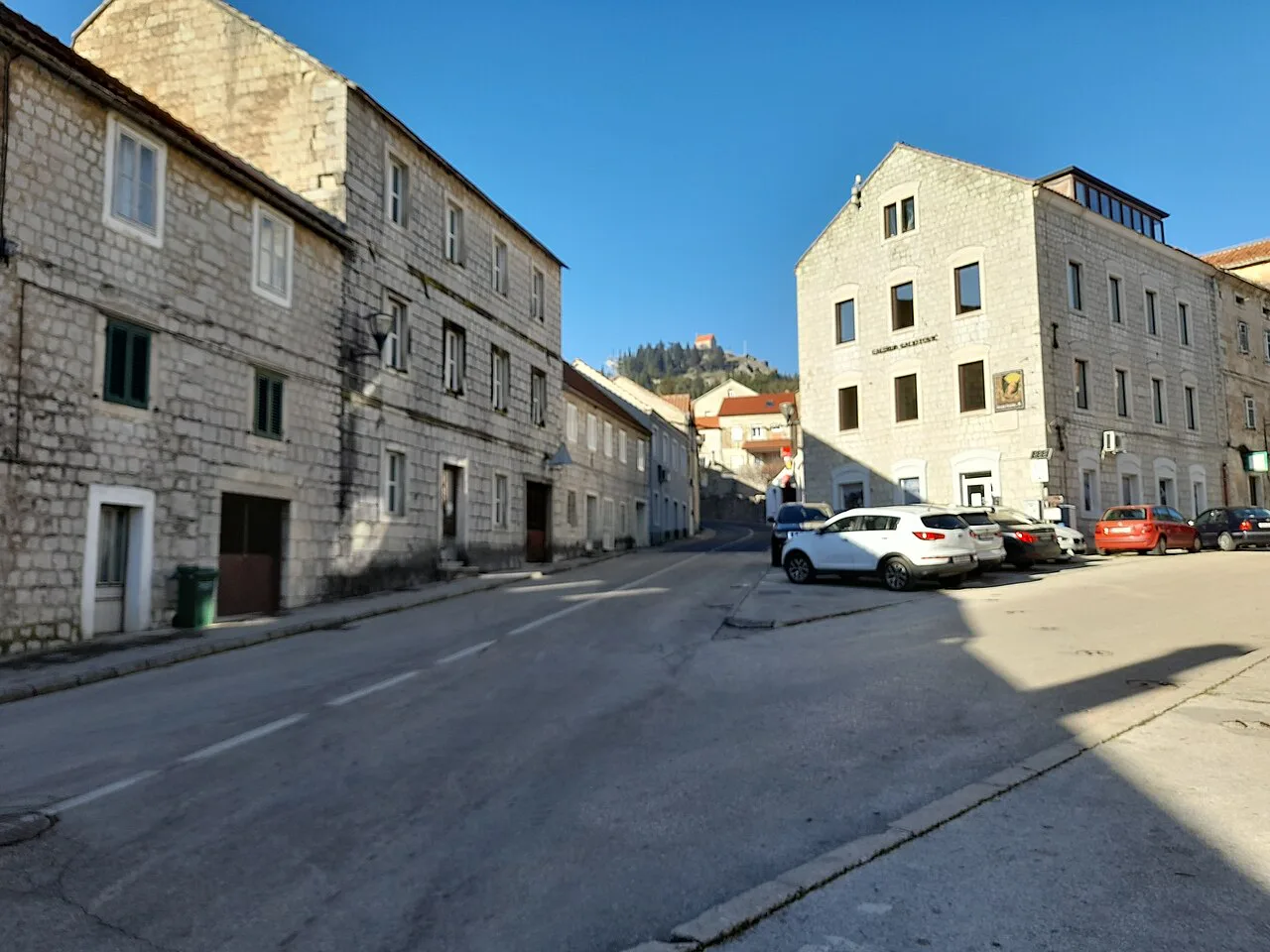
The heart of Sinj is its Piazza, the square where the local ritual of sitting over coffee plays out, surrounded by stone streets and public sculptures. Treat the square as the start and finish of any walk: order a coffee, get your bearings, then work outward through the lanes rather than treating the centre as a checklist of separate stops.
Allow something under an hour to wander the core at an unhurried pace. The lanes are short, the buildings are close together, and the pleasure lies in noticing details — carved stone, doorways, the small plaques and figures that punctuate the streets — rather than in covering distance.
The Basilica of the Miraculous Madonna of Sinj and the painting
The Basilica of the Miraculous Madonna of Sinj holds the painting that gives the town its central devotion. The image, by an unknown painter and dated to the fifteenth or sixteenth century, is the reason pilgrims come here, and it occupies the focal position in the church rather than sitting off in a side chapel.
The local account ties the image to the defence of Sinj in 1715, when, according to tradition, the town was delivered from Ottoman rule through the Madonna's intervention. Read the church as a place of active veneration connected to that story, and dress and behave accordingly if a service is under way.
The Grad fortress and the Way of the Cross up to it
The Grad fortress, known locally as the Old Town, is the reason to give Sinj more than a coffee stop. It sheltered the townspeople and soldiers during the Ottoman incursions and guarded the settlement below; at its centre stood St Michael's church, where the Franciscans from Rama placed the image of the Mother of Mercy on the altar of St Barbara.
The approach is itself part of the visit: a Way of the Cross of fourteen stations runs from the foot of the hill up to the votive church at the Old Town. Walk it slowly, since the stations give the climb structure and a series of pauses, and the surface underfoot is stone rather than a graded path.
The view over the town, the Sinj field and the surrounding mountains
From the fortress you get the panorama that explains Sinj: the town spread out below, the flat Sinj field behind it and the mountains closing the horizon. Go up late in the afternoon if you want the softer light, and keep in mind that an exposed limestone ridge is not the place to linger in a strong bura or in the middle of a summer afternoon.
The view is also the practical way to understand how the town relates to the Cetinska krajina countryside around it. Once you have seen the field and the mountain rim from above, the rest of the walk through the streets makes more sense.
The Museum of the Alka of Sinj: what the collection covers
The Museum of the Alka of Sinj is the year-round way to see what the August tournament is about. Its collection includes the lavishly decorated original uniforms of the alkars and their squires, valuable equipment and weaponry, three-hundred-year-old historical objects, and a life-sized display of the Alka procession.
If your dates do not coincide with the tournament, this is where to spend your time rather than hoping to catch preparations in the street. Check the current opening hours and admission directly with the museum or the Sinj Tourist Board before travelling, since these change with the season.
Kamičak Fort and its clock mechanism
Kamičak Fort is the second of the town's fortifications and holds a clock mechanism described as older than the one at Big Ben. It is a short stop rather than a long visit, but it rewards the sort of traveller who likes mechanical detail and old masonry in the same place.
Pair it with the Grad fortress rather than choosing between them. The two together give you Sinj's defensive story in a couple of hours, one above the town and one at its edge, and the walk between them crosses the centre where you can stop for coffee.
Other sights: the stela of Gaius Laberius, the statue of Diana Lucifera and the public sculptures
Beyond the headline monuments, Sinj has a scatter of smaller antiquities and modern works worth hunting down. Look for the stela of Gaius Laberius, the head of Hercules and the statue of Diana Lucifera, which together show the Roman layer beneath the later town.
The town also has numerous public sculptures, and the Franciscan classical gymnasium, the first gymnasium in southern Croatia where classes were taught in Croatian, adds a nineteenth-century note to a mainly older streetscape. These are the details that make a second hour in the centre worthwhile.
The Alka Ergela city stables and the Rera railway station
Two further stops round out the Alka story. The city stables of Alka Ergela keep the horses connected with the tournament, and the Rera railway station recalls the narrow-gauge line that once served the Sinj area. Both are short stops, best slotted in the same walk as the museum.
A short walking route through the town and how long it needs
Start at the Piazza for coffee, walk the stone lanes for a while, then visit the basilica and its painting. Take the Way of the Cross up to the Old Town fortress for the view, come down, and finish with the Museum of the Alka of Sinj; add Kamičak Fort, the stables and the Rera station if you still have energy.
Budget three to four hours for that core loop without rushing, and closer to a full day if you add every smaller sight and a proper lunch. The distances are short but the fortress climb and the museum both take real time, and summer heat slows the uphill sections.
When to go and how Sinj fits a coast trip
Spring and early autumn give the best conditions for the climb and the streets, with less heat on the exposed fortress rock. August brings the Alka and a busier town, so if the tournament is your reason for coming, plan around it and book accommodation early; if it is not, an August afternoon in the centre is still manageable but the fortress will be hot.
Sinj is an inland detour, not a coastal base, so it costs you extra road time from Split or the Makarska coast. The reward is a town with its own history and food culture, sitting in limestone country that gives you somewhere different to go on a cloudy day or when the coast feels crowded, and it works well combined with other inland stops in the Dalmatian hinterland such as Trilj and the Imotski lakes.
Practical points: arriving and getting around on foot
Everything described here is reachable on foot from the centre, which is the main practical argument for parking once and leaving the car. The fortress climb is the only real effort, and the town's compact scale means you can return to the Piazza between stops rather than carrying a day's kit around.
Do not treat Sinj as a beach stop; the town is inland and the sea is over the mountains. Use it as a cultural and historical half-day within a wider inland itinerary, and if you go on to the coast, Klis Fortress above the coastal plain makes a logical pairing.
Should Sinj be on your inland itinerary?
Yes, if you want a Dalmatian town with a serious local tradition and a fortress you can walk up to, and you are willing to trade a coastal afternoon for the drive inland. It suits travellers staying in Split or the Makarska area who want one day away from the sea, and it is at its best when you give it a full morning rather than an hour.
If your trip is a short coastal break with no slack, leave Sinj for a longer visit and spend the time on the islands instead. Confirm the museum and basilica opening times with the Sinj Tourist Board close to your date, then plan the walk around the Piazza, the fortress and the Alka collection.
Explore more Dalmatia guides
Frequently Asked Questions
How long do you need in Sinj?
Allow three to four hours for the Piazza, the basilica, the Way of the Cross up to the Old Town fortress and the Museum of the Alka of Sinj. A full day gives you time for Kamičak Fort, the Alka Ergela stables and the Rera railway station as well.
Is Sinj worth visiting if you are not there for the Alka tournament?
Yes. The Museum of the Alka of Sinj displays the uniforms, weapons and a life-sized procession display throughout the year, so the tradition is legible outside August, and the fortress, basilica and stone centre stand on their own.
Can you walk between the sights in Sinj?
All the sights described here lie within a walkable ring around the Piazza, with the climb to the Old Town fortress the only real effort. Park once in the centre and cover the rest on foot.
Sources
Notes from the Croatian coast
Optional updates when our guides change.
You might also like
Continue reading
More guides you'll find useful