Zadar Roman Ruins: What to See and Where They Stand
Zadar's Roman ruins sit inside the old town, from the paved Forum to reused columns and fragments. Here is what survives, where it stands and how to walk it.
On this page
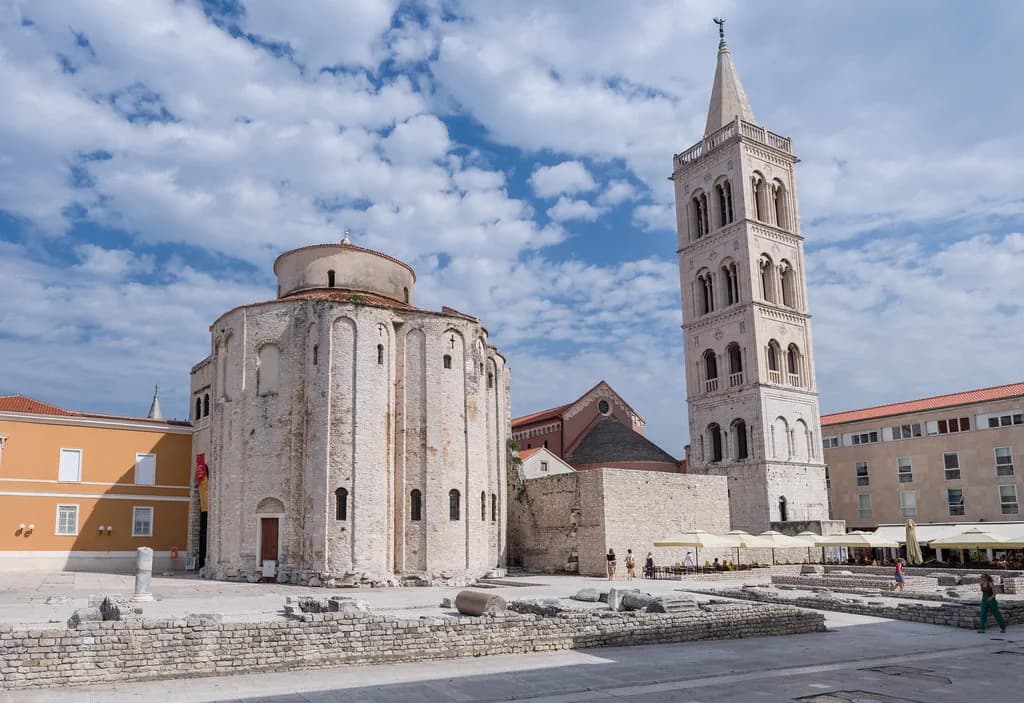
Zadar's Roman ruins are open-air and spread through the old town rather than enclosed on one site, so you can see the essentials in a single walk of roughly two hours. The centrepiece is the Roman Forum, a paved public square still walked over today, with the circular Church of St Donatus standing beside it and fragments of columns and masonry reused in the surrounding streets. This guide explains what each piece was, how to link them in one route and what to expect from crowds and timings.
Set expectations before you go: Roman Zadar is a scatter of paving, foundations, columns and recycled stone rather than a row of standing temples. The reward is a compact, level old town where the Roman layer sits directly under the medieval and Venetian one, and where the remains are open to walk through rather than fenced off.
What survives of Roman Zadar, and where it sits in the old town
Roman Zadar's remains are concentrated on and around the old town's main square, on the flat tip of the peninsula. The standout survivor is the Forum's paving and its surrounding fragments, with the Church of St Donatus raised beside it and the Cathedral of St Anastasia close by; the Sea Organ and the waterfront Riva are a few minutes' walk away. Because the whole old town is compact and pedestrianised, you can treat the remains as one continuous site rather than separate sights.
Zadar keeps many marks of its Roman past, including a monumental column and remnants of grand public buildings that appear as you wander rather than behind a barrier. That is the character of the place: you read the Roman city through what later builders left in position or reused, not through reconstructed monuments.
Practically, wear shoes that handle polished ancient stone, which is slippery when wet, and keep the walk short: the Roman layer sits within a few hundred metres, so there is no transport to arrange and no queue to plan around.
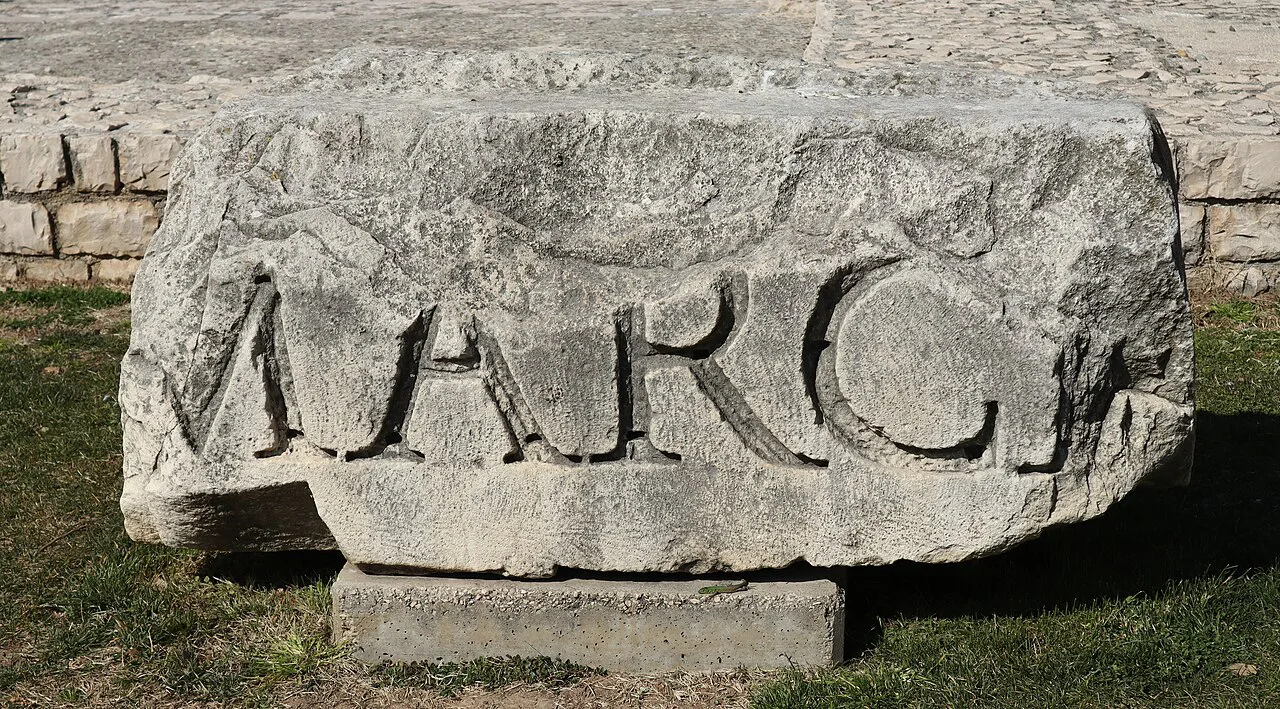
The Roman Forum: the paved square and the buildings that framed it
The Forum was the civic heart of Roman Zadar, a paved public square where the city's public buildings faced one another. What you walk across today is its surviving paving, with column drums, capitals and wall fragments around the edges giving a sense of the porticoes and structures that framed it. Treat it as a square to circle slowly rather than a single monument to photograph.
The site is open year-round and around the clock, so there is nothing to book or queue for. That makes it the natural anchor of any Roman walk: start here in the morning before the square fills with groups, and return after dark when the stone is quieter and the lighting changes the mood.
Look down as much as up. The paving slabs, worn smooth by centuries of feet, are the most direct physical link to the Roman city, and the fragments scattered around the square are what remain of the buildings that once defined it.
The Church of St Donatus and its setting beside the Forum
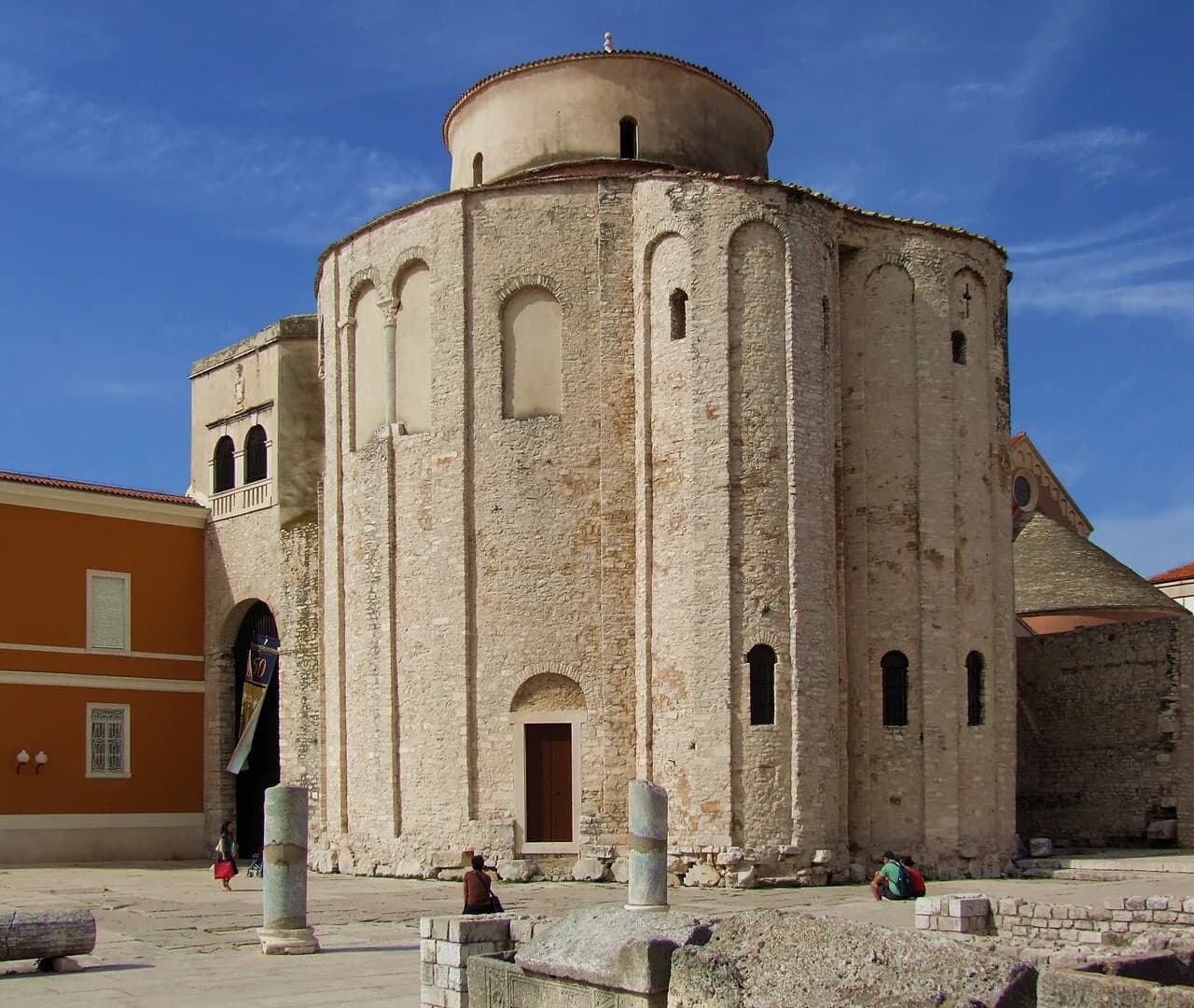
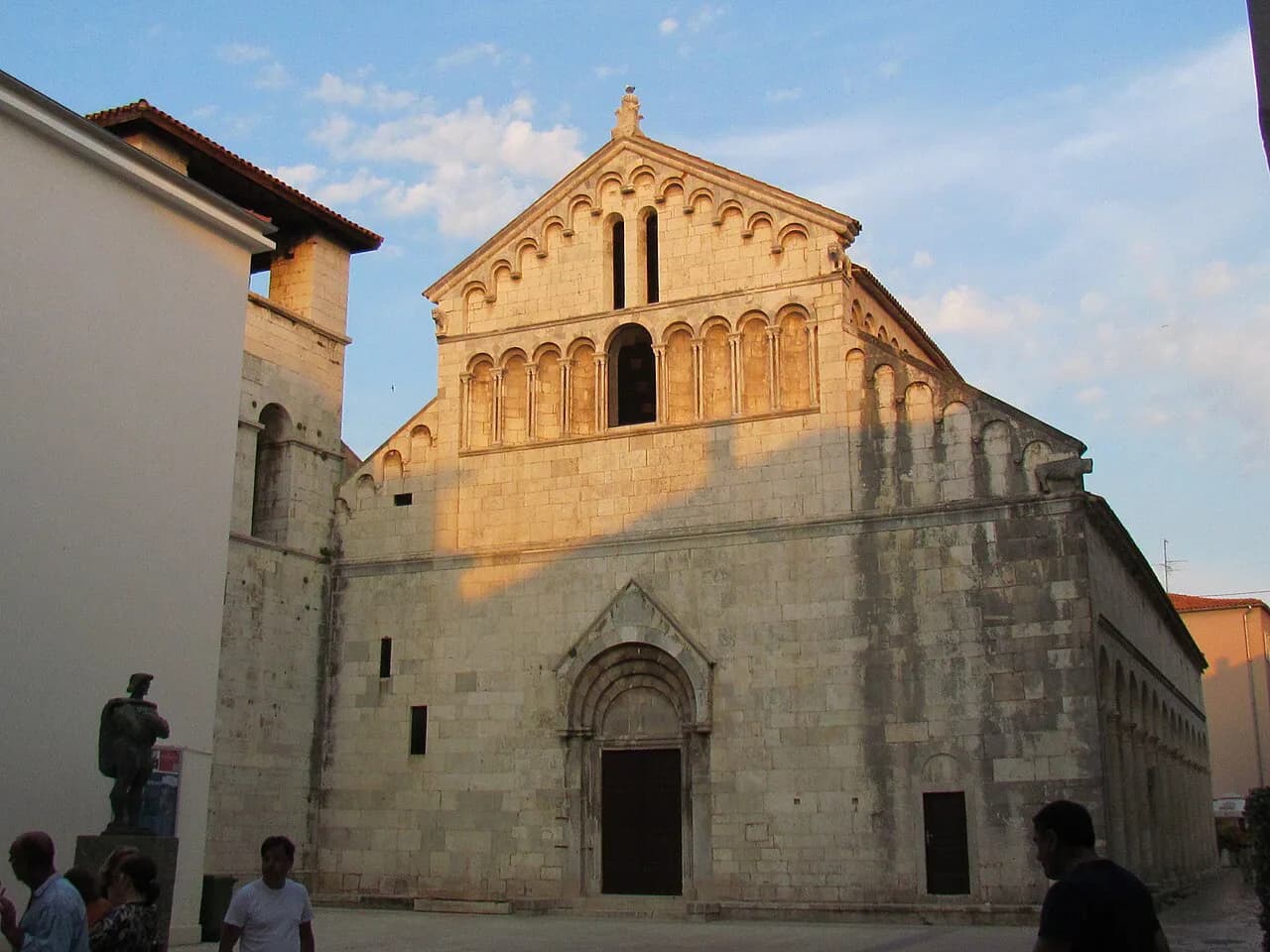
The Church of St Donatus is the most recognisable landmark beside the Forum, a circular pre-Romanesque building that stands among the Roman remains and is widely treated as one of the finest examples of its style in this part of Europe. Its presence explains why the Forum is more than an empty square: Roman, early medieval and later layers sit within a few steps of each other.
Use the church as your fixed landmark. Wherever you wander in the old town, the drum of St Donatus brings you back to the Forum, which makes it a sensible meeting point and the place to restart the walk if you lose your bearings.
Columns, fragments and stones reused in later buildings along the streets
Much of Roman Zadar survives because later builders reused it. Columns, carved stone and masonry were worked into churches, houses and walls across the old town, so the Roman layer appears in doorways, corners and facades rather than only at the Forum. Walking with your eyes at waist height and above will turn up pieces that never make it into a list of sights.
Check the area around the Forum and the streets running back from the Riva, where the densest later building sits on the oldest foundations. A simple loop from the square towards the Cathedral of St Anastasia and back will pass much of this reused stone without any detour.
Roman Zadar's place in the wider story of Roman Dalmatia
Zadar's Roman layer belongs to the wider story of Roman Dalmatia, the coastal province whose cities left ruins along the Croatian coast. Zadar's distinct offer is not scale but continuity: the Roman city was never abandoned or buried in a field, so its square became the medieval and then the modern town's main square.
If you are comparing Roman sites on the coast, come here for the lived-in city rather than an excavated park: you get a working old town with a Roman floor under it, and you can combine the ruins with the Sea Organ, the Greeting to the Sun and the waterfront in the same afternoon.
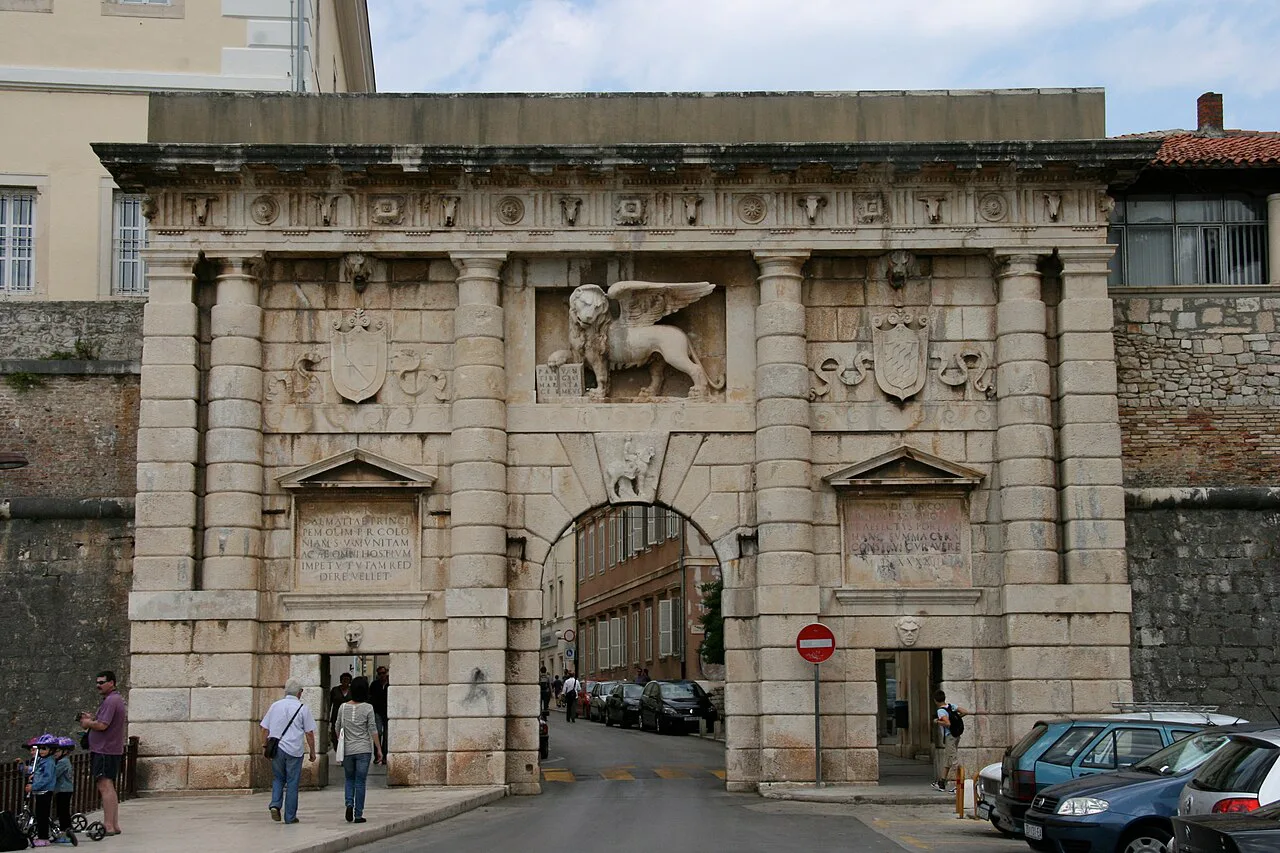
How to walk the Roman remains in one route through the old town
Start at the Roman Forum and circle the paving slowly, then step across to the Church of St Donatus to read the relationship between the Roman square and the early medieval church. From there, loop towards the Cathedral of St Anastasia and back through the lanes towards the Riva, watching the lower storeys and doorways for reused Roman stone.
Allow about two hours at an unhurried pace, including pauses at the Forum and a coffee on the Riva. The route is flat and short, so it fits easily into a morning and leaves the afternoon for the waterfront and the Sea Organ, which are a few minutes away and open to all.
The main Roman stops need no ticket and no timed slot, so you can shape the walk around the light. Early morning and late afternoon give the best conditions for reading the stone, and outside midsummer the square is calm enough to linger.
When to go and how the summer crowds and cruise-ship days change the visit
The Forum is an open, free square on the main pedestrian route, so it is busiest in midsummer and on days when cruise ships berth in Zadar, when groups move through in waves. The old town is small enough that a little timing buys a lot: early morning and evening are calmer, and the stone reads better in low light.
Because the site is open around the clock, you can shift the Roman walk to the edges of the day rather than the middle. If a cruise ship is in port, save the Forum for later and use the middle of the day for the waterfront and the Riva instead.
What the ruins cost to see and what to allow time for
The Roman Forum and the open-air remains around the old town are open year-round and available around the clock, so the Roman layer needs no booking and no timed slot. Check any separately ticketed sights you plan to add, such as the cathedral bell tower, at the entrance, since those charges sit outside the ruins themselves.
Budget two hours for the Roman walk itself, and add time for the Riva, the Sea Organ and the Greeting to the Sun if you want the full waterfront. Because everything sits within a few hundred metres, the day is shaped by how long you linger rather than by travel between stops.
Should you build the day around the Roman remains?
Yes, if you want the old town to make sense: the Forum, St Donatus and the reused stone give you the city's foundation story in a two-hour, open-air walk that fits around the waterfront. Go early or late, keep your eyes on the paving and the lower storeys, and treat the ruins as the frame for everything else in Zadar.
If you have only an afternoon, do the Forum and St Donatus first, then take the Riva and Sea Organ at sunset; if you have longer, add the cathedral area and the lanes behind the square where more reused Roman stone survives.
Explore more Zadar guides
Frequently Asked Questions
Where exactly are the Zadar Roman ruins?
The main remains are in the old town, on and around the Roman Forum on the flat tip of the peninsula, with the Church of St Donatus beside it and the Cathedral of St Anastasia a short walk away. Reused Roman stone appears through the surrounding lanes and along the route to the Riva. The whole area is pedestrianised and easy to cover on foot.
Do I need a ticket to see the Roman Forum in Zadar?
The Forum is an open public square, open year-round and around the clock, so you can walk through it without booking a timed slot. Any separately ticketed sight you add nearby, such as a bell tower, is charged at its own entrance, so check there.
How long does it take to see the Roman remains in Zadar?
Allow about two hours for the Forum, St Donatus and a loop through the lanes towards the cathedral and the Riva. The route is short and level, so the time goes on looking rather than walking. Add extra time if you want the waterfront and the Sea Organ afterwards.
Sources
Notes from the Croatian coast
Optional updates when our guides change.
You might also like
Continue reading
More guides you'll find useful