Pag Island Guide: Pag Town, Villages and Getting There
Use this Pag island guide to plan Pag Town's squares, churches and lace museum, the outlying villages, and how the bridge and ferries fit together.
On this page
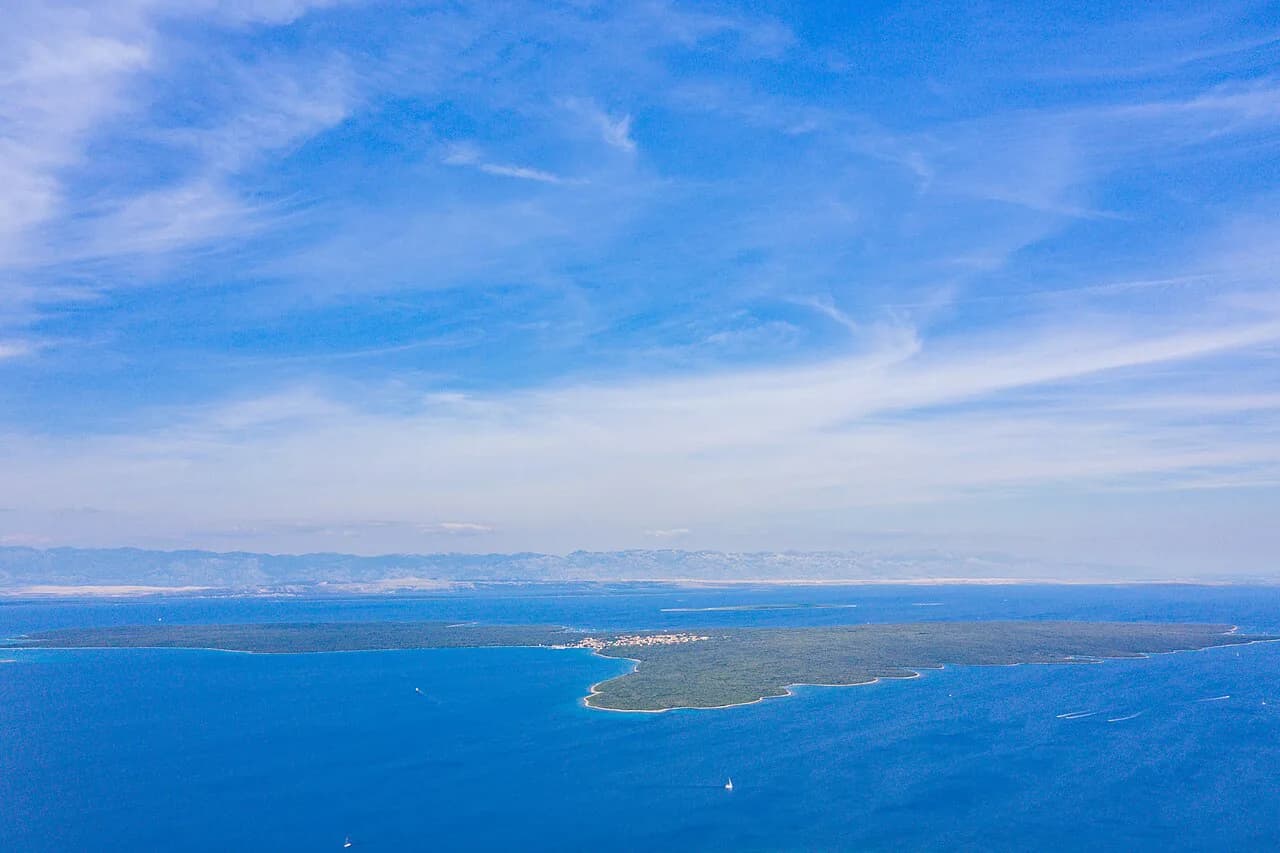
Pag island is worth a full day for Pag Town alone and two or three days if you want the villages and the bare karst interior as well. The island runs long and thin off the Dalmatian coast near Zadar, and it is reached from the mainland by road bridge, which makes it an easier addition to a mainland itinerary than the car-free islands further out. This guide sets out what Pag Town contains street by street, how the villages differ, and how the bridge and the sea route options change what you can see.
It helps to think of Pag as two trips. Pag Town is a compact, pedestrian walled settlement with a defined sightseeing circuit you can walk in a couple of hours; the rest of the island is scattered settlement, long north-south distances and exposed rock where a car makes the difference between seeing three places and seeing one. Deciding which of those you want is the single most useful planning choice you will make.
What Pag island is like: karst, bare rock and the moonscape
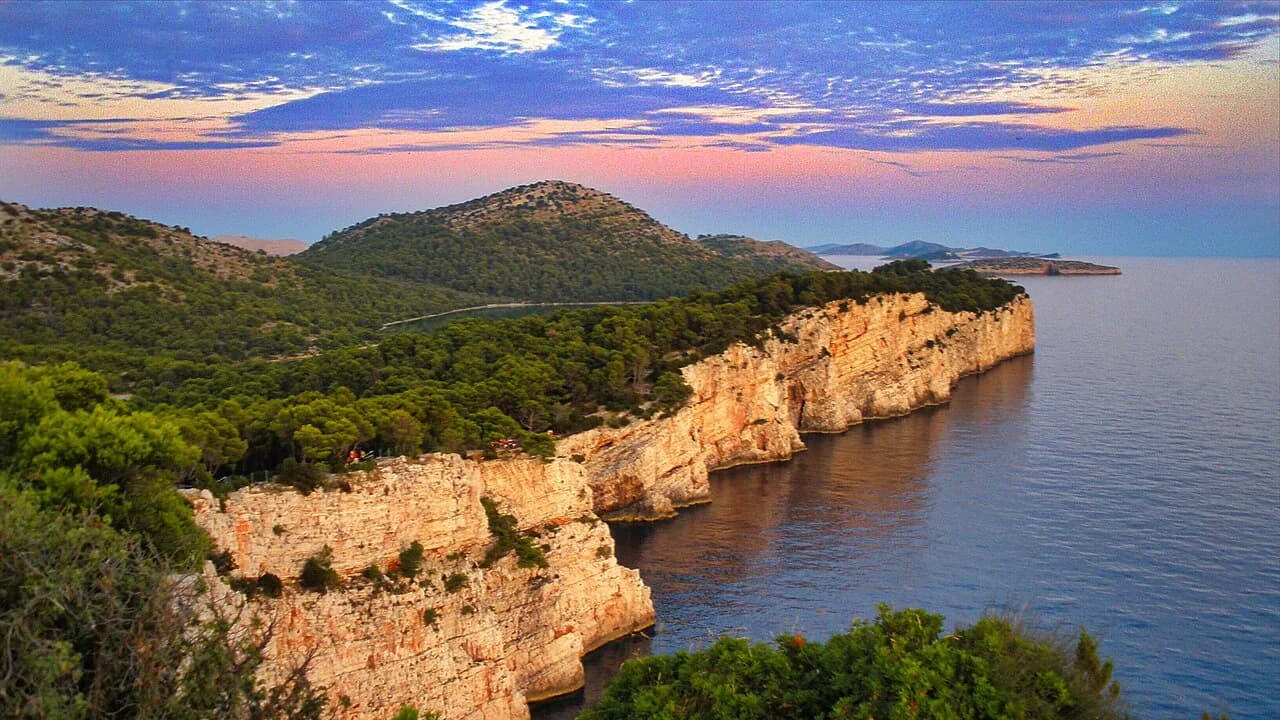
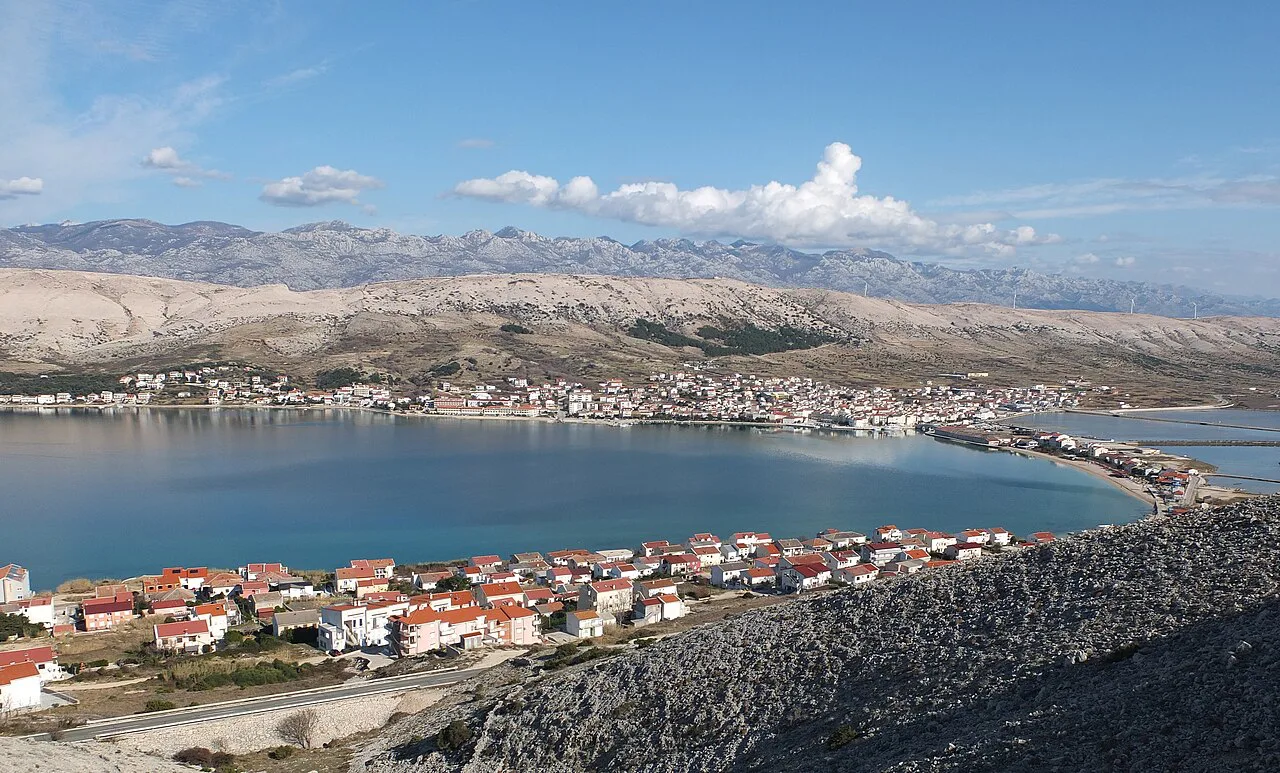
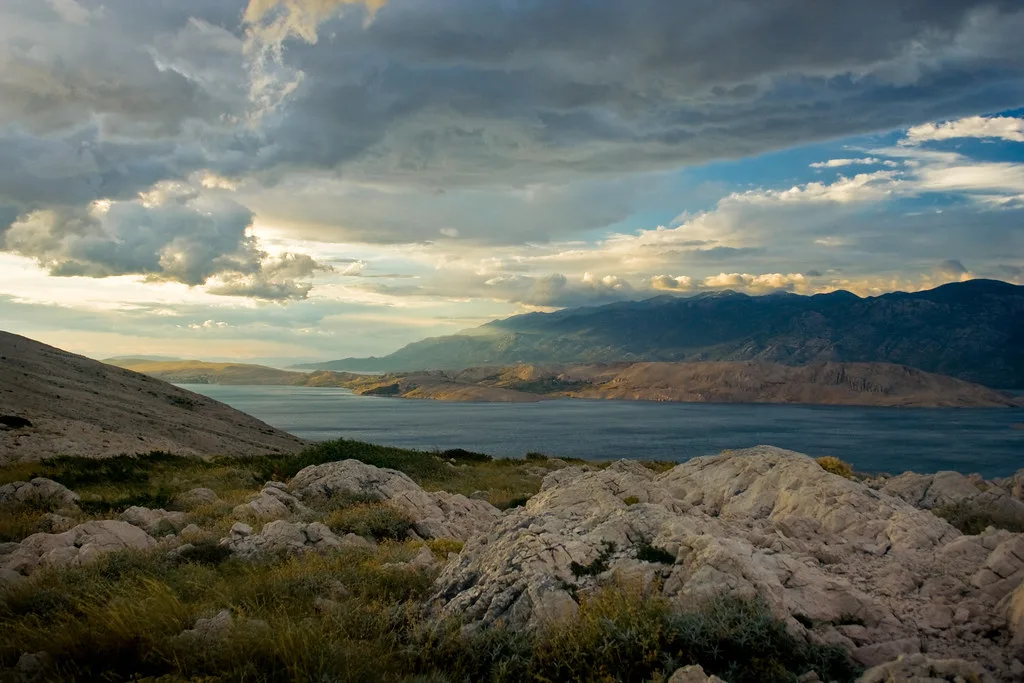
Pag is formed from karst rock, and the landscape reads as pale, stony and almost lunar rather than green and wooded, with patches of Mediterranean scrub in between. That bareness is the island's character rather than a defect: the light on the rock and the blue of the sea are what people come for, and the same geology explains the long views and the lack of shade.
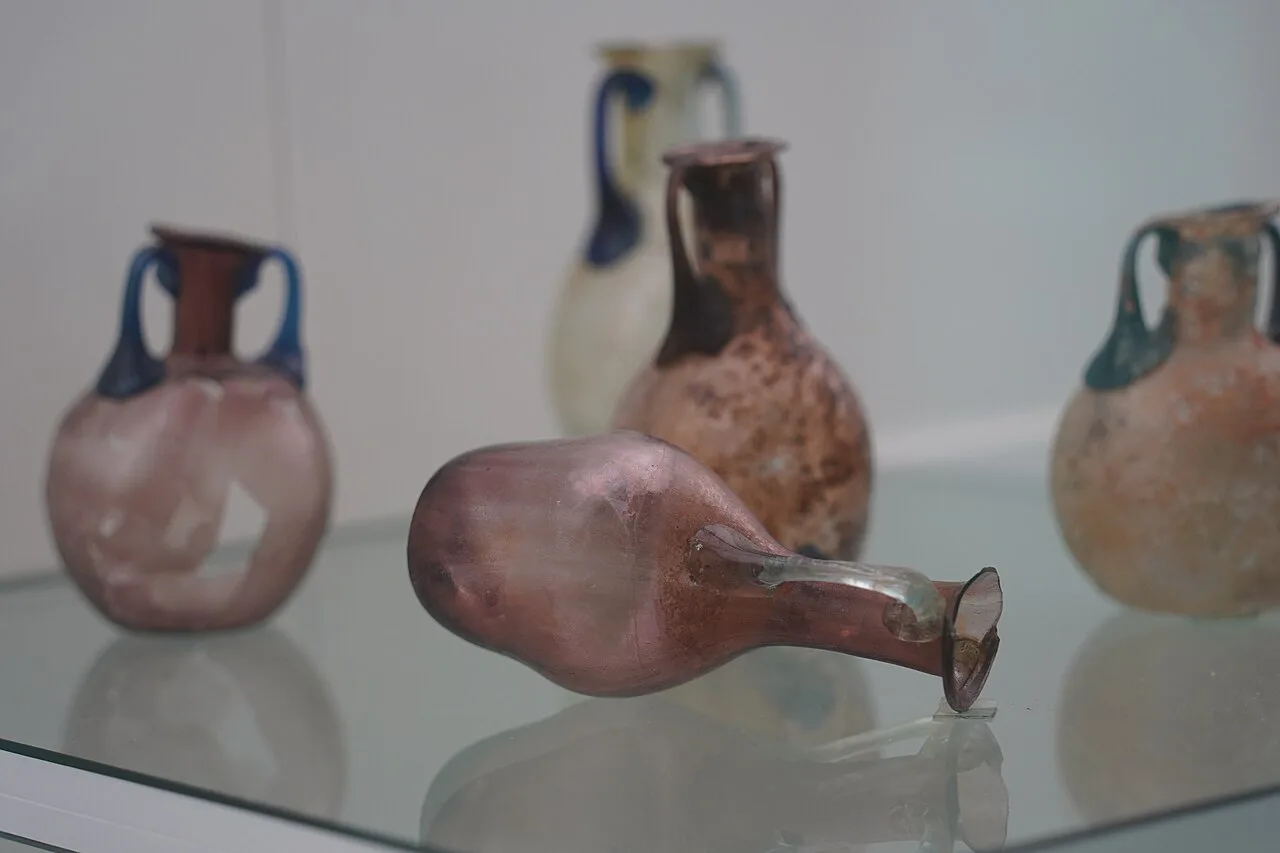
The island's history follows the coast and the sea rather than the interior. The Liburni were the first recorded inhabitants, the Romans came in the first century BC and left surviving remains, and the Croats settled in the seventh century before a succession of Venetian, Austrian and French rulers. For a small island the record is unusually deep, and it shows up in the towns rather than in the landscape.
Tourism on Pag is not new: the island's own history records visitors from the Czech Republic and Poland in 1925, with 6,580 overnight stays that year, and a genuine expansion after the Pag Bridge opened in 1968. Those years are history, not current figures, and they are the only visitor statistics the island's published history gives.
Pag Town: the walled centre, Trg Kralja and the pedestrian streets
Pag Town was laid out by the Venetians in the fifteenth century to a plan attributed to the architect Juraj Dalmatinac, and the result is a small, ordered grid rather than an organic tangle. Two streets, Vangrada and Podmir, enclose the old town, which now forms a pedestrian zone, so the centre is walked rather than driven.
The social centre is Trg Kralja, the main square, where you can take a coffee or a bench and watch the town go about its business. Around it are narrow streets and low stone houses, and the scale is small enough that you can cover the whole core on foot without a route.
Pag Town's churches: St Mary, St Margaret and St George
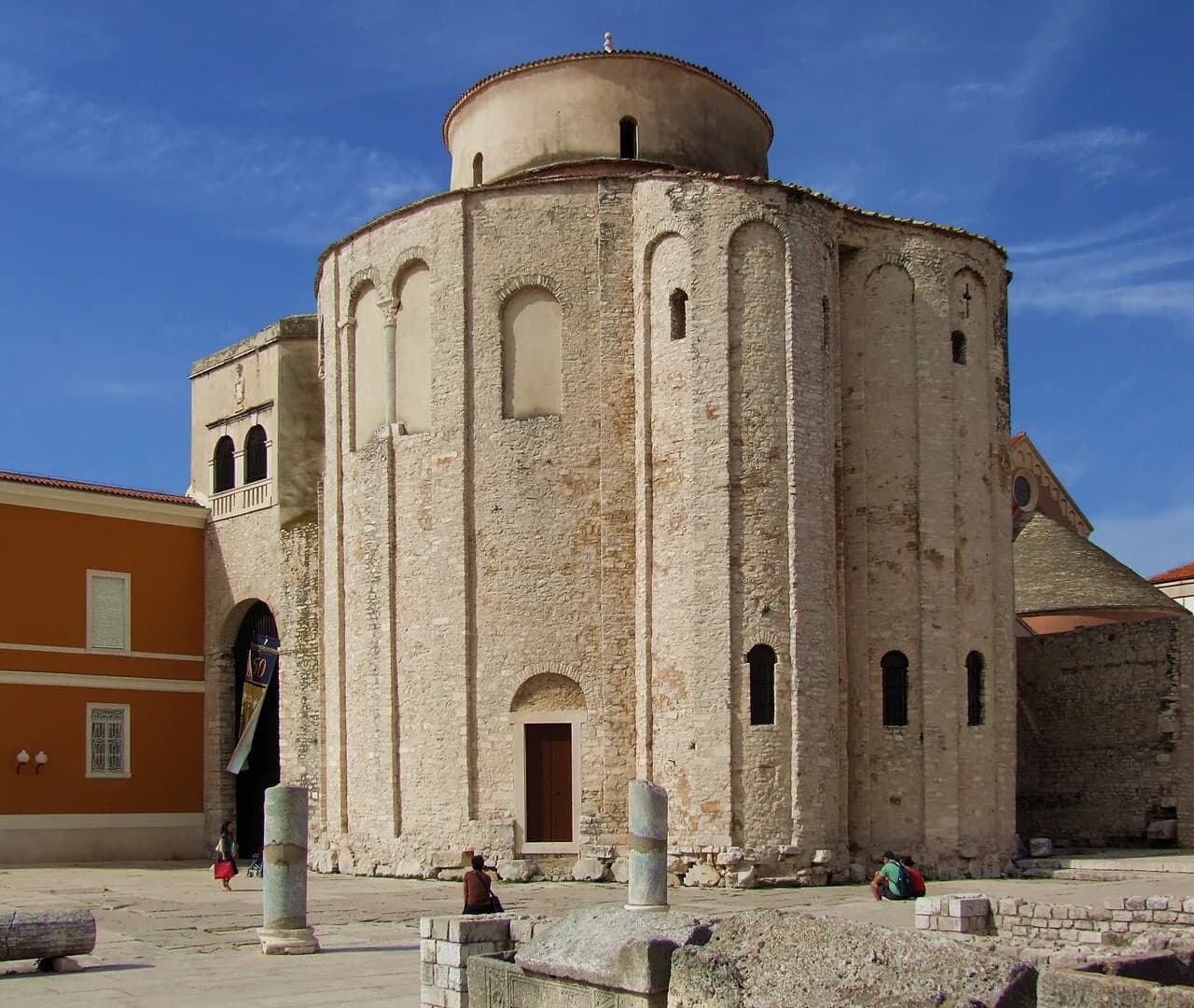
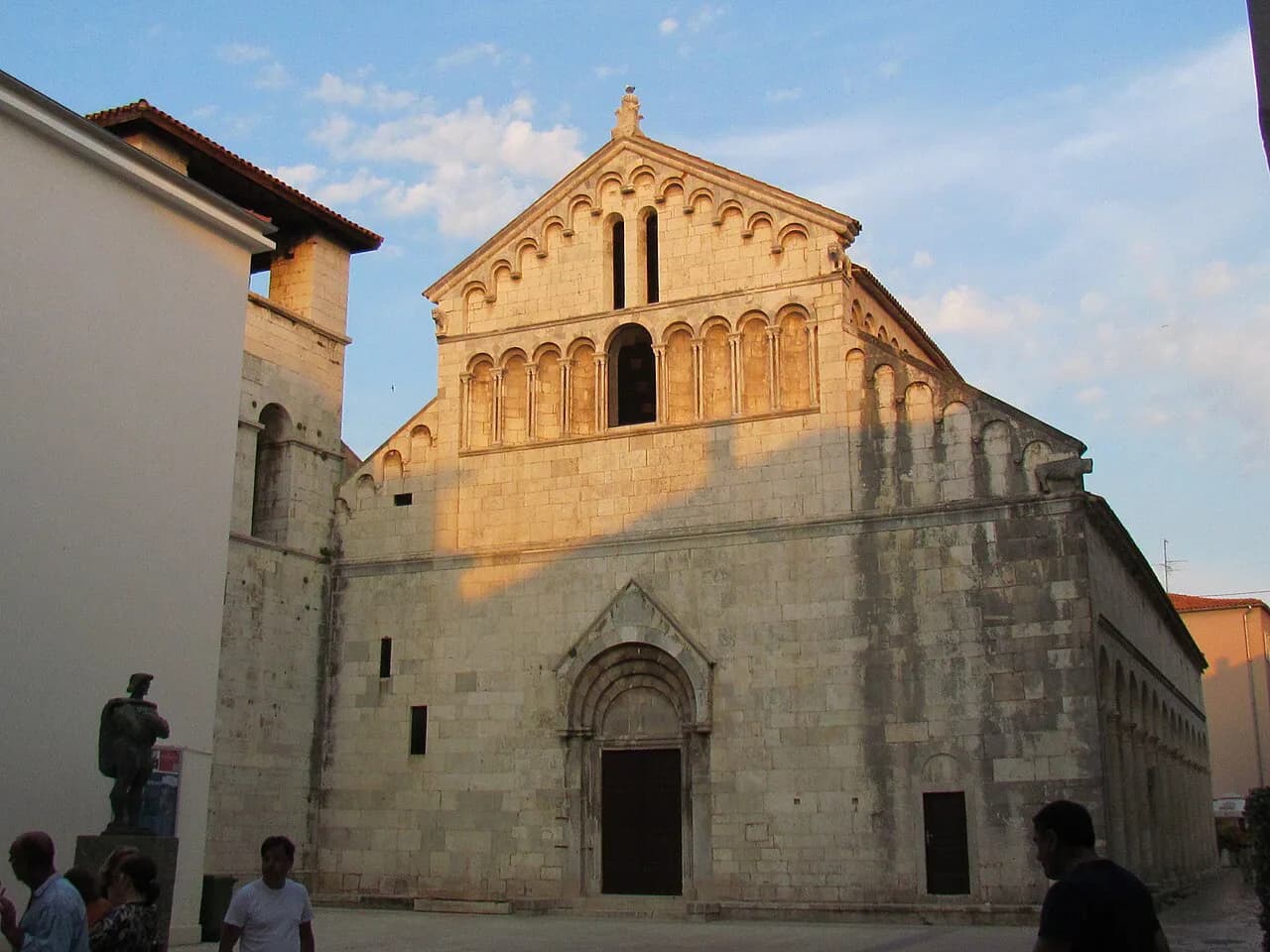
Three churches anchor the sightseeing circuit, and each belongs to a different style. The Church of St Mary is Gothic, the Church of St Margaret mixes Renaissance and Baroque elements, and the Church of St George completes the trio. Seeing all three takes little time because they sit within the compact centre, but the stylistic contrast between them is the reason to look at more than one.
The three churches belong to the same compact pedestrian core as the square, so they slot into a walk through the centre rather than a separate outing. Look at the façades and interiors of each in turn and take the stylistic contrast as the point of the walk.
The Ducal Palace portal and the Lace Museum
The Ducal Palace carries a richly ornamented portal worth pausing at even if you go no further, and inside it the Lace Museum displays handmade lace with historical photographs and information panels telling the story of a local tradition that long predates tourism.
The Lace Museum is the one clearly defined indoor sight in the town and the obvious refuge on a wet or windy day, but opening hours and ticket prices are not something this guide can fix for you. Confirm them with the museum or the tourist office in Pag Town before you build part of a day around it.
The salt warehouses and why salt shaped the island
Salt warehouses stand in the centre of Pag Town as testimony to how important the trade was to the local population, and they are part of the fabric of the town rather than a separate attraction. Look for them as you walk the core between the square and the churches, because they explain the prosperity behind the stone buildings around them.
Alongside salt, lace-making was the other tradition that supported island households, and the two together give Pag Town a working history that is easier to grasp than a list of dates. One practical consequence for visitors: the town's interest is cultural and architectural, so allow time to look rather than to tick off monuments.
Novalja: the second town, its waterfront and Roman remains
Novalja is the island's second town and lacks Pag Town's historical polish, having developed as a base for a young, late-night crowd. That reputation is seasonal, and outside high summer the waterfront is a pleasant place for a slow stroll and a starting point for the surrounding coast.
The Roman layer is a real draw here: the Liburni were the island's first recorded inhabitants and the Romans defeated them in the first century BC, and well-preserved underground segments of a Roman aqueduct can still be seen in Novalja, sitting as a quiet, unspectacular relic among the modern town.
If you want quiet, Novalja is the wrong choice in peak season and the right one in the low season, when the noise recedes and the waterfront returns to the town. Treat the two towns as different tools: Pag Town for sightseeing, Novalja for a coastal base with easier access to the island's northern end.
Villages around the island and what each one is near
Stara Novalja sits in a quiet bay and suits travellers who want calm water, with diving among the local options. Jakišnica and Lun are sleepy villages in the shade of old olive trees, and Lun's groves are described as among the oldest in the Mediterranean, which makes the northern tip a destination in its own right rather than a pass-through.
Povljana, Proboj and Šimuni are the family-oriented choices, while Mandre looks out towards the islands of Silba and Olib and the islets of Maun and Skrda — useful orientation if you are also considering the quieter islands of the Zadar archipelago. Metajna is the pick for nature lovers, sitting close to the rugged coastal scenery on the island's eastern side.
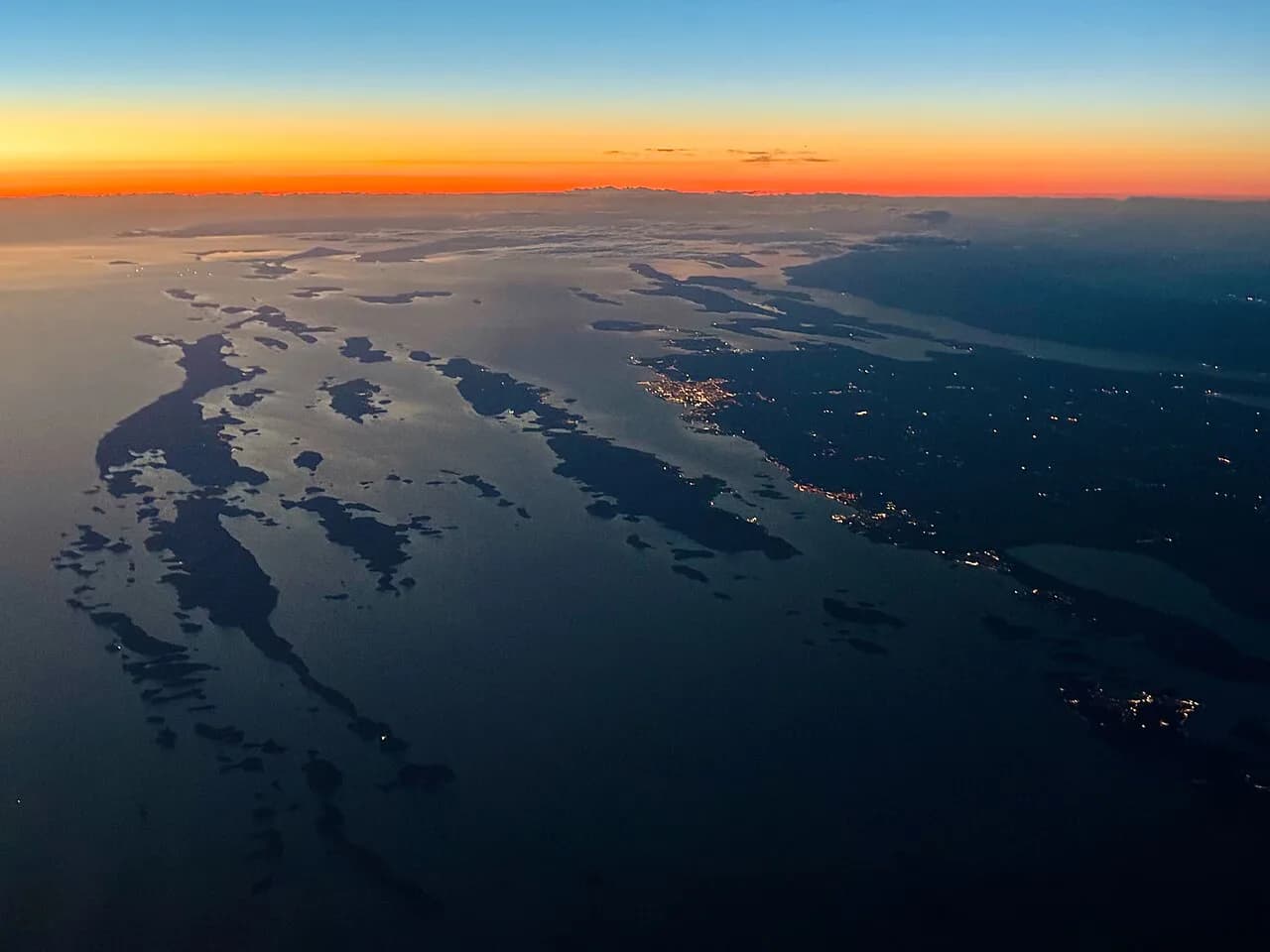
The spread matters more than the individual descriptions: these villages are strung along the coast at real distances from one another, so picking two near your base beats trying to tour the whole island in a day. If you are working from Zadar, it is worth comparing Pag with the other islands in the group before committing your days, including the long, low profile of Dugi Otok.
How to get to Pag: the bridge from the mainland
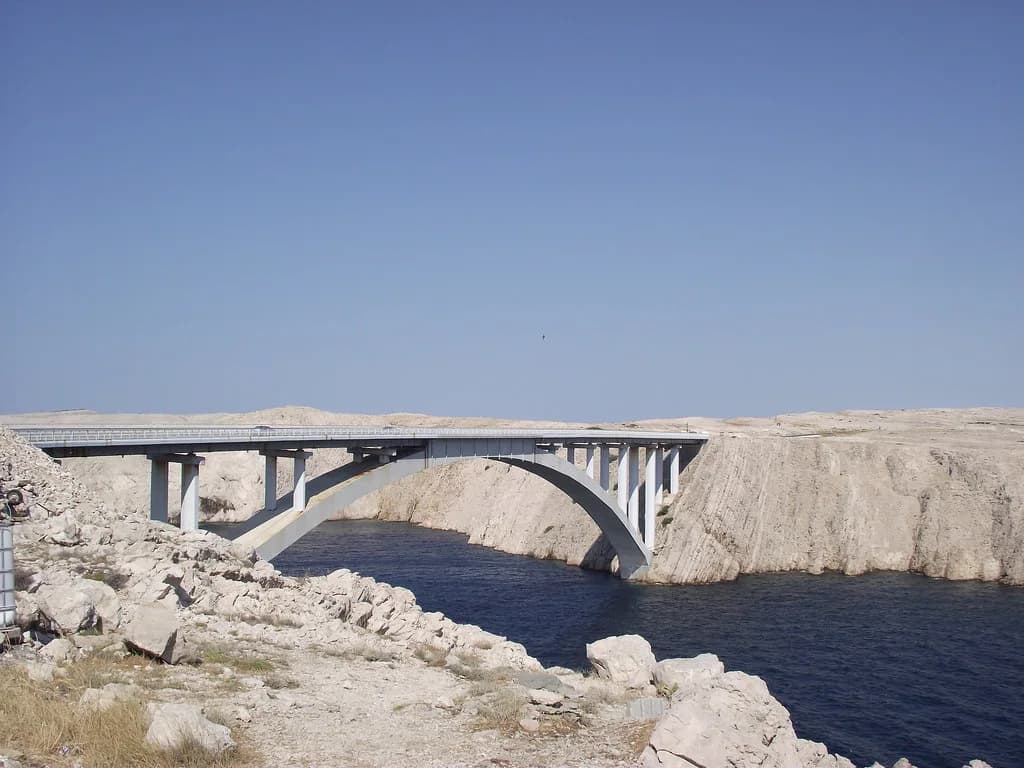
Pag is connected to the Croatian mainland by a road bridge, which is how most visitors arrive and the reason the island fits easily into a mainland driving itinerary. You drive on rather than book a crossing, so the bridge removes the timetable question that governs the car-free islands.
The island's own history records that the bridge opened in 1968 and that it drove the growth of tourism here. As a historical note it explains why the coastal settlements developed the way they did; it is not a statement about current traffic or tolls, which you confirm locally.
Your first hour on the island depends on where you are coming from and which end you reach first. Pag Town and the island's southern villages sit at one end, while Novalja and the northern villages lie further along the island's length, so plan your first stop before you cross rather than after.
Ferries and boats to and from Pag: confirming routes with the operator
With the bridge in place, most visitors reach Pag by road and do not need a sea crossing at all. If you are travelling on foot, do not assume a scheduled ferry or catamaran to Pag — confirm the current route and season directly with the ferry and catamaran companies before you plan around it, and be ready to reach the island by road or bus from the mainland end of the bridge instead.
Without a car, the bridge still brings you within reach of the island's bus and taxi services. Ugljan, across the channel from Zadar, runs on a frequent foot-passenger model and is a useful benchmark if you are weighing up how an island reachable mainly by bridge compares with the car-free islands nearer Zadar.
Getting around the island by car and how the distances feel
A car changes Pag more than it changes most Croatian islands, because the settlements are spread along a long, thin island and the interior is bare karst with little between one place and the next. Without a car you are tied to one village and whatever the local bus or taxi will do; with one, Pag Town, Novalja and the northern villages become a single coherent day.
The settlements are strung along the length of the island at real distances, and the roads follow the terrain rather than cutting across it, so the map is a poor guide to how much of the island you can cover in a day. Plan two or three stops rather than six, and treat the driving as part of the day rather than dead time.
How long Pag needs: a day for the town, more for the island
Pag Town alone fills a compact circuit: the walled core, Trg Kralja, the three churches, the Ducal Palace portal, the Lace Museum and the salt warehouses sit within the pedestrian streets you can walk in a couple of hours. If the town is your only goal, you can come over the bridge, see it properly and be back on the mainland the same evening.
The rest of the island is where you spend the extra time: Novalja's aqueduct, the olive groves at Lun and at least one of the quieter coastal villages each pull you away from Pag Town. Split your time by geography rather than by checklist: a northern day around Novalja and Lun, and a southern day around Pag Town and Povljana, covers the island without long back-and-forth drives.
When to go: low season quiet versus summer crowds
Low season is the better match for sightseeing on Pag: the towns are calmer, the waterfront at Novalja reverts to a normal place, and the exposed karst is far kinder to walk in cooler weather. High summer brings the crowds the island is known for, concentrated in Novalja and along the coast rather than in Pag Town's streets.
The island's own history gives an idea of how long the season has been established here, with visitor numbers recorded as far back as 1925. Treat that as background rather than a guide to current demand, and check the specific months you plan to travel against what is open where you are staying.
Honest trade-offs: exposed karst, the bura wind and summer pressure
Pag's bare rock means little natural shelter, and the bura, the cold north-easterly wind that affects this part of the Adriatic, can make an exposed day on the island uncomfortable in a way that a wooded island would not. Build flexibility into the plan and keep an indoor option such as the Lace Museum in reserve rather than treating it as an afterthought.
Summer pressure falls unevenly: Novalja is the island's acknowledged nightlife centre and takes most of the summer crowd, while Pag Town's pedestrian core stays comparatively manageable. That unevenness is the practical argument for choosing your base by the kind of holiday you want rather than by the island as a whole.
One further trade-off is that Pag rewards curiosity about culture and landscape rather than beach-hopping, so if your priority is a single stretch of coast, the island's inland distances will feel like a cost. If you want variety across several islands instead, the wider group makes more sense as a framework, with Pag sitting alongside the other islands near Zadar rather than standing alone.
Should you cross the bridge or look for a boat?
Cross by bridge if you have a car and want Pag Town plus a couple of villages in a day or two; the crossing removes the timetable question entirely and lets you plan around weather rather than around a sailing. Sea route options for Pag are not something this guide can state with confidence, so check current timetables and dates before you rely on any crossing.
Whichever way you arrive, decide first whether you are visiting the town or the island, then build the day around that answer. The town is one compact circuit; the island is a long drive with scattered rewards.
Explore more Zadar guides
Frequently Asked Questions
Is Pag island connected to the mainland by a bridge?
Yes. Pag is linked to the Croatian mainland by a road bridge, which is how most car-borne visitors arrive and why the island fits easily into a mainland driving route. The bridge opened in 1968, according to the island's published history, and drove the growth of tourism here. The sources for this guide give no current crossing details, so confirm the crossing locally before you travel.
Do you need a car on Pag island?
A car makes a real difference. The settlements are spread along a long, thin island with bare karst in between, so without a car you are tied to one village and local transport. With one, Pag Town, Novalja and the northern villages can be combined into a coherent day.
Is Pag island worth visiting?
It is, particularly if you like cultural sightseeing in a compact setting. Pag Town has a walled pedestrian core with a main square, three churches of different styles, an ornate palace portal, a lace museum and old salt warehouses. The outlying villages and the karst landscape reward a second day.
Can you reach Pag by ferry or catamaran?
This guide cannot confirm scheduled passenger ferries or catamarans to Pag. Most visitors arrive by road over the bridge, and if you are travelling on foot you should confirm the current route, operator and seasonal frequency directly with the operator before you plan around a sea crossing.
Sources
Notes from the Croatian coast
Optional updates when our guides change.
You might also like
Continue reading
More guides you'll find useful