

Hvar Heritage Museum: A Visitor's Guide to Muzej hvarske baštine

The Hvar Heritage Museum is a short, low-key visit rather than a full morning out: a walled garden, two small stone houses and a pair of memorial rooms, tucked into the lanes of Hvar Town. Allow roughly half an hour to 45 minutes, and treat it as one stop among several in the old centre rather than the reason for your day.
Its official name is Muzej hvarske baštine, and it occupies the former summer house associated with the Renaissance poet Hannibal Lucić. The draw here is atmosphere and a handful of specific details rather than a large collection.
What the museum is and where it sits in Hvar Town
The museum stands at Hanibala Lucića 8, and the tourist board says the summer residence is reached from the town's main square. The complex is a Renaissance country-house arrangement: two stone buildings and a walled garden, with local masters working alongside stonemasons from Korčula and Brač. In Your Pocket describes it as the most unassuming of Hvar's museums, entered through a small gate into the garden, which is part of the reason it stays quiet even when the town is busy.
Do not expect a large exhibit. The site at Hanibala Lucića 8 holds the walled garden and the two stone houses with their memorial rooms, while the Arsenal Gallery is a separate collection within the Hvar Heritage Museum, housed in a different building in town. Treat the garden and memorial rooms as one stop and the Arsenal Gallery as a second, adjacent stop rather than one continuous visit, so you can plan each separately.

Finding it from the main square
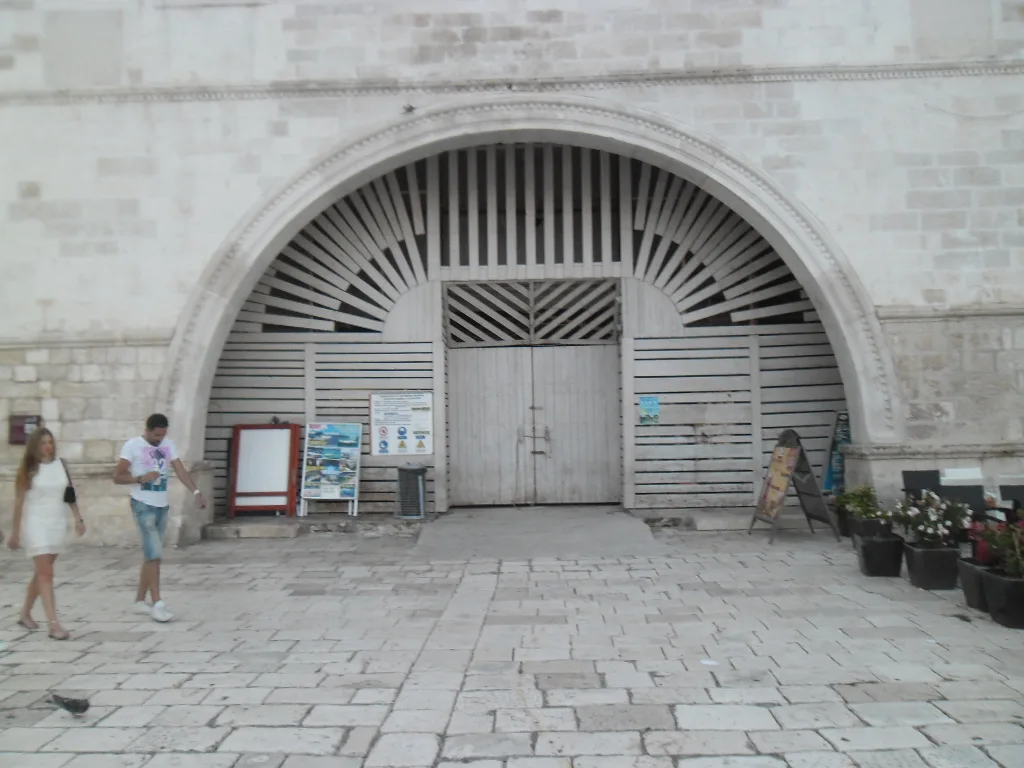
Start from Trg svetog Stjepana, the long square that opens onto the harbour, and look for the lane named for Lucić. The Visit Hvar listing notes that the summer residence can be reached via the main town square, which makes the square your practical landmark rather than a street number on a map app.
The entrance is easy to walk past, since it is a modest gate in a wall rather than a signed museum frontage. Confirm the address and contact details on the tourist board's museums listing before you set out.

Inside the walled garden and the Melusine well-head
The garden is the most photogenic part of the visit. It is a walled green space with well-tended plants, and it holds a stone well-head carved with a relief of the Melusine, a mermaid figure with two tails. That carving is the single detail worth seeking out.
Be realistic about what the garden is. It is not preserved in its original Renaissance form, and nobody should arrive expecting parterres and period planting. What you get is a shady, enclosed space with a piece of carved stone at its centre, which is pleasant in the heat and quick to see.
The two stone houses: Lucić and Bučić
Steps rise from the garden to two stone houses containing a pair of small memorial rooms. One is devoted to Hannibal Lucić, the Renaissance poet who owned the house; the other remembers Grgur Bučić, a local researcher who did much to promote tourism on the island. The rooms are intimate rather than exhibition-scale, so give them ten to fifteen minutes between them rather than an hour.
The architecture itself carries much of the interest. The complex is a good example of Dalmatian Renaissance country-house building, with late Gothic features still visible, and local masters worked alongside builders and stonemasons brought in from Korčula and Brač.
The Arsenal Gallery collection
The Gallery of Modern Art in the Arsenal building was founded in 1957 and is now a collection within the Hvar Heritage Museum rather than a standalone institution. Its permanent display holds paintings, sculptures and prints from the museum's holdings, alongside temporary exhibitions. The Arsenal building also houses the small historic theatre.
The gallery's strength is Croatian art of the mid-twentieth century, with the first permanent display shaped by Grgo Gamulin and later adjustments by Kruno Prijatelj bringing Hvar and Dubrovnik painters into the same hang. Treat it as a distinct stop in the Arsenal, separate from the garden and memorial rooms.
Opening hours by season
In Your Pocket lists the exhibition at Hanibala Lucića 8 as available year-round from 10:00 to 13:00 by prior arrangement — meaning you should request access rather than simply turn up — with a stated summer window of 10:00 to 14:00 in July and August. Ring ahead before relying on either.
The by-arrangement clause matters most in spring and autumn. If you are travelling in May, June, September or October, ring ahead on +385 (0)21 741 009 before building the visit into your day, because arriving unannounced out of season risks finding the gate shut.
How long to allow and when it is quietest
Plan on half an hour to 45 minutes for the garden and both memorial rooms, adding another 20 to 30 minutes if the Arsenal Gallery is open and you want to see the collection properly. Pair it with a look at the cathedral treasury rather than expecting it to fill a morning.
A morning visit suits the garden, which is at its most pleasant before the midday heat builds. If your day involves several old-town sights, going early generally keeps the lanes calmer.
Nearby: the cathedral treasury and the Franciscan Monastery
The Treasury of the Cathedral of Hvar, housed in the Bishop's Palace, holds Gothic, Renaissance and Baroque church art, vestments and liturgical plate, with pieces including a fifteenth-century chasuble and a silver bust of St Prosperus. It is a short walk from the museum and a natural second stop.
The Franciscan Monastery, on the Križa side of town, holds a church collection with old-master paintings, sculpture, liturgical objects, coins, rare books and manuscripts. Its best-known work is an early seventeenth-century Last Supper by Mateo Ponzoni Pončun, and the monastery garden has a long-standing cypress. See the guide to the Franciscan Monastery, Hvar for what to expect, and note it is another short walk from the museum.
If you want a view to finish, Hvar Fortress (Fortica) is the obvious climb above town, and the Hvar city walls give a shorter alternative. Both work better in the morning or late afternoon than at midday.
Tickets and confirming before you go
Entry is not a published price on the museum's visitor listing, so it is worth asking about the fee when you ring +385 (0)21 741 009 rather than budgeting from secondhand figures. Croatia uses the euro.
One call settles everything: whether the rooms are open that day, what entry costs and whether the Arsenal Gallery is running.
Is the museum worth an hour of your Hvar day?
Yes, if you are already in the old centre and want something small, shady and specific: the Melusine well-head, two memorial rooms and a garden that stays quiet while the harbour fills. No, if you are choosing between this and a bigger sight and only have time for one.
The practical version: go in the morning, ring ahead outside July and August, ask about the entry fee and the gallery at the same time, then walk a few minutes to the cathedral treasury to round out the morning.
Explore more Hvar guides
Frequently Asked Questions
Do I need to contact the museum before visiting?
Yes — the In Your Pocket listing describes the exhibition at Hanibala Lucića 8 as open by prior arrangement, so it is sensible to ring +385 (0)21 741 009 before you go. The stated hours are 10:00 to 13:00 year-round, widening to 10:00 to 14:00 in July and August. The same call lets you ask about entry cost and whether the Arsenal Gallery collection is open.
How long does a visit take?
Half an hour to 45 minutes covers the walled garden, the Lucić memorial room and the Bučić room comfortably. Add 20 to 30 minutes if you also want to see the Arsenal Gallery collection properly. That makes it a short stop to pair with the cathedral treasury rather than a morning on its own.
Is the garden a restored Renaissance garden?
No. The walled garden is well tended and still contains a stone well-head with a Melusine relief, but it is not preserved in its original Renaissance form. Go for the atmosphere, the carving and the shade rather than period planting.