
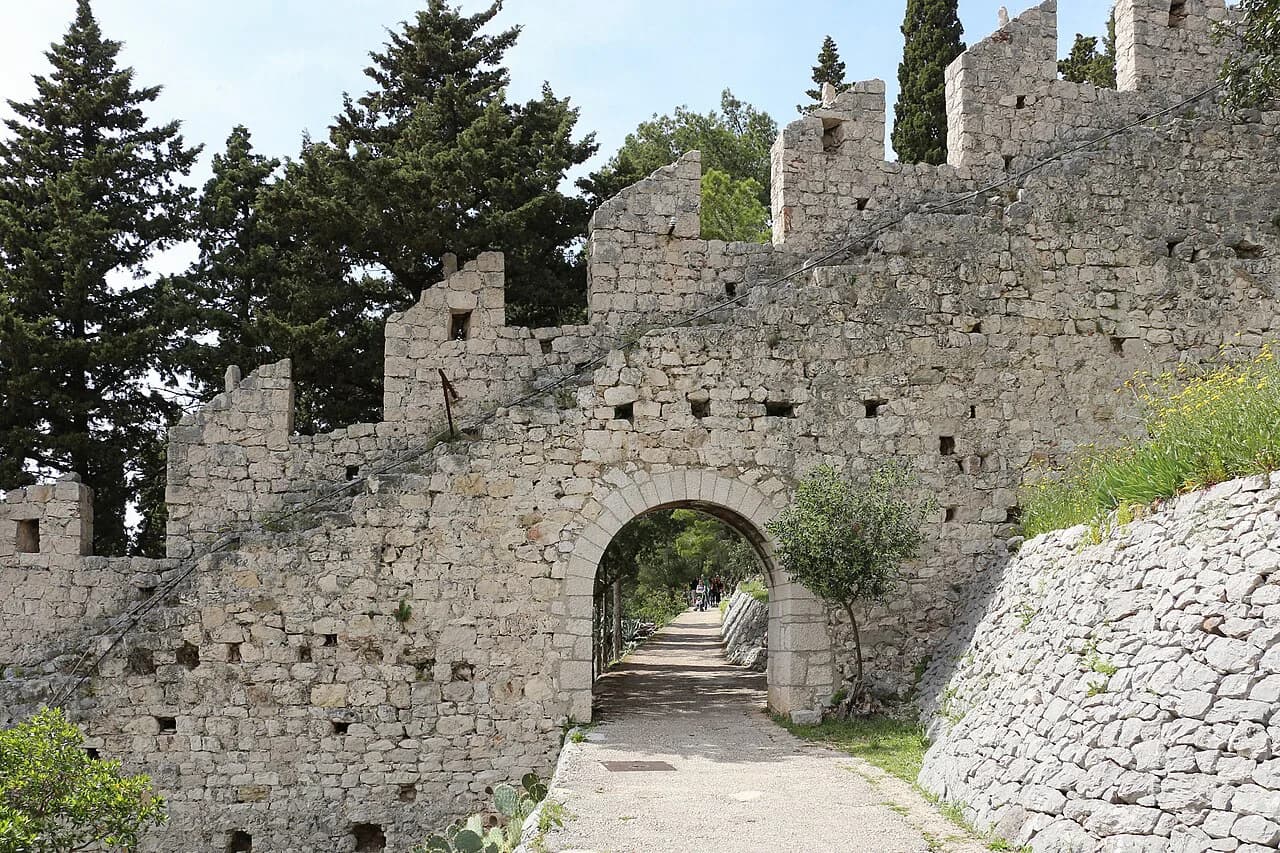
Hvar City Walls: Walking Up to the Fortress Above Hvar Town

There is no flat, Dubrovnik-style wall circuit in Hvar Town. The town's defences belong to a hilltop castle raised above the rooftops, reached by climbing through stepped stone lanes that start a few minutes from St Stephen's Square; the reward is the broadest view of the harbour and the Pakleni Islands. This page covers where the walls sit in the town's layout, how to reach the start of the climb, what you see on the way up and at the top, and how much time and effort to budget.
What the Hvar city walls actually are
Treat the phrase as shorthand for the fortified upper town and its castle, not as a promenade you walk around the edge of Hvar Town. The historic core below is a Venetian-era patchwork of townhouses and palaces opening onto the marble-flagged main square, with terracotta-roofed houses rising behind it to overlook the horseshoe-shaped harbour; the castle sits above that slope as the high point of the same defensive picture.
That distinction shapes your day. Dubrovnik's walls are a one-way circuit with a single ticket and fixed closing time, so planning there is about queues and heat; in Hvar the climb itself is the attraction, and the practical questions are fitness, hot stone underfoot and how long you want at the top.
Where the walls sit relative to the square and harbour
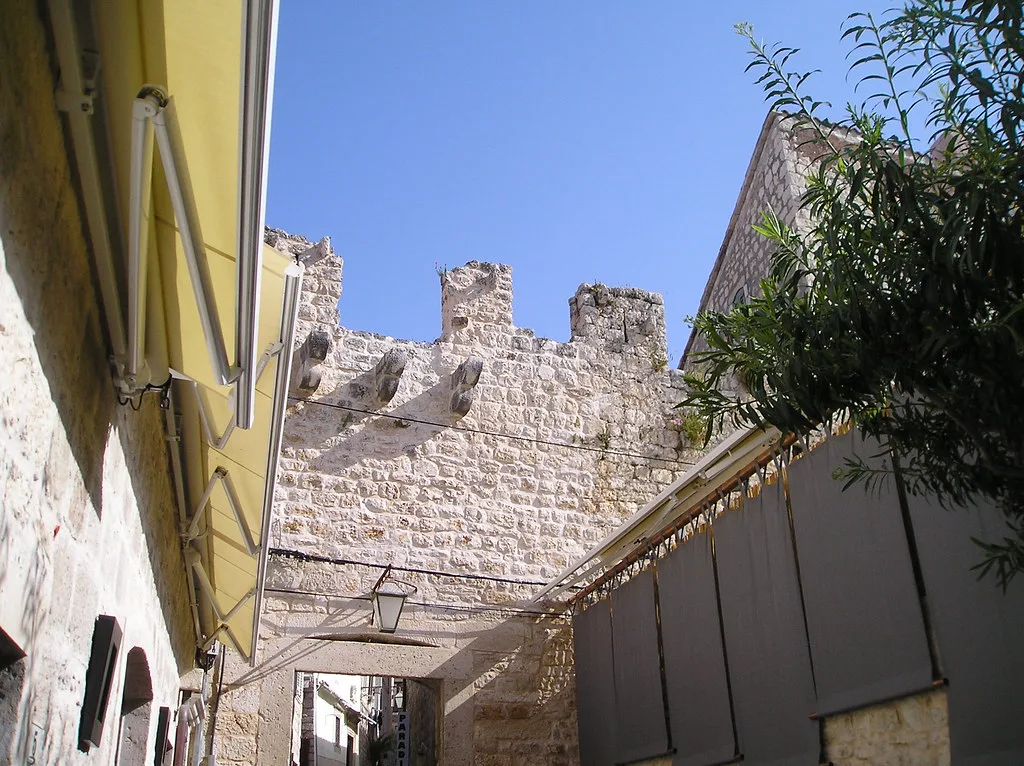
Hvar Town wraps around its harbour, with the long paved waterfront on one side and St Stephen's Square at the inner end, where the town opens away from the water. The lanes behind the square climb the slope toward the castle, so you are never far from the walls in the sense of the fortified ridge above you – you simply have to gain height to reach them.
This compact layout is why the climb fits easily into a half-day. Arriving by catamaran at the harbour, you cross the Riva and reach the foot of the stepped lanes within minutes, making the ascent a realistic first or last stop rather than a separate excursion.

Getting to the start of the climb from the Riva
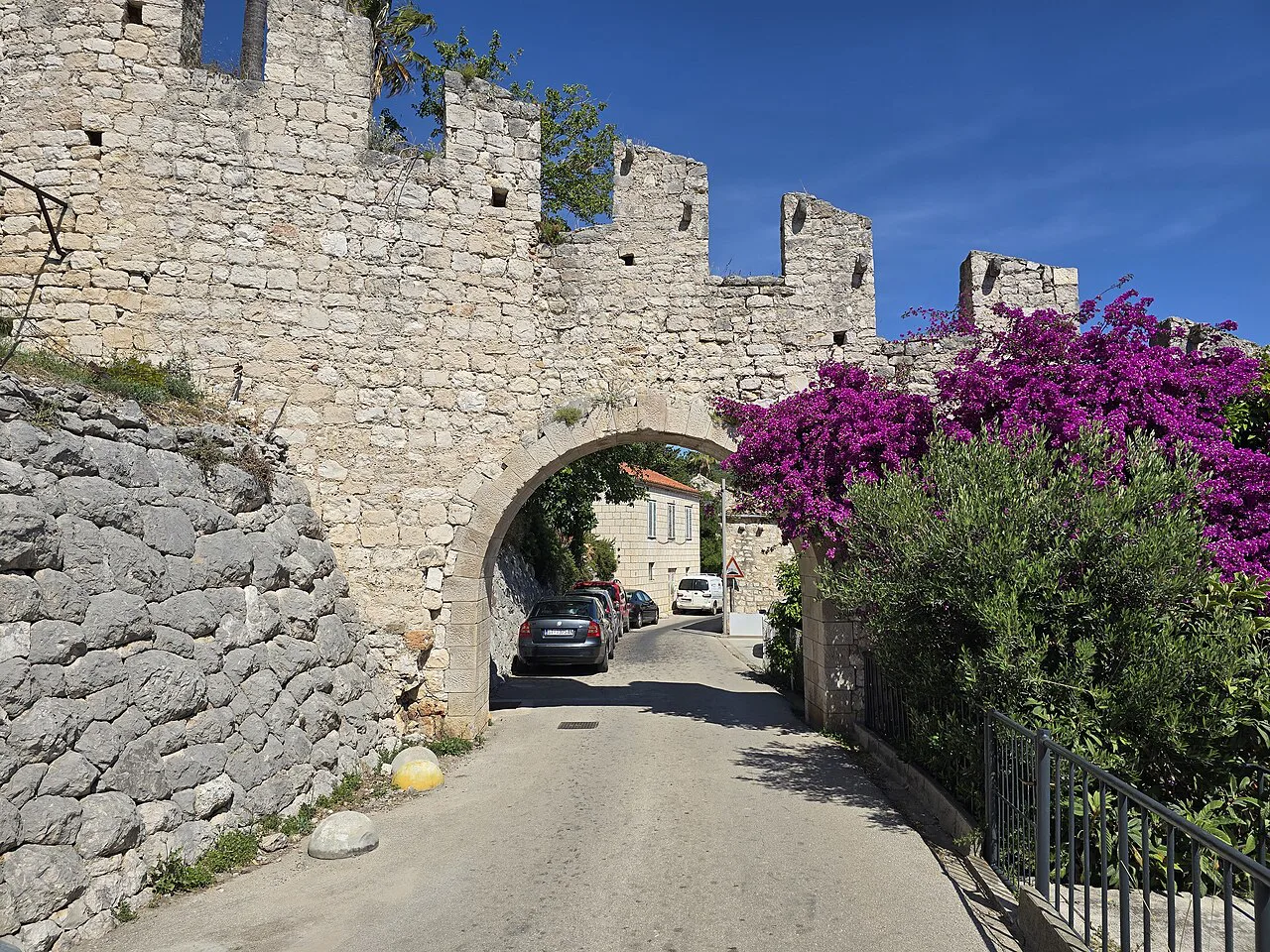
Use St Stephen's Square as your landmark. From the Riva, walk to the inner end of the harbour and into the square, then look for the stone stairways heading uphill behind the buildings on the landward side; the routes converge as they rise, so a wrong turn costs you minutes rather than the afternoon.
The ascent is made on foot through residential lanes and flights of steps, with no road or lift taking you to the top, so anyone in the group with knee trouble should decide before setting off rather than halfway up. TripAdvisor's listing for the historic sites above Hvar Town likewise describes the approach from the centre as a climb by steps and path, with the effort repaid by the view.
The stepped path through the old streets
The climb is a sequence of short, steep flights rather than one long staircase, passing house walls, small terraces and doorways. Because the streets bend and narrow, the harbour keeps appearing between rooftops, which breaks the ascent into stages and gives you natural places to pause.
Take the lanes at an unhurried pace and keep to the side when someone is coming down; the steps are worn smooth in places and narrow enough that two people pass with care. For the castle itself and its immediate surroundings, see the dedicated guide to the Hvar fortress, which covers what stands at the summit.
What you see from the walls: harbour, Pakleni Islands, rooftops
Height is the whole point. From the upper lanes and the castle terrace, Hvar Town reads as a bowl of terracotta roofs around the horseshoe harbour, with the waterfront and square below and the Pakleni Islands strung across the water beyond.
Late afternoon brings the warm light that makes the rooftops worth photographing, while morning gives clearer air for picking out the islands; in high summer the middle of the day is the least comfortable time to be standing on exposed stone. If your interest is the town's churches and cloisters rather than the panorama, the Franciscan monastery near the waterfront makes a cooler alternative.
How much time to allow
Plan on a leisurely half-day if you want the ascent, a proper look around at the top and the descent without rushing, and less if you climb steadily and come straight back down. The climb itself is short in distance but slow in practice because of the steps, the heat and the stops for views, so treat any estimate as guidance rather than a published figure.
Build in slack if you are visiting on a busy boat day. Hvar Town is a congested summer port, and climbing early or later in the afternoon gives you quieter steps and better light than the middle of the day.
Footwear, heat and shade: what the climb asks of you
Wear shoes with grip and a closed heel. The stone steps are polished by generations of feet and can be slippery, and sandals or smooth soles make the descent harder than the ascent; carry water, because the upper lanes offer little in the way of shade or somewhere to buy a drink.
Summer heat is the real constraint. Hvar's climate is Mediterranean, with hot, dry summers and plenty of sun on the stone, so an early start or a late-afternoon climb is kinder than midday; in spring and autumn the same route is far more forgiving. Weather and sea conditions vary, so treat any seasonal expectation as typical rather than guaranteed.
Nearby: the square, the Riva and the harbour front
Back at sea level, St Stephen's Square is the natural place to recover, with café terraces set back from the water and the cathedral at the head of the square. The Riva gives you a flat promenade in both directions, and the harbour is where the boats come and go, which makes it a good place to end a hot afternoon.
If you still have energy for indoor sightseeing after the climb, allow extra time for the square's buildings. The Riva and the harbour front make a flat, cooler finish to a hot morning on the steps.
Tickets, hours and where to confirm them
Entry arrangements at the castle above Hvar Town are set locally and change with the season, so confirm the current position on arrival in the town rather than relying on an old figure. Dubrovnik's city walls are a different site with their own pricing and a stated 2026 main-season adult ticket of €40, including Fort Lovrijenac; that is Dubrovnik, not Hvar, and should not be used to budget for this climb.
For the wider set of sights in and around the town, from the square to the waterfront, Hvar Attractions: 11 Visitor Guides collects the individual pages and is the best starting point for planning which stops fit around the climb.
Is the climb to Hvar's walls worth it?
Yes, if you go for the view and accept the steps as part of the experience rather than an obstacle to be avoided. Climb early or late, wear proper shoes, carry water and skip the midday sun; the lanes, the rooftops and the island panorama are the reason to make the ascent.
If steep stone stairs are not for you, the town's Venetian streets and the harbour from the Riva still deliver, and you can put the time into the square and its buildings instead.
Explore more Hvar guides
Frequently Asked Questions
How do the Hvar city walls compare with the Dubrovnik city walls?
They are different experiences. Dubrovnik's walls form a continuous circuit above the Old Town with a single ticket and timed opening hours, whereas Hvar's defences centre on a hilltop castle reached by steep stepped lanes from St Stephen's Square. Plan Dubrovnik around crowds and closing times, and Hvar around heat, footwear and how long you want at the top.
Do I need a ticket to walk up to the castle above Hvar Town?
The lanes and steps through the upper town are public streets, while the castle at the summit is a managed site whose entry arrangements are set locally and can change by season. Confirm the current position in the town when you arrive rather than relying on an old figure.
What is the best time of day for the climb?
Early morning or late afternoon. The route has little shade, the stone retains heat, and Hvar Town is busiest when boats are in during the middle of the day. Spring and autumn are more comfortable overall than high summer.