
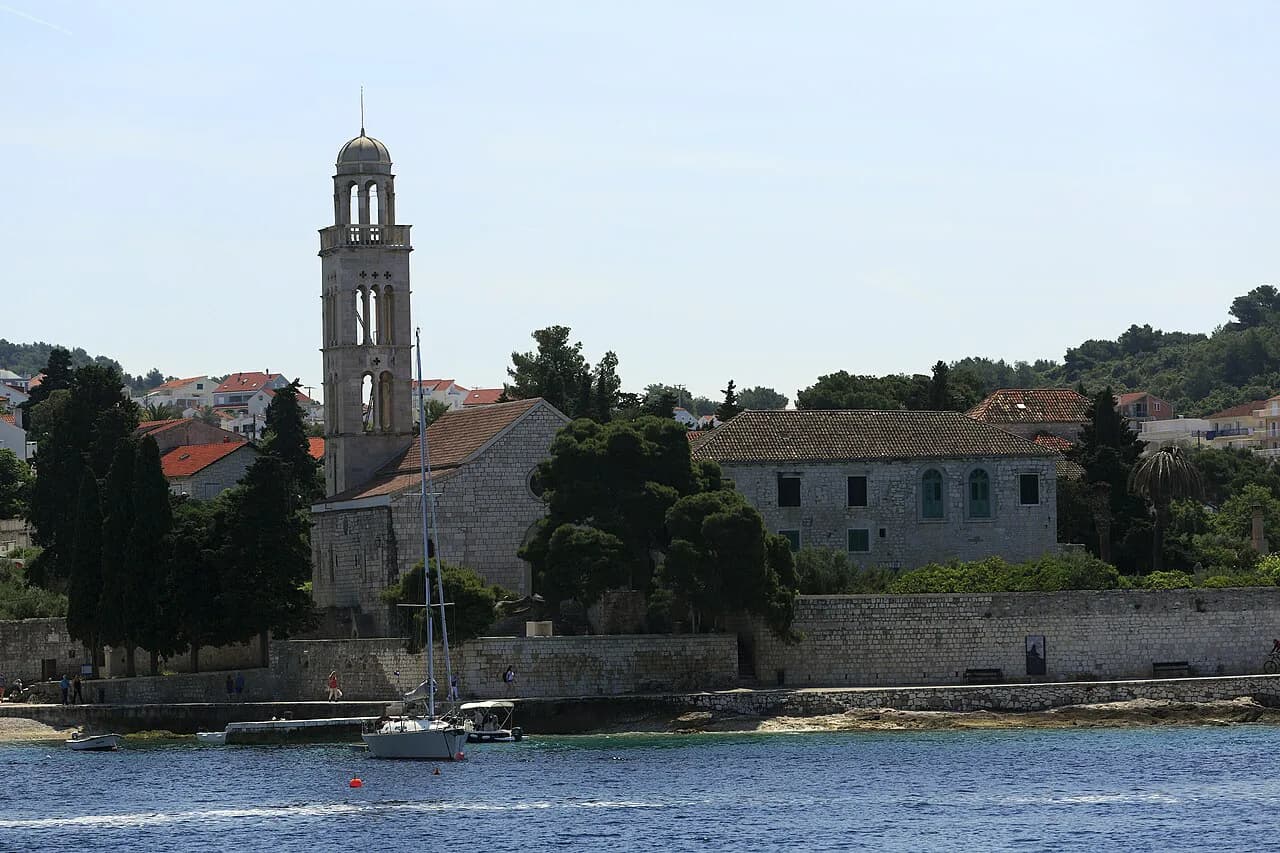
Franciscan Monastery, Hvar: a Visitor's Guide to the Cloister and Collection

The Franciscan Monastery is worth 30 to 45 minutes of your day in Hvar town, and it works best as one stop on a single walk through the old town rather than a separate outing. It is a short walk inland from the waterfront, within easy reach of the Riva and St Stephen's Square. This guide covers where to find it, what to look for inside, how to pace the visit and which nearby sights slot in around it.
Where the monastery sits and how to reach it on foot
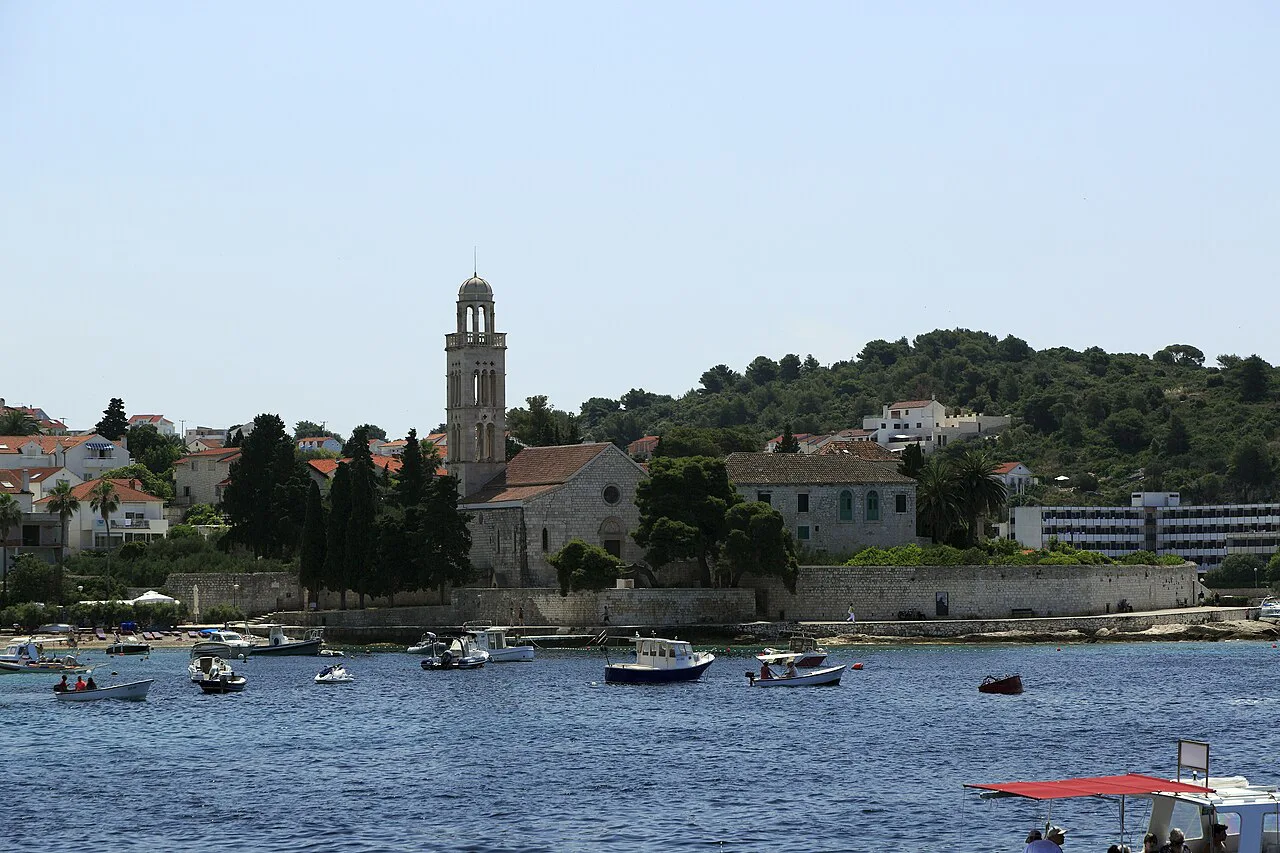
The monastery stands in Hvar town a short walk inland from the waterfront. If you arrive by catamaran or ferry, walk off the Riva and head through the lanes; the old town is compact enough to cover on foot from the harbour.
Treat the Riva as your starting line and the lanes as your route. The whole old town is compact enough that you pass the monastery naturally while wandering, and you can combine it with the marble-paved square and the lanes running north.

What the monastery is and when it was built
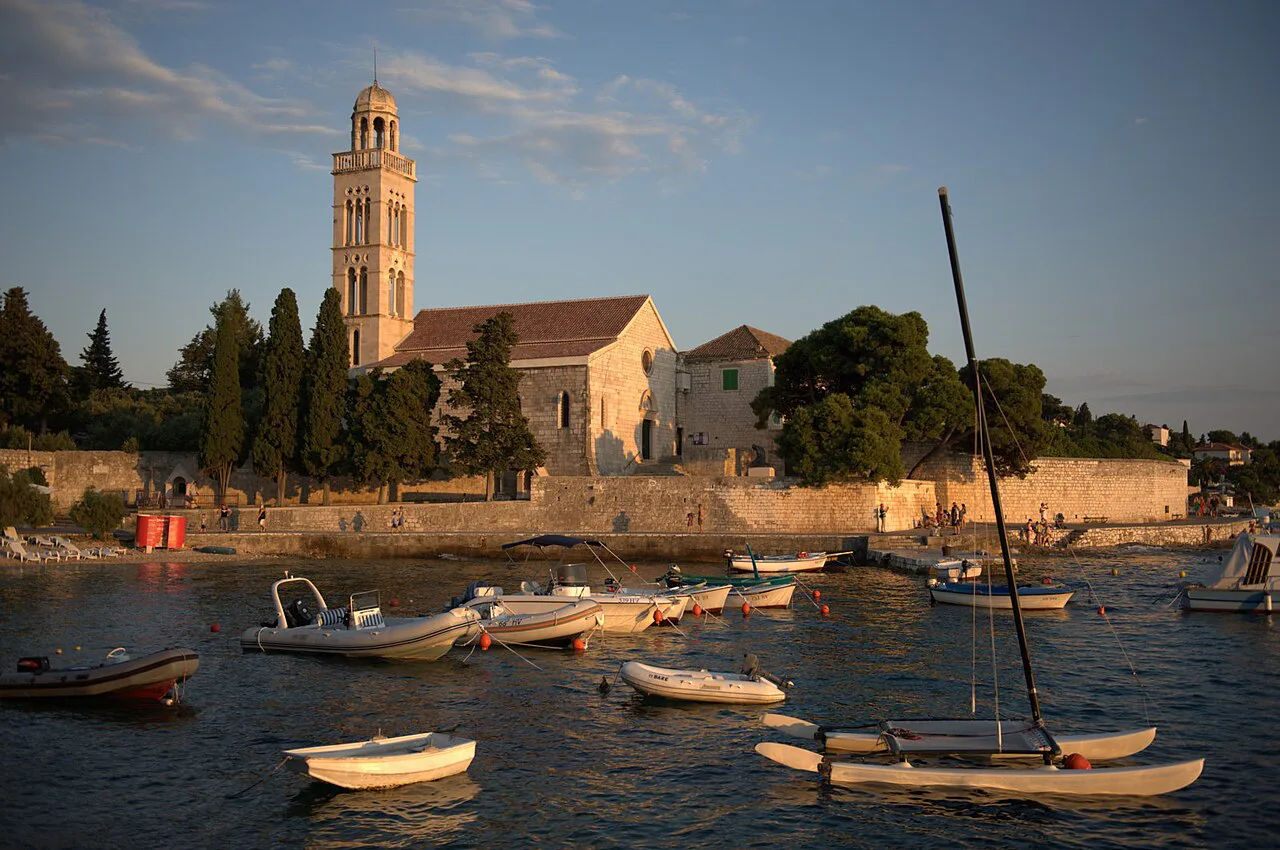
The Franciscan Monastery was built in the 15th century, originally as a refuge for sailors passing through Hvar while it was an important naval port. That origin ties it to the town's maritime life. The Franciscan order keeps the site, and it remains a working religious house rather than a museum piece.
Because the monastery grew out of the town's maritime life, it belongs to the same story as the harbour defences above it. Read it as part of Hvar's sea-facing history, not as an isolated ecclesiastical sight.

What to see inside: sacral art and the Last Supper
Inside you can see rich sacral art and a series of important museum exhibits. The most prominent single work is a painting of the Last Supper, which the Hvar tourist board names as the highlight of the collection. Give yourself time to look at the art rather than rushing through to the courtyard.
The displays are modest in scale, which suits the monastery's size and makes it a manageable visit even on a short stay. If religious art is not your priority, the courtyard and the walk itself still justify the detour.
The cloister and its 500-year-old cypress
In the inner courtyard stands a cypress tree around 500 years old, notable for a crown shaped like a parasol. Its age and unusual form earned it a place on the list of botanical nature monuments, so it is a sight in its own right rather than just courtyard greenery.
The cloister is the calmest part of the visit and the easiest place to slow down between the busier squares downhill. Look up at the cypress crown from different corners of the courtyard for the best view of its umbrella shape.

How long to allow and how to order the walk
Budget around half an hour for the monastery, or 45 minutes if you read the displays carefully and linger in the cloister. That keeps it a genuine low-effort stop rather than the anchor of your day. Pair it with a walk up to the fortress if you want a longer outing.
A sensible order starts at St Stephen's Square, moves through the lanes to the monastery, then continues uphill to the fortress for the view back over the harbour. The fortress climb is the steep part, so pace the walk to reach it fresh rather than after a long morning.
If you prefer a shorter loop, do the monastery and the square and leave the fortress for another morning. The town is small enough that you can return without losing time to transport.
Tickets and opening times: confirm current details
The Hvar tourist board does not publish an entrance fee, opening hours or closed days for the monastery, so check with the tourist board or at the door on the day. That is the practical way to plan around a possible midday closure or a change in the visiting arrangement.
Nearby sights on the same old-town walk
The Arsenal is the obvious next stop, a 1579 building once used to store and service Venetian ships and now home to the oldest communal theatre in Europe. Its scale and position make it easy to fold into the same walk as the monastery.
St Stephen's Cathedral, built from the 16th to the 18th century and funded by contributions from the town's own citizens, anchors the square below. Step inside for the three-nave interior and works by local and Venetian masters.
Just off the central square, the Benedictine Monastery is known for lace made from agave plant, a technique recognised on UNESCO's Intangible Cultural Heritage list. It is a small, worthwhile add-on if you are already in the old town.
The Hvar Heritage Museum, housed in the summer house of the poet Hanibal Lucić, displays an ornament from a galley that fought at the Battle of Lepanto in 1571. It rounds out the old town's cultural circuit without lengthening the walk much.
Beyond the town centre, the broader set of Hvar Attractions gives you the full picture of how these stops fit together across the island. Use it to plan which ones deserve a dedicated slot.
Is the monastery worth slotting into your Hvar walk?
Yes, if you are already walking the old town: it adds a calm cloister, a botanical curiosity and a modest art collection in under an hour. Skip it only if your time in Hvar is very short and the fortress and square are your priorities. Either way, check the current visiting arrangements when you arrive.
Explore more Hvar guides
Frequently Asked Questions
Where is Hvar island located?
Hvar sits off the Dalmatian coast in the Adriatic Sea, south of Split. It is reached by ferry and catamaran from the mainland, and Hvar town is on the island's western side.
Is the Franciscan Monastery free to enter?
The Hvar tourist board does not publish an entrance fee for the monastery, so pricing isn't set in advance—check at the door on the day.
How long is the ferry ride from Split to Hvar Town?
Ferry and catamaran crossings between Split and Hvar town differ by operator and season, so look up current timetables before you travel.
Is Hvar expensive for a short visit?
Costs in Hvar town vary by season and by what you do, so there is no single figure; check current prices for the sights and transport you plan to use.