Vis Town, Croatia: What to See and How Long to Stay
Vis Town packs a Greek-founded old town, two harbour quarters and an easy-going pace into a short visit. Here's what to see and how long to allow.
On this page
Vis Town is worth at least one night, and an afternoon's walk covers its old centre, both harbour quarters and the waterfront. It sits on the island of Vis, the furthest of Dalmatia's main islands from the mainland, and that distance keeps it calmer than Hvar or Split even in high summer. This guide sets out the layout, the sights worth your time, how long to stay, when to go and how arrival at the ferry pier actually feels. See the Vis Island guide for the island as a whole.
Why Vis Town feels quieter than Split or Hvar
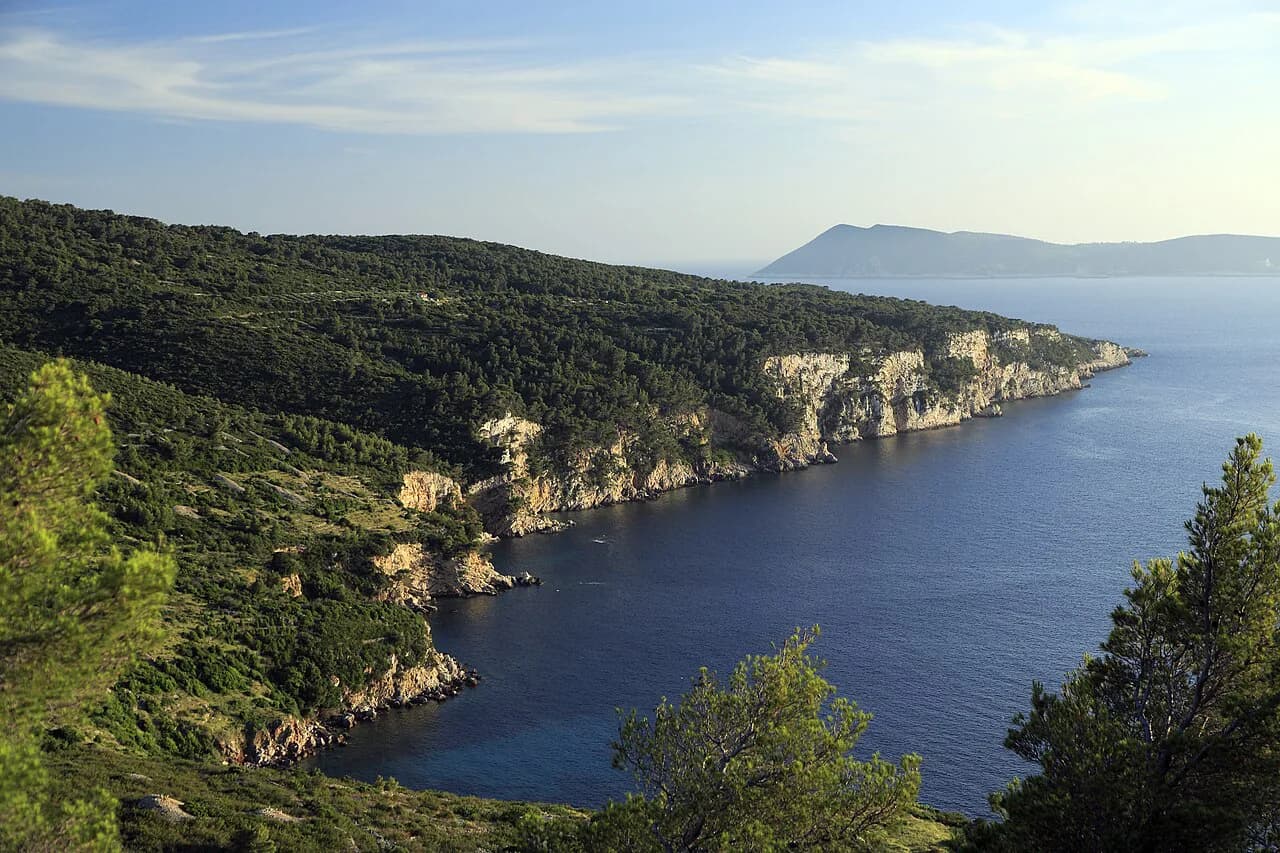
Distance does most of the work. Vis lies well out in the Adriatic, so it draws fewer day-trippers than Hvar or the islands just off Split, and the town keeps a working, lived-in air rather than a resort one. The island spent the late 20th century as a military installation closed to outsiders, which explains how much of its older fabric survives.
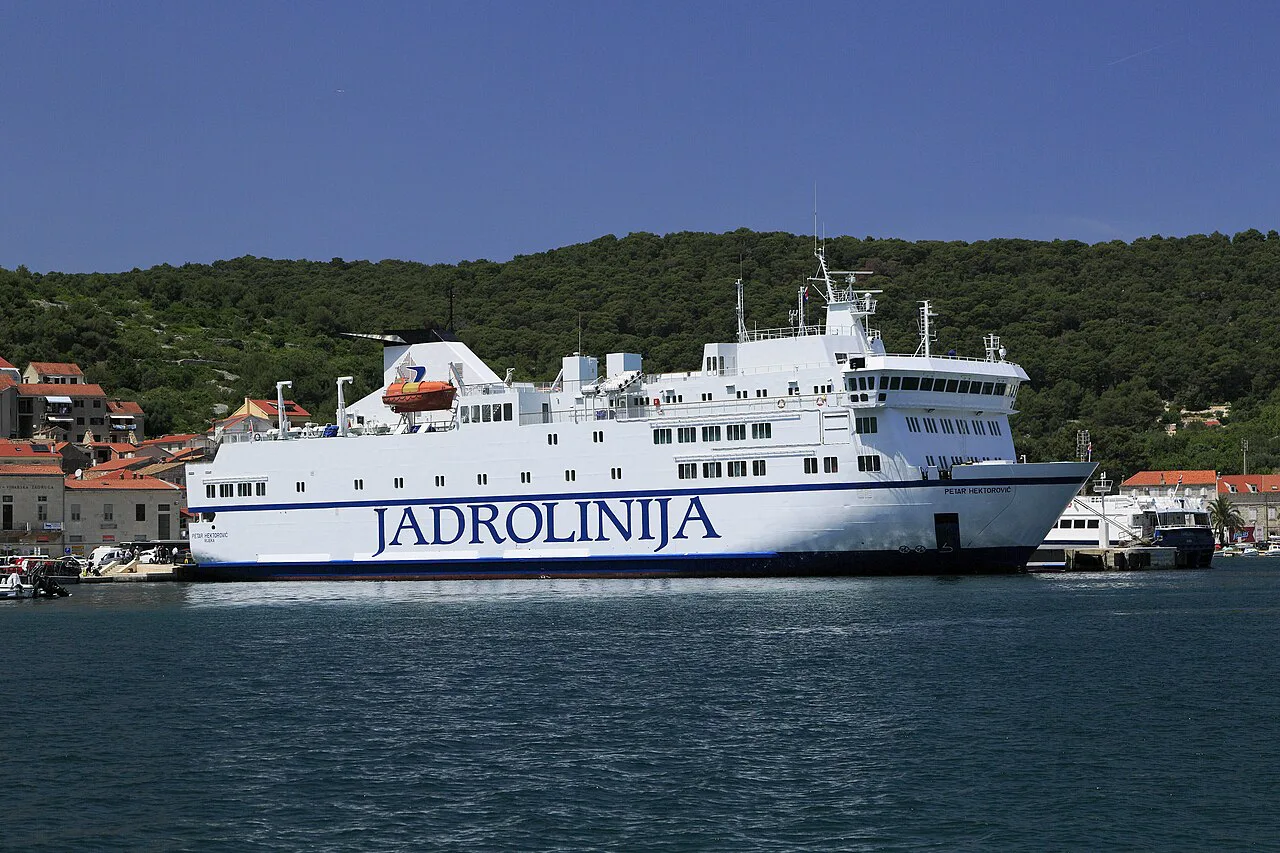
Do not expect emptiness on arrival day. The ferry disgorges its car deck into the street in one surge, with foot passengers threading between vehicles toward the Riva, and for twenty minutes the harbour front feels busier than the town behind it. That crowd disperses quickly once the cars head up the island roads. The town itself stays low-key, especially once the last afternoon boat has gone.
The layout: Luka around the ferry pier and Kut along the western harbour
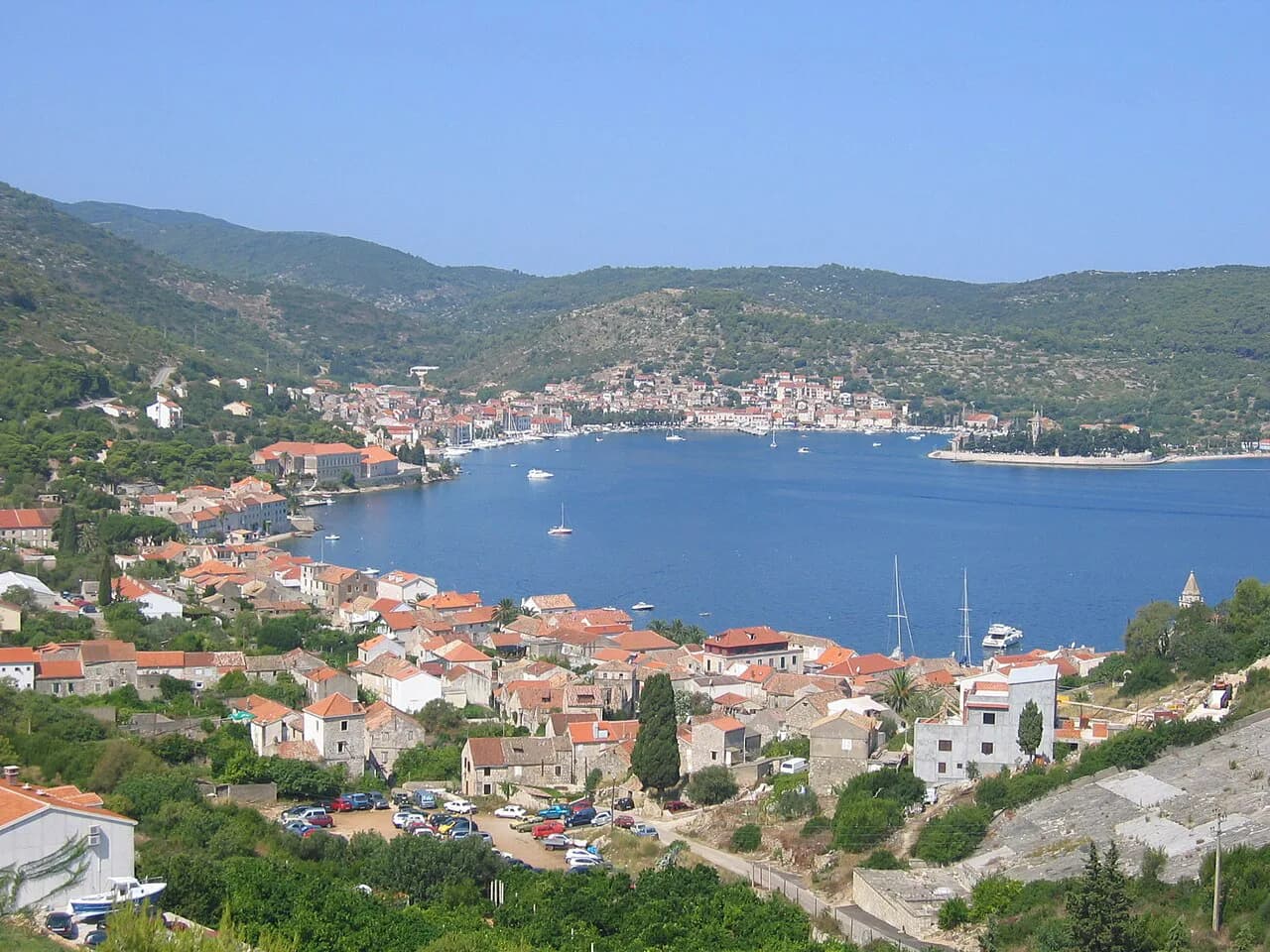
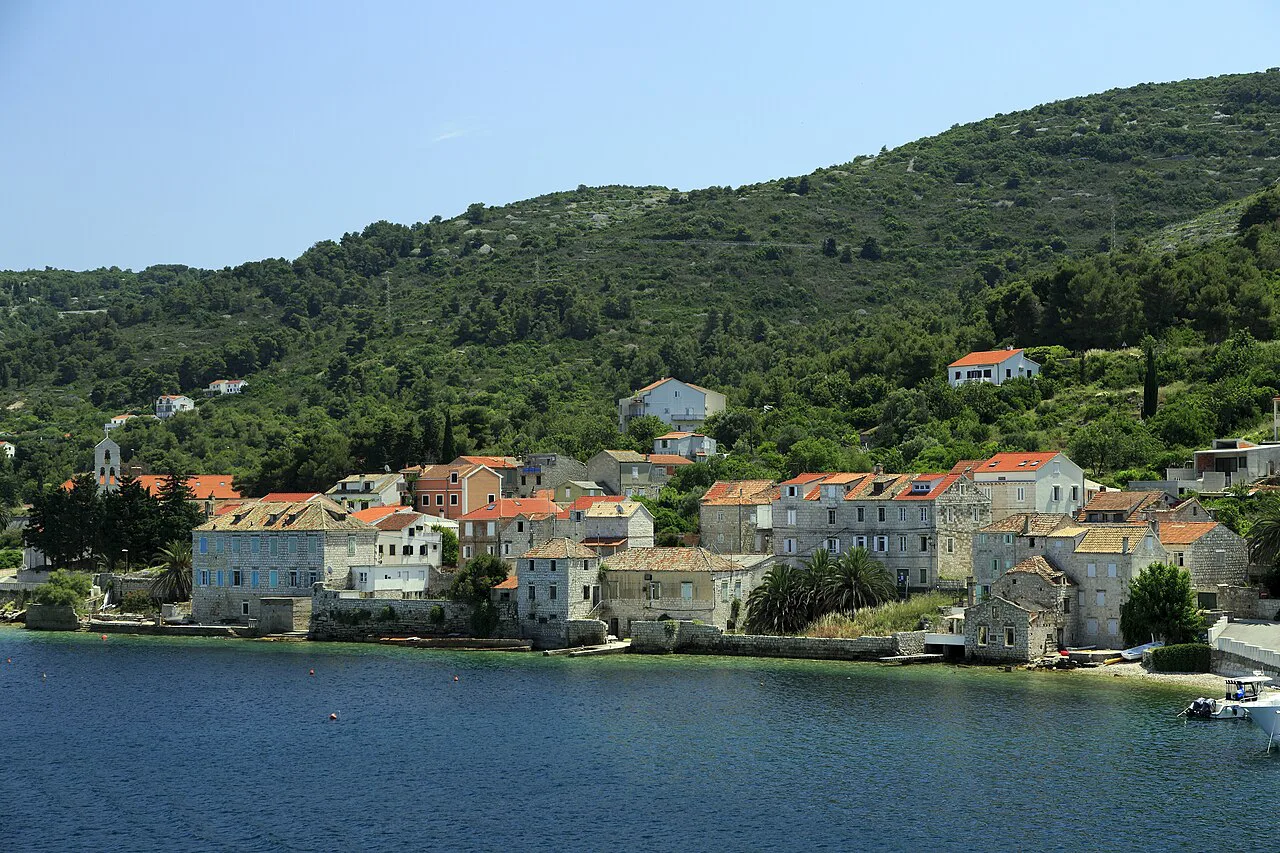
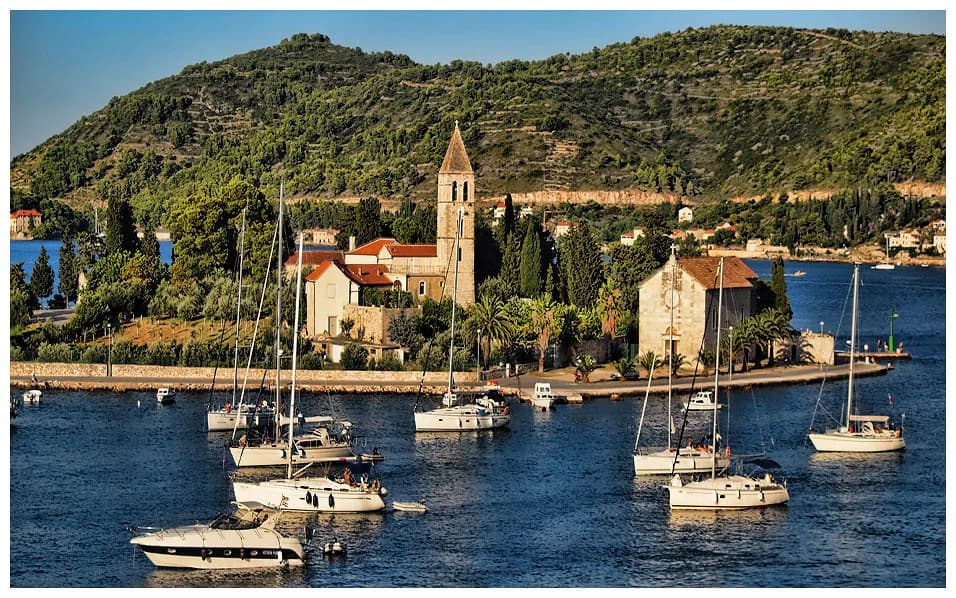
Vis Town curves around a deep, sheltered harbour, and the two quarters sit at opposite ends of the same waterfront. Luka is the eastern side around the ferry pier, where the main square, the bigger stone palaces and most of the cafés cluster. Kut lies further west along the harbour, quieter and more residential, with a cluster of old houses and a handful of places to eat.
Knowing which quarter you are walking through matters more here than in most Croatian towns, because the two feel different within a few minutes of each other. If you are booking a room, the address tells you whether you wake to ferry announcements or to church bells and the bakery. The town is compact enough that either side puts you within a short stroll of the other. Use the Vis Island guide to see how the town fits the rest of the island.
A short walk through the old centre
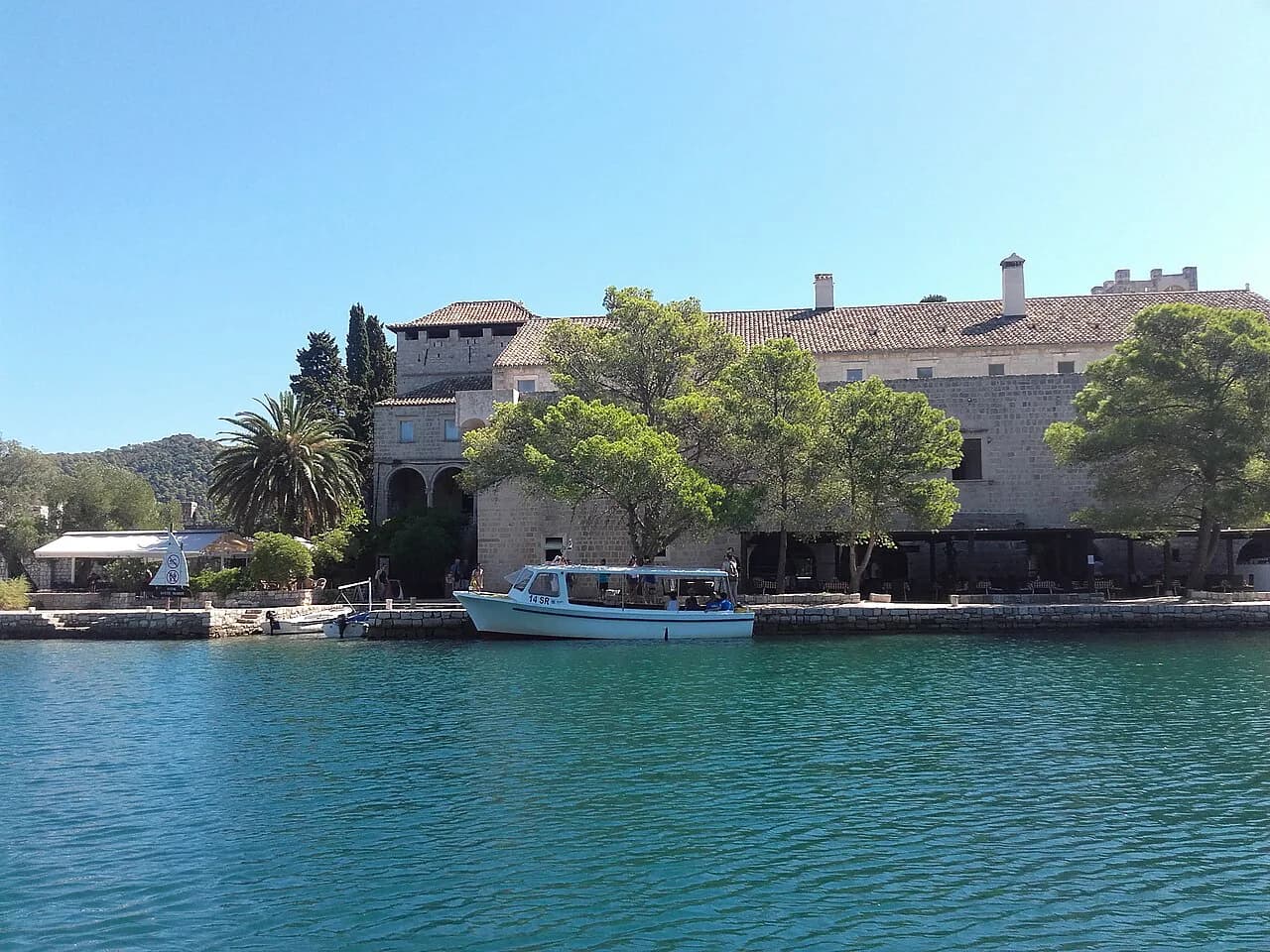
Start at the ferry pier and walk west along the Riva, the waterfront promenade, with the boats on your right and the town's facades on your left. The main part of town by the pier is lined with 17th- and 18th-century palaces, their stone balconies and arched windows facing the water, with tall palms standing in the open squares behind. Cafés spill out along the front, busy with locals as much as visitors.
Behind the waterfront, narrow lanes climb between stone houses into small squares and pocket boutiques, and this is where the day-trippers drift once they have left the pier. Allow an hour to wander without a plan, then follow the harbour west into Kut, where the lanes narrow and the pace drops again. The whole circuit is short enough to repeat in the evening, when the light on the stone is at its best.
The Greek colony of Issa and the layers beneath the town
Vis Town is one of the oldest settlements in Croatia. A Greek colony from Sicily, Issa, was founded here around 400 BCE, and the name eventually became Vis. Settlement and trade on the site go back further still, with archaeological traces predating the Greek arrival.
Later empires left their own marks. The town passed through Venetian, Austro-Hungarian and British hands before the Yugoslav period, which is why the architecture reads as a mix rather than a single style. For a sense of how the island was used in the 20th century, Tito's Cave on Vis is the region's other essential stop and sits up in the hills above the town.
The morning market and the rhythm of the day
Early morning is the best time to see the harbour working. Market stalls along the waterfront set up at sunrise, selling produce to locals, yacht crews and anyone else moored in town, and the smell of baking bread drifts through the lanes behind. This is the hour to walk the Riva before the heat builds and the boats start arriving.
By mid-morning the narrow streets fill with visitors from the day boats, browsing the boutiques and squares, and by late afternoon they thin again. Plan your walking for the early or late hours and use the middle of the day for the water or a museum. The town's evening is its own reward: the Riva settles into a slow promenade, and the harbour lights come on.
How long to stay: a night for the town, four for the island
One night is enough to see Vis Town properly: the old centre, both quarters, the Riva and a slow evening. If you want to see the island, allow longer. Four nights gives a relaxed pace with time in the town itself and enough left over to reach the island's other corners, and a car makes that far easier than relying on the bus.
The trade-off is real. A short stay means you see the town and little else, because the island's bays and caves are best reached by boat and eat into a day. Basing yourself in Vis Town works well for exploring, and trips by boat to the Blue Cave Croatia on the neighbouring islet of Biševo are the obvious day out from the harbour.
When to go: late September and the end of the season
Late September is one of the best windows on the Dalmatian coast: the sea has had a summer to warm up, the crowds thin and the light stays generous. Vis Town in particular feels like itself again once the peak-season boats stop running in such numbers, with space on the Riva and a table easy to find.
Shoulder-season travel has a cost, though. Some boat trips and seasonal places wind down as autumn sets in, so plan around what is running rather than expecting a high-season schedule. The bura, the cold northerly wind, can arrive without much warning and shut down small-boat crossings, so check with the boat company before committing to a boat day.
Getting there: the ferry from Split
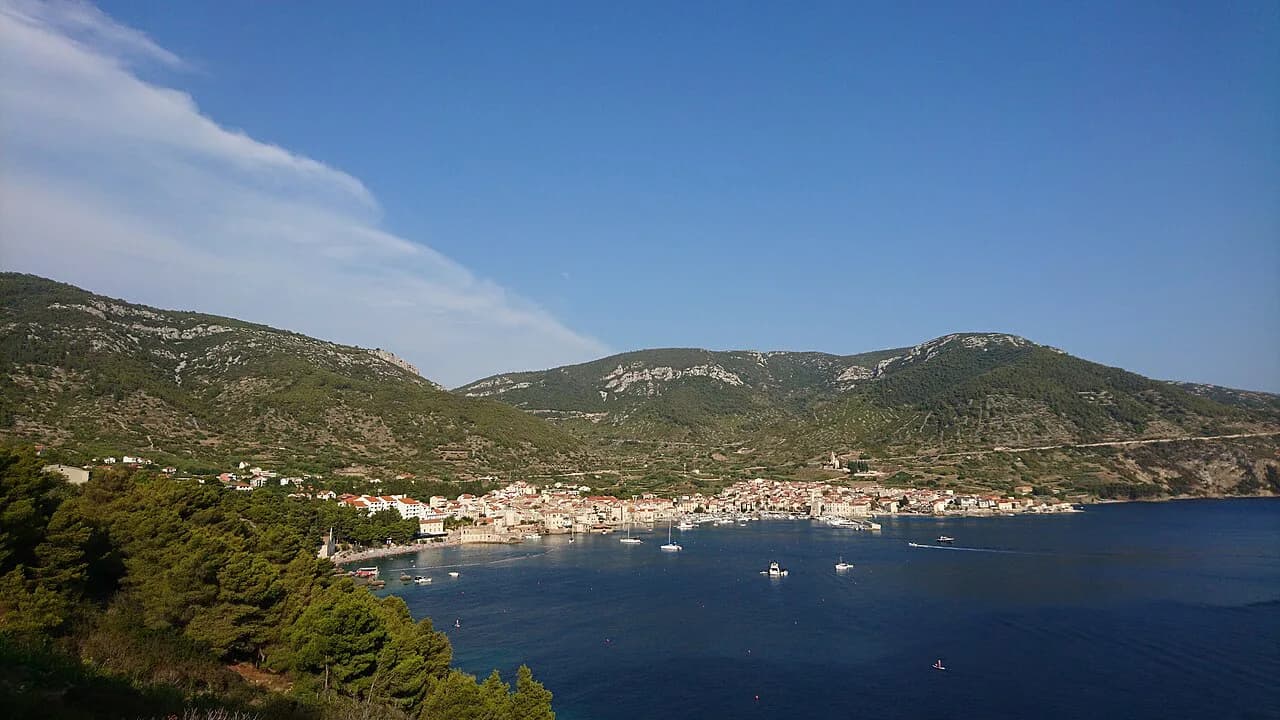
Vis is reached by ferry from Split, a crossing of a couple of hours on the open deck, with the red roofs of the town and the mountains behind coming into view on the approach. In summer, particularly with a car, sort out the crossing early: the vehicle deck is the part most likely to be full.
Schedules change with the season, so confirm departure times and the latest ticket rules with the ferry company before you travel. Fares and timetables are published by the ferry company, not fixed by the town.
Vis Town or Komiža as a base
Vis Town is the better base for a first visit. It has the ferry pier, the larger old centre and the most choice of an evening, and it puts you on the road to the rest of the island. Komiža, on the far western side, is smaller and more of a fishing town, quieter still, and closer to the boat trips out to Biševo. See the Komiža guide for its old fishing-town character.
The two are only about a 20-minute drive apart, so a split stay is easy if you have a car. Without one, pick the town that matches your plans: Vis Town for the ferry and the old centre, Komiža for the boats and the western coast. Either way, do not try to see both properly in a single day.
Where Vis Town fits in a longer Croatian coast trip
Vis Town slots neatly into a Dalmatian itinerary between Split and Hvar or Korčula, and the ferry makes the connection without a car. Two or three nights here breaks up a coast trip and gives you a genuinely different pace from the mainland. If your time is tight, one night plus a boat trip is a fair compromise.
The sheltered harbour helps here, and the town makes a sensible base for a day on the water. From the harbour, boat trips reach the quieter bays along the island's coast. Build the boat day into your plan before you book the ferry back.
Is one night in Vis Town enough?
For the town itself, yes: an afternoon and an evening on the Riva covers the old centre, both quarters and the harbour. Book four nights if you want the island as well, with a car and a boat day to reach the bays and caves. Otherwise, treat Vis Town as a calm overnight stop on a longer Dalmatian coast trip and enjoy the fact that it does not feel like Split or Hvar. Heading back to the mainland, the Split ferry brings you within reach of the rest of the coast; plan onward travel with the Vis Island guide.
Sources
Notes from the Croatian coast
Optional updates when our guides change.
You might also like
Continue reading
More guides you'll find useful