Komiža, Vis: Where to Stay, Eat and Explore the Old Town
Komiža on Vis is a small harbour town shaped by fishing, with a Venetian past and boats out to Biševo. Here is how to walk it and how long to allow.
On this page
Komiža needs roughly half a day, and it is the western of Vis's two towns rather than the one the ferry reaches. The Jadrolinija car ferry from Split docks at Vis town in the centre of the island, so Komiža sits across the island and is reached by road or bus rather than on arrival. This guide covers the harbour, the old stone core, the town's defences, its fishing history, the viewpoints and the option of a boat trip towards Biševo.
Treat Komiža as a working harbour town first and a swimming stop second. Its identity comes from fishing: the catch paid for churches, defensive towers and large stone houses, and the harbour still gives the place its shape. That makes the walk here a matter of lanes and waterfront rather than beach-hopping.
What Komiža is and where it sits on Vis
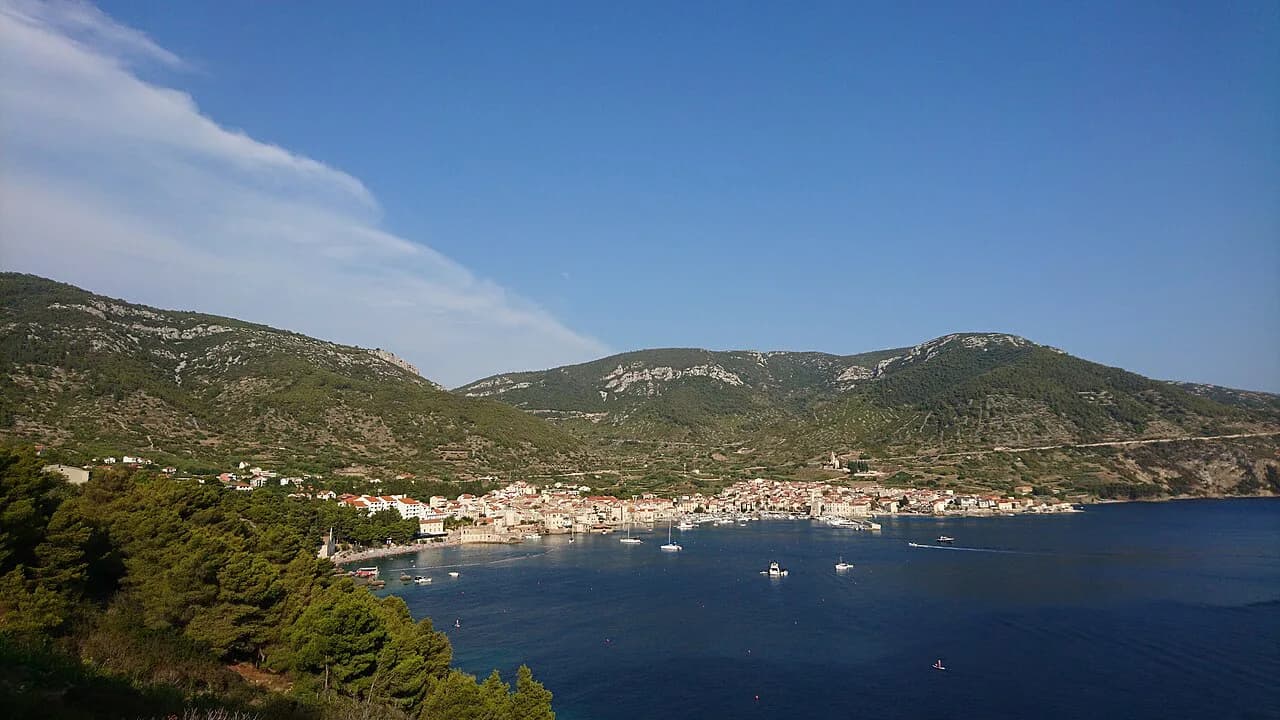
Komiža is a small town with a harbour on the west coast of Vis, part of Split-Dalmatia County. Its name probably comes from the phrase Com Issa, meaning next to Issa, a reference to the Greek city-state founded at today's Vis town. It is a younger settlement than Vis town, and the oldest written record of it dates to 1145.
The distance between the two towns is the single most useful thing to understand before you plan a day. Ferries arrive at Vis town, so anyone staying in Komiža still lands on the other side of the island. Budget for the transfer and check the bus and taxi options for your arrival time rather than assuming a harbour-side landing.
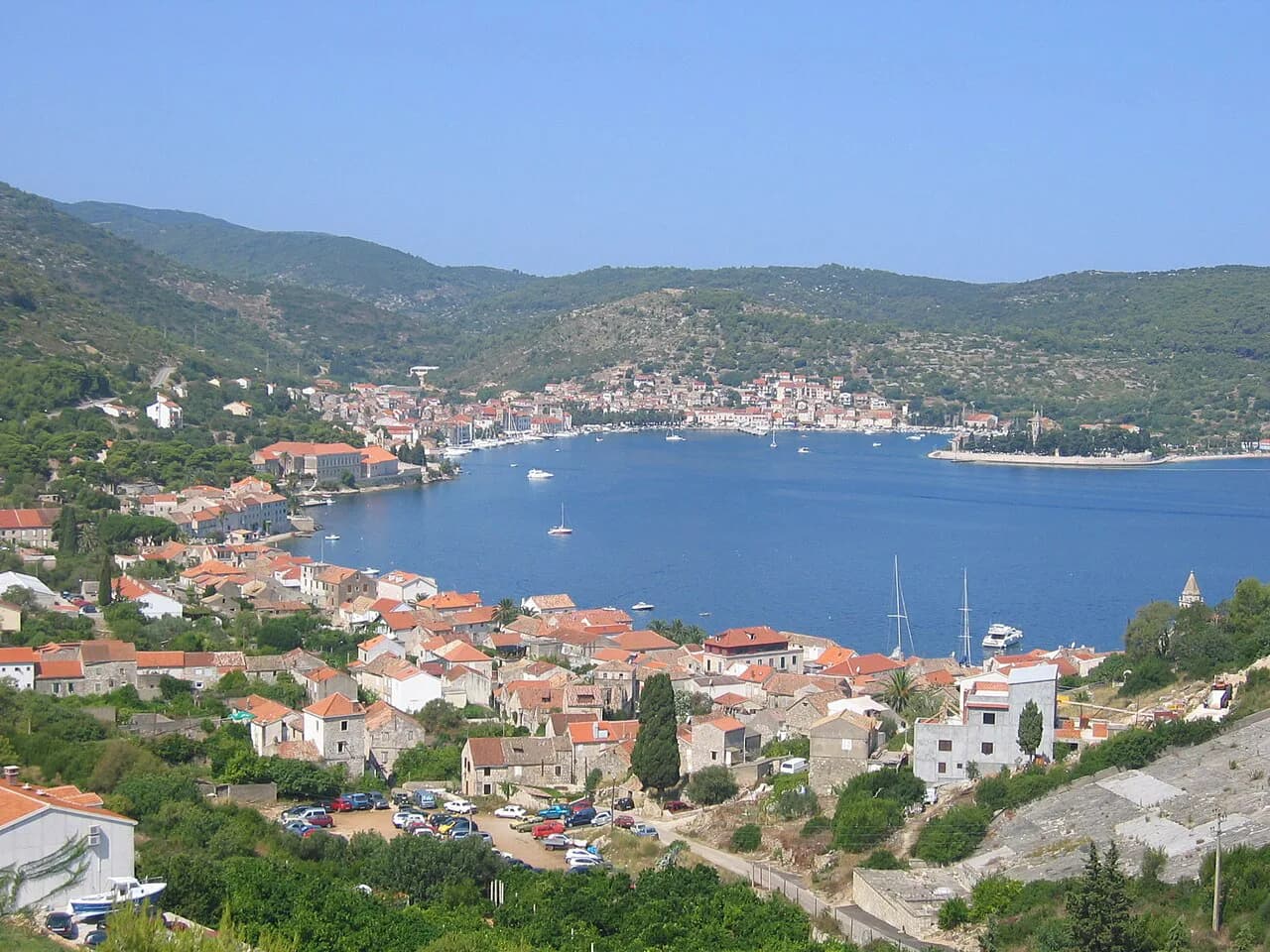
The contrast between the two settlements is part of the appeal. Vis town faces the mainland and shelters in the bay of Saint George, while Komiža turns towards the open Adriatic on the island's western edge. Seeing both is the reason to give the island more than a single day.
The layout: harbour, Riva and the old stone core
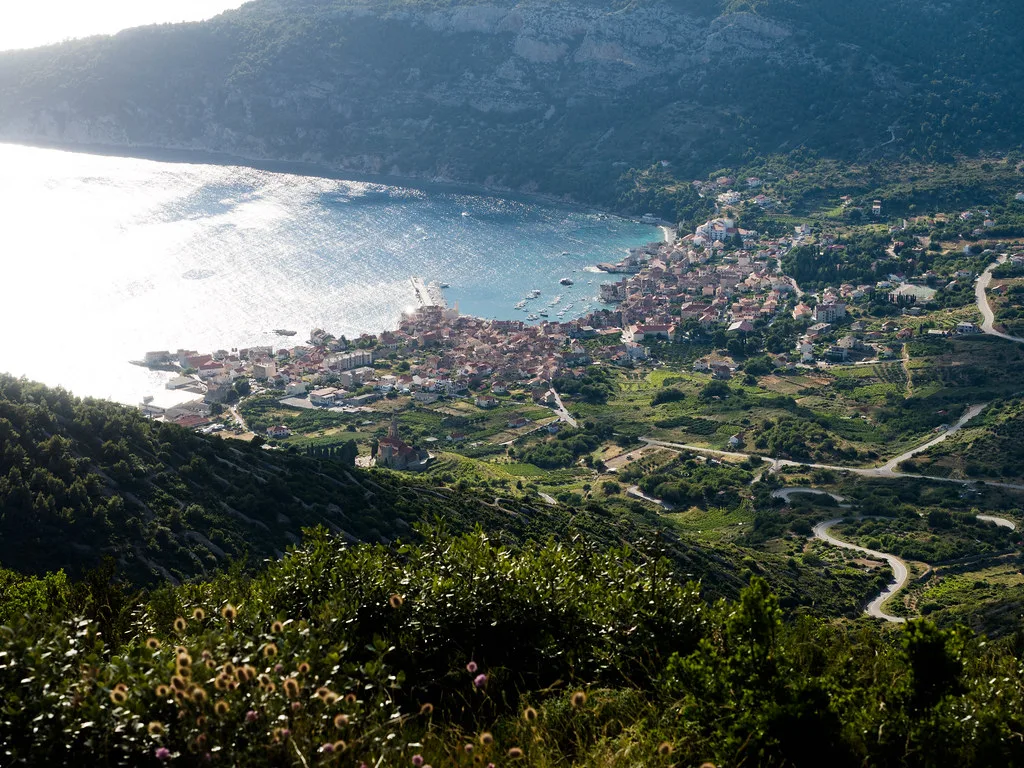
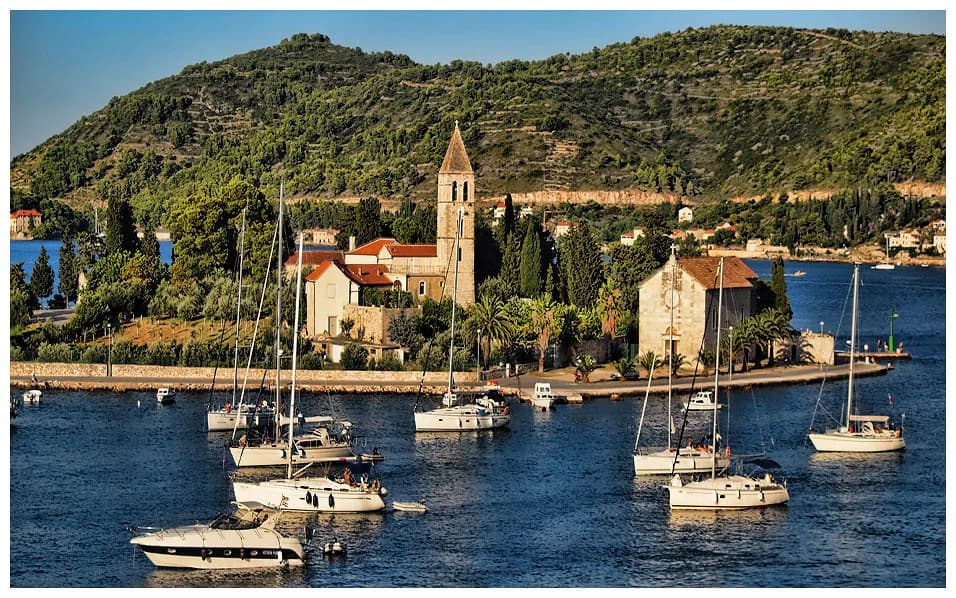
Komiža wraps around its harbour, and the waterfront is the natural place to start: a promenade where the boats are tied up and the town presents itself. From there the lanes climb gently into the old core, where the stone houses that fishing paid for stand close together. The town is compact enough to cover on foot without a plan, but a rough loop of harbour, lanes and back to the water keeps you from missing the core.
The 19th century left a visible mark on this layout. Under Austrian rule Komiža became an independent municipality and an important island centre, with a well-maintained port and several fish-processing factories, the best known being Fratelli Mardešić. That commercial past gives the stone town its scale more than any single monument.
Give the old core an hour of unhurried walking rather than treating it as a corridor to the boats. The pleasure is in the scale: narrow gaps between houses, sudden openings onto the sea, and the sense that the town was built by people who worked from the harbour.
The Venetian tower and the town's defences
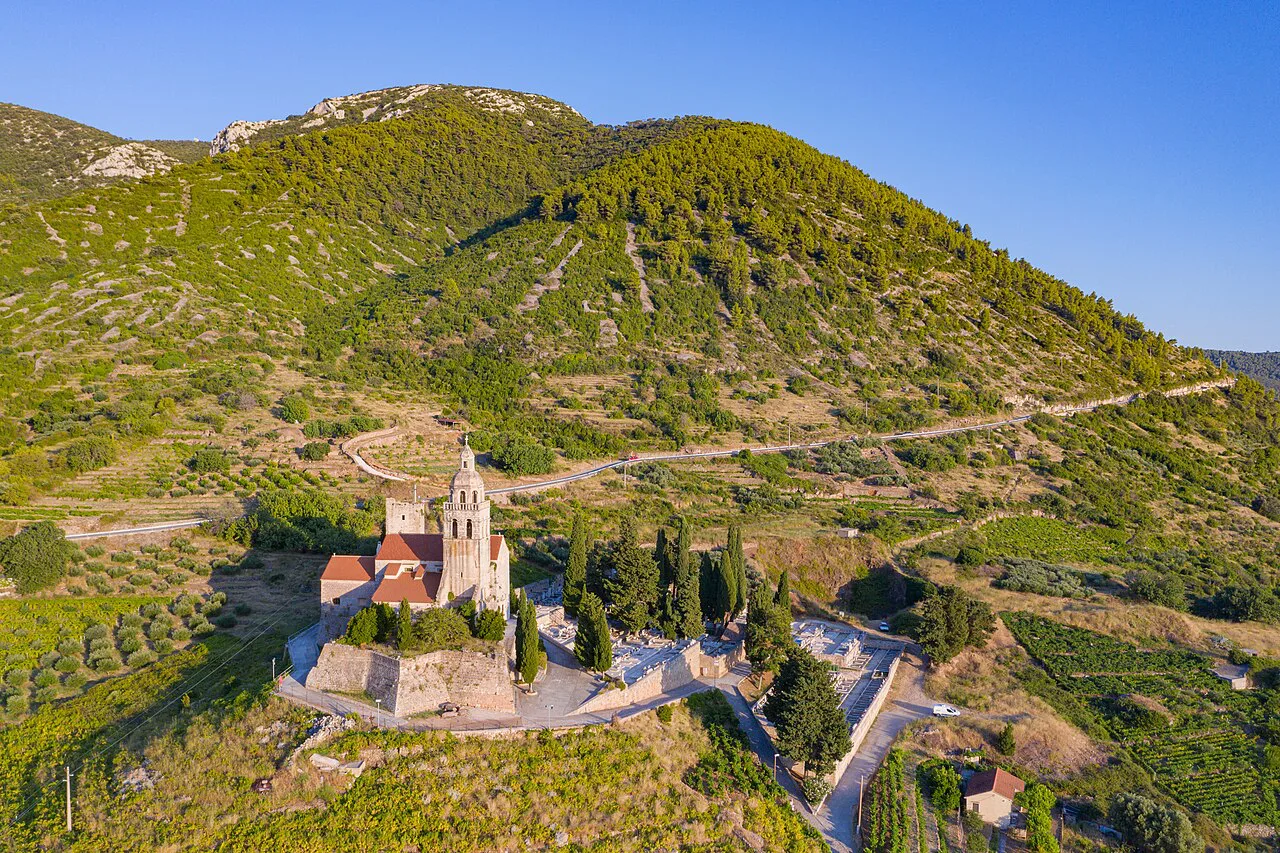
Komiža's defences belong to its Venetian period, when the town was part of the Hvar municipality and grew quickly on the back of fishing. The wealth from that trade funded churches, defensive towers and large stone houses, which is why the town's historic fabric feels richer than its size suggests.
Look for the old defensive towers as part of the walk rather than as a separate excursion; they belong to the lanes and the waterfront. Nothing about going inside them is fixed, so treat them as buildings to see from the street and check locally at the tourist office before building a visit around an interior.
The fishing museum and Komiža's fishing past
Komiža's fishing history is the thread that ties the town together, and it runs from prosperity to exodus. At the start of the 20th century the town had almost 4,000 inhabitants, but after the First World War the rich fishing grounds around Palagruža fell under Italian rule, which hit local fishermen hard and sent many to California to continue the trade.
Later, after the Second World War, the island was declared a military zone, tourism and economic life stalled, and Komiža lost its municipal status and its ferry link with Split. The town only regained its municipality in 1993 and became a city in 1997. Reading the fishing museum with that arc in mind makes the exhibits about boats and nets feel less nostalgic and more like recent history.
The town's tourism pages are the place to confirm whether its fishing museum is open on your day before you go. If it is closed, the harbour and the older houses still carry the same story.
Churches and stone houses in the old centre
Churches are scattered through Komiža and the wider island, among them St Cyprian and Justina, St Jerome, St Mary, St Nicholas and St Sylvester. They are part of the fabric of the lanes rather than a single sight to tick off, so treat them as landmarks that help you navigate the old centre.
The large stone houses around them are the clearest evidence of the town's fishing wealth. Walk slowly enough to notice doorways, balconies and the way buildings turn their backs on the wind while opening to the sun. This is architecture made for work and weather, not display.
Elsewhere on the island the same story continues in other layers, from forts to the archaeological collection in the Austrian fortress Batarija at Vis town, where the bronze head of the goddess Artemis is kept. That collection is worth pairing with Komiža if you are giving Vis two days.
Views over the harbour and out to the open sea
The town seen from above is the easy highlight of a Komiža day. Short climbs out of the old core open views back over the harbour and the boats, with the open Adriatic beyond.
Because Komiža faces west, the harbour is a natural place to end the day. Keep any viewpoint walk short and flexible so it fits around boat departures and the heat of midday.
Boats from Komiža to the Blue Cave and Biševo
Komiža gives you the island's western base for a boat trip towards Biševo and the Blue Cave, which is one of the reasons the town matters to visitors who are not staying there. Trips of this kind run in the summer season, so confirm the departure harbour, what each operator includes, how long you are actually in the cave and whether the trip continues around the island before you commit a day.
Sea conditions decide whether a crossing happens, so keep your boat day flexible and avoid scheduling it against a fixed onward ferry. Fares and departure times vary, so confirm them with the boat operator at the harbour.
If you have a car or a spare day, Tito's cave Vis and the island's military tunnels sit in the same landscape of hidden coastal history. They work well as a second-day option once Komiža itself has had its half day.
How long Komiža needs and how it fits a Vis trip
Half a day covers the harbour, the old lanes, the old defensive towers and the town's fishing history at an easy pace. Add a couple of hours if you want a boat towards Biševo, and a full day if you plan to combine Komiža with Vis town and the island's interior. Two nights on Vis lets you see one town properly and the other without rushing.
The common mistake is to treat Komiža as a quick photo stop between ferry and beach. The town rewards the slower version, and the harbour means you can combine sightseeing with a trip out to the caves without doubling back.
Getting to Vis and on to Komiža
The car ferry from Split to Vis takes about two and a half hours and docks in the port at the very centre of Vis town, the island's largest settlement. From there, Komiža is reached by road across the island. Check the sailing you intend to take before booking the rest of the day, as schedules can vary by season.
Treat arrivals on Vis as modest in scale and plan ground transport across to Komiža in advance rather than expecting to improvise at the quay. The town is the island's second settlement, reached by road from where the ferry lands.
When to go: crowds, season and the bura
Summer is when Vis is at its liveliest, while late spring and early autumn give you the old centre with more room to move, at the cost of a quieter boat schedule and some seasonal closures.
Boat trips and crossings are weather-dependent, so build a spare day into a Vis itinerary rather than committing to a fixed boat date on a tight schedule.
Is Komiža worth half a day of your Vis trip?
Yes, if you want the island's working history rather than only its swimming. Komiža gives you a harbour, stone lanes, old defensive towers and a fishing history in a compact area, and it puts you on the island's western side for a Biševo boat. The trade-off is the transfer from Vis town, which you should factor into the day.
Pair Komiža with Vis town for the fuller picture of the island, and keep one day loose for the boat and the weather. Confirm museum hours and boat departures with the town's tourist office and the harbour operators when you arrive.
Sources
Notes from the Croatian coast
Optional updates when our guides change.
You might also like
Continue reading
More guides you'll find useful