Tito's Cave on Vis: Wartime Hideout Above Komiža
Tito's Cave above Komiža on Vis is a wartime hideout reached by a steep climb from Borovik. Here's what the cave is and how to fit it into a morning.
On this page
Tito's Cave is a cave on the slope above Borovik on Vis, on the way up toward Mt Hum above Komiža. It is a wartime-associated site rather than a show cave, and the walk up is the part that decides whether it suits your day. This guide covers what the cave is, where it sits, and how to pair it with Hum and Komiža.
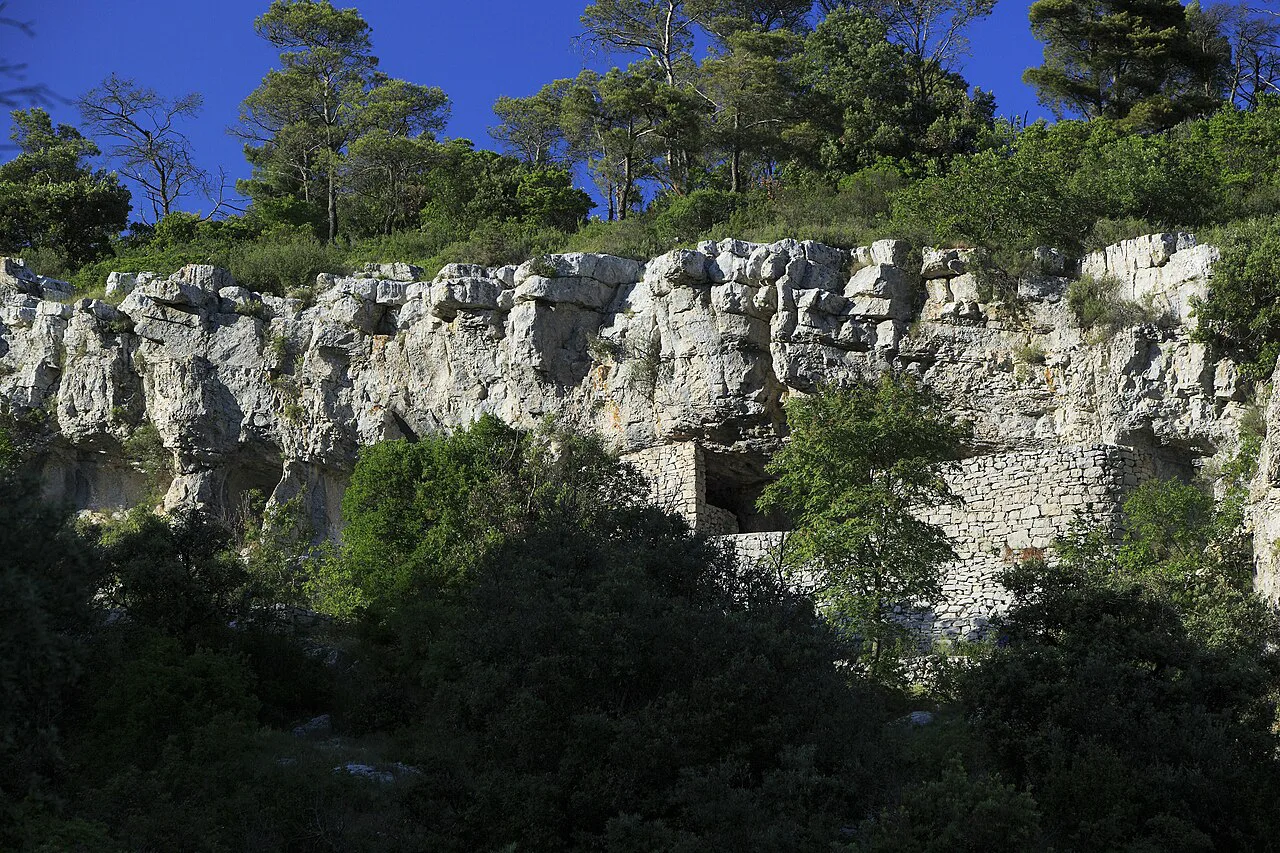
Above Borovik, on the way up toward Hum, several caves open in the hillside, and the one named after Josip Broz Tito is the best known of them. It was formerly called the Ghost Cave, and the wartime association is what gives it its present name.
What Tito's Cave is
Above Borovik, on the way up toward Hum, several caves open in the hillside, and the one named after Josip Broz Tito is the best known of them. The Dalmatia tourist board records its older name, the Ghost Cave, and that it takes its present name from Tito. That older name is worth knowing, because signs and older maps may still use it.
Two entirely different places share this name: the cave above Borovik on Vis, and a cave of the same name at Drvar in Bosnia and Herzegovina. The Drvar site is inland, in a different country, and has its own visitor arrangements and entry charge. If a listing quotes an entry price or facilities that do not fit a bare hillside cave on an Adriatic island, you are almost certainly looking at Drvar, not Vis.
Treat the cave as a landscape feature with a story rather than an attraction with facilities. The Dalmatia tourist board lists it as one of several caves on the Hum road rather than a managed site, so plan for a short time on site and a longer approach, and wear shoes with grip.
Where it sits on Vis
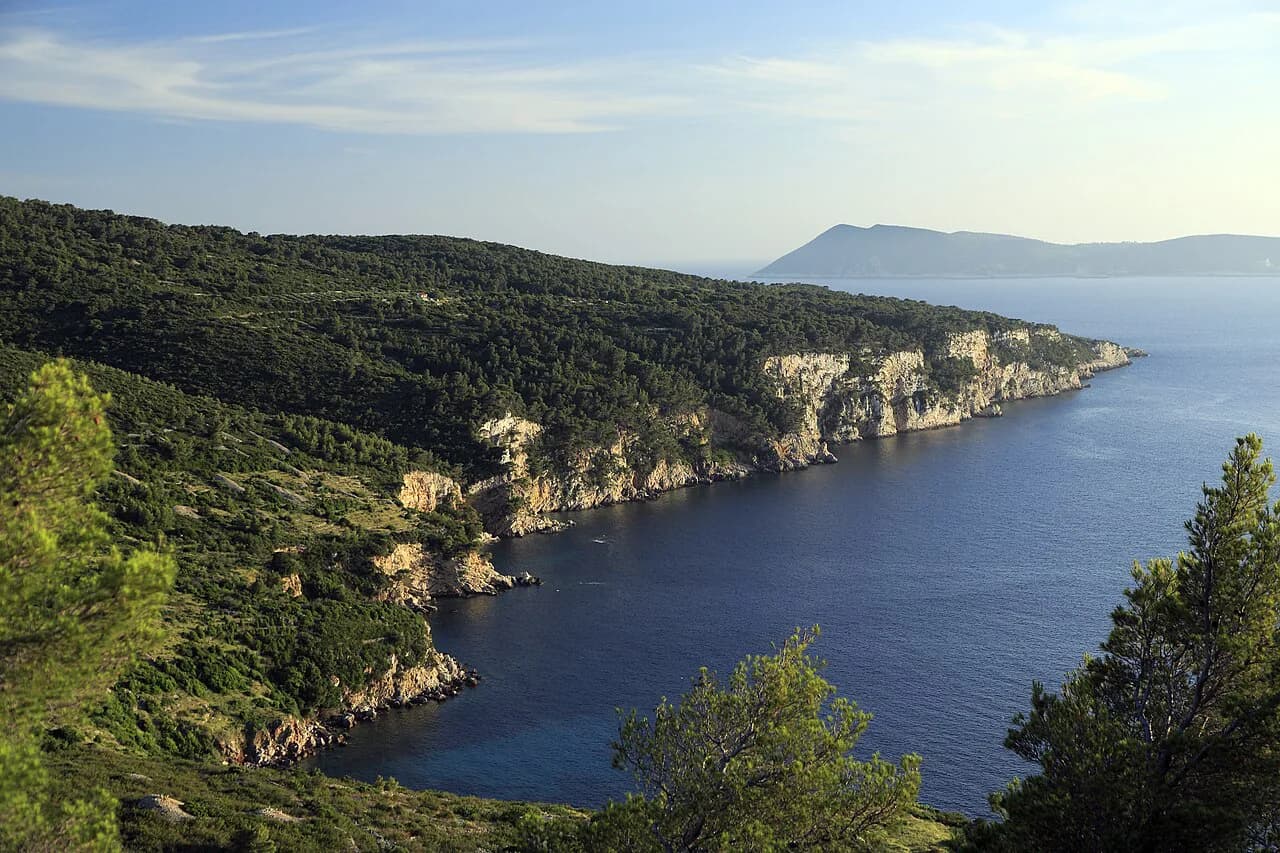
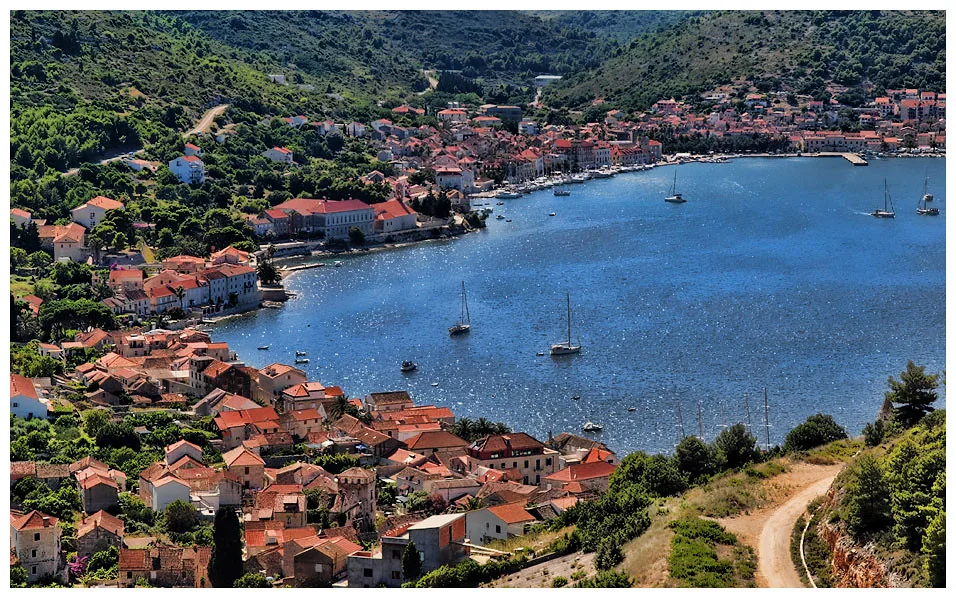
The cave lies on the western side of Vis, on the slope above Borovik, on the way up toward the island's highest peak, Mt Hum. Hum rises to 587 metres above sea level and looks down over Komiža and out toward Biševo, the small island that holds the Blue Cave.
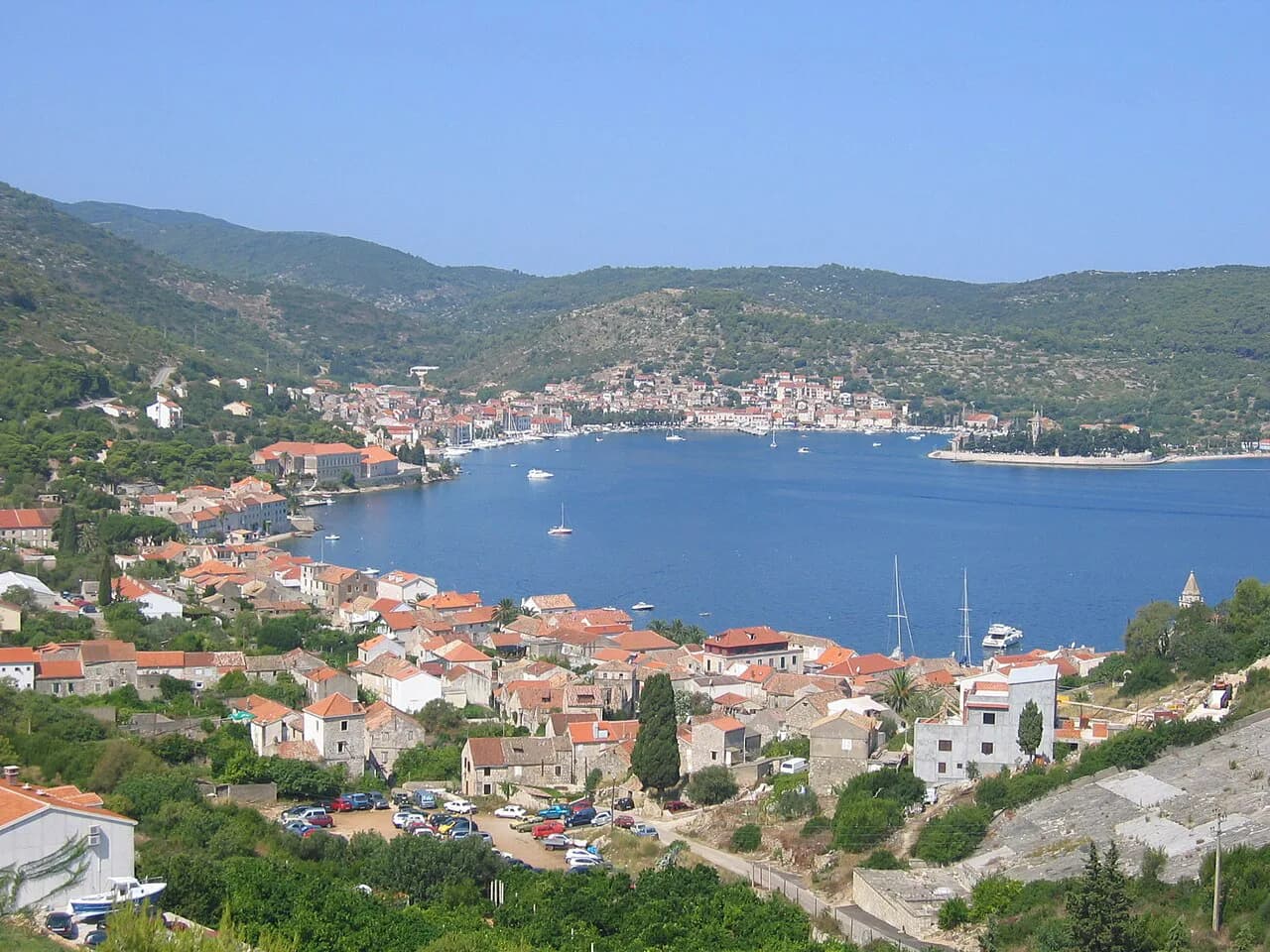
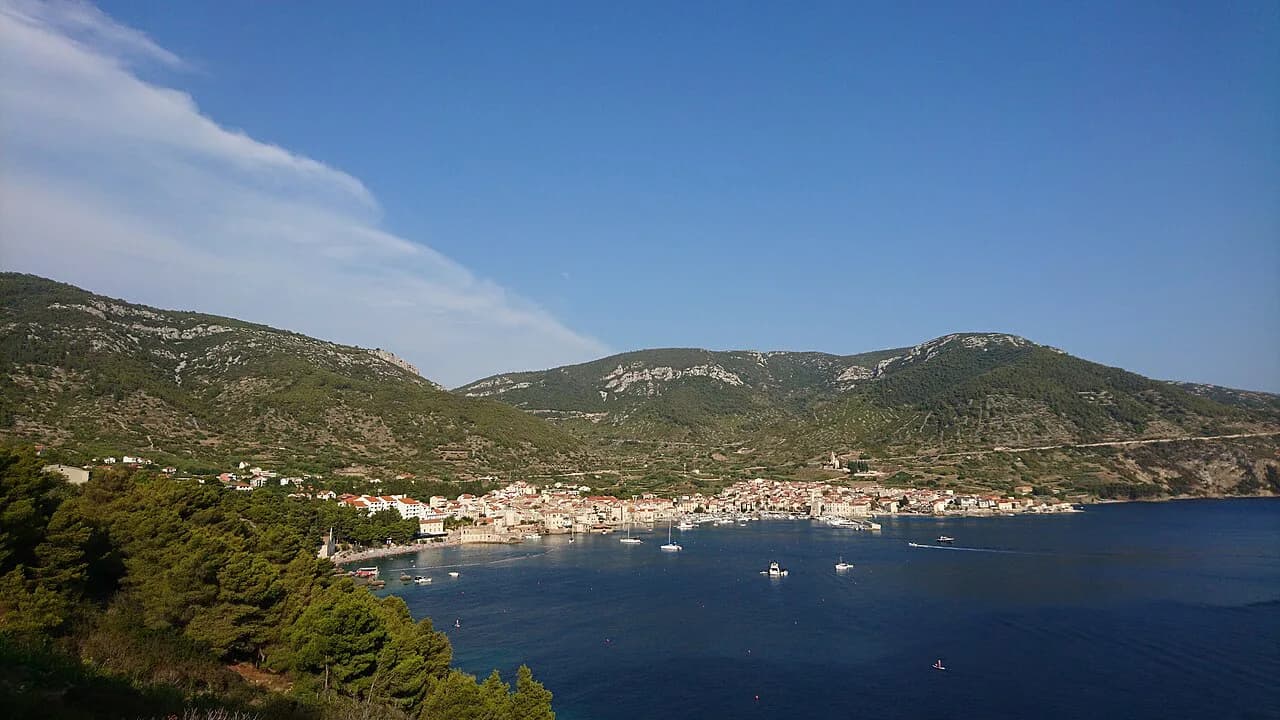
Komiža is the natural base for the climb: it is the island's second town, a fishing harbour with narrow stone streets, and it sits directly below the mountain. The cave fits neatly into a Komiža morning, before the heat builds and before the harbour fills up. If you are working out how the island's two towns divide up, our Vis Island Guide covers the geography from end to end.
Vis town, where the ferry from Split docks, is on the other side of the island. Ferries take about two and a half hours from Split and land in the centre of Vis town, so travellers arriving on a day trip need to factor in the crossing to Komiža before they even start walking.
Getting there on foot
The cave sits above Borovik, the point where the road climbs the mountainside toward Hum. The final approach is on foot up a rough hillside, so walking shoes or trainers with tread matter more than any other kit here.
Budget generously for the walk up from the Borovik road, and more if you continue to the Hum summit. Go early in the day for cooler conditions, and carry water and a hat. Anyone with knee trouble should take the descent slowly, since loose stone makes the way down trickier than the way up.
A car makes the logistics simpler: you can drive up to Borovik, walk to the cave, and then continue by road to Komiža or on toward Hum. Without a car, arrange your transport from Komiža in advance rather than relying on frequent services.
What you see at the site
What you find is a modest cave set into the exposed slope, rather than an interpreted or staffed attraction. The pleasure of the visit is the setting and the quiet, so go with the expectation of a rough hillside stop and let the views on the climb do the rest. Bring a torch if you plan to look into the darker recesses.
Because there are several caves in this stretch of hillside, it helps to know you are at the right one: the cave above Borovik on the Hum road is the one named for Tito and formerly called the Ghost Cave. The wider island is full of wartime remains, from underground tunnels and bunkers to the old airstrip, and the Life and Ventures guide to Vis describes that broader military landscape across the island.
The wartime story in brief
Vis spent much of the twentieth century as a military base, which is why its coastline escaped the development that reshaped Hvar and Brač. During the Second World War the island served as an Allied base, and its tunnels, bunkers and airstrip date from that period. The cave above Borovik sits within that wartime landscape, and its association with Tito is what gives it its name.
The Dalmatia tourist board entry names the cave after Josip Broz Tito and records the Ghost Cave as its older title, which is the firmest detail to rely on. Beyond the name and its wartime-era associations, the cave is best understood as one stop in a much larger story told across the island, rather than a site with displays of its own.
Pairing it with Mt Hum and Komiža
A realistic half-day runs like this: start early from Komiža, drive or arrange a lift up to Borovik, walk to the cave, then continue to the Hum summit for the view over the town and Biševo. Come back down for a late lunch in Komiža, where the harbour and the stone lanes are the reward. Adding a boat trip to the Blue Cave on the same morning is where the plan starts to creak.
Komiža itself deserves an unhurried hour: it is an old fishing town, and the waterfront and back streets are the point. The Blue Cave Croatia sits on Biševo just offshore, and boats run from Komiža and Vis town in season, which makes a separate half-day. The visitor centre explains how the cave visit works and why boats time their arrivals around the light.
When to go
The climb is hot and shadeless from late morning through the afternoon in summer, so an early start is the practical choice rather than a purist one. Spring and autumn are kinder on the legs, and the island is quieter then too. Vis sits far enough from the mainland that the bura, the cold north-easterly wind, can make the exposed slope uncomfortable, so a windproof layer earns its place even on a warm day.
Mornings also mean better light for the view back over Borovik and Komiža, and fewer people on the path. In high summer, aim to be at the cave before the day's heat settles, and keep the Hum summit as an optional extra if energy and time allow. A short visit done comfortably beats a long one done in the midday sun.
What to check before you go
The cave is not a managed attraction with published hours or a ticket desk, so plan it as a walk to a wartime-named feature rather than a booked visit. The Drvar cave in Bosnia and Herzegovina is a separate site with the same name and has its own admission charge, and prices quoted for it do not apply to this cave on Vis.
Before setting out, ask at the Komiža tourist office or your accommodation about the state of the path and any current arrangements at the site. Check the latest Jadrolinija ferry times for your return crossing, since timetables change with the season.
Is Tito's Cave worth the climb?
Yes, if you are already spending time in Komiža and want the walk, the view and a piece of the island's wartime story in one outing. No, if you are expecting a staffed attraction or a quick stop from the car: expect a rough path to a modest cave. Plan it as a morning on foot.
Build the day around Komiža, start early, take water and proper shoes, and treat Hum and the cave as one route rather than two. Then use the afternoon for the harbour or a separate boat trip to Biševo. That is the version of the visit that works.
Sources
Notes from the Croatian coast
Optional updates when our guides change.
You might also like
Continue reading
More guides you'll find useful