Islands Near Šibenik: Zlarin, Prvić, Tijat and Kaprije
Which islands lie off Šibenik, what each one offers and how to combine them by boat, from car-free Zlarin to Kaprije and the Kornati approach.
On this page
The quickest answer for most travellers is the trio of Zlarin, Prvić and Tijat, which one Šibenik operator links in a single six-hour speedboat day from the Riva. That format suits anyone based in the city without a car, because the islands sit close to the mainland and the hops between them are short. This guide covers what each island actually offers ashore, how Kaprije and the outer islands differ, and when wind and summer crowds should change your plan.
The archipelago's advantage is distance: the run from Šibenik out to Žirje is comparable to the stretch between Split and the Splitska vrata, so you spend time ashore rather than under way. The catch is that the same proximity makes these islands busy in high summer, and the sheltered coves that sailing crews favour fill early. For a similar cluster within easy reach of a Dalmatian city, our guide to the islands near Zadar covers that alternative.
How the Šibenik archipelago is laid out
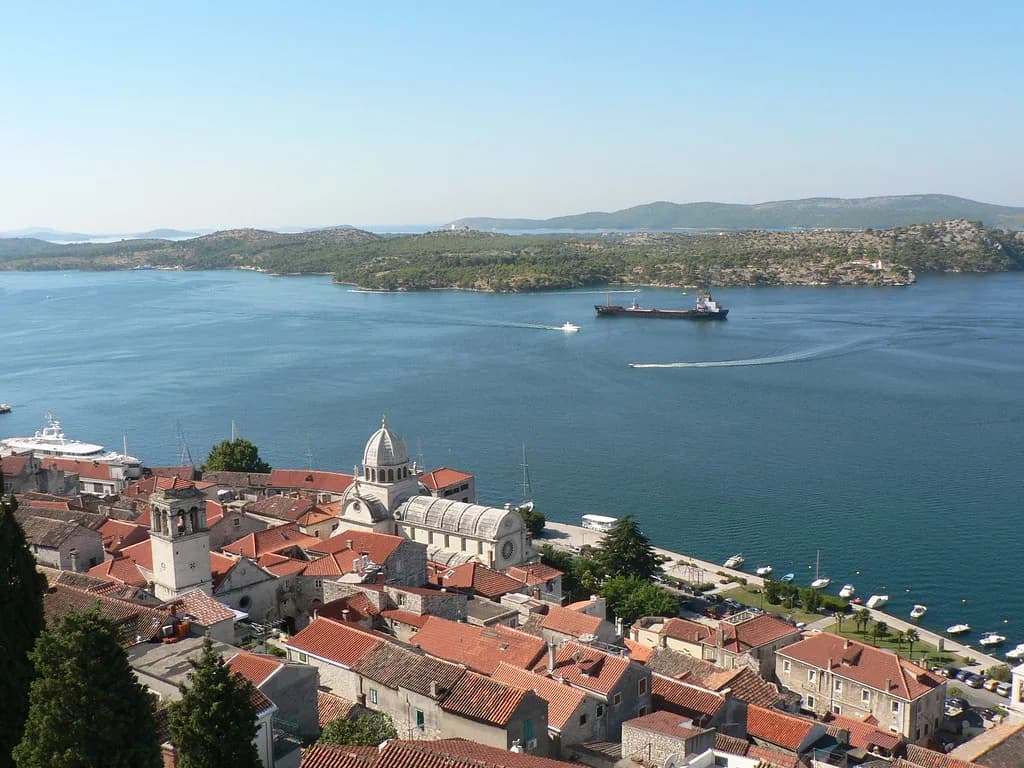
Leaving Šibenik, boats pass through the St. Ante channel past Jadrija before the islands open up. From there the choice splits quickly: Zlarin, Prvić and Tijat lie to the west and south-west, while Kaprije, Zmajan and Žirje sit further out toward the Kornati. Understanding that geography is the difference between a relaxed day and a rushed one.
The inner islands are small enough to walk in an afternoon, which is why they work as a combined day rather than separate excursions. The outer islands, Kaprije and Žirje, are where you go when you want a village to settle into or a base for reaching Kornati. Plan one direction rather than trying to cover both ends of the archipelago in a day.
Zlarin: car-free lanes and the Museum of Red Corals
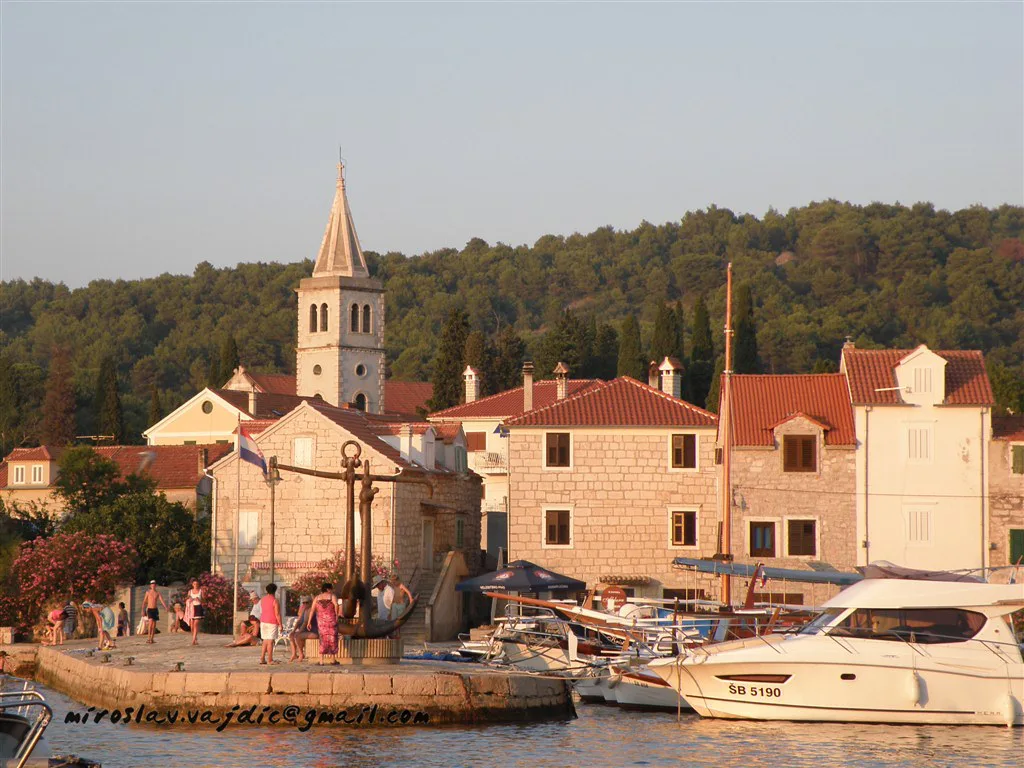
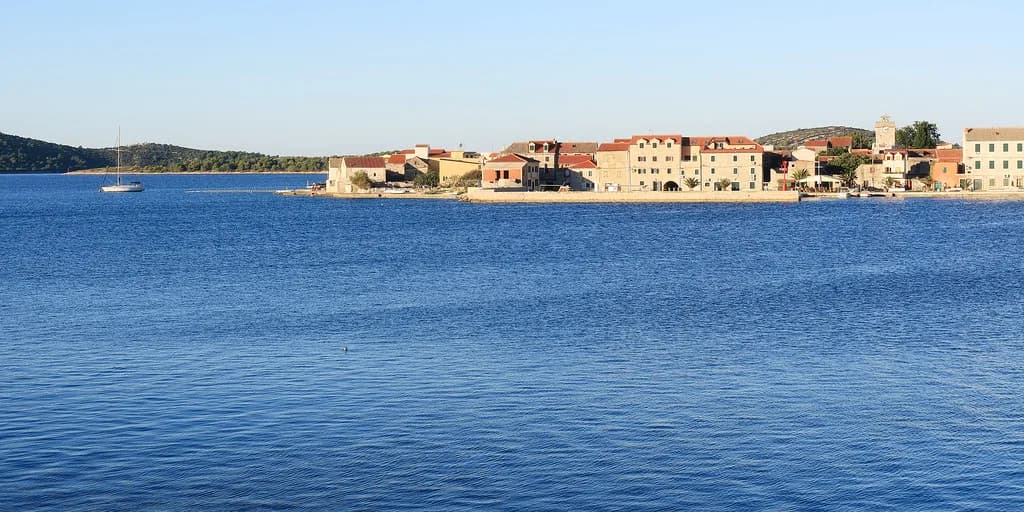
Zlarin is the island most people picture when they think of the Šibenik archipelago: a car-free village with a medieval core and lanes that reward slow wandering. It is also home to Croatia's only Museum of Red Corals, which anchors the island's identity as a coral-working community rather than just a pretty harbour. Zlarin: A Guide to the Car-Free Coral Island Near Šibenik covers the village and museum in more depth, and our Krapanj guide covers a neighbouring island in the same archipelago.
On a group speedboat day, entrance to the Museum of Red Corals is included and free time ashore is built into the schedule, so you can split the stop between the collection and the lanes. Coral jewellery is sold in local shops, which makes a small, portable souvenir that reflects the island's trade. If you want the historical context in depth, a local guide can be arranged to join you on Zlarin when you book.
The trade-off is time. A shared tour treats Zlarin as one of three stops, so you get a taste of the village rather than a full afternoon in it. Travellers who want to see the museum properly, swim off the rocks and eat without watching the clock should consider giving Zlarin a day of its own.
Prvić: two villages on one small island
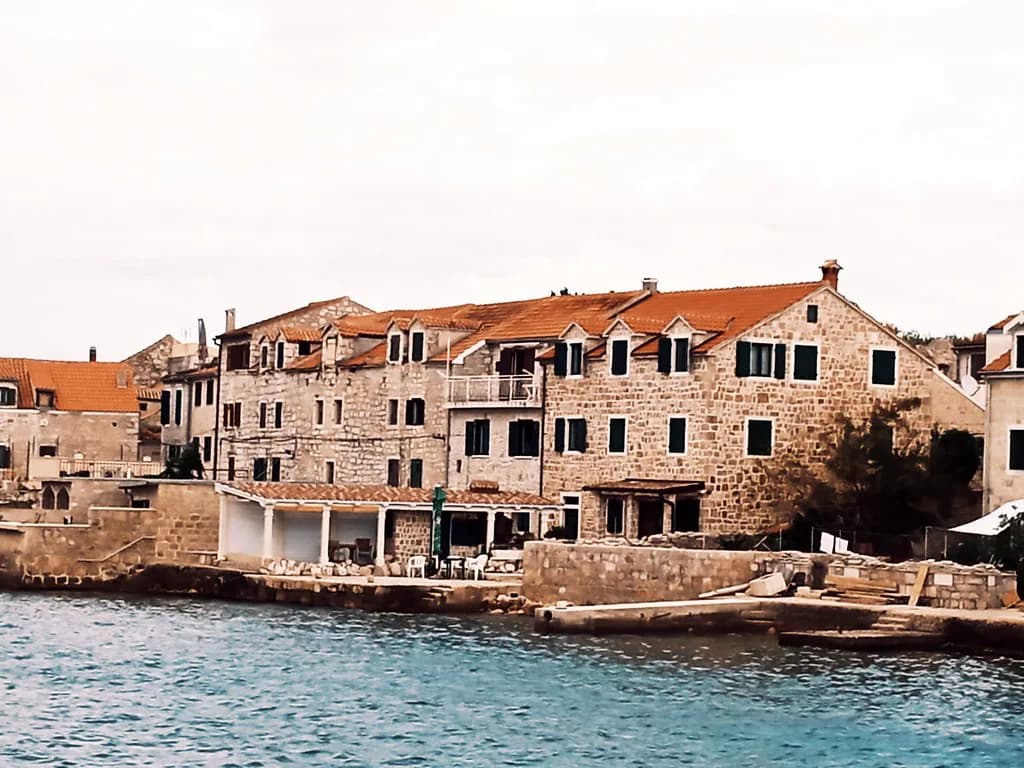
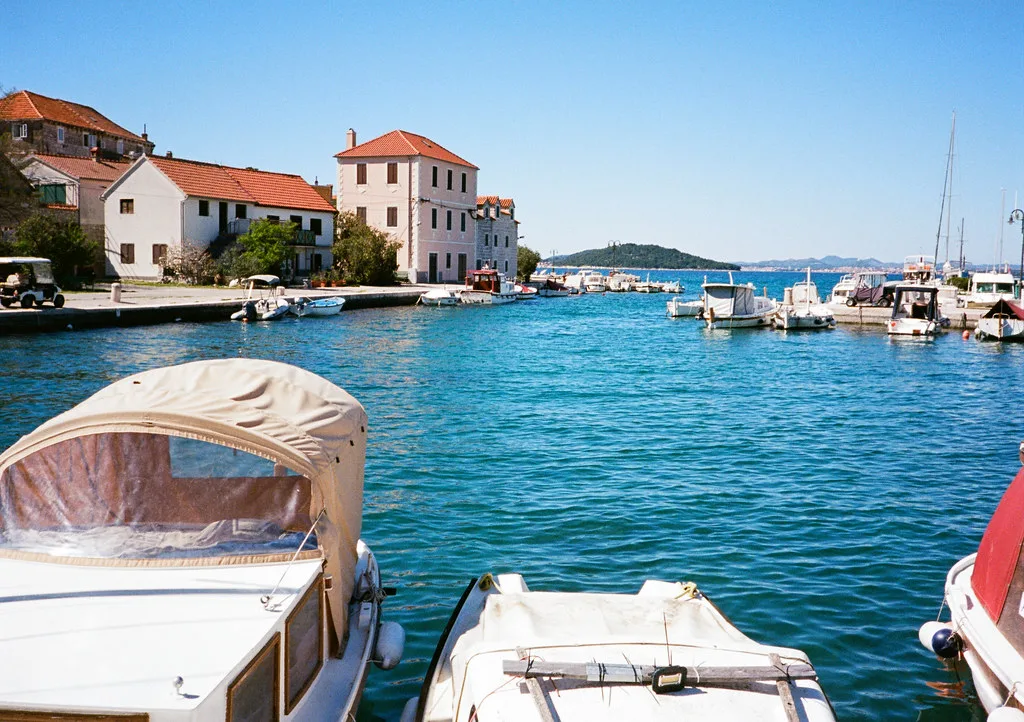
Prvić holds two distinct settlements, Prvić Luka and Prvić Šepurine, and the contrast between them is the reason to come. Prvić Luka is the sheltered harbour where boats moor and lunch is served on the tour, while Šepurine has a beach that Anima Natura Šibenik, which runs the six-hour Zlarin–Prvić–Tijat speedboat tour from Šibenik Riva, rates among the finest in the archipelago. Prvić Island sets out both villages.
Prvić is car-free, and the island's Faust Frančić Museum and several restaurants give it more substance than a pure swim stop. Sailing crews have reported in past seasons that construction work on the Prvić waterfront prevented stern-to mooring there, with anchored boats still finding good shelter from westerly winds. If you are arriving on your own keel, treat mooring availability as changeable and have an anchoring plan.
For a day-tripper the practical decision is whether to eat first or explore first on arrival at Prvić Luka. Lunch there is arranged through the tour but paid at your own expense, and drinks are excluded, so budget separately for the meal and anything beyond it. Šepurine comes before the boat turns for home, and the walk between the villages is part of the experience rather than a transfer.
Tijat: the uninhabited swimming stop
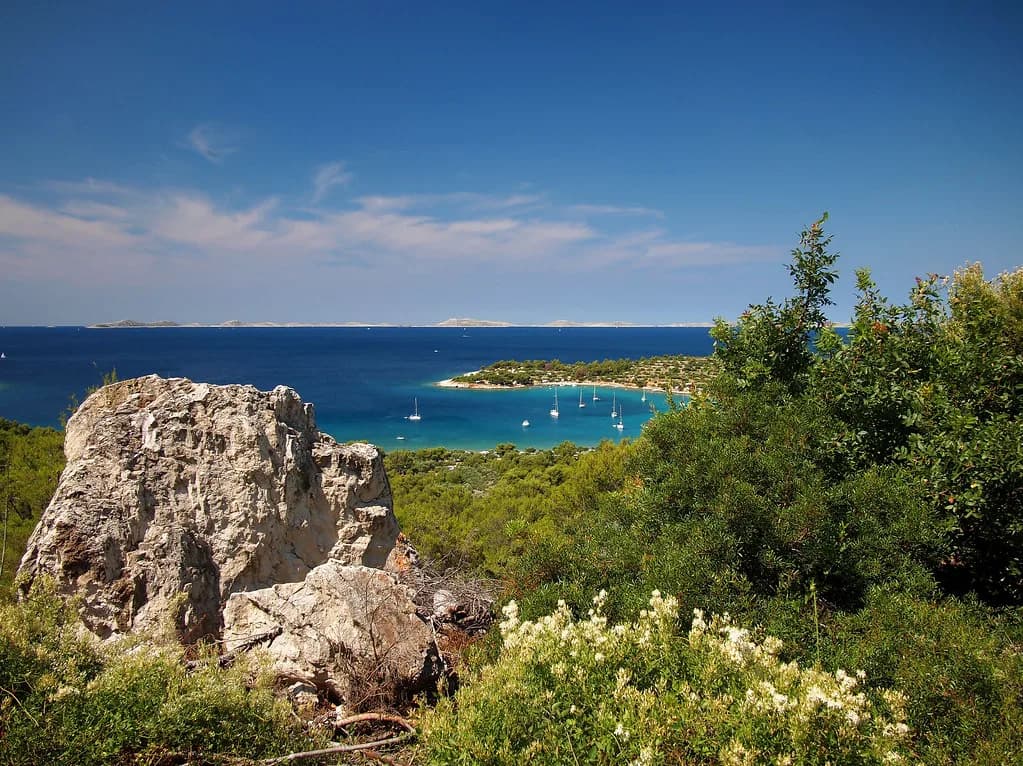
Tijat has no village, no commerce and no crowds, just sheltered bays where anchored sailboats gather and a local beach with clear water. It is the swimming stop of the day rather than a sightseeing one, and that is precisely its appeal after two inhabited islands.
Tijašćica cove, near Tijat, is a reliable shelter from the maestral, the summer north-westerly, and crews treat it as safe even for less experienced sailors. That makes it a sensible fallback when the wind picks up on the outward leg. The neighbouring Zmajan is uninhabited and popular for day stops, but it lacks a well-protected deep cove for an overnight.
The six-hour three-island boat trip
Anima Natura Šibenik runs a small-group speedboat day covering Zlarin, Prvić Luka and Šepurine, and Tijat in six hours, departing from the Šibenik Riva at Obala dr. Franje Tuđmana 5 with a maximum of ten guests. The price is €120 per person for the shared group tour, with fuel, boat and museum entrance included and free cancellation up to 24 hours before departure.
Bookings must be made at least 12 hours ahead, the skipper speaks Croatian and English, and the trip runs rain or shine. Lunch on Prvić Luka can be arranged as part of the day but is paid at your own expense, and drinks and tips are not included. This is the offering of one operator, so compare other boats on price and group size before committing.
Kaprije: the island you can reach without a tour
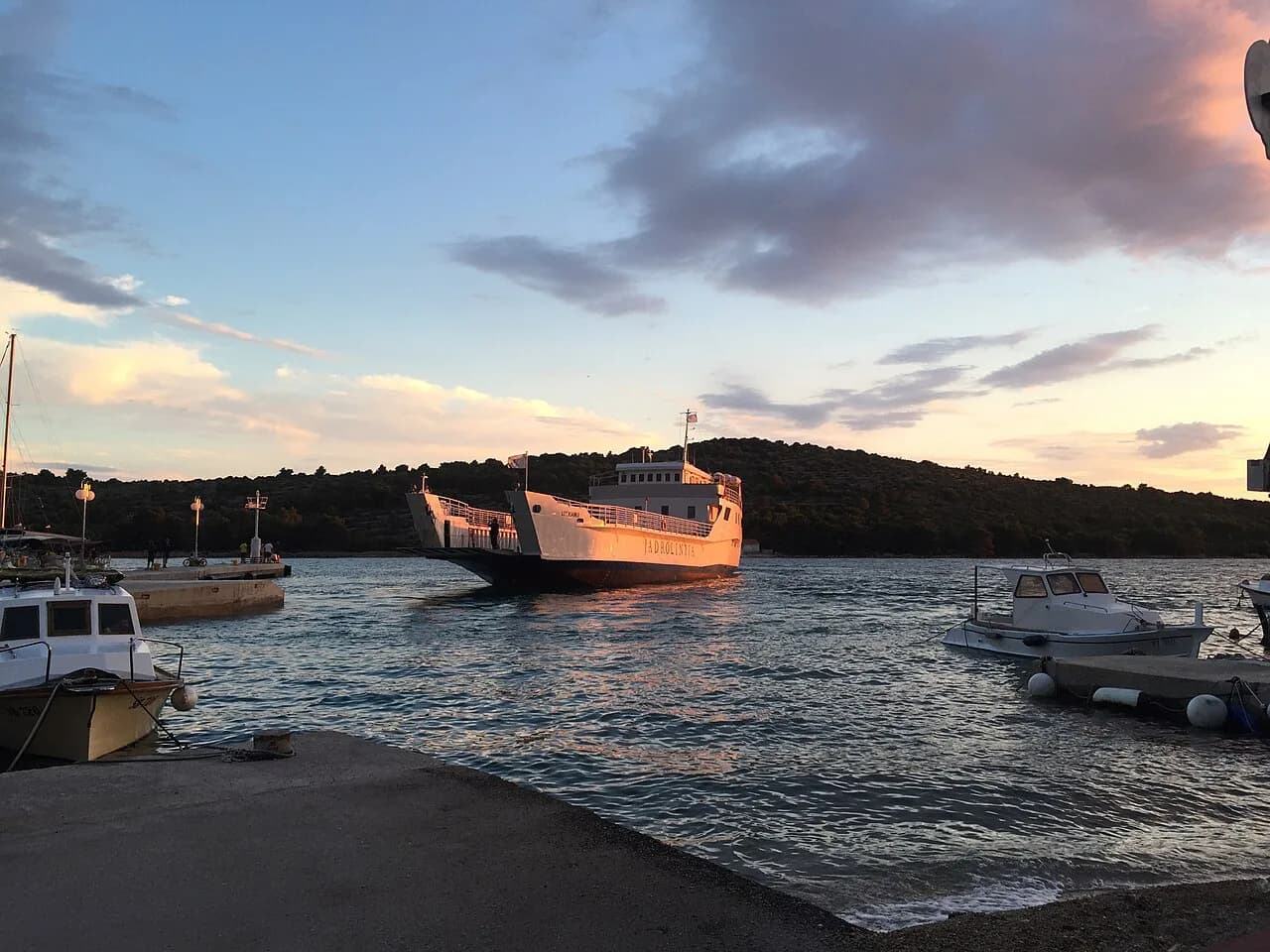
Kaprije is the one inhabited island in this group with a regular ferry and catamaran line to Šibenik, so you can reach it independently rather than only by excursion. The village shares the island's name and clusters around the harbour, with the old ferry pier and buoys offering straightforward landing.
Away from the port, the coves of Mala Nozdra, Magaš and Remetić hold the island's seafood restaurants, including Spirito Kaprije, which also runs as a beach bar in season. Sailing crews tend to anchor in these coves rather than moor at the pier, and the shelter is good enough to make that the better choice.
Žirje and the outer islands toward Kornati
Žirje marks the edge of the inner archipelago and lies within reach of Kornati on a good-weather sail. Its southern coves are the busiest because boats use them before and after the crossing, and the sheltered bay of Vela Stupica suits westerly winds but becomes awkward when the wind swings southerly.
On the northern side, Koromašna cove shelters boats from the southern quadrant and has a restaurant of the same name. The long-running restaurant at Vela Stupica has been a boaters' favourite for three decades, serving simple grilled food. These are reasons to overnight out here rather than sprint back to the city in the afternoon.
If Kornati itself is the goal, treat it as a separate day or a multi-day sail. Day boats from Šibenik do run National Park excursions, but the distances involved mean the island-hopping described above and a Kornati crossing compete for the same hours. Choose one.
Kakan and the Potkućina lagoon
Across from Kaprije, the islet of Kakan holds Potkućina, a natural lagoon bordered by two smaller islets and regarded as one of the most beautiful anchorages in this part of the Adriatic. Two restaurants serve boaters there and mooring buoys are laid on, which makes it an easy lunch stop rather than a wild anchorage.
For anyone on a private boat, Kakan is the sort of place that justifies carrying snorkelling kit and lingering. On a shared day tour, ask whether the boat you join includes it before you count on it.
Wind, shelter and mooring decisions
The maestral defines summer sailing here, and the coves that shelter you from it are not the same ones that work when a southerly blows through. The St. Ante channel has coves on its western side that may offer a swim on the way out, and Tijašćica on Tijat handles the maestral well, while Vela Stupica — whose name means 'trap' — is known to be harder to handle when a southerly sets in.
Mooring is the other variable. The old ferry pier and buoys at Kaprije are the formal options, while anchoring in a protected cove is what sailing crews tend to favour. On Prvić, waterfront works have been reported in past seasons and can remove stern-to berths, so radio ahead or prepare to anchor.
Speedboat tour or your own boat
The fixed six-hour tour packs three islands into a day with the logistics handled, which suits a short stay in Šibenik or anyone without sailing experience. You give up flexibility: the itinerary is set, free time on each island is brief and you cannot stay for a sunset in Prvić Luka.
Under your own steam, whether by charter or on the ferry to Kaprije, you trade convenience for time. One island done properly usually beats three done quickly, especially on Zlarin where the museum and lanes deserve more than a flying visit. The ferry line to Kaprije is the simplest independent option because it removes the need to skipper anything.
Combining an island day with Krka and Skradin
Many travellers use Šibenik as a base for Krka National Park, reaching it via Skradin, where boats carry visitors onward to the falls at Skradinski buk. That makes a natural split: one day on the water among the islands, one day inland at the waterfalls. Summer visitor numbers at the park are high, so give Krka its own day rather than folding it into an island run.
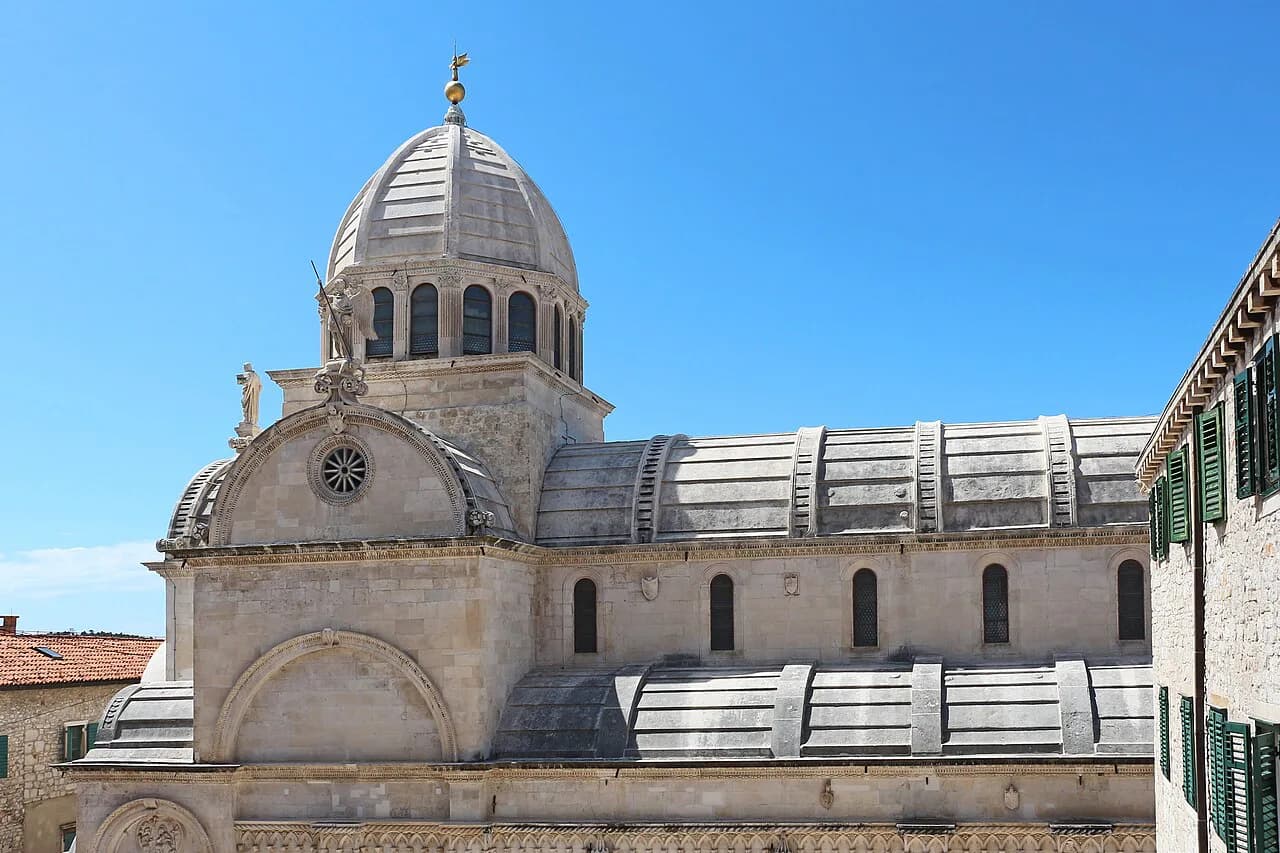
Šibenik itself is quieter than the headline Dalmatian destinations, and its own old town and St. James Cathedral fill an evening comfortably after a day at sea. For Krka, buy tickets through the official Krka National Park channels and start early, because summer numbers are high.
When to go and what summer crowds mean
June is warm and comparatively peaceful in Šibenik and on the inner islands, before the high-season rush fills the coves. Kaprije, scarcely populated in winter at roughly fifty residents, is super-popular through the long summer season, while Žirje's southern bays fill with boaters heading out toward Kornati. Any boat trip on this coast is worth booking ahead for July and August.
Book boat trips well ahead in July and August, aim for the earliest departure and accept that the museum on Zlarin will be busier. Outside high season, services thin out, so confirm that the specific tour or ferry line you want is running before you plan your stay around it.
Which island should you pick?
Choose the six-hour Zlarin, Prvić and Tijat speedboat day if you have one day, want the logistics handled and accept short stops. Choose Zlarin alone if the coral museum and car-free lanes matter more than ticking off three islands, Prvić if you want two villages and a beach, and Kaprije if you would rather travel on the regular ferry and settle into one place.
Whichever you pick, watch the wind forecast rather than the calendar, since shelter is what makes or breaks a day in this archipelago.
Explore more Šibenik guides
- Krapanj: the Tiny Sponge-Diving Island off Brodarica
- Murter: a guide to the island, its villages and the Kornati gateway
- Tisno: A Guide to the Drawbridge Village Between Murter and the Mainland
- Zlarin: A Guide to the Car-Free Coral Island Near Šibenik
- Kaprije: A Quiet, Car-Free Island Off Šibenik
- Prvić Island
- Žirje: A Practical Guide to the Šibenik Archipelago's Outermost Inhabited Island
- Islands near Pula
Frequently Asked Questions
Which islands can you see on the speedboat day from Šibenik?
Zlarin, Prvić (Prvić Luka and Prvić Šepurine) and Tijat lie just beyond the St. Ante channel and Jadrija, and they are the three islands on the six-hour speedboat day from the Šibenik Riva.
Can you visit the Šibenik islands without a car?
Yes. A small-group speedboat trip leaves from the Šibenik Riva in the city centre, and Kaprije has its own regular ferry and catamaran link, so no car is needed for the islands described here.
Is Zlarin worth visiting?
It is, particularly for the car-free village lanes and the Museum of Red Corals, Croatia's only museum devoted to coral. A shared tour gives limited time ashore, so a dedicated day suits anyone who wants longer.
Sources
Notes from the Croatian coast
Optional updates when our guides change.
You might also like
Continue reading
More guides you'll find useful