Žirje: Byzantine Forts, Village and Ferries from Šibenik
Plan a visit to Žirje in the Šibenik archipelago: the village, the Byzantine forts at Gradina and Gustirna, hill walks and how the ferries from Šibenik work.
On this page
Žirje is the outermost inhabited island of the Šibenik archipelago, about 22 kilometres from the mainland, and it suits travellers who want Byzantine and military ruins on quiet hills rather than a resort. It has one main village, a handful of marked paths and a ferry link that runs only a few times a day, so the island rewards planning more than improvisation. This guide sets out where the island sits, how the car ferry and fast ferry work, and a realistic order for seeing Gradina, Gustirna, Zvizdulja, Samograd and Vela Glava.
Where Žirje sits in the Šibenik archipelago
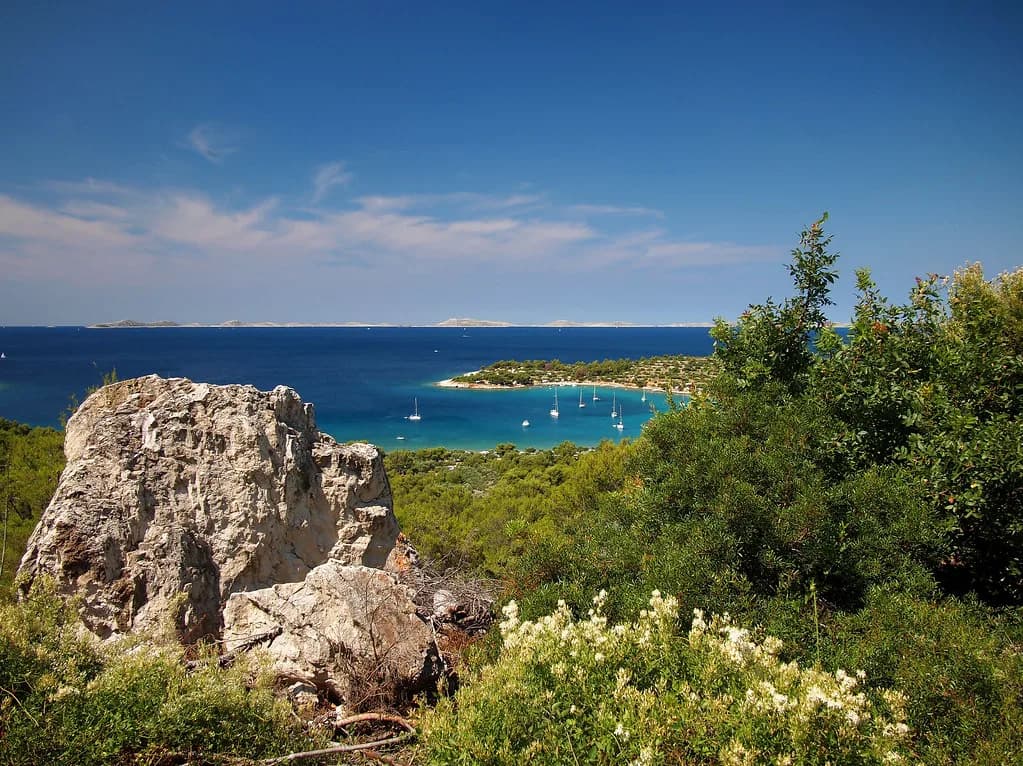
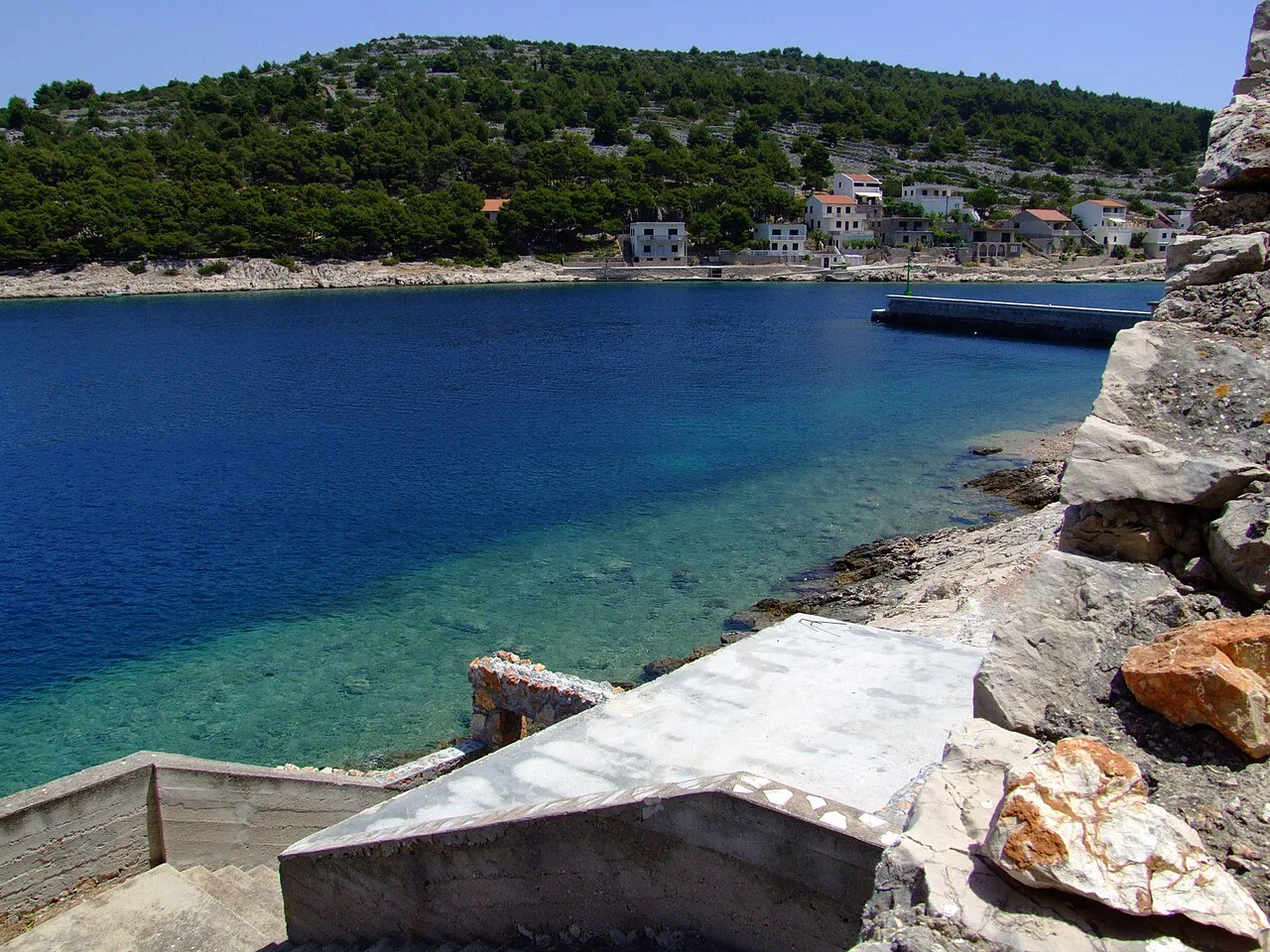
Žirje lies in the Šibenik archipelago, about 22 kilometres from Šibenik, beyond the closer islands of Kaprije and Zlarin. That position is the point: it is far enough out to feel empty, with the Kornati islands visible from high ground on the island's far side. It is also the reason a visit has to be built around a sailing time rather than slotted into half a day.
If you are weighing up which island near Šibenik deserves your day, start with the close, car-free islands and then decide whether the extra crossing to Žirje is worth it. Our guide to the Islands Near Šibenik sets out how Zlarin, Prvić, Kaprije and Murter differ in crossing length and character, which makes the trade-off plain. Žirje only makes sense as a deliberate choice, not an add-on to a beach afternoon.
Getting there: car ferry and fast ferry from Šibenik
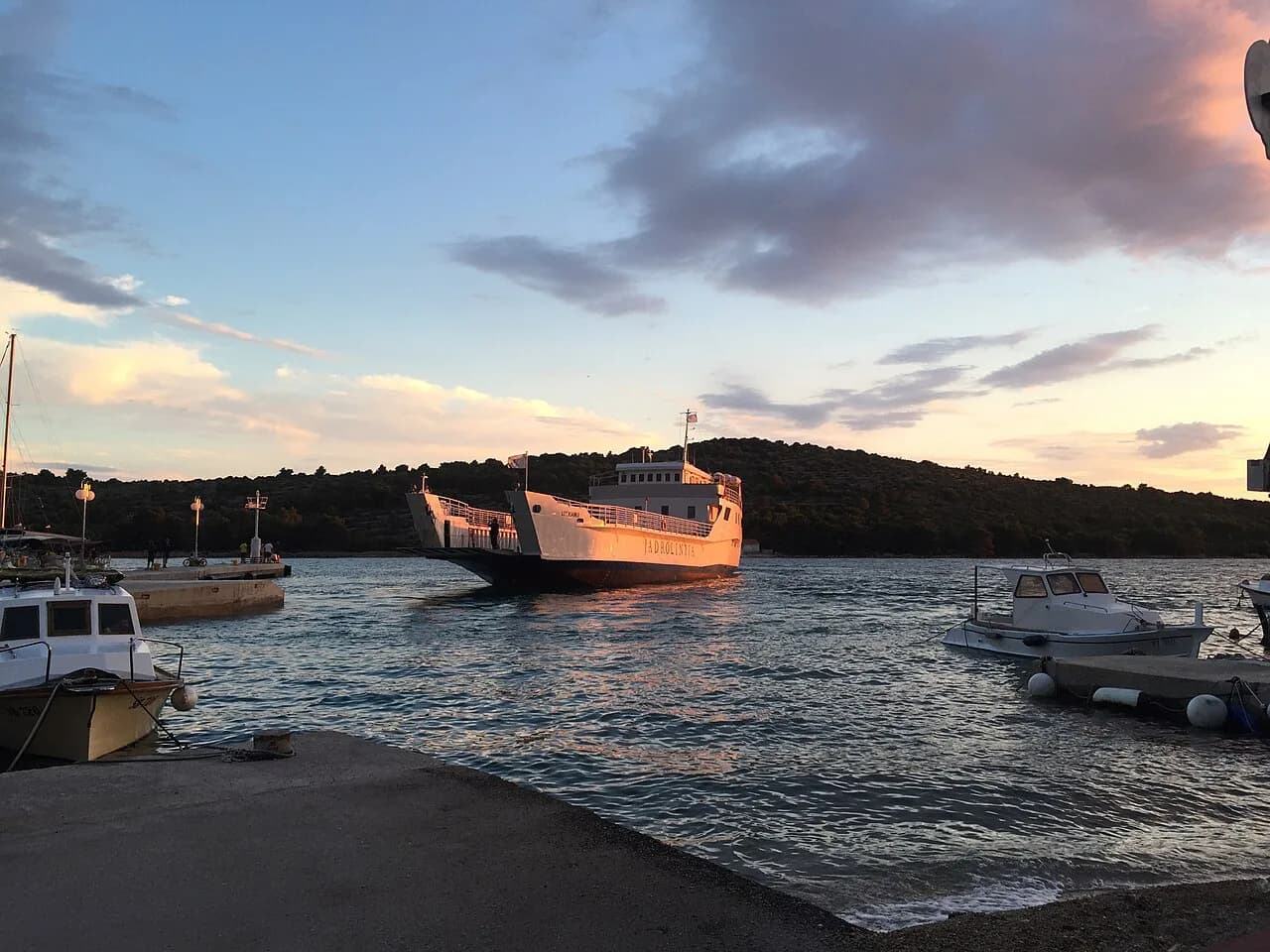
Two services connect Žirje with Šibenik: a car ferry and a faster passenger ferry, and the fast ferry also stops at Kaprije. The fast crossing takes about 80 minutes and the car ferry roughly 20 minutes longer. The island lies 14 nautical miles out, so the crossing is slow for the distance. Sailings are limited to a few a day, so the return time shapes everything you can fit in on the island.
If you bring a car in season, reserve space on the car ferry in advance, because capacity is small and the crossing carries both islanders and visitors. On foot you avoid that problem and the faster ferry is the quicker option, though you then depend on the island's few vehicles or your own legs to reach the hill sites. Neither crossing is frequent enough to treat as a turn-up-and-go service.
Sailing times change with the season, so the current Jadrolinija timetable for the Šibenik–Žirje line is the place to confirm departures and whether a car booking is needed on your date. The Croatian National Tourist Board page for Žirje is a sensible starting point for the island's general information.
The village: a small island with thin facilities
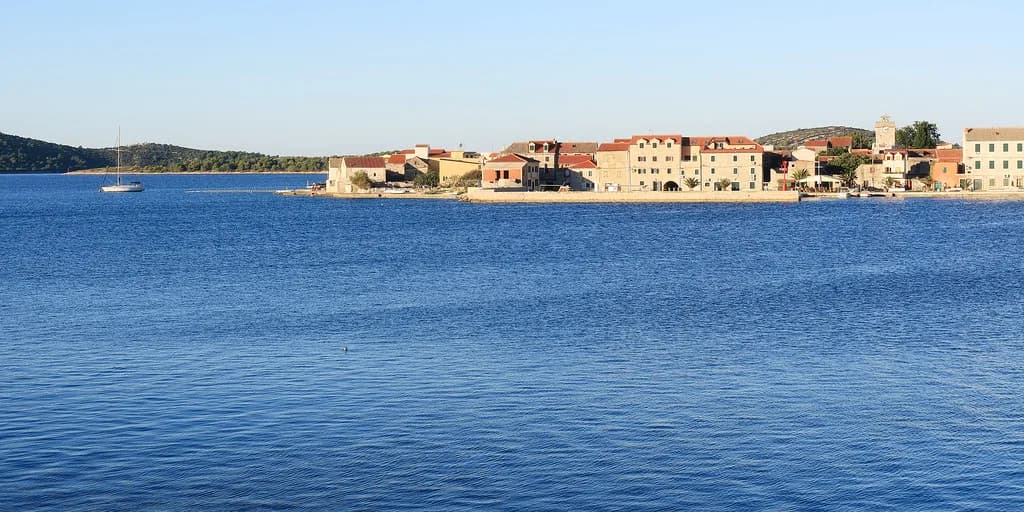
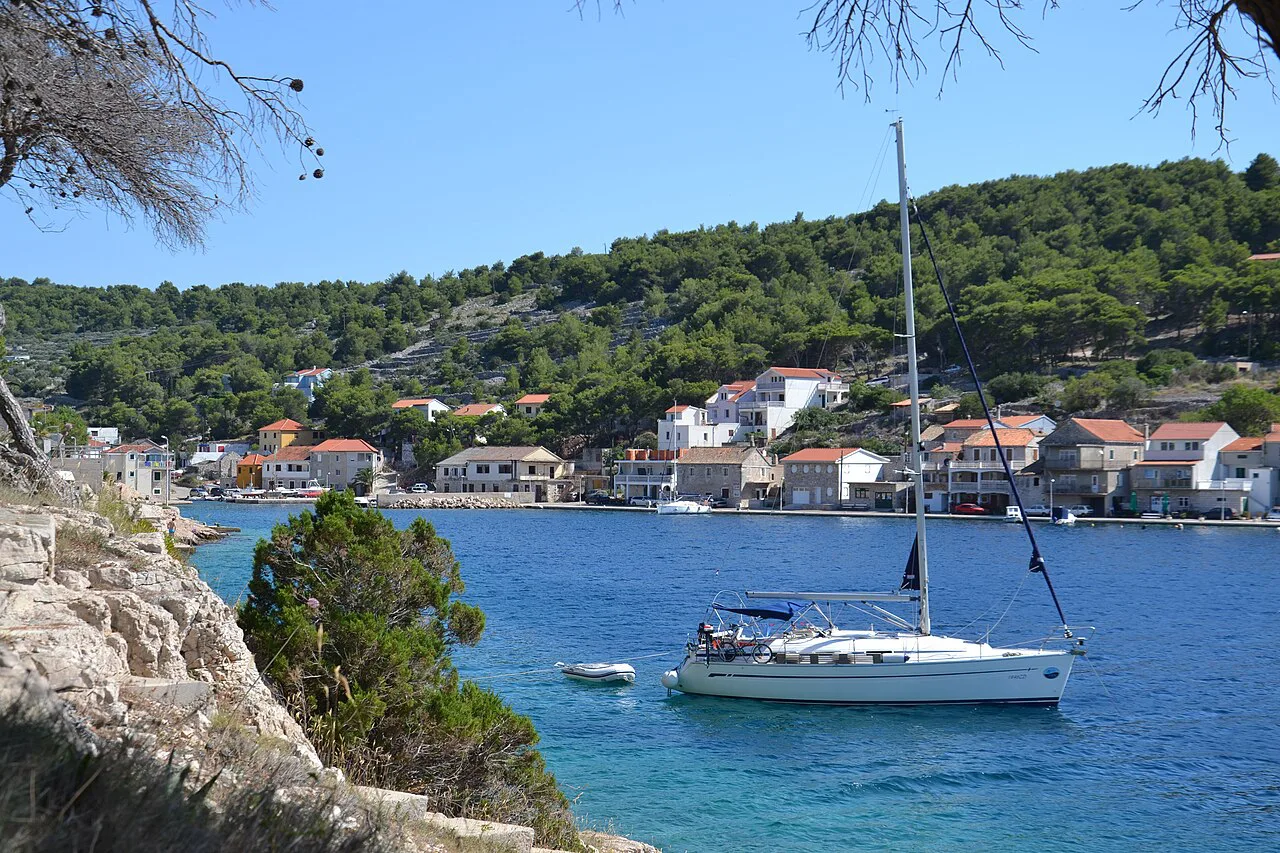
Žirje has around 50 permanent residents, rising to roughly 400 to 500 people in summer once visitors and holiday-home owners arrive. That tells you most of what to expect: somewhere genuinely quiet, with the village as the base and very little commercial clutter beyond it. It also means you should carry what you need for the day rather than assume you can buy it on the island.
The island's remoteness is not accidental. A steamer connection with Šibenik was first established in 1889, tying Žirje's small population to the mainland while leaving it outside the main tourist circuit. The result is a place of stone houses, olive plots and old tracks, and the appeal lies in that rather than in a developed waterfront.
Cars on the island are few and some are unregistered old vehicles kept for farm work rather than hire. Plan to walk, and assume the distances between the village and the hill sites take longer than the map suggests. Comfortable shoes and water matter more here than on Zlarin, where the whole island is compact; compare the two in Zlarin: A Guide to the Car-Free Coral Island Near Šibenik.
Zvizdulja hill and its bunkers
Zvizdulja hill carries the remains of a military complex begun under Austro-Hungarian rule in the late 19th and early 20th centuries, expanded by Italian occupation forces in the Second World War and then built up heavily by the Yugoslav army. The most striking bunkers date from the Yugoslav period, when considerable money went into installations across the country. The concrete is in reasonably good condition, but the bunkers cannot be entered, so this is a site to look at from outside rather than explore inside.
Because Žirje stayed off the radar during the 1990s, when many military outposts were stripped for scrap, its installations survived better than similar sites elsewhere. Walkers get a sequence of concrete structures and viewpoints rather than a curated museum. Treat the ground with care: this is unguarded terrain, not a maintained attraction.
The Gustirna hilltop fortress and its unfinished walls
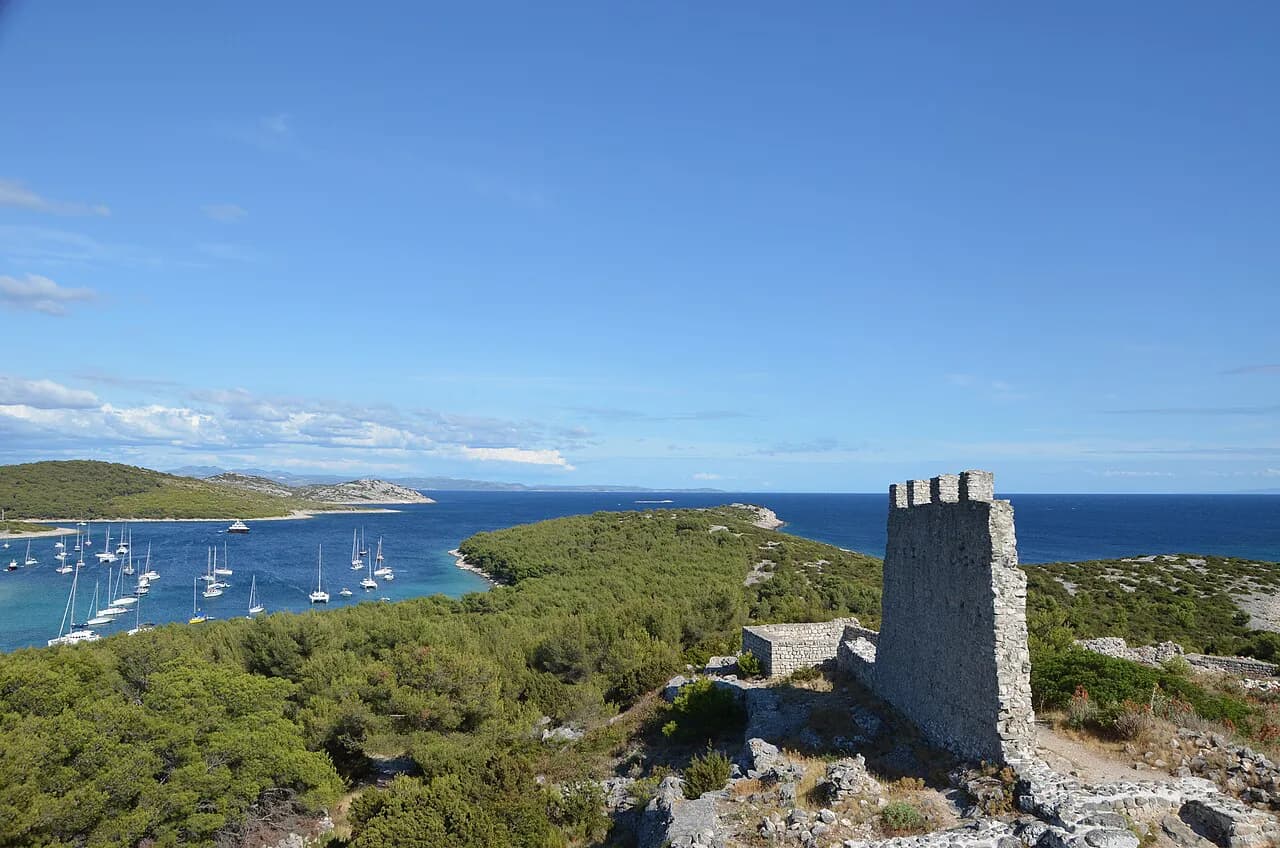
Gustirna is the neighbouring hilltop to Zvizdulja, and its fortress is the most unusual site on the island: Byzantine walls that were never completed. What remains are massive blocks forming a megalithic front wall, with a rear wall in the Byzantine manner behind it. That combination makes it compelling for anyone interested in fortification, because you can read the construction sequence in the stone.
Pair Gustirna with Zvizdulja in a single morning, since the two hills sit beside each other. Neither site has modern signage or a formal visitor arrangement, so what you get is the ruin and the view. Allow time to sit with the walls rather than treating the pair as a tick-box stop.
Gradina fortress: Justinian's sixth-century defences
Gradina is the site most visitors come for: a hilltop fortress that formed part of the sixth-century defensive system designed under the Byzantine emperor Justinian the Great. One stretch of wall still stands, alongside a megalithic outer wall and numerous structures that remain visible after major archaeological work in the early 2000s. The walls tower over a small beach below, reached by a narrow path from the hill.
Older theories that the Byzantine builders simply reused far older megalithic walls, thought by some to be Phoenician, have been set aside as evidence showed the megalithic and regular masonry went up at the same time. That detail matters when you are standing in front of it: you are looking at one coherent building campaign, not layers separated by centuries. Read the walls with that in mind and the scale of the enterprise becomes clearer.
Keep the two distinct: Gustirna is the Byzantine fort that was never completed, on the hill beside Zvizdulja, while Gradina is the Justinianic fortress above the beach. Do them on separate legs of the day if you want to give each proper attention.
The Samograd stone shelters and how to find them
Samograd is a complex of five rooms in two drystone buildings, 12 and 7 metres long, built without cement in a technique found across the Mediterranean. The structures were completed in 1903 and 1920 and served the Alić family as shelter and storage while working the fields and olive groves on this part of Žirje. A crawl space links the rooms, and there is a small niche inside.
Finding Samograd is the hard part, and it was made easier by a Czech couple, Renata and Tomaž Večera, who settled on the island and put up signs to guide curious walkers. Look for those markers rather than striking out across the olive terraces on a guess. It is a modest site compared with Gradina, so fold it into a walk rather than making it the day's objective.
Vela Glava: tunnels, views towards Kornati and sunset
Vela Glava is a second military complex, less imposing than Zvizdulja but with tunnels to explore and, more importantly, a view out towards the Kornati islands. Local people have put up a strip with information and distances to help visitors find their way around it. Come late in the day and the position pays off with a strong sunset over the water.
If you only have time for one military site, choose between Zvizdulja's bunkers and Vela Glava's tunnels and outlook; if you have a full day, Vela Glava works best as the last stop before the evening ferry. The Kornati lie beyond Žirje, and the view gives a sense of how exposed this outer edge of the archipelago is. It is also the calmest way to end a day of ruins.
How long Žirje needs, and how it fits a Šibenik coast trip
Give Žirje a full day, not a half day, and accept that the ferry timetable rather than your legs sets the ceiling. A workable order is to land in the morning, walk to Zvizdulja and Gustirna first while you are fresh, take in Gradina and Samograd in the middle of the day, and finish at Vela Glava before the return sailing. Adding a second island on the same day rarely works given how few crossings there are.
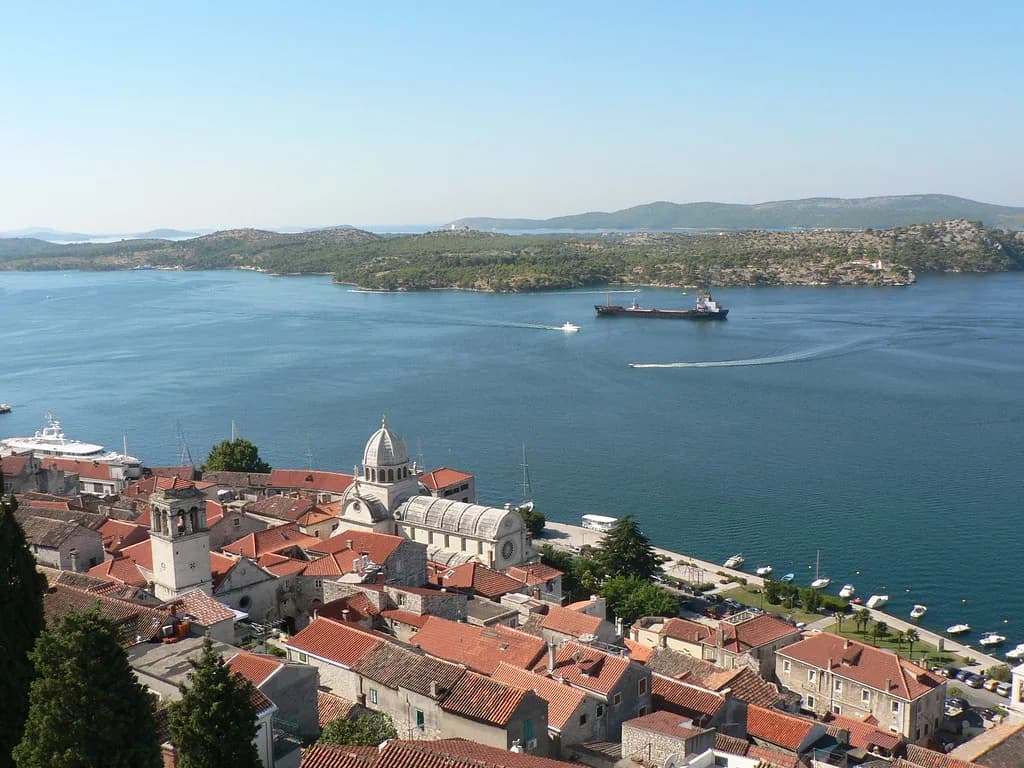
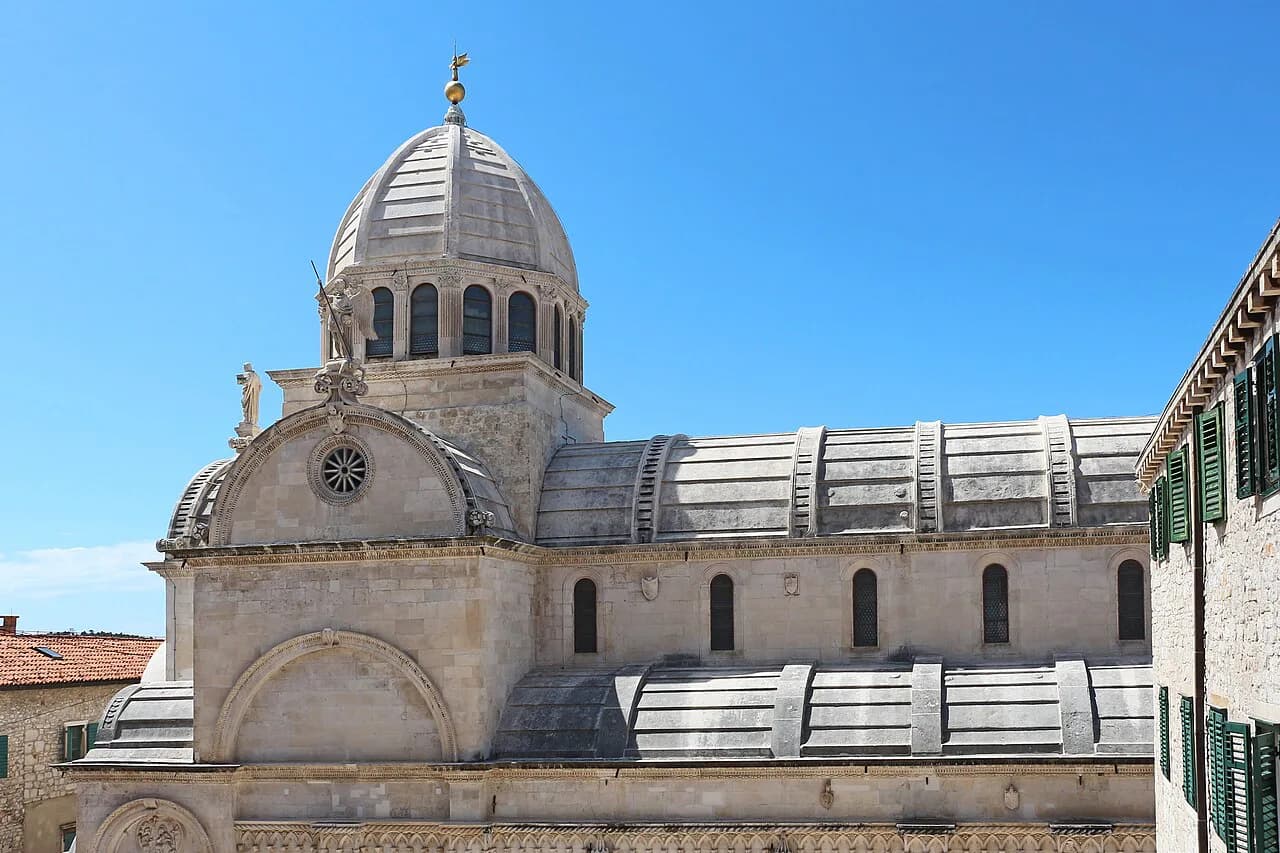
Žirje combines naturally with time in Šibenik itself, where the old centre and St James's Cathedral fill a day without any ferry involved. Our Šibenik attractions guide covers what to see in town, so you can put the island day in the middle of a mainland stay rather than moving base. If you want an easier island day with more facilities, see our Kaprije: A Quiet, Car-Free Island Off Šibenik.
For travellers heading on towards the Kornati, Murter is the usual base and a natural next stop after Žirje. Murter: a guide to the island, its villages and the Kornati gateway explains the villages and the bridge link to the mainland. Pairing the two gives you one remote island day and one more connected base.
Quiet versus convenience
The case for Žirje is emptiness and ruins; the case against is everything that comes with a resident population of about 50. Ferries are infrequent, facilities are thin, and a missed sailing costs you hours rather than minutes. If your trip is short or you are travelling with people who need shops and cafés within reach, the closer islands serve you better.
Weather is the other variable. The bura can affect crossings in the Šibenik archipelago, and hill walking here is exposed, with little shade between the sites. Check the forecast the day before and keep your plans flexible enough to swap Žirje for a mainland day. The Croatian National Tourist Board page for Žirje is a sensible starting point for the island's own information, but check current sailing times and prices with Jadrolinija before you commit.
Is Žirje worth the crossing for your trip?
Choose Žirje if you want Byzantine and military ruins, a quiet village and a day shaped by infrequent ferries, and if you are content to walk and carry your own supplies. Skip it if your trip is short, if you need facilities on tap, or if the weather looks unsettled, and take one of the closer islands instead. Book the car ferry ahead in season if you are bringing a car, take the fast ferry on foot, and let the timetable set the plan.
Explore more Šibenik guides
Sources
Notes from the Croatian coast
Optional updates when our guides change.
You might also like
Continue reading
More guides you'll find useful