
St John's Fortress, Šibenik: A Visitor's Guide to the Tanaja

St John's Fortress, Tvrđava sv. Ivana in Croatian and nicknamed Tanaja, is the largest of Šibenik's three restored fortresses and the highest point above the old town, which is the reason to come late and watch the light drop towards the islands. It was built in 1646 in just 58 days as the centrepiece of the city's new defences before an Ottoman attack, and a renovation finished in 2022 added an underground campus inside the walls. This guide covers where it sits, how to walk up, what a ticket costs, what there is to see and how it fits alongside the rest of Šibenik.
What St John's Fortress is and why it is called Tanaja
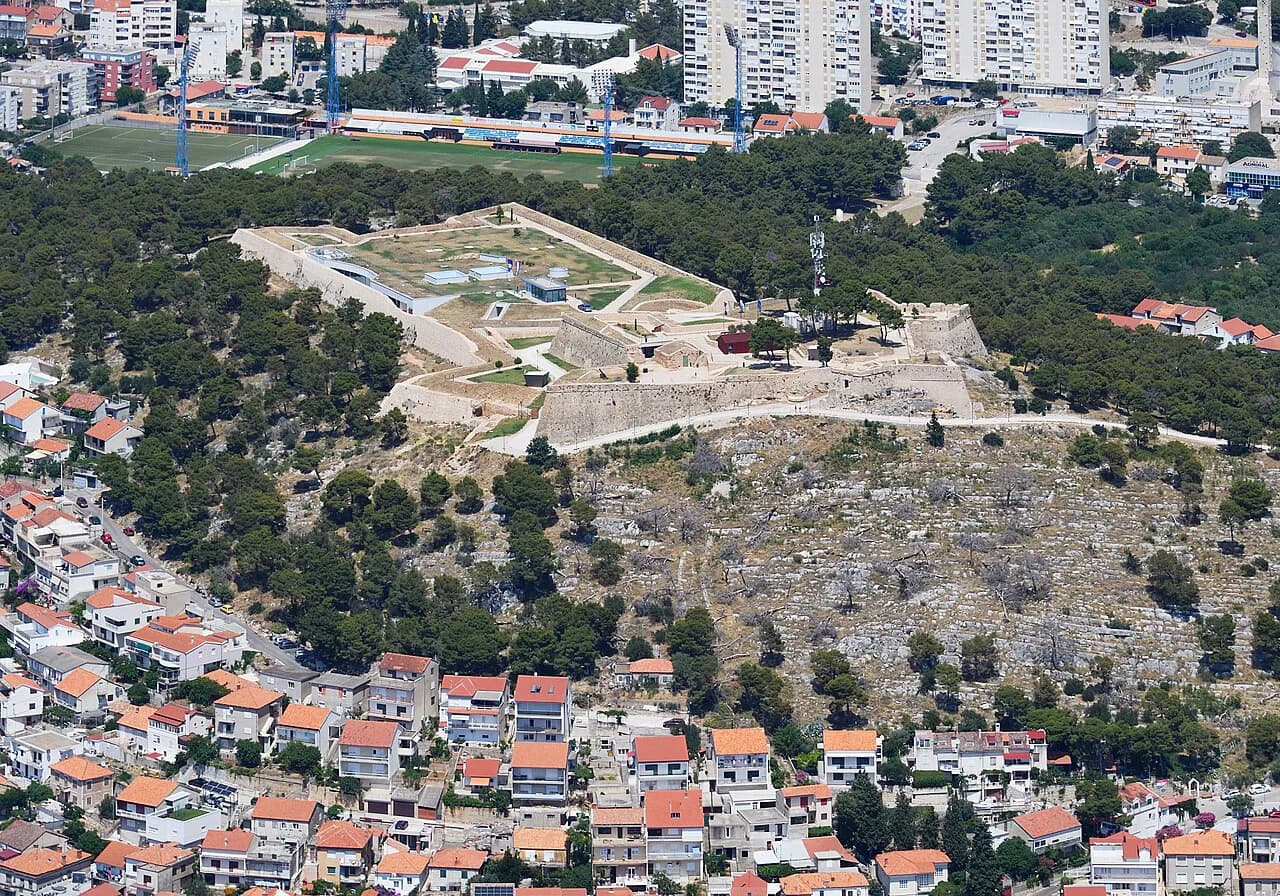
The fortress is an early modern defensive work on a hill north of Šibenik's historic centre, built in 1646 by the people of the city, who paid for and constructed it as the main point of a new defensive system ahead of an expected Ottoman assault. Its formal name comes from the church of St John that once stood on the site, while Tanaja is the name most locals use. After the Second World War the Yugoslav National Army held the site for around two decades before abandoning it, and it stood derelict until the city's Fortress of Culture took on the restoration.
Work finished in 2022, with the walls fully repaired and a modern underground campus built below the outer defences, now used for conferences and events. The result reads as a ruin from some angles and as a fully equipped venue from others, which is what makes it the most varied of the three fortresses.
Where the fortress sits above Šibenik and how to walk up
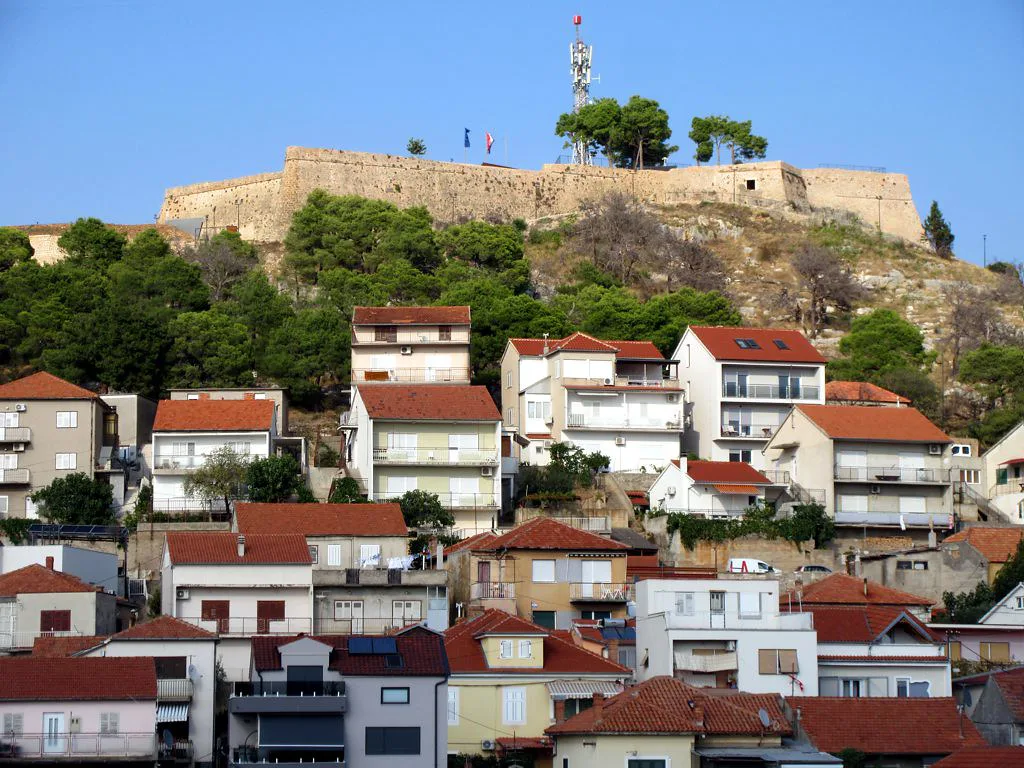
The address is Put Tanaje 29, on the hill directly above the old town; the walk up from the Riva and the cathedral area is short but steep, climbing through residential lanes on the north side of the centre. Wear shoes with grip, because the surfaces mix stone steps and sloping tarmac, and leave the climb for the cooler part of the afternoon in July or August.
If you are driving, accept that there is no car park at the fortress itself. The nearest free option is the car park beside the walls of Barone Fortress, open during Barone's opening hours, with further city spaces in Težačka Street and on Put Gimnazije, and spaces on the slope towards the Šubićevac quarter on the north-east side. From the old town the walk is often quicker than moving the car.
For the wider set of city sights, from the cathedral down to the waterfront, see the Sibenik Attractions: 8 Visitor Guides before fixing a route, because the fortress works best paired with a separate old-town walk rather than squeezed into it.

Opening hours and ticket prices
Regular opening is Monday to Sunday, 9am to 5pm, with last admission 30 minutes before closing. The fortress also runs events and concerts that can change access, so if you are travelling for a specific date, check its events calendar before building the day around it.
Adult admission is 11,50 euros, students aged 7 to 18 pay 7,50 euros and a family ticket for parents or guardians with children under 18 costs 28,00 euros; the same prices apply at St Michael's Fortress. The combined ticket covering all three fortresses is 15,00 euros for adults, 8,50 euros for students and 33,00 euros for a family, usable once within seven days of purchase. Admission is free for children up to seven, ICOM members, and visitors with disabilities plus a companion on presentation of a valid national or European document issued by the Agency for Commercial Activities.
Compare the maths before buying: the three-fortress ticket costs only a little more than the single St John's and Barone ticket and adds St Michael's, so it pays the moment you plan to see two sites. Audio guides, augmented-reality devices and other multimedia kit are free to use, and visitor insurance is included in the ticket.
What to see inside: the star, the pliers and the underground campus
The fortress splits into two parts, and knowing this saves confusion at the gate. The star is the fortified southern section on the summit, with a single entrance and exit on its south side where the access road arrives; the pliers are the outer fortification to the north, below which sits the educational campus, and the access road runs from the entrance through to the pliers.
Inside, the main draw is the walk along the ramparts with the city, the sea and the islands below, plus the underground campus carved into the hill, which is a cool retreat at midday. A bar operates at the top in summer and a souvenir shop sits in the former powder magazine next to it. Spacious modern toilets, including accessible facilities, serve both the star and the pliers.
The WWII bunker and the fortress's wartime story
Look for the concrete bunker on the site, a Ringstand or Tobruk-type position built during the German occupation in the Second World War, with a small room and a machine-gun emplacement. The name comes from the Libyan city of Tobruk, where Italian and German forces first used the design against the Allies, and similar bunkers survive on the eastern approaches to Šibenik. Šibenik was under Italian rule until September 1943 and then German occupation until the city was liberated on 3 November 1944.
The bunker is a short stop, but it gives the fortress a second layer beyond the early modern walls and explains why the hill mattered militarily well into the twentieth century. See it on the way round the ramparts rather than as a separate visit.
The sunset visit and the golden-hour view
The strongest reason to time your visit late is the view: this is the highest fortress in Šibenik, looking over the rooftops, the channel and the islands beyond. Visit during the golden hour, which in summer means the final stretch before the 5pm close, and you get the best light of the day without stepping outside opening hours; if the fortress is running an evening event, that is when a true sunset from the ramparts is possible.
Remember the 5pm closing time when planning: in summer the best light falls in the hour before closing rather than after it. Arrive with enough margin to walk the walls and reach the bar before last admission at 4.30pm.
How long to allow and when to go to avoid the crowds
Allow about an hour to 90 minutes for the fortress itself: the walls, the star and pliers, the bunker and the underground campus fill that comfortably without rushing. Add the climb up and back down from the old town, which is a separate effort on a hot day.
Šibenik's cruise-ship days and the peak weeks of July and August press hardest on the old town rather than the fortress, so the hill is usually calmer than the streets below even when the city is busy. Early morning and the last two hours before closing are the quietest windows.
Getting there, parking and access notes
The fortress has one entrance for the star section, reached from the access road on the south side, and the route through to the pliers follows the same road. Dogs are welcome but must stay on a lead throughout, and drones or other unmanned aircraft are banned across the Šibenik fortresses, so leave the drone at home.
For questions about access, group visits or venue hire, the fortress publishes a phone number and email on its plan-your-visit page. If you arrive by ferry into Šibenik, allow time to walk from the port through the old town and up the hill rather than expecting to drive to the gate.
Nearby: St Michael's and Barone Fortress, and the old town below
St Michael's Fortress sits above the old town on the other side of the centre and is the obvious second stop on the combined ticket; St Michael's Fortress, Šibenik is a shorter visit but has the better central view over the rooftops and the channel. Barone Fortress, next to the free car park, is the third leg and the easiest to add on the way back down.
Down in the old town, the Šibenik Cathedral of St James is the city's UNESCO-listed masterpiece, a short walk from the Riva and an easy pairing with the fortress on the same afternoon. The city museum and the Town Hall cluster in the same lanes, so a fortress visit plus an hour or two below makes a full but unhurried day.
Out in the channel, St Nicholas Fortress guards the sea approach to Šibenik and is reached by boat rather than on foot, a different half-day altogether if you have more than one day in the city.
Weather, the bura wind and seasonal opening
The fortress is an exposed hilltop site, so the bura turns a pleasant walk into a battle with the wind, and the summer sun gives little shade on the walls; the underground campus and the bar are the shelter in either case. The St John's and Barone joint ticket is sold from March to November, which reflects the seasonal rhythm.
Plan around the weather rather than against it: a clear, still late afternoon gives you the sunset and the islands, while a windy or overcast day is better spent in the old town and the cathedral.
Is St John's Fortress worth the climb?
Yes, if you go for the view and the ramparts rather than the interior alone: the climb from the old town is steep, but the highest point in Šibenik delivers the best late-afternoon panorama in the city, and the bunker and underground campus give it substance beyond the scenery. Buy the combined three-fortress ticket if you plan to see St Michael's or Barone as well, and go late in the day within the published 9am–5pm opening hours.
Skip it if you have only a couple of hours in Šibenik and would rather spend them in the old town around the cathedral and the Riva, since the fortress is a half-day commitment once you count the walk up and back. Otherwise, pair it with a walk down through the lanes and finish on the waterfront.