
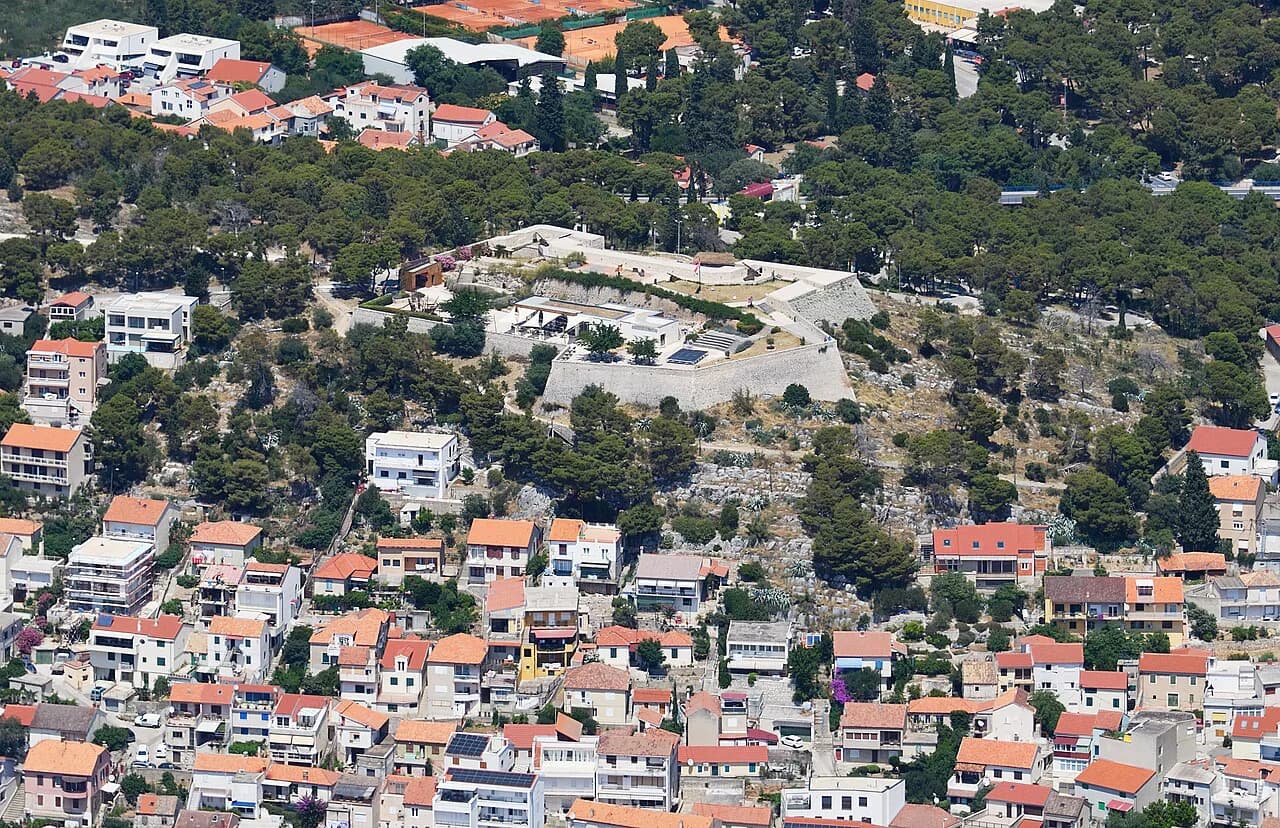
Barone Fortress (Tvrđava Barone), Šibenik: What to See and How to Visit

Barone Fortress is worth the climb if you want one thing above the Šibenik rooftops: an augmented-reality retelling of the 17th-century Ottoman siege, followed by a drink on a terrace looking back over the whole city. It is one of four fortresses that ring Šibenik, all of which have been renovated and modernised, so the visit feels more like a small multimedia museum than an empty ruin.
The fortress was built on high ground and earned its place in local history by holding off the fiercest Ottoman attacks of the 17th century, a story the displays inside now reconstruct in sound and image. Expect stone ramparts, open ground and plenty of sky rather than furnished rooms, so the appeal rests on the setting and the interpretation.
Where Barone Fortress sits above Šibenik
Barone Fortress stands on the hill directly above Šibenik's old town, close enough that the whole historic centre and the Channel of St. Ante spread out below you. Because it overlooks the same rooftops you walk through, the climb is short in distance but steady in gradient, and it is entirely on foot.
Šibenik itself is unusual in the region for having four fortresses from the same era, all renovated and modernised rather than left to decay, and St. Michael's, St. John's and Barone all rise above the old town while St. Nicholas sits offshore on the island of Ljuljevac. That means a single day in the centre can put several viewpoints within walking reach of one another.
Think of Barone as the northern counterpart to St Michael's Fortress, Šibenik, which has the grander open-air stage and concert reputation. They are separate tickets and separate visits, so decide which one gets your late afternoon light.
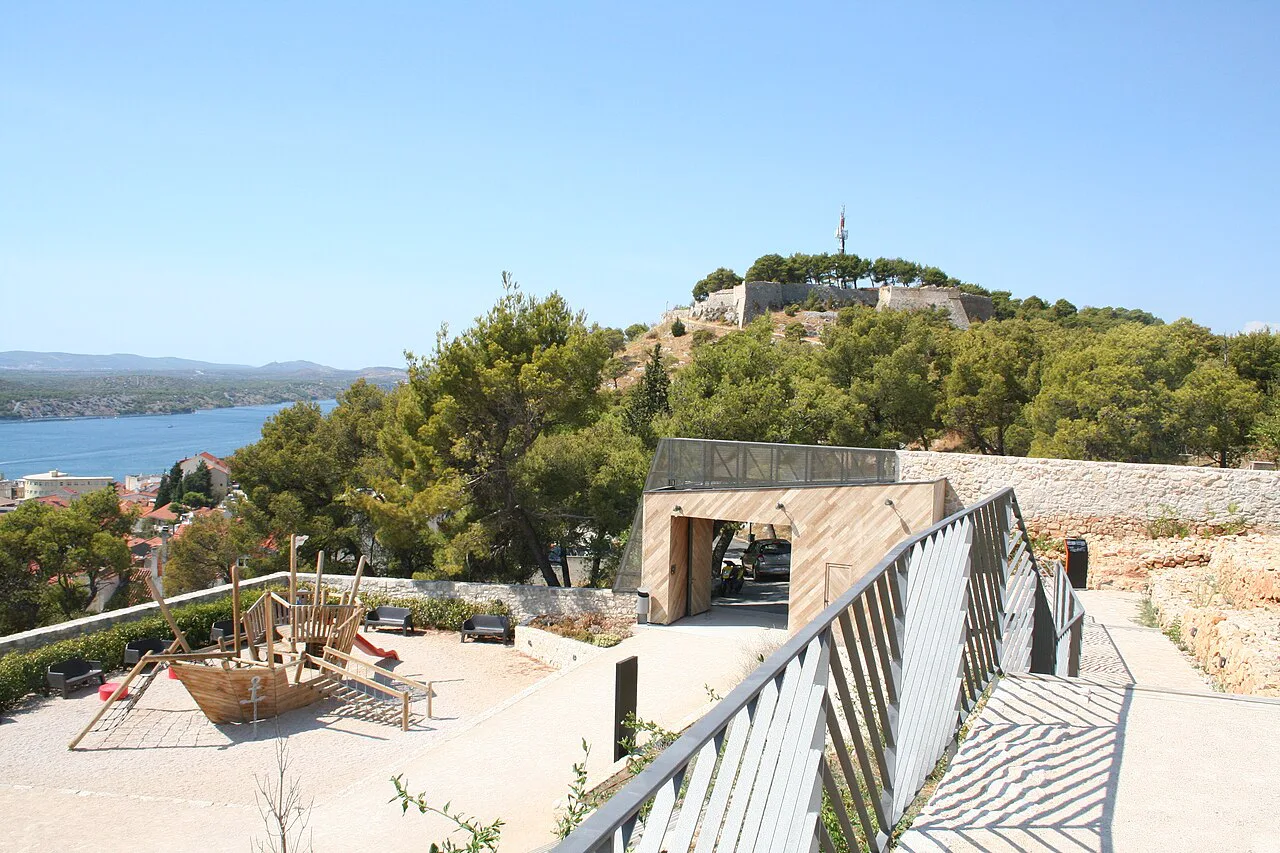

The walk up to Put Barone from the centre
From the old town, the approach is a short but genuine uphill walk through the lanes north of the centre, with steps in places and little shade on the final stretch. Wear shoes with grip rather than sandals, carry water, and treat the climb as part of the visit rather than a chore to be endured; it takes minutes, not an hour.
Because the fortress sits at the top of a hill, the sensible plan is to walk up in the morning or late afternoon and come down into the old town for the rest of the day. Doing it in reverse, straight after a long lunch in the heat, is the version most people regret.
If your mobility is limited, the honest trade-off is that this is a hilltop approached on foot, and the climb is the price of the view. Plan a slower pace with stops in the shaded lanes, and save the walk for a cooler hour rather than midday in high summer.
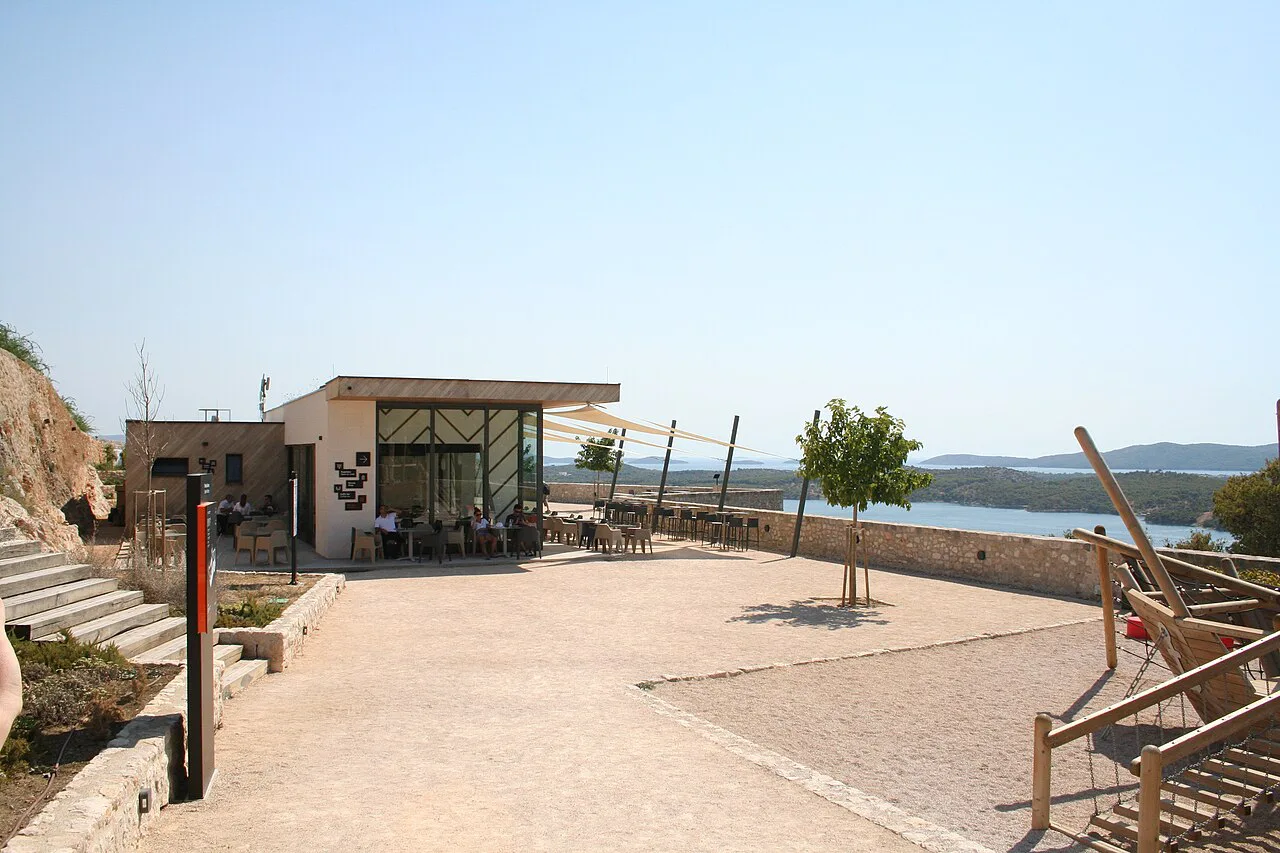

What to see inside the walls
The core of the visit is augmented reality: the fortress reconstructed the key moments of the 17th-century Ottoman attacks through sound and image, which is what lifts it above a bare viewpoint. Allow time to work through the displays rather than rushing straight to the parapet.
Outside the interpretation, the walls themselves and the panorama do the heavy lifting: the old town's roofs below, the Channel of St. Ante and the water that made Šibenik's fortune, with the open sea beyond. Pick a corner of the rampart away from the busiest stretch and the view is yours.
Families get a specific benefit here, since the site includes a children's playground, unusual for a fortress of this kind. That makes it easier to stretch the visit for younger travellers while adults finish the displays.
How long to allow at Tvrđava Barone
Budget roughly an hour inside the fortress if you want to take in the augmented-reality content properly, plus the climb and a pause on the terrace at either end. Two hours on the hill, including the walk, is a comfortable allowance without rushing.
Add time if you are combining it with nearby sights, because the old town packs Šibenik Cathedral of St James and the lanes tightly enough that a fortress visit easily slips into a half-day. If your time in Šibenik is short, do Barone and the cathedral first.
Tickets and opening times
Barone is operated as a visitor attraction, and opening varies through the year, so check the fortress operator's own site for the day you plan to visit rather than relying on hours posted for an earlier season.
Croatia uses the euro, and any admission prices or combined-ticket options are set by the fortresses' management, so confirm them at the entrance or on the official Šibenik fortresses site before you climb rather than relying on a figure from an earlier year.
The Barone Bar terrace
After the displays, the Barone Bar terrace is the reward: a drink with the city spread out in front of you, and a reason not to descend immediately.
Treat it as a viewpoint with a drink rather than a destination in its own right, and you will get the most from it. The terrace is also the practical reason the climb works as an evening excursion rather than only a daytime one.
Nearby: St Michael's Fortress, the cathedral and the old town
St Michael's Fortress, Šibenik is the natural companion visit, older than Barone and used today as an open-air concert stage, with its own multimedia presentation inside 15th-century water tanks. It sits above the old town too, so link the two on foot.
Down in the streets, Šibenik Cathedral of St James is the town's masterpiece and a short walk from the base of the climb, making it the obvious pairing with a fortress morning.
If you want a third fortress on a longer stay, St John's Fortress north of the historic centre rose around a medieval church of St. John the Baptist, and its reopening after reconstruction was planned for September 2021. St. Nicholas Fortress, UNESCO-protected and the only one of the four on its own island offshore, is reached on an official boat tour of about two hours from Šibenik rather than on foot.
Wind, heat and choosing your hour
The fortress sits exposed on a hilltop, so the bura wind makes it brisker than the sheltered lanes below, and summer midday sun is unrelenting on the walls and terrace. Morning and late afternoon give you softer light, cooler air and better photographs of the rooftops.
If the bura is blowing, save the exposed spots for later in the day and linger in the old town first; if the heat is fierce, climb early and let the terrace drink do its work. Either way, an hour on an open hilltop is a very different experience from an hour in the shade of the lanes.
Is Barone worth the climb, or should it be St Michael's?
Climb Barone if you want the siege story told through augmented reality, a terrace view over the whole city and a quieter hilltop than its famous neighbour. Choose St Michael's Fortress, Šibenik instead if the concert-stage setting and its older fabric appeal more, and do both only if you have a comfortable half-day in Šibenik.
For the rest of the town, the wider Sibenik Attractions: 8 Visitor Guides collection covers the cathedral, the city streets and the offshore fortress that needs a boat rather than a climb.
Explore more Sibenik guides
Frequently Asked Questions
How long does the climb to Barone Fortress take?
It is a short uphill walk through the lanes north of the old town, with steps in places. Allow extra time in heat, carry water and wear shoes with grip for the final stretch.
Do you need a ticket for Barone Fortress?
Access is set by the operator, so confirm the current admission arrangements and any combined-ticket options at the entrance or on the operator's site before you climb.
Can you visit Barone Fortress and St Michael's Fortress on the same day?
Both sit above the old town and are close enough to link on foot. They are separate sites, so many visitors pick one for late-afternoon light and save the other for a second day or an earlier slot.