
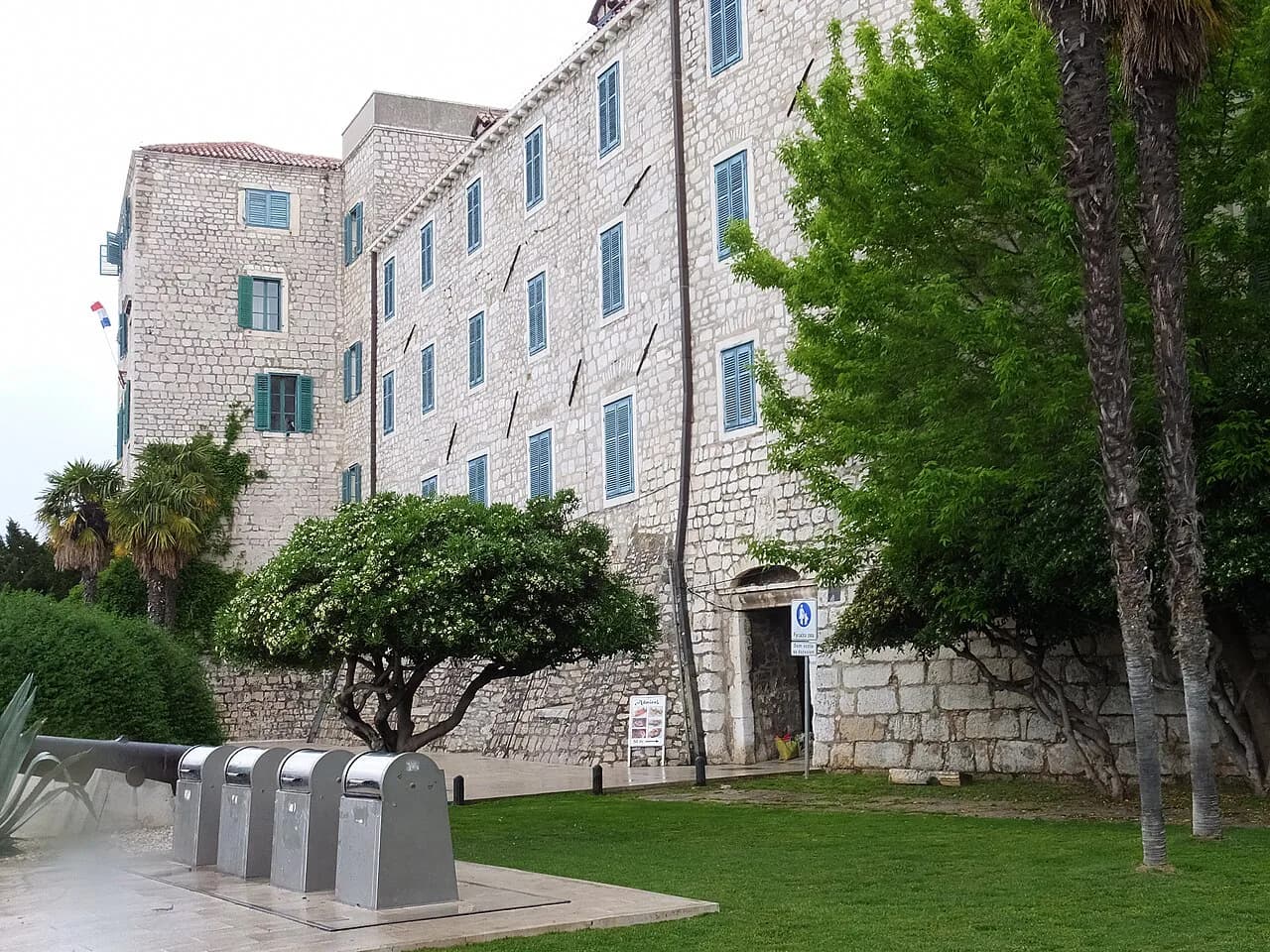
Šibenik City Museum: A Visitor's Guide to the Duke's Palace

Šibenik City Museum is a one-building stop in the old town, housed in the Duke's Palace and best treated as an hour of context rather than a half-day. Its rooms set the archaeology of the Šibenik area alongside the city's later history, which makes it a useful primer before you climb the fortresses or take the boat out to Tvrđava Sv Nikole.
This guide covers where the museum sits in the old town, how to reach it on foot from the Riva, what the collections hold, how long to allow and which nearby sights fit the same afternoon.
What the Šibenik City Museum is and where it sits
Muzej grada Šibenika is the city's central cultural institution, founded in 1925 to mark the thousandth anniversary of the Croatian Kingdom. It moved into the Duke's Palace in 1947 and has operated there ever since, expanding into several professional departments over the decades.
The museum stands in the heart of the old town, within a few minutes' walk of the Cathedral of St James and the stone lanes that run down to the waterfront. That position is the practical argument for including it: you pass it on the way between the cathedral and the fortresses rather than detouring across town.
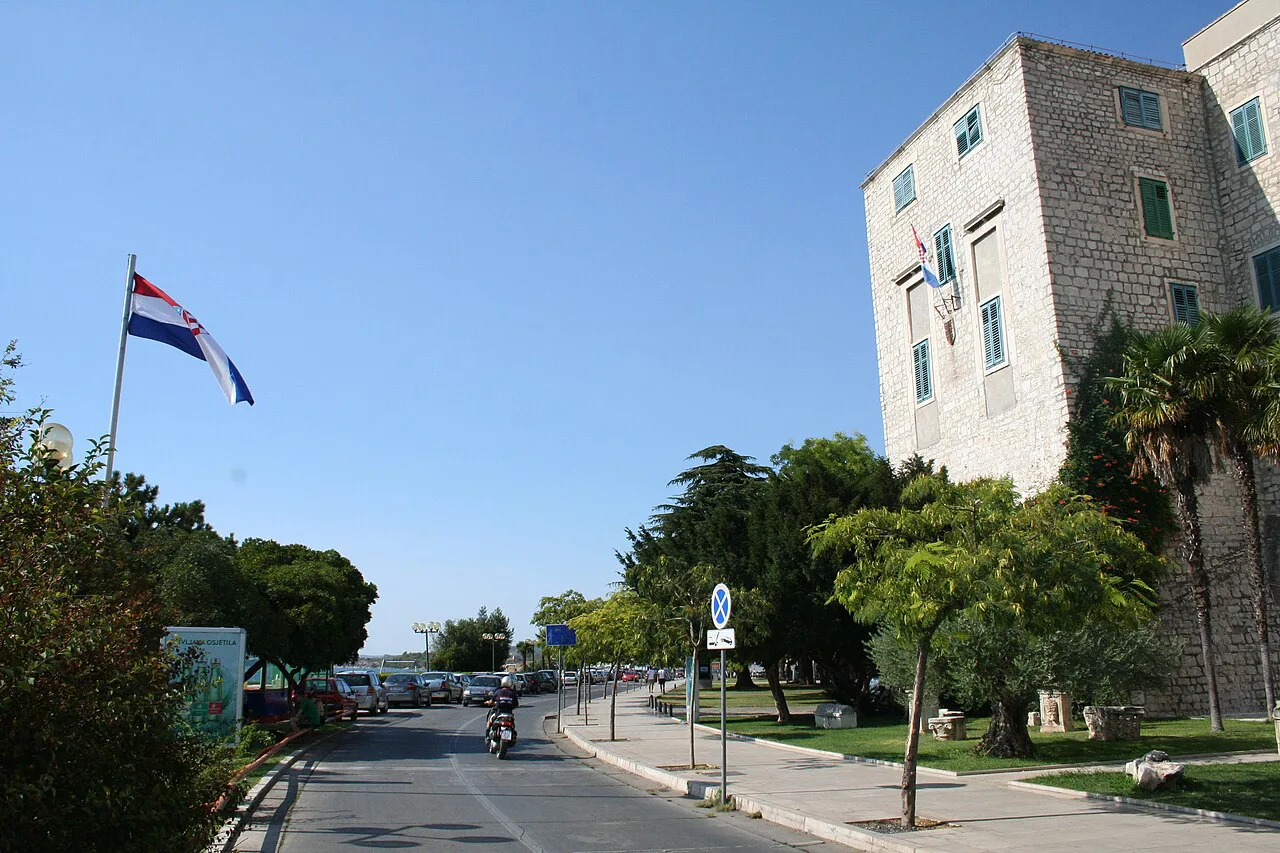

The Duke's Palace: the building that houses the museum
The setting is a former princes' palace dating from the 13th and 14th centuries, and the museum occupies its atrium and two wings. You are walking through a medieval Dalmatian noble building as much as through exhibition rooms, which is part of what separates the visit from a standard city museum.
The permanent exhibition on show today opened in 2012. Treat the palace itself as half the exhibit: the courtyard and the surviving stonework give the collections a period frame that a purpose-built gallery could not.
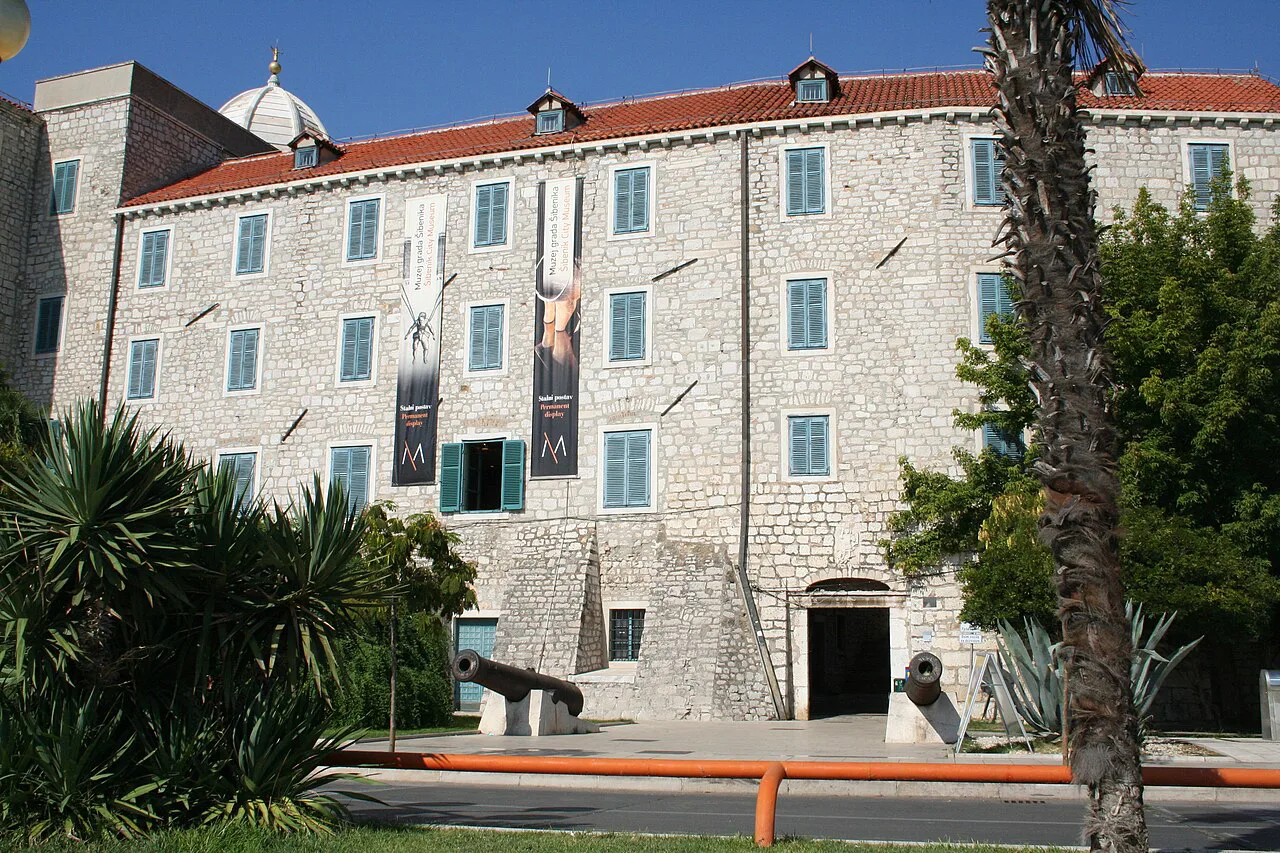

How to get there on foot from the Riva and the cathedral
Arrive by sea or bus and you will come ashore on the Riva, Šibenik's waterfront promenade, then climb into the old town on foot. The museum is signposted within the historic core, a short walk uphill from the waterfront and close to the cathedral square, so no transport is needed once you are in the centre.
If the cathedral is your anchor, visit the museum first or straight after: the two sit within minutes of each other and together explain how the city paid for and built its great church. The Šibenik Cathedral of St James page and the Sibenik Attractions: 8 Visitor Guides hub cover the church and the wider city sights in more detail.
What the collections cover, from archaeology to the city's later history
The displays blend archaeological material from the Šibenik region with the documented history of the city and its surrounding county. Expect ceramics, stonework and everyday objects rather than blockbuster treasures, with labelling that ties the finds to the town's development as a port under Venetian rule.
The museum's early history centres on its first director, Don Krsto Stošić, who gave his private collection to the institution. The building was demolished in the Second World War and most of the material destroyed before the museum reopened in the Duke's Palace in 1947 — a wartime gap worth knowing when you read the collection's labels.
Read the panels on the city's fortifications before you climb to the viewpoints; the defensive walls and the seaward fortress make far more sense once you have seen the maps. The St Michael's Fortress, Šibenik guide, together with the Barone and St John's entries, covers the sights you can then walk to.
How much time to allow inside
Budget around an hour for the permanent exhibition and the palace courtyard. It is a modest museum in scale, so it fits a morning or a wet afternoon without swallowing the rest of your day.
The trade-off is depth against breadth: if you have only a day in Šibenik, the cathedral and one fortress will use it up, and the museum is the better choice on a second visit or in poor weather. Families with younger children may prefer to shorten the museum and spend the time outdoors.
Opening hours and ticket prices: where to check before you go
The museum publishes its own opening hours and admission charges, and those are the figures to rely on for the day you visit. Check the Muzej grada Šibenika site or ask at the desk in the Duke's Palace before you plan the rest of the day around it.
Croatia has used the euro since 2023, so any price you are quoted will be in euros. If the museum is closed for a change of exhibition, the cathedral, the fortresses and the waterfront boat to Tvrđava Sv Nikole remain open alternatives.
The Interpretation Centre of the Cathedral of St James (Civitas Sacra)
Civitas Sacra occupies the Galbiani Palace in the old town, close to the cathedral, and explains the building's construction under masters including Juraj Dalmatinac. It is the natural companion to the city museum: one tells the story of Šibenik, the other the story of its UNESCO-listed church, inscribed in 2000.
Doing both on the same day works well because they sit minutes apart, but keep the order flexible: the interpretation centre is the more focused experience, the city museum the broader one.
Nearby sights: St Michael's, Barone and St John's
St Michael's Fortress rises on the rocky hill 70 metres above sea level that was the original core of Šibenik, first mentioned in 998 and now a summer concert venue with views over the rooftops and the bay. Climb it after the museum for the geography lesson the exhibition cannot give you.
Barone Fortress, restored and now used for events and local producers' markets, and St John's Fortress (Tanaja), the star-shaped work built in two months in 1646, complete the circuit above the old town. Each is a short walk from the museum, so you can link two or three in an afternoon without transport.
Getting out to St Nicholas' Fortress by boat
Tvrđava Sv Nikole guards the channel from the islet of Ljuljevac and joined the UNESCO list in 2017 as part of Venice's defensive works. The boat leaves from and returns to the Šibenik waterfront near the junction of Obala Hrvatske Ratne Mornarice and Obala Dr. Franje Tuđmana, and the fortress operator publishes the season's departure schedule.
The sailing adds a couple of hours to a museum day and depends on sea conditions, so treat it as a separate outing rather than an add-on squeezed in after the Duke's Palace.
Does the museum earn a slot in a short stay?
Yes, if you have more than a day in Šibenik or the weather turns: an hour in the Duke's Palace gives the cathedral and fortresses their context. On a single fine day, prioritise the cathedral and St Michael's Fortress, and keep the museum for a return or a rainy morning.
Whichever order you choose, confirm the day's opening hours and admission with the museum first, then build the walk around the old town from there.