
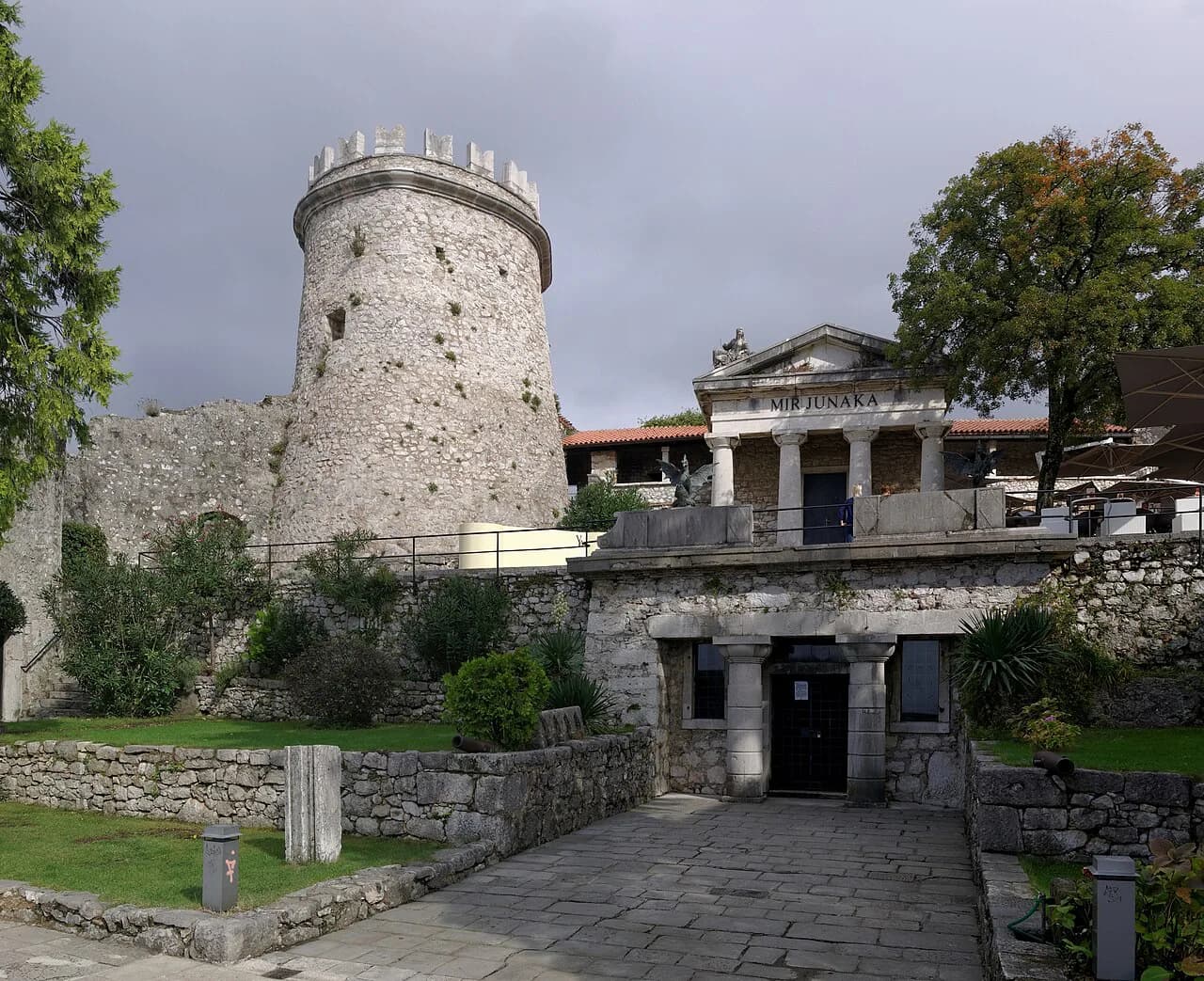
Trsat, Rijeka: the castle, the pilgrimage church and the steps up

Trsat is a hill district above Rijeka, on the left bank of the Rječina gorge, and it needs half a day rather than an hour. The draw is a pair of neighbours: the medieval castle and the Franciscan shrine that made the hill a destination. This guide covers the castle's layered history, the pilgrimage church, the steps against the road approach, and who the climb suits.
Treat Trsat as its own place rather than an add-on to the waterfront, because the transport decision shapes the day. Climbing the steps or arriving by road determines how much of the hill you can reasonably see.
What Trsat is and where it sits above Rijeka
Trsat occupies a steep hill on the left bank of the Rječina, directly above Rijeka, looking down over the river gorge. The position controls access to the sea along the Rječina, which is why a fortress ended up there. The hill was recorded in written sources in the medieval period and an ancient castle was built here in the 13th century.
The name is tied to older layers of the site: a hill-fort possibly called Darsata, and the Roman fortification Tarsatica, which took its name from it. The Roman position sat on a road linking Aquileia with Pannonia and Senia (Senj), so Trsat was a waypoint before it was a pilgrimage destination.
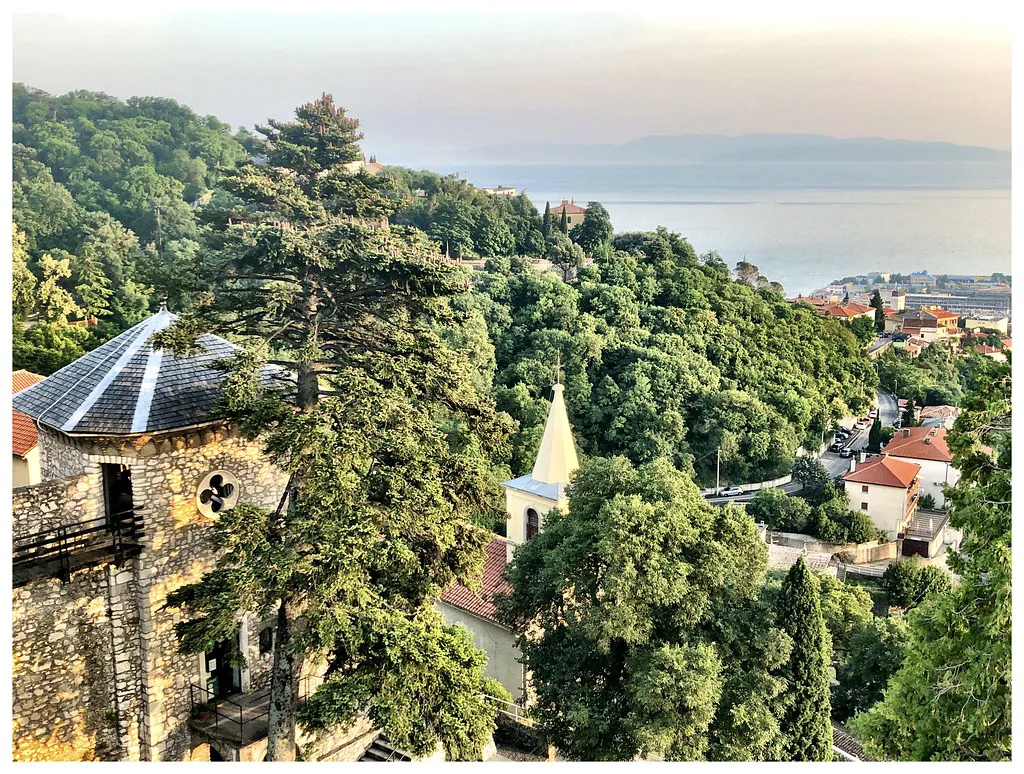
Trsat Castle: Frankopan origins and the Neo-Gothic rebuild
The Frankopan family, one of the most powerful noble houses on the Croatian coast, built the present castle to protect their holdings in Vinodol. The Croatian noble Vuk Krsto Frankopan is buried in one of the churches on the hill, which ties the castle story to the ecclesiastical one.
The castle's history is a sequence of decline and reinvention. It fell into decay in the 17th century as the Venetian and Ottoman threats receded, and the earthquake of 1750 accelerated that decline. In 1826 the castle passed to Field-Marshal Laval Nugent, an Irishman commanding Austrian troops nearby, who restored it in Neo-Gothic style.
Nugent built a mausoleum inside the castle, adorned with the family coat of arms, and the castle stayed in his family until nearly the end of the Second World War. Look for the former mausoleum, known as Mir junaka, the dungeon beneath it, and the round and oval towers. The 1509 episode, when the Ban of Croatia recaptured Trsat and then entered Rijeka after expelling the Venetians, is context rather than a sight.
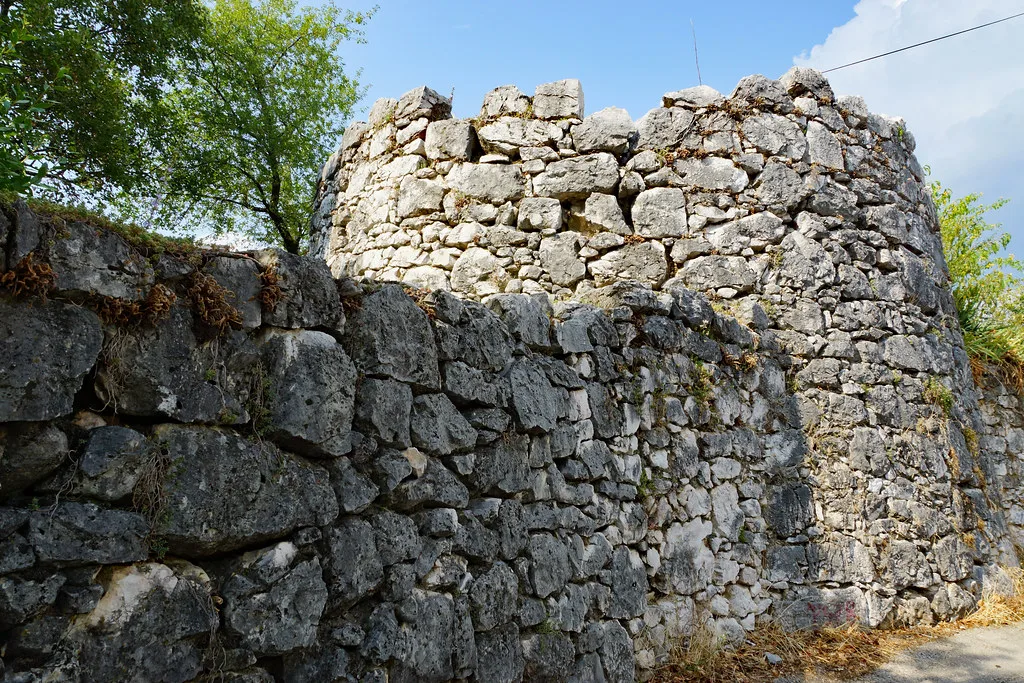
What you see from the castle courtyard, and what it is used for now
The castle stands on the steep hill overlooking the Rječina gorge, and that position is the point of the visit: you look down the gorge and over the town. The courtyard has been turned into a restaurant, and the castle draws many visitors during the summer months. The experience is as much about the terrace and the view as about the masonry.
Plan around that combination: a castle whose main pleasure is standing in the courtyard and looking out, with food and drink on site rather than in a separate museum building. If you want a sit-down stop, the restaurant is the reason to linger; if not, the castle is a short visit. It pairs naturally with the church a few minutes away rather than filling an afternoon.
The Franciscan church and the pilgrimage tradition
The Franciscan church and shrine on the hill are why Trsat became a destination rather than just a fortress. The pilgrimage tradition gives it a working religious life: expect the church to be in use rather than treated purely as a monument, and dress and behave accordingly if a service is under way.
The castle is tied to the Frankopan family, and Vuk Krsto Frankopan is buried in one of the hill's churches, so the religious and defensive histories sit within a few minutes' walk. Come for the church as well as the castle, or you will have seen only half of what the hill is for.
The Trsat steps: climbing up versus approaching by road
There is a walking route up the hill as well as the road approach, and the climb is a real ascent up a steep hill rather than a decorative staircase. Take the walk if you are fit and travelling light and want to arrive on foot; the road is the fallback when the climb would spoil the day for anyone in your group.
The road approach suits anyone with limited mobility, heavy luggage, small children or a tight timetable, because it delivers you to the top without the ascent. The trade-off is that you lose the walk and arrive directly into the built-up part of the hill. Whichever way you go up, the descent on foot is easier than the climb.
Who Trsat suits, and who should skip it
Trsat suits travellers who want history with a view and will spend half a day on a hill: the Frankopan castle, the Nugent mausoleum and the Franciscan shrine together justify the trip. It also suits anyone based in Rijeka who wants a change from the waterfront without leaving the city. If someone in your group cannot manage steep ground, the road keeps the hill accessible.
Skip Trsat if your time in Rijeka is a single afternoon and you want the centre, or if stairs and hills are off the table and the road trip does not appeal either. It is also the wrong choice for anyone hoping for a furnished castle interior, because the courtyard and the view carry the experience.
Eating and staying on the hill
The castle courtyard operates as a restaurant, which makes Trsat a place where you can eat on the hill rather than descending first. Most visitors treat Trsat as a half-day from central Rijeka rather than a base, which is the simpler plan if you want the waterfront and the old town within walking distance.
Most visitors treat Trsat as a half-day from central Rijeka rather than a base, which is the simpler plan if you want the waterfront and the old town within walking distance. If you do stay on the hill, weigh the quiet against the daily commute down and back up.
Getting there from central Rijeka and how long to allow
From central Rijeka you have two options: the steps up the hill on foot, or the road approach by bus or car to the top. The bus and car route is the one to choose with luggage or limited mobility, while the steps are for those who want the climb itself. Which bus, how often it runs and where it stops changes by season.
Budget half a day on the hill: the steps or the ride up, the castle courtyard and towers, and the Franciscan church. Add time if you plan to eat at the castle restaurant. If you are comparing Trsat with Rijeka's other districts, Pećine, Rijeka has the coastal walk and Mlaka, Rijeka sits on the flat near the river, both far easier on the legs.
Sušak, Rijeka, on the other side of the Rječina, is the natural pairing if you want to see the gorge from below before or after the climb. For the rest of the city's sights, the Rijeka Attractions: 9 Visitor Guides sets Trsat beside the waterfront and museum stops.
Practical limits: seasonal opening and the bura on the hilltop
The castle draws visitors mainly in the summer months, so an out-of-season trip to the courtyard may be quieter or more limited than a July visit. The hilltop is exposed, so a layer and a realistic view of the weather are worth packing even when the streets below feel mild.
Opening times, ticket arrangements and restaurant hours for the castle and church are not fixed year-round; the castle courtyard now houses a restaurant, so check the current details before setting out.
Is the climb worth it for you?
Take the steps if you are fit and light-packed and want the ascent; take the road if anyone in your group cannot manage the hill, and lose nothing but the walk. Either way, give Trsat half a day and see the church as well as the castle.
The castle is at its best as a view and a courtyard stop rather than a museum, so go for the position over the Rječina gorge and the Frankopan and Nugent story behind it. If that is what you want from an afternoon in Rijeka, Trsat earns the climb.
Frequently Asked Questions
How long does it take to see Trsat?
Allow about half a day. That covers the climb or the ride up, the castle courtyard and towers, and the Franciscan church, with extra time if you eat at the castle restaurant. Trsat is a hill district rather than a single sight, so squeezing it into an hour defeats the point.
Do you have to climb the steps to reach Trsat Castle?
No. The steps are the classic walking approach, but the road brings you to the top without the ascent, which suits travellers with limited mobility, luggage or small children. Choose the road if the climb would spoil the day, and walk down instead if you want the views on foot.
Why is Trsat a pilgrimage destination?
The Franciscan church and shrine on the hill are what made Trsat a destination beyond its fortress, and the castle is tied to the Frankopan family, with Vuk Krsto Frankopan buried in one of the hill's churches. Seeing only the castle means missing the religious half of the hill's story.