
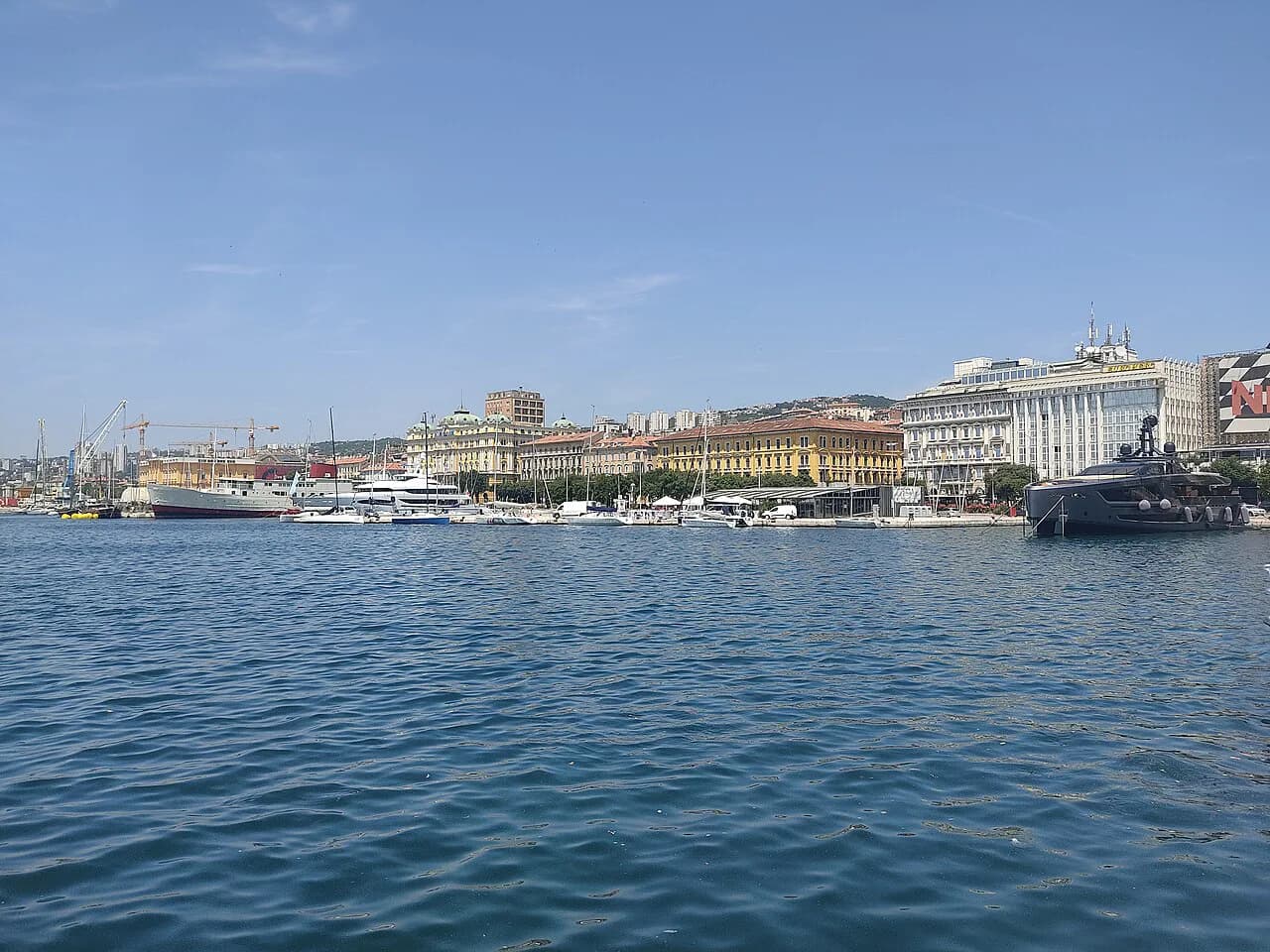
Mlaka, Rijeka: a residential district guide

Mlaka is a residential district of Rijeka, not a sightseeing quarter, and it suits travellers who want a quiet, everyday slice of the city rather than the old town on the doorstep. The Mjesni odbor Mlaka covers 83.52 hectares and has 3,203 residents according to the city's own published figure, which tells you this is a lived-in neighbourhood rather than a visitor strip. This guide sets out what the name actually covers, the open space worth knowing and who should skip it.
Read it as a planning tool: it explains how Mlaka relates to the centre and to the wider set of Rijeka Neighborhoods: 4 Area Guides, and it is candid about the fact that there is very little here aimed at visitors. If you are choosing a base and want old towns, museums and ferry piers within walking distance, look elsewhere first and read this to confirm the trade-off.
Where Mlaka sits in Rijeka
Mlaka is one of Rijeka's many named quarters, part of the same built-up city, so you are never far from shops and buses, but you are not stepping out into a historic centre. Treat it as a piece of everyday Rijeka rather than a stop on a sightseeing circuit, and use the centre and the Riva as your sightseeing base.
The name covers more ground than the neighbourhood core: the council area of Mlaka is also described as taking in Podpinjol and the former industrial zone running out towards Piopa, so the Mjesni odbor is a larger administrative unit than the streets people mean when they say Mlaka. If you are placing the district on a map, use the boundary published by Grad Rijeka for the Mjesni odbor Mlaka rather than treating the name as stopping at the residential blocks.
For orientation, Mlaka is one of the city's many mjesni odbori, listed alongside Trsat, Pećine and Sušak in the city's own directory of districts. That listing is a useful reminder that Rijeka is a patchwork of named quarters rather than one uniform centre, and each has its own character. Mlaka's is domestic and workaday.
Park Mlaka and the Krešimirova entrance
Park Mlaka is the district's open green space and the one place in the neighbourhood worth seeking out on foot. The city's own notice for a community event places the lower entrance to the park on Krešimirova ulica, which is the landmark to use if you are walking there. Beyond its existence and that entrance, plan around what you find rather than an itinerary of facilities.
Set expectations accordingly: a neighbourhood park of this kind is a local green pocket for a stroll or a quiet half-hour, not a destination park with a programme of attractions. It works best as a breather between other things rather than the reason for a trip across the city.
The park also functions as a community venue: the district council has used the space by the lower entrance for public health checks open to residents. Events also spill into the streets, with a screening of Igor Bezinović's film Fiume o morte! held in ulica Luki on a site where part of the film was shot. That tells you something about how Mlaka works, with its open spaces and streets as the shared front room. Treat any such event as a bonus if it happens to fall on your dates rather than as the basis for a trip.
Getting there and around
Mlaka sits within Rijeka's urban fabric, so reaching it means a city bus or a walk from the centre rather than a separate excursion. Check the route and times with the city bus operator on the day you travel. Walking from the centre is straightforward if you are reasonably mobile and not carrying much.
The district is best treated as somewhere you pass through or stay in rather than tour. Its value to a visitor is proximity to ordinary Rijeka life and an easy link back into the centre when you want the sights. If you want the waterfront and the historic core as your default, base yourself there instead.
Rijeka's other quarters give a sense of the alternatives. Trsat, Rijeka sits above the city with its own distinct feel, while Pećine, Rijeka stretches along the coast. Mlaka's draw, if it has one for a traveller, is that it is unpolished and residential in a way those more visited areas are not.
The Mjesni odbor Mlaka office
The district council office, Mjesni odbor Mlaka, is at Giuseppe Duelle 2 in Rijeka, with a published telephone number and an email address for residents. It is the administrative heart of the neighbourhood rather than a visitor centre, but the address is a handy fixed point if you need to place Mlaka on the ground.
The city publishes the office's hours on weekday mornings and afternoons, with a midday field period on some days. If you actually need to speak to someone, check the current hours before setting off. This is practical local information, not a reason to visit.
For a traveller, the office mainly signals that Mlaka is a functioning residential unit of the city with its own council, communal priorities and public notices. It is a good reminder that the neighbourhood is someone's home first. Keep that in mind and you will get more out of walking its streets.
Who Mlaka suits
Mlaka suits travellers who have already seen Rijeka's headline sights and want a quieter, everyday base, or who are staying with friends or family in the city. It is also reasonable for a longer stay where you want ordinary shops and a park rather than a tourist strip. What it offers is the everyday calm of a lived-in neighbourhood.
It does not suit first-time visitors who want the old town and the waterfront on foot, or anyone hoping to step out of a door into cafes and sights. If your days are built around the centre and the Riva, staying in Mlaka adds travel to every outing. Be honest with yourself about how much time you want to spend in transit.
There is also very little visitor infrastructure to plan around in Mlaka itself. Beyond Park Mlaka and the council office, there is little built for tourists in the district, so do not build an itinerary here. Use it as a place to sleep and walk, and spend your sightseeing time in the more visited quarters.
Rijeka's seasons and when to walk
Rijeka's climate varies sharply by season: hot, humid summers give way to cooler, wetter conditions in winter. For a summer stay in Mlaka, plan walks in the park and around the district for the morning or evening rather than the middle of the day, when the heat and humidity are at their height.
Any swimming means travelling to the coast for the day. Sea temperatures and typical conditions on the Kvarner coast vary through the season and change year to year. If swimming is part of your plan, look up current climate averages from a reliable weather source rather than trusting a single reading.
Should you base yourself in Mlaka?
Choose Mlaka only if a quiet, residential Rijeka base with a small park and an ordinary neighbourhood feel is what you want, and you are happy to travel to the centre and the coast for the sights. If your trip is built around the old town, the Riva and the museums, base yourself closer to them and treat Mlaka as a place you pass through.
Compare the alternatives before you commit: Trsat, Rijeka for a hilltop character and Pećine, Rijeka for the coastal side of the city, then decide which trade-off you can live with. If it is still Mlaka, the council office at Giuseppe Duelle 2 and the park entrance on Krešimirova ulica are your two fixed points on the ground.