
Sušak, Rijeka: a Guide to the District Across the Rječina

Sušak is the district on the left bank of the Rječina, the river that separates it from central Rijeka, and for three decades it sat in a different state from the city across the water. Come for an evening of theatre, exhibitions or a concert rather than for monuments: Sušak has one strong cultural anchor and a lot of ordinary city life. This guide covers what the district is, how it grew, who it suits and how to fold it into a Rijeka day.
The centre of gravity is the Croatian Cultural Home on Strossmayerova 1, a public cultural institution that runs a year-round programme of theatre, music, exhibitions and film, with a second small stage on Križanićeva 6A. Around it are the streets climbing above the Rječina, a short walk from the old town. If you are dividing your time between Rijeka's districts, the wider set of area guides sits alongside this one.
What and where Sušak is
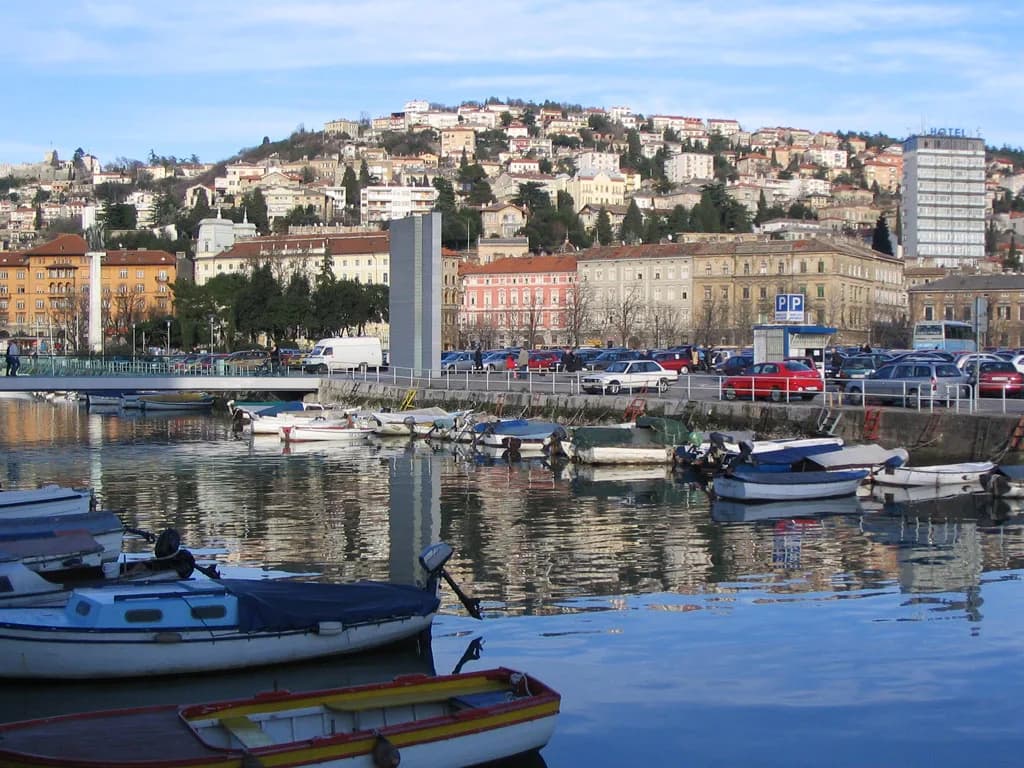
Sušak is a settlement on the left bank of the Rječina, today part of the city of Rijeka in the Primorsko-goranska županija. The river is the practical marker: cross it from the old town and you are in Sušak, with the ground rising towards Trsat behind you.
Do not confuse it with Susak, the small island in the Kvarner bay reached by boat from Mali Lošinj. They share a name and nothing else, and the diacritic matters when you search or buy a ticket.
How Sušak grew: roads, port and a border
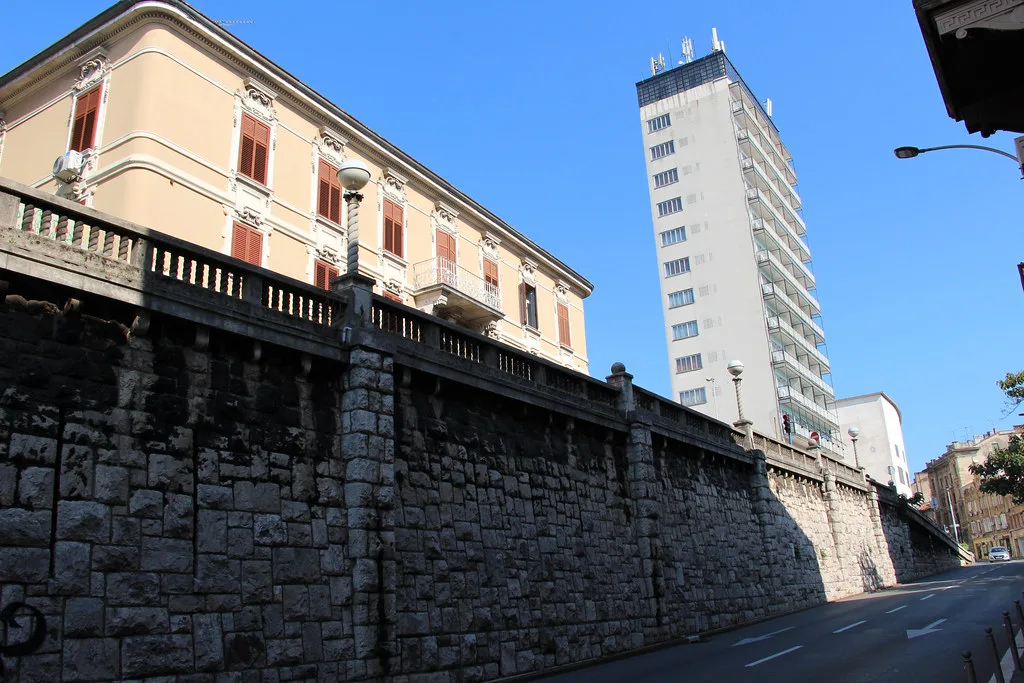
Sušak's origins are tied to road building. A small settlement developed near the chapel of St Lawrence with the construction of the Karolinska cesta in the eighteenth century, and the later Lujzinska road from Rijeka to Karlovac added to its progress. In the nineteenth century it became a separate administrative municipality, at first seated at Trsat and from 1877 at Sušak itself.
The same century brought a harbour, a railway station and a gymnasium, and in 1885 the first Sušak bathing establishment was built. Population climbed from 494 in 1857 to 13,239 in 1921. Those figures are history, not a description of the district today, but they explain why Sušak feels like a town in its own right rather than a suburb.
The border period is the district's most distinctive chapter. When the 1924 Rome Agreement annexed Rijeka to Italy, Sušak went to the Kingdom of Serbs, Croats and Slovenes, whose authorities tried without much success to establish it as a port. The population fell to 5,472 by 1931. The 1947 Paris peace conference returned Rijeka to Croatia, and in 1948 the two towns were merged into a single city of Rijeka.

The character of the district today, and who it suits
Sušak is a working city district: offices, schools, residential blocks and a cultural house, with the river and the Trsat hill as its edges. It rewards travellers who like seeing how a port city actually functions and who want an evening's entertainment in a Croatian-language venue. It does not suit anyone hunting a checklist of monuments, and there is no cluster of sights to tick off here.
If your priority is a swim or a waterfront stroll, look east to Pećine, where the coast opens up below the centre. Sušak makes more sense as a two-hour add-on to a Rijeka day than as a base for a whole trip.
Hrvatski kulturni dom na Sušaku on Strossmayerova 1
The Hrvatski kulturni dom na Sušaku, the Croatian Cultural Home, is a public institution at Strossmayerova 1 that runs cultural, educational and entertainment programmes through the year. Its own listings mix theatre, dance, film, exhibitions and concerts, some in the main hall and some in smaller spaces. For a visitor it is the clearest single reason to cross the river in the evening.
The building also houses Galerija Kortil, which shows contemporary art and has staged painting, object and light-installation exhibitions by artists from the region. Check what is on before you go: the programme rotates, and a quiet week in the galleries is a different visit from a festival night. Tickets and start times are published on the venue's own site, not fixed by season.
A second, small HKD stage operates at Križanićeva 6A, used for studio-scale performances such as VR dance film screenings. Seats in a room that size are limited, so booking ahead is sensible here rather than assumed: check the listing for the event you want.
Contemporary art and studio-scale performances
Pair the gallery with whatever is on in the small venue and you have a compact cultural afternoon without leaving a few streets. The trade-off is language: much of the theatre programme is in Croatian, so weigh a music, dance or visual-art event if you do not follow the dialogue.
Walking Sušak: Strossmayerova and the streets above the Rječina
Start at Strossmayerova 1 and walk the surrounding grid, then drop towards the Rječina for the view back across to the old town. Allow about an hour and a half on foot for the streets around the cultural home and the riverbank, longer if you stop for the gallery. The gradient is gentle near the centre and steeper as you climb towards Trsat, so wear shoes you can walk in.
The hill above is a separate outing: the Trsat hill and its sanctuary reward the climb, but treat it as its own visit rather than an extension of a Sušak stroll.
Getting there and around
Sušak is walkable from central Rijeka: cross the Rječina on foot and you are in the district within minutes of the old town's edge. Local buses cover the climb towards Trsat and the streets further inland. If you are arriving by train or coach, the city's transport hub is on the Rijeka side of the river, so the walk across doubles as your orientation.
Allow an evening rather than a day. A sensible plan links a late-afternoon walk along the river with a performance at the cultural home, then a walk back into the centre for dinner. The neighbouring districts of Mlaka and Pećine sit along the same stretch of coast if you want to extend the loop.
When to come: pairing a Sušak evening with a Rijeka city day
The cultural home runs programmes across the year, so a Sušak evening can anchor a city day in almost any month. Build the day around the old town and the Rječina, then move east for the performance. Winter weekdays are quieter in the streets, while summer brings the city's larger visitor numbers to the centre rather than to Sušak itself.
Check the HKD programme and gallery listings for the week you plan to travel, and confirm ticket details on the venue's site when you book. A quick look at the calendar also tells you whether the main hall or the small Križanićeva stage is in use, which changes the feel of the evening.
Is Sušak worth crossing the river for?
Yes, if you want a real Rijeka evening in a cultural venue rather than another old-town square. Pick one event at the Croatian Cultural Home or an exhibition at Galerija Kortil, walk the streets around Strossmayerova, and cross back over the Rječina. If you have only a few hours in the city, spend them in the centre and leave Sušak for a return visit.
Explore more Rijeka guides
Frequently Asked Questions
Is Sušak the same as the island of Susak?
No. Sušak is the district of Rijeka on the left bank of the Rječina. Susak is a separate island in the Kvarner bay, and the two names are not interchangeable.
Do I need a ticket to walk around Sušak?
No. The streets, the riverbank and Strossmayerova are public space and free to walk. Theatre, concerts and gallery exhibitions at the Croatian Cultural Home are ticketed; check the venue's own website for prices and times.
How long does Sušak take to see?
About an hour and a half on foot covers the streets around Strossmayerova and the Rječina. Add time for a performance or exhibition, and treat the climb to Trsat as a separate outing.